1814: The Summer of Discontent

In the summer of 1814, the fledgling U.S. republic was on the brink of a catastrophe, one that would test its resiliency as a nation and its ability to sustain its sovereignty and independence for the long haul. The war that it declared on Great Britain two years earlier, with considerable enthusiasm, was proving to be a debacle. Many of the strategic assumptions that underpinned the U.S. march to war were erroneous, while poor military leadership, a lack of professional soldiers and an overall shortage of supplies and equipment led to defeat after defeat.  With each passing setback, opposition to the war increased and there was growing talk of secession amongst the New England states who were always opposed to what they called “Mr. Madison’s War.”

By July 1814, American fortunes had taken another turn for the worse. For two years the British regarded the conflict with the United States as a side show while they battled Napoleon for mastery of Europe.  Consequently the American war was fought with whatever money, manpower and naval force that could be spared. With Napoleon’s defeat and subsequent exile in May, the British were now able to shift their focus. Thousands of  battle-hardened redcoats began arriving in the Chesapeake ready to strike a decisive blow. By the end of August, the American capital of Washington D.C. would be in flames and the entire American experiment under siege.
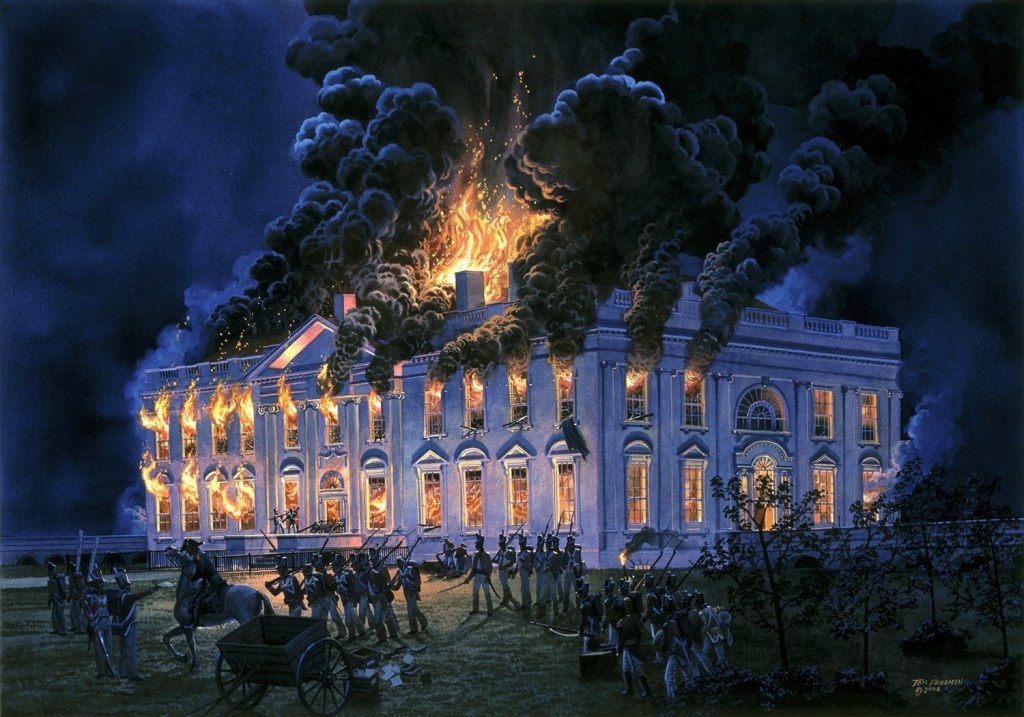
August 30, 1814, British Troops Burn the White House

The March to War

The War of 1812 is perhaps one of the least known and least understood wars in American history. It is the United States first war, post-independence, and one the country was ill-prepared to fight. It is a conflict that seems as if it could have and should have been avoided. Understanding the reasons and rationale for the war and how and why the decision to declare war was made are critical for appreciating how the United States found itself in such a terrible predicament in the Summer of 1814.

The United States declared war on Great Britain on June 18, 1812.  Anti-British sentiment in the country had reached a fevered pitch by this time and there were strong voices, including that of President James Madison, clamoring for war. Other officials, mostly Federalists from New England that benefited from trade with Britain, were less enthusiastic. In his call to arms, Madison presented a detailed summary of hostile British conduct towards the United States denouncing  the practice of impressment and Great Britain’s continued harassment of U.S. shipping. He also accused the British of inciting Indian attacks on frontier settlements in the Great Lakes region and Mississippi territories. In the end Madison and the War Hawks argued that Great Britain forced the United States to either surrender its independence or maintain it by war. One prominent War Hawk, Congressman Felix Grundy from a Tennessee declared that he would rather have war than further “submit” to British insults. 
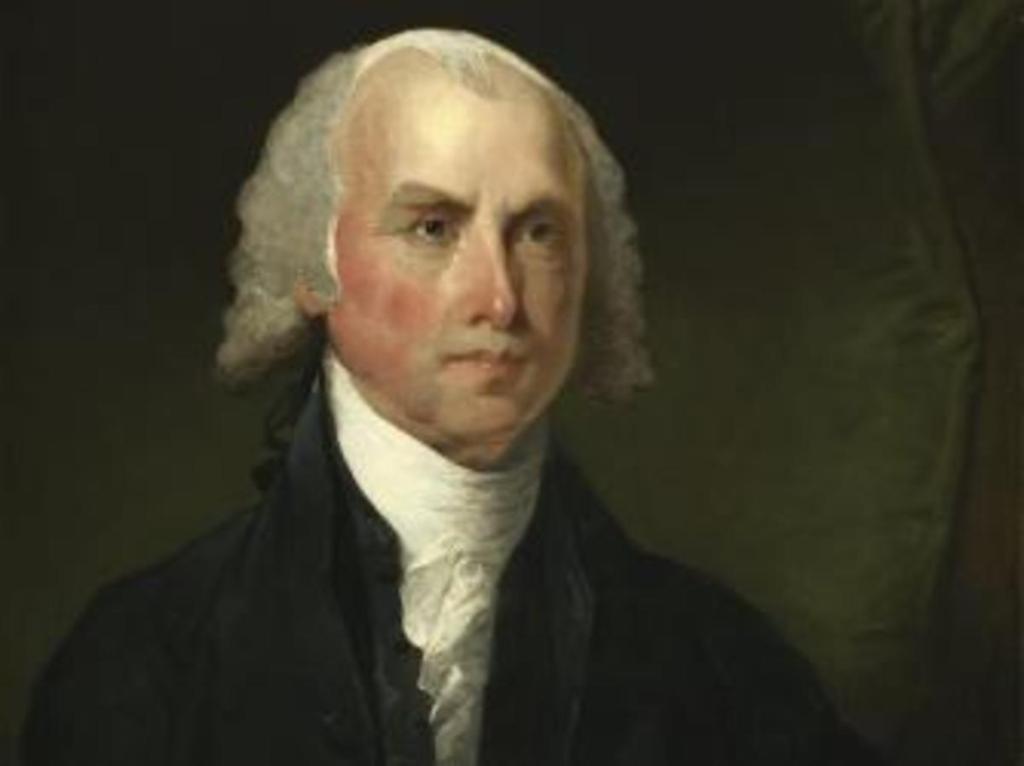
President James Madison

Of all the causes of the war, the British practice of impressment was the most important and most vexing for America. Great Britain’s ongoing war with Napoleon put increased manpower demands on the Royal Navy. Unable to meet these quotas through voluntary enlistments, the Royal Navy resorted to impressment. For almost a decade the United States suffered the ignominy of having its neutral merchant ships boarded by the Royal Navy and crew members suspected of being British subjects removed and forced to serve on British ships of war. According to estimates, between 5,000-10,000 seamen were taken from U.S. ships from 1806-1812 with approximately 1,300 of them born in America. Although American politicians rattled their sabers in public, in private they admitted that fully half of the sailors on American merchant ships were actually British subjects who had either abandoned or avoided service in the Royal Navy, which was often cruel and harsh. Nonetheless, many Americans continued to view these actions as an insult to the young nation, a challenge to its honor, and evidence that Great Britain did not accept the independence of the United States.
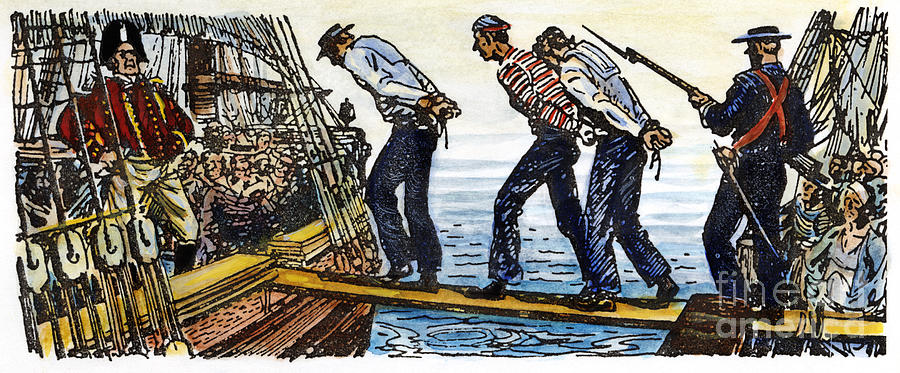
A British Press Gang at work

Many of the War Hawks in Congress were also driven by territorial ambitions and viewed war with Great Britain as on opportunity to seize all or at least part of Canada. Since 1775, when Generals Richard Montgomery and Benedict Arnold led a military expedition across the frozen wilderness of Maine to seize Quebec, American politicians dreamed of acquiring Canada. Speaker of the House Henry Clay, a Kentuckian, argued that Canada was so vulnerable that an attack on the British colony would force Britain to make concessions. At the same time, he claimed that the conquest of Canada would remove a longstanding threat to America’s security on the North American continent and restore national honor. “I believe that in four weeks from the time a declaration of war is heard on our frontier, the whole of Upper Canada and a part of Lower Canada will be in our power,” bragged South Carolina Senator John C. Calhoun.

A Not Ready for Prime Time Military

In June of 1812, the United States had neither the army nor the navy to fight and win a war against Great Britain, despite the bravado of American politicians. In the years following independence, the creation and maintenance of a large standing professional army was not a priority for the young republic and there was little interest in investing in one. The prevailing assumption was that state militias would form the basis of any army in times of need, so at the outbreak of the war the regular army consisted of less than 12,000 men. Congress authorized the expansion of the army to 35,000 men as war sentiment increased but service was voluntary and unpopular because it paid poorly. Moreover, because of the heavy reliance on state militias there were few professional and experienced officers. President Thomas Jefferson authorized the establishment of the United States Military Academy at West Point in 1802 but it’s primary purpose early on was to produce a corps of engineers to drive infrastructure improvements.

The U.S. Navy was in just as poor shape as the army. Never large to begin with, the navy consisted of less than a dozen ships at the outbreak of the war and included only three frigates. Rather than appropriate funds for a Navy capable of defending U.S. maritime interest, Congress preferred to go the cheaper route and rely on privateers during wartime. In terms of manpower, the U.S. Navy had roughly 5,000 sailors and 1000 marines. The Royal Navy, on the other hand, had 130 ships of the line with 60-120 guns and 600 frigates and smaller vessels as well as 140,000 sailors and 31,000 well trained marines. However, the British had only a fraction of their fleet for use against the United States in the summer of 1812 — one ship of the line, seven frigates, and a dozen smaller vessels — because most of their navy was focused on fighting the French.
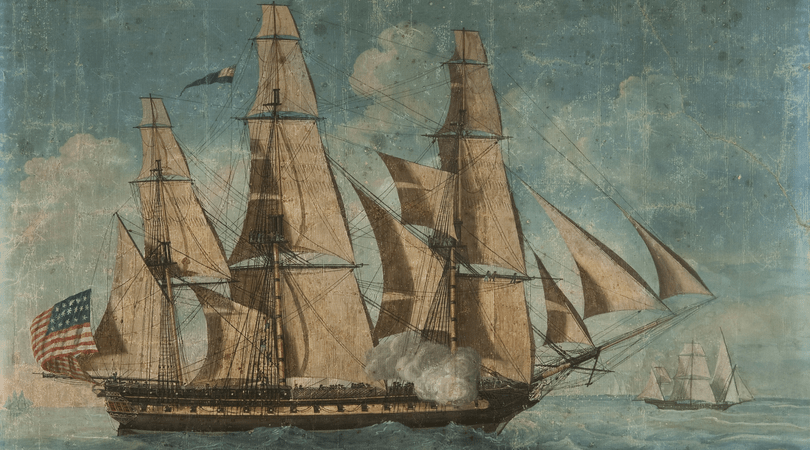
U.S.S Constitution, “Old Ironsides”

War Along the Borderlands

During the first two years of the war, the primary theater of combat was the border lands between the United States and Canada. That fighting would center in this area was hardly surprising. American politicians and military leaders had long coveted Canada and many of the War Hawks in the country were quite transparent about their territorial ambitions. They believed American forces would be welcomed by the Canadians as liberators. Canada was also the closest and easiest place to strike at Britain. On paper, the United States had a clear advantage. The U.S. population totaled roughly 7.5 million compared to about 500,000 Canadians, which included 300,000 of French descent that were not considered reliable. The United States had about 10,000 men under arms at the start of the war with thousands more available for call-up compared to 4,500 British troops spread along the border. Nonetheless, the British were better led, better trained, and better equipped which the Americans would soon realize.

Less than a month after declaring war on Britain, the United States carried out a three pronged invasion of Canada that would ultimately end in failure. The entire operation was marred by gross military incompetence, an over reliance on militia, and poor coordination. On July 12, 1812, a combined force of 2,000 U.S. Army regulars and militia, under the command of General William Hull, a 59 year old veteran of the Revolution crossed into Canada from Detroit. Hull lost his nerve after a series of attacks by Britain’s Indian allies and retreated back to Detroit. Hull later surrendered Detroit to a small British force after being deceived into believing he was surrounded by a larger army. He was later court-martialed and convicted of cowardice and neglect of duty.

In October, General Stephen Van Rensselaer, an inexperienced political appointee, and 3,5000 men, crossed the Niagara River into Canada and attacked a much smaller force of British Redcoats, and their Indian allies at Queenston Heights. The attack was foiled by political infighting amongst the army commanders, a refusal by a large body militia to cross into Canada, and the exploits of a more capable and adept British commander.

In November, General Henry Dearborn, another older veteran from the Revolution, led a 6,000 man force from Albany to the north shore of Lake Champlain. Their goal was to capture Montreal but once again the militia refused to leave the United States. The force retreated without ever entering Canada. The results of the entire Canadian operation were best summed up by a Vermont newspaper, it produced nothing but “disaster, defeat, disgrace, and ruin and death.”

The United States regrouped the following year and with the help of new commanders and more experienced troops attacked Canada again with better results. However, it was still unable to score that decisive victory that would force Britain to the negotiating table. In April, the Americans capture York (now Toronto) and burned several government buildings, an act that later would be avenged when the British burned Washington D.C. in 1814. In September, Admiral Oliver Hazzard Perry destroyed the British fleet on Lake Erie, famously declaring “We have met the enemy and they are ours.” The following month, American troops re-captured Detroit and defeated a combined British-Indian force at the Battle of the Thames, which drove the British from southwestern Ontario. American troops ended the year with the capture of the strategically important Fort George near the mouth of the Niagara River. More fighting took place along the Niagara River in 1814, but the conflict’s center of gravity shifted southward to the Chesapeake by August 1814. 

Admiral Oliver Hazzard Perry on Lake Erie

The Chesapeake Shuffle

Following Napoleon’s defeat in April 1814, Britain was now free to focus all its military might on the United States and the target of that focus would be the Chesapeake Bay where American defenses were weak and the British could exploit their greatest advantage, their navy. The previous year, British naval forces under the command of Rear Admiral George Cockburn instituted a naval blockade of the Chesapeake Bay and began raiding coastal towns up and down the Bay in an effort to relieve pressure along the US-Canadian border. Cockburn’s raids made him the scourge of the Chesapeake, and the target of much animus from the U.S. press but they did little to draw large numbers of American troops from the Canadian border.

Cockburn resumed his raids on the coastal Chesapeake towns in early 1814 but he believed the only way to force the Americans to see that the war they were fighting wasn’t worth pursuing was to lead a large force against the US capital itself.  In August, an army of 4,500 veteran British troops who’d fought the French for the last 20 years, anchored in the lower Chesapeake under the command of Major General Robert Ross. The arrival of Ross’ army in the Chesapeake unnerved the American leadership prompting heated debate over where the army was likely to strike. Secretary of War John Armstrong strongly believed that the British would most likely try to attack Baltimore because of its commercial importance and did little to strengthen the defense of the capital. In 1814, Washington, DC, had roughly 8,200 residents and many of its major structures, including the Capitol Building, were still works in progress. Nevertheless, it presented an appealing means of retaliation for an American attack against the Canadian Capital of York a year earlier.

On August 19, Ross’ army landed at Benedict, Maryland on the shores of the Patuxent River and began their 35 mile march north toward Washington D.C. In less than a week, they would be at the gates of the capital. A hastily cobbled together force of 6,500 soldiers, sailors, marines, and militia, under the command of General William Winder, engaged the British at Bladensburg, Maryland just five miles from the capital. Although Winder’s men outnumbered their British foes, they were mostly poorly trained militia and no match for the battle-hardened British. Under heavy British pressure, the left flank of the American line of defense crumbled. With their left flank enveloped, the Americans fell back in chaos and a rout that would become known as the “Bladensburg Races” ensued. By 4:00 pm the battle was over and the door to Washington wide open.

Winder’s defeat put the capital in a panic.  President Madison, who was at the battle with Winder retreated back to Washington. In his absence his wife supervised the evacuation of the White House. Foregoing their personal items, Mrs. Madison gathered important papers and some national treasures, such as Gilbert Stuart’s revered portrait of George Washington and left the city that evening just before the arrival of the British.
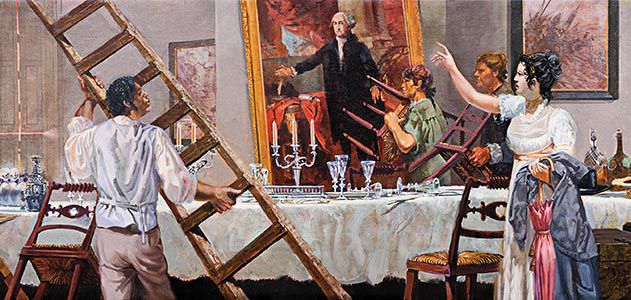
Dolly Madison directing the evacuation of the White House.

The British Army entered Washington only to find the city largely abandoned. Under orders from General Ross and Admiral Cockburn the British troops proceeded to burn Washington. One British officer described how the British soldiers “proceeded, without a moment’s delay, to burn and destroy every thing in the most distant degree connected with government.” The Capitol was the first building set aflame followed by the White House. Around midnight Ross and Cockburn entered the White House to find that the president’s dinner was still on the table undisturbed. The men proceeded to enjoy their first hearty meal since departing their ships with Cockburn facetiously offering a toast “Peace with America, Down with Madison.” After finishing their meal, the chairs were placed atop of the table and lit on fire. Before the British were done, the Treasury, State Department, and other federal buildings were on fire as well as the Navy Yard. One British officer remarked that if it hadn’t been for Ross, who urged caution, Cockburn would have burned down the whole city. In what can only be viewed as an act of divine providence, Washington was saved from further destruction when a very heavy thunderstorm and tornado passed over the city the following day and put out many of the flames. President Madison returned to the city two days later. Congress briefly considered abandoning Washington to make a capital somewhere else but the city was eventually rebuilt.

On to Baltimore

After the storm had passed, the British army returned to their ships and prepared to contemplate their next move. Following intense debate within the British command over their next course of action, the British fleet sailed north to Baltimore. Baltimore, unlike Washington, had formidable defenses, including Fort McHenry which guarded entry to the city’s inner harbor. Its 13,000 defenders were not just militia but U.S. Army Regulars, Dragoons, sailors, and marines. They were also more ably led by Major General Samuel Smith, a sitting U.S. Senator, who commanded the Maryland militia before the outbreak of the war. 

The British plan was to land troops on the eastern side of the city while the navy reduced the fort, allowing for naval support of the ground troops when they attacked the city’s defenders. Encountering no opposition, the British landed a combined force of soldiers, sailors, and Royal Marines at North Point, a peninsula at the fork of the Patapsco River and Chesapeake Bay, on September 12.  Determined to conduct an active defense of the city, Major General Smith, sent Brigadier General John Stricker and his 3rd Brigade to Patapsco neck to delay the British advance. Stricker’s brigade numbered about 3,000 and was one of the most capable of all Baltimore’s defenders. Around 1:00 pm Stricker deployed 250 skirmishers and engaged the advanced guard of the British army at North Point. Upon hearing the sounds of battle, the British commander, General Ross, rode forward to evaluate the situation and to order his men to drive the Americans from the field. In the midst of battle, Ross was shot in the chest by an American marksman and fell to the ground mortally wounded.

U.S. Army Infantry at the Battle of North Point.

Command of the British land forces now passed to Colonel Arthur Brooke who gathered the main body of the British army and pressed the attack. Expecting the American forces to flee as they did at Bladensburg, the British were surprised when they held strong and inflicted heavy casualties on their ranks. By the late afternoon the Americans began to give way after repeated assaults by the British and retreated back to Baltimore in good order. The British were forced to pause their advance and regroup allowing U.S. time to prepare better defensive positions. The next day the British would find their advance blocked by 10,000 American troops and 100 cannon. Outnumbered 2 to 1 the British would need naval support to dislodge the defenders and Fort Mc Henry would have to be neutralized.

The Rockets Red Glare…

The British began their bombardment of Fort McHenry early in the morning of September 13. For the next 27 hours British warships hammered the fort with cannon balls, shells, and the relatively new Congreve rockets, seeking to pulverize the fort into submission. Francis Scott Key, a Baltimore lawyer, who was held on board a British warship, negotiating a prisoner release, watched the nighttime attack on the fort from the ship’s deck. At that moment he would compose the famous words, “the rockets’ red glare, the bombs bursting in air,” that would go on to become our national anthem in 1931. Over 1,500 pieces of ordnance were fired but it inflicted only minor damage to the fort. The shelling ceased by 7:00 am and an enormous American flag was raised over the fort, signaling victory. Following the failed bombardment of Fort McHenry, Colonel Brooke was forced to abandon the land assault on Baltimore. The British troops returned to their ships, defeated, and set sail, leaving the Chesapeake Bay.

The Bombardment of Fort McHenry.

Give Peace a Chance!

Great Britain’s defeat at Baltimore and the United States’ inability to make greater headway in Canada served as great impetus for both sides to sit down at the negotiating table and hammer out a peace agreement. Peace talks between the two sides had started in early August in the Belgian city of Ghent, even before the British attacks on Washington and Baltimore. However, negotiations hit an immediate impasse because of the maximalist positions of each side. British representatives demanded that the United States give control of its Northwest Territory to its Indian allies. They also asked that the United States give part of the state of Maine to Canada, and make other changes in the border. The Americans made equally tough demands. The United States wanted payment for damages suffered during the war. It also wanted the British to stop seizing American sailors for the British navy. And the United States wanted all of Canada. The British representatives refused to even discuss the question of stopping impressment of Americans into the British navy. And the Americans would surrender none of their territory.

Word that the British attacks on Baltimore and Plattsburgh, NY failed, combined with the financial strain that the war was putting on both sides brought a new flexibility to the negotiations. Both Great Britain and the United States struggled to finance the war. The British Prime Minister was aware of growing opposition to wartime taxation and the demands of merchants in Liverpool and Bristol to reopen trade with America. He realized that Britain had little to gain and much to lose from prolonged warfare. On the American side, the country’s finances were in shambles and national debt was ballooning because of the war. In the Spring, Congress had authorized Madison to borrow $32.5 million to pay for the war but by summer the investment climate for U.S. Treasury bonds was dismal, and the government’s inability to borrow money hampered its ability to pay for the defense of Washington. In addition, opposition to the war was growing and the New England states were organizing a convention in Hartford Connecticut to discuss the possibility of secession.

After four months of difficult negotiations the two sides agreed to a peace on December 24, 1814. Remarkably, the treaty said nothing about two of the key issues that started the war–the rights of neutral U.S. vessels and the impressment of U.S. sailors. There were also no territorial concessions. In the end, all the treaty did was establish a return to the antebellum status quo. They simply agreed to end what both sides had come to view as a colossal mistake.

The Republic Lives On!

Even though the War of 1812 ended in a stalemate with no territorial concessions or other prizes, just a return to the antebellum status quo, it doesn’t mean the war was without importance. In the simplest terms, the United States proved it could survive. The war also taught the young republic valuable lessons and opened the door to future territorial expansion.

The United States went toe to toe with arguably the strongest military power of the day and fought it to a draw. In doing so, it demonstrated it could and would fight to preserve its sovereignty and independence. It confirmed the separation of the United States from Great Britain once and for all and forced the British to accept United States as a legitimate national entity.

In the military sphere, it proved that a well funded professional military was necessary and that the young nation could no longer rely on state militias and privateers for its security. Future President John Quincy Adams would write, “The most painful, perhaps the most profitable, lesson of the war was the primary duty of the nation to place itself in a state of permanent preparation for self-defense.”

Lastly, the war opened the door to further territorial expansion. For decades, the British strategy had been to a create a buffer to block American expansion and incited Indian attacks along the United States Western frontier. With the smashing of the Tribal Confederacy, Britain’s Indian allies, a major obstacle to further U.S. expansion West was eliminated.

The Death of Trotsky and the Long Arm of the Kremlin

August 21, 1940- On this day Leon Trotsky died from wounds he suffered in an assassination attempt, the previous day by a Spanish born NKVD (pre-cursor to the KGB) agent Jaime Ramon Mercader in Mexico City. The attack was organized by Pavel Sudoplatov, deputy director of the foreign department of the NKVD.  Sudoplatov claimed that, in March 1939, he was ordered by Stalin that “Trotsky should be eliminated within a year.” The previous year Sudoplatov ran an operation that assassinated Yehven Konovalets, head of the Organization of Ukrainian Nationalists, in Poland, under orders from Stalin.

León Trotsky

Two previous attempts to kill Trotsky had failed, one in March 1939 and one in May 1940. A new plan was hatched to send a lone assassin against Trotsky. Mercader, who had been recruited by the NKVD during the Spanish Civil War, gained access to Trotsky through his lover Sylvia Ageloff, a confidante of the former Bolshevik leader, and posed as an admirer. On 20 August 1940, Mercader was alone with Trotsky in his study under the pretext of showing him a document. Mercader struck Trotsky from behind and fatally wounded him on the head with an ice axe while Trotsky was looking at the document. 

The blow failed to kill Trotsky, and he got up and grappled with Mercader. Hearing the struggle Trotsky’s guards burst into the room and beat Mercader nearly to death. Mercader was handed over to the police and Trotsky was taken to a hospital and operated on but died the next day as a result of severe brain injuries. During his trial, Mercader recounted the assassination, “I laid my raincoat on the table in such a way as to be able to remove the ice axe which was in the pocket. I decided not to miss the wonderful opportunity that presented itself. The moment Trotsky began reading the article, he gave me my chance; I took out the ice axe from the raincoat, gripped it in my hand and, with my eyes closed, dealt him a terrible blow on the head.” Mercader was later convicted of murder and sentenced to 20 years in prison. He was released from prison in 1960 and was presented with the USSR’s highest decoration, Hero of the Soviet Union, personally by Alexander Shelepin, the head of the KGB.

Jaime Ramon Mercader after his arrest

Trotsky’s assassination, while remembered for its brutality, was not the last time the Kremlin had political enemies or other problematic individuals abroad assassinated. In 1955 a KGB asset Bohdan Stashynsky poisoned prominent Ukrainian nationalist figure Stepan Bandera with cyanide gas in Munich, under orders from Soviet KGB head Alexander Shelepin and Soviet premier Nikita Khrushchev.  In 1987 Bulgarian dissident and defector Georgi Markov was killed with a ricin-tipped umbrella most likely by a KGB assassin while walking on London’s Waterloo Bridge. The 1981 assassination attempt against Polish Pope John Paul II by Turkish-citizen Mehmet Ali Ağca is also believed to have been organized by the KGB and its Bulgarian counterparts, who viewed the Pope as a threat to communist rule in Eastern Europe.

In today’s Russia, directed assassination against Kremlin foes at home and abroad are on the rise once again punctuated most recently by the suspected poisoning of leading Kremlin critic Alexei Navalny and the 2018 attack on a former Russian military intelligence officer, Sergei Skripal, in the United Kingdom with a high-tech nerve agent. These attacks are not only increasing in their frequency but their brazenness and sophistication, once again proving the power of Stalin’s famous quote, “Death is the solution to all problems. No man, no problem.”

Reflections on Gorbachev and the 1991 Coup

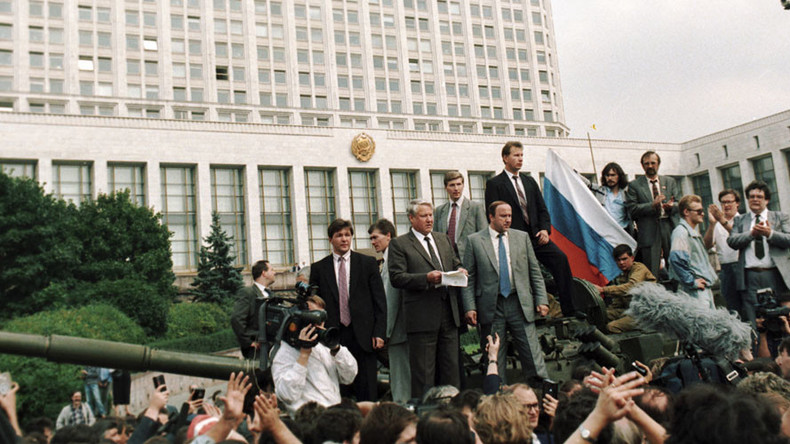
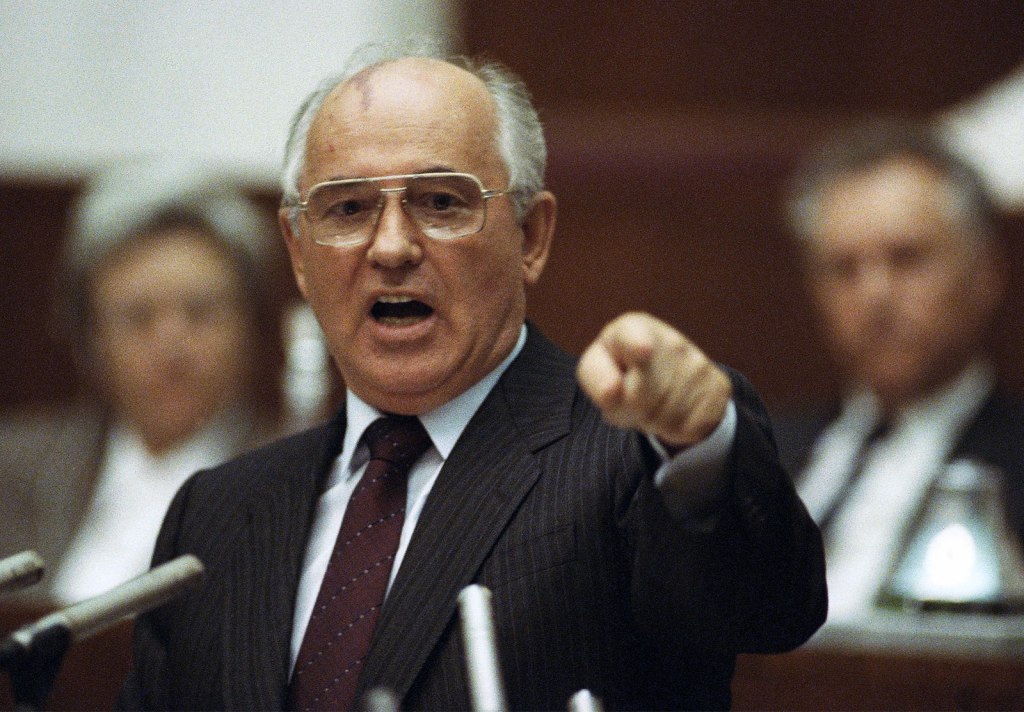
The attempted overthrow of Soviet President Mikhail Gorbachev on August 19, 1991 by a group of hardliners was the tragic culmination of five very tumultuous years in which Gorbachev attempted to reform and reinvigorate the Soviet political-economic system but in doing so unleashed centrifugal forces that accelerated its demise. Gorbachev’s dilemma was the same one that confronted every modernizing Russian leader since at least Peter the Great, how to conduct effective reform of the system without jeopardizing or relinquishing political control. He was thrust into power with the expectation that he, unlike his geriatric predecessors, would be the young vibrant tonic needed to revive the Soviet system, the one to humanize it and make it more competitive with the West, not to preside over its whole-sale destruction and the collapse of the Soviet state. Gorbachev evolved from a measured reformer to a radical deconstructionist and back to a conservative reactionary having lost control of the reform process which soon became bigger than him. Gorbachev’s trademark slogans, Glasnost and Perestroika (openness and restructure), that inspired so much hope for meaningful reforms in the beginning of his rule quickly became insufficient in the face of demands for something more than tinkering at the edges. In the end, Gorbachev tried to put the genie back in the bottle, but it was too late.

August 1991: Boris Yeltsin at the Russian White House

Gorbachev instinctively understood that any successful reform effort would need to overcome an entrenched state and Communist Party bureaucracy resistant to change. He would also need a relaxation in tensions with the United States to focus on domestic challenges, break with the policies of the past that were bankrupting the state and to undercut the arguments of his opponents that reform would leave the USSR vulnerable to the United States.

Like any new leader, Gorbachev’s first task was to consolidate his power. Within a month of taking power  he set about overhauling state and party cadres removing ossified plutocrats and replacing them with a younger generation of party leaders who shared his reform impulses. Gorbachev ousted two of his main rivals in the Politburo, Victor Grishin and Grigoriy Romanov, promoting close peers in their place. He replaced long standing Soviet Foreign Minister, Andrei Gromyko, with the relatively unknown First Secretary of the Georgian Communist Party Eduard Shevardnadze. He also rounded out his foreign policy team by promoting a close confidant, Aleksandr Yakovlev to be a foreign a foreign policy advisor and full member of the politburo. Yakovlev would be a key architect of Gorbachev’s “new thinking” in foreign policy.

Soviet president Mikhail Gorbatchev

Nonetheless, personnel changes alone were not going to overcome the bureaucracy. Gorbachev needed to create new institutions and expand civil society to gain greater control over the party apparatus.  In doing so he created alternative centers of power and unleashed a wave of pent up nationalist sentiment in the non-Russian Republics of the Soviet Union that subverted Party authority and led to the fragmentation of the country. Gorbachev essentially created created Boris Yeltsin  and at each part of the drama gave him a soap box to challenge the central government.  In the non-Russian republics of the USSR, Gorbachev supported the creation of popular fronts as a way for people to mobilize society in support of his agenda. The Sajudis movement in Lithuania, Rukh in Ukraine, the Karabakh Committee in Armenia, and Birlik in Uzbekistan and others all started as vehicles in support of Gorbachev’s reforms. Eventually, these popular fronts assumed a more nationalistic character and began to agitate for greater political rights and independence from Moscow. So much so that the last two years of Gorbachev’s rule were dominated by the nationalities problem and the proximate cause underlying the coup attempt. The coup attempt was to prevent the signing of a new union treaty that Gorbachev had conceded to that would have devolved more power to the republics. It’s ironic that in attempting to stave off what the coup plotters saw as the dismantlement of the USSR, accelerated its collapse.

Jean Jaurès: Europe’s Last Great Hope

In 1914, as all of Europe’s statesmen and diplomats girded themselves for the coming calamity that would become known as World War I, others labored below the surface seeking to head off this descent into the abyss. One such figure was Jean Jaures, leader of the French Socialist party. In the weeks before the outbreak of the war, Jaures tried to organize general labor strikes in France and Germany to force their governments to step back from war and negotiate a peace. He urged all socialist to resist their nation’s call to arms and to unite in the interest of the working class and stop the march to war. Jaures was perhaps Europe’s best and last chance to avoid the coming cataclysm, a chance that was snuffed out by an assassin’s bullet on July 31, 1914.

Jaurès was born into a lower middle-class family that had been impoverished by business failures. He was a towering intellect and a professor of philosophy and historian. However, he was more drawn to politics than teaching.  Because of his life experiences, Jaures was always drawn to the plight of the working class. He was a socialist but not in doctrine. His socialism did stem from Marx it was he argued, “the product of history, of endless and timeless sufferings.” He believed that man was good, that society could be made good and the struggle to make it so was to be fought daily. In a sense he was closer to Eduard Bernstein and the evolutionary socialists who argued that the working class was not sinking into impoverishment but making gains and that socialism cold be achieved by working within the system than the more revolutionary Marx who believed it could only be achieved through violent revolution.

As leader of the French socialist party and a brilliant orator, Jaures exercised a powerful voice in the Second International, an organization of 33 socialist parties from around the world working to advance the proletarian revolution. As Europe’s diplomatic crises multiplied in the early part of the 20th century, Jaures tried to move the Second International to focus more on how the socialist parties of Europe might prevent a European wide conflagration that seemed increasingly imminent. In 1907 the Second International adopted a resolution stating, “If a war threatens to break out, it is the duty of the working classes and their parliamentary representatives in the countries involved, supported by the coordinating activity of the International Socialist Bureau, to exert every effort in order to prevent the outbreak of war by the means they consider most effective. The resolution further added, “In case war should break out anyway, it is their duty to intervene in favor of its speedy termination and with all their powers to utilize the economic and political crisis created by the war to rouse the masses and thereby to hasten the downfall of capitalist class rule.” However, the resolution did not answer the question of how.

For Jaures, the answer was clear, the general strike. The concept of the general strike which provoked heated debate amongst the various members of the Second International. The idea was divisive, especially amongst more orthodox Marxists who believed that war was a natural and unavoidable consequence of capitalism and necessary for advancing the proletarian revolution. At the August 1910 Congress of the Second International in Copenhagen, James Keir Hardie a member of the British Labour Party, proposed a new resolution, which called for a general strike in case of war, in order to simultaneously paralyze mobilization in the relevant countries. The delegates agreed that it was necessary to discuss the resolution, but decided to defer that to the next congress, on August 1914. 

As war became increasingly more likely, in the wake of Archduke Frank Ferdinand’s assassination, Jaurès tried to rally the forces of international socialism to prevent a war. Jaurès prophetically warned earlier that a war would unleash the most terrible holocaust since the Thirty Years war An emergency meeting of the executive International Socialist Bureau in Brussels in July 1914 with all the big-wigs of the international socialist movement attending. All the leaders talked about all-out resistance but it soon became clear that the last chance for peace was slipping through Jaurès’ fingers. Jaurès pressed all the attending leader to call a general strike but  there would be no general strike. There was no support. All preconceived notions that class interest would supersede nationalism were shattered. One by one all the great socialist leaders rejected Jaurès’ call. Victor Adler, the great Austrian socialist noted the war was popular in Austria, and the Austrian socialists would no resist it. Adler’s comments were echoed by all the other great socialist leaders.  What every one failed to grasp was that in all the countries of Europe, everyone believed some one else was responsible for the coming conflict.

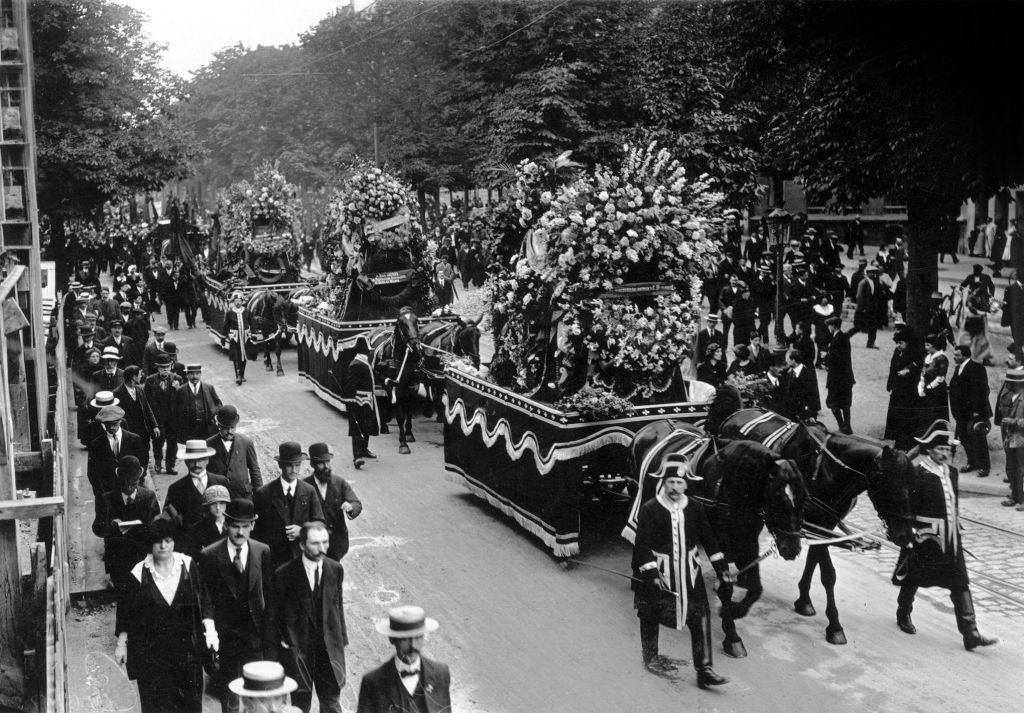
Frustrated and dejected, Jaurès returned to Paris. He spoke passionately at one of the last anti-war rallies. Two days later on July 31st Jaurès was assassinated by a over zealous French nationalist, Raoul Villain, who was fearful of Jaurès’ power to prevent France from going to war.

Funeral of Jean Jaures on August 4, 1914 in Paris

Why did Japan Surrender?

World War II in Europe ended in May of 1945, a titanic six-year struggle between good and evil that would lay waste to the entire continent. The defeat of Nazi Germany would quiet the guns that had brought so much death and destruction to Europe but the war in the Pacific would continue with a Japan still determined to fight to the last man if necessary. Alone but undaunted, Japan would continue to stubbornly defend its island footholds in the Pacific, inflicting ever increasing casualties on U.S. military forces as they inched closer to the Japanese mainland. At the same time, questions and challenges regarding the post-war peace continued to mount as the deep seated distrust between the allies that had been suppressed by the common interest in defeating Nazi Germany were coming to the fore. As the Cold War set in, the accepted truth in the United States that the two atomic bombs dropped on Hiroshima and Nagasaki compelled Japan to surrender, allowing the United States to avoid a costly land invasion of Japan. This version of events downplays the key role the Soviet declaration of war on Japan on August 8 in Hastening Japan’s surrender.

The Beginning of the End

By September 1944, if not sooner, it had become increasingly clear that the defeat of Nazi Germany was no longer in doubt. The Soviet victory at Stalingrad in February 1943 blunted any further German advances eastward and the Red Army would steadily push westward reaching the outskirts of Warsaw, Poland by August 1944. In the West, the June Normandy landings succeeded and by the end of August US, British, and Canadian forces had liberated France. It had now become a question of who would reach Berlin first and when, the United States and its allies or the Soviets. 

 In the Pacific, the United States continued to make advances with its island hopping strategy but at great cost. By the end of June 1944, U.S. Marines had taken the strategically important island of Saipan but at the cost of over 13,000 casualties. The capture of Saipan would allow the United States to launch B-29 bomber strikes on the Japanese mainland but the ferocity of the Japanese resistance, 29,000 killed in action including 5,000 suicide attacks, would be a harbinger of what a U.S. invasion of the Japanese homeland might encounter. Estimates of the time suggested that such an operation could last a year and result in upwards of one million casualties.

Focus on the Post-War Order and Japan

As their military fortunes continued to improve, the Allies gradually shifted their attention to shaping a post-war Europe and the defeat of Japan. In November 1944, President Roosevelt called for convening a conference to address numerous post-war issues and to enlist Soviet assistance in the war against Japan. The previous year the big three—Roosevelt, Churchill, and Stalin—had met in Tehran where the United States and Great Britain committed to opening a long-awaited second front in France and Stalin agreed in principle to declare war against Japan after Nazi Germany’s defeat. Roosevelt wanted to press Stalin to make his pledge more concrete. After much debate, Roosevelt and Churchill agreed to meet Stalin in early February 1945 at Yalta on the Crimean Peninsula in the Soviet Union, despite warnings from Roosevelt’s physicians that such a long and onerous trip could kill the weakening president.

Churchill, Roosevelt, an Stalin at Yalta, February 1945

Each of the leaders arrived at the conference with competing agendas. For Roosevelt, securing Soviet entrance into the war against Japan was a top priority. Roosevelt worried U.S. casualties at Saipan and increasing Japanese suicide attacks in the Pacific were signs of things to come should the US attempt an invasion of the Japanese homeland. These apprehensions would be reinforced later that month at the battle of Iwo Jima, where the US would suffer another 25,000 casualties. Stalin’s goals were more single minded and aimed at the post-war period. He wanted Allied recognition of a Soviet sphere of influence over Eastern Europe. As Stalin told one of his Yugoslav communist allies, “This war is not as in the past; whoever occupies a territory also imposes on it his own social system. Everyone imposes his own system as far as his army can reach.” The previous October Stalin and Churchill had cynically divided Eastern Europe into spheres of influence and Stalin sought Roosevelt’s acquiescence to this agreement. He also demanded territorial concessions from Japan to include South Sakhalin Island and the Kuril Islands, which would allow him to avenge Russia’s defeat in the 1904 Russo-Japanese War. The United States’ desire for Soviet assistance in the war against Japan provided Stalin with strong leverage. In many respects the United States was playing a weak hand at Yalta. As one U.S. diplomat would remark “it was not a question of what we would let the Russians do, but what we could get the Russians to do.”

Roosevelt left the conference content with a concrete promise from Stalin that the Soviet Union would declare war on Japan exactly three months after the defeat of Nazi Germany and that the Soviet Union would support free elections and democratic governments in Eastern Europe. He wouldn’t live long enough to see the Soviets enter the war against Japan or renege on their pledge to support free elections and democratic governments in Eastern Europe. On April 12, 1945, Roosevelt passed away from a cerebral hemorrhage, while recuperating from his Yalta trip in Warm Springs, Georgia.

An Enormous Burden

Harry S. Truman would succeed Roosevelt as the 33rd president of the United States ill-prepared for the job at hand. Truman, a plain-spoken haberdasher from Independence Missouri, stood in direct contrast to the patrician, larger than life, Roosevelt. Truman, a junior senator, was selected as a compromise candidate to replace Vice President Henry Wallace as Roosevelt’s running mate in 1944 because Wallace was seen as a socialist and too sympathetic to the USSR.  Roosevelt had deliberately kept Truman from many of his sensitive diplomatic dealings and major initiatives related to the war, including the top secret Manhattan Project. Roosevelt rarely contacted him and they met together only twice during their time in office. So when the time came for Truman to step up, the learning curve was steep. Shortly after taking the oath of office, Truman spoke to reporters: “Boys, if you ever pray, pray for me now.”

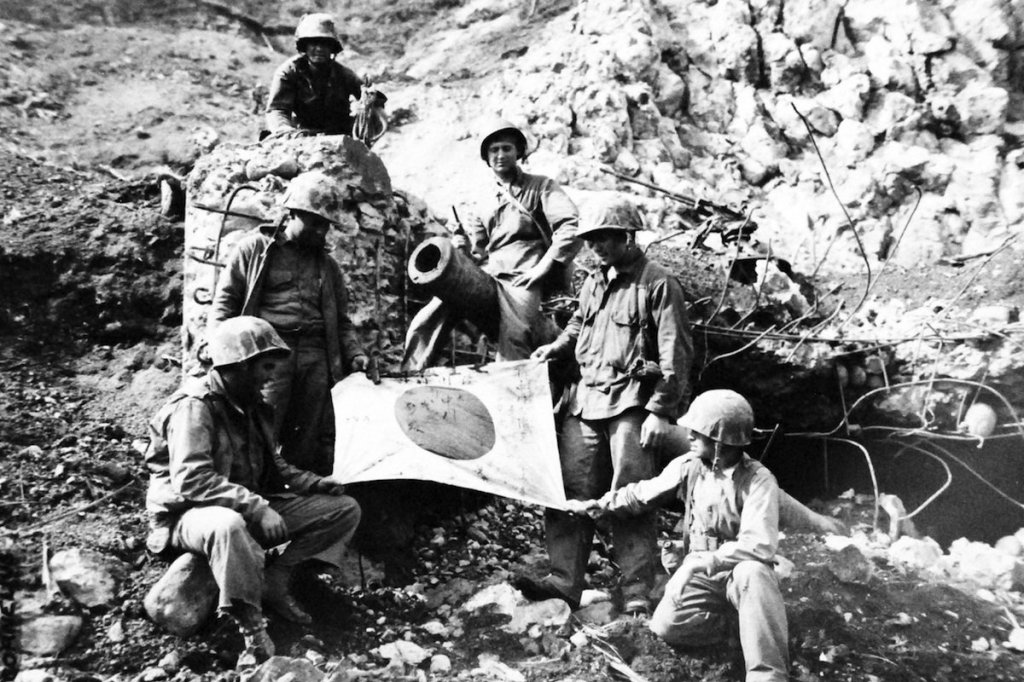
American Marines with a captured Japanese flag on Iwo Jima

Nonetheless, Truman was quite cognizant of the human costs of the continuing war against Japan. US casualties in the Pacific continued to mount. U.S. marines and soldiers encountered tenacious Japanese resistance on the island of Okinawa, which would serve as a staging ground for the invasion of Japan. U.S. forces would suffer close to 75,000 casualties taking Okinawa.  Truman was afraid that an invasion of Japan would look like “Okinawa from one end of Japan to the other.” By February 1945, the Japanese military leaders had concluded that they could not win the war but their honor dictated that they could not accept the ignominy of unconditional surrender. Japan’s war ending strategy became clear, inflict so many casualties on a war-weary America that it would relax its demands for unconditional surrender and negotiate a lenient peace. This strategy, it was hoped would, at a minimum, safeguard the Emperor, and potentially preserve the armed forces and shield them from prosecution for war crimes. Japan still had at least 700,000 soldiers in Manchuria and had begun to transfer some of these forces home to bolster homeland defenses against an expected U.S. invasion. Soviet assistance would be needed to pin down these forces. 

A Not so Secret, Secret

Truman had learned of the Manhattan Project only after being sworn into office but it was at the Potsdam Conference on July 25, 1945 where he was informed that the first atomic weapon had been tested successfully. Truman told Stalin at Potsdam that the United States was about to use a new kind of weapon against Japan. Stalin feigned surprise and interest in Truman’s announcement but he was already quite aware of this new weapon. The Soviets had earlier infiltrated the top secret program.  Klaus Fuchs, a German-born British physicist, who was working on the project passed on detailed information about its progress to Moscow. At the end of the conference, the allies issue a stern ultimatum calling for the immediate and unconditional surrender of Japan, warning that Japan would face “prompt and utter destruction” if it failed to comply.

Dawn of the Atomic Age

With Japanese leaders rejecting the Potsdam ultimatum, Truman grappled with the idea of using the bomb to hasten and end to the war without invading Japan. Returning home from Potsdam on the cruiser Augusta, Truman and his advisors carefully considered the moral and ethical questions surrounding the use of the atomic bomb, especially against civilians, and balanced these concerns against political and military interests. Some advisors suggested conducting a demonstration of the bombs destructive capabilities as a warning, hoping that Japan would come to its senses and surrender without having to use the bomb. Others dismissed this approach, doubting that a demonstration without a loss of life or property would be sufficient to compel the Japanese to surrender. In the end, Truman authorized the use of the bomb over the moral reservations of Secretary of War Henry Stimson, General Dwight Eisenhower and a number of the Manhattan Project scientists. “It is an awful responsibility that has come to us,” Truman wrote. On the morning of August 6, the first atomic bomb, nicknamed Little Boy, was dropped on the city of Hiroshima. The bomb immediately devastated its target. Approximately 80,000 people were killed as a direct result of the blast, and another 35,000 were injured.  At least another 60,000 would be dead by the end of the year from the effects of the atomic fallout. The atomic age had begun.

Detonation of the Atomic Bomb over Hiroshima

With confirmation that the bombing of Hiroshima was successful, Truman informed the American public of this new destructive weapon. In his address Truman explained that the secret project had been in development for some time and that the United States and its allies had been engaged in a race with Nazi Germany to determine who could develop it first. He added that it had the destructive power of over 20,000 tons of TNT. Truman also expounded on why he decided in favor of using the atomic bomb, “Having found the bomb we have used it. We have used it against those who attacked us without warning at Pearl Harbor, against those who have starved and beaten and executed American prisoners of war, against those who have abandoned all pretense of obeying international laws of warfare. We have used it in order to shorten the agony of war, in order to save the lives of thousands and thousands of young Americans. We shall continue to use it until we completely destroy Japan’s power to make war. Only a Japanese surrender will stop us.”

The Soviets Make Good on their Word

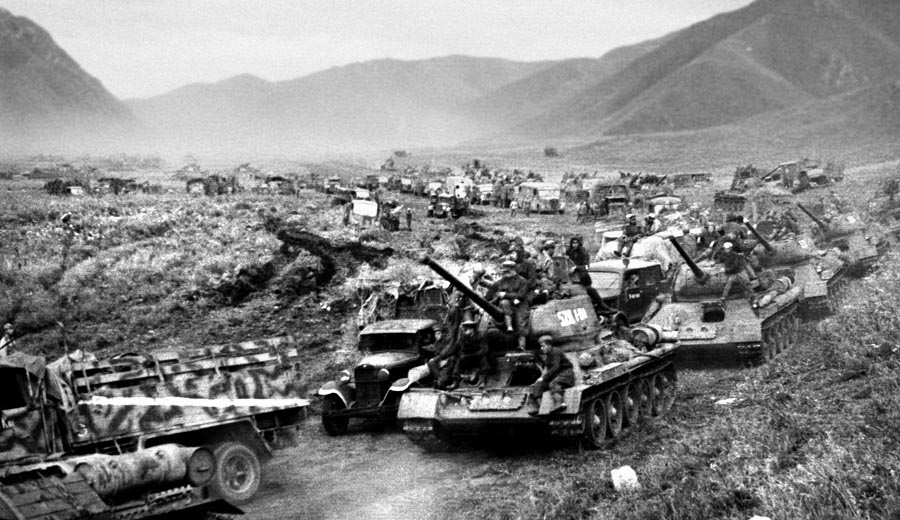
In the meantime, the Soviets were preparing to honor their promise to enter the war against Japan, despite having signed a five year neutrality pact in 1941. Soviet planning for operations in the Far East against Japan began as early as March 1945, after Stalin’s commitment at Yalta. Articles denouncing the Soviet-Japanese non-aggression pact and accusing the Japanese of engaging in aggressive actions against the Soviet Far East soon began appearing in Soviet newspapers. In April, the Soviets informed Japan that they would not extend their non-aggression pact, set to expire in 1946, and began shifting their military might eastward. They were expecting to face close to 1.5 million Japanese soldiers in theater. It would take three months to move sufficient military force to the east and preparations were never fully completed. Nevertheless, true to its word, the Soviet Union declared war on Japan on August 8, exactly three months to the day, after Nazi Germany was defeated. On August 9, the Red Army began offensive military operations against Japanese forces in Manchuria.  Japan was surprised by the speed and timing of the offensive. The Japanese had had been monitoring Trans-Siberian Railway traffic and other Soviet military activity east of Manchuria but they did not believe a Soviet attack was likely in August 1945 and they had no confirming evidence of where a Soviet attack would occur.  Invading on three fronts with 90 divisions, the Soviets penetrated deep into Manchuria as the Japanese defenders quickly collapsed. With the destruction of its largest remaining military force and losing much of its economic base in Manchuria, Japan’s prospects for parlaying a prolonged war into a conditional surrender and lenient peace grew dimmer.

B949MT A Soviet tank column crossing the Greater Hingan Range in August 1945 to rout Japan s Kwantung Army in one of the last actions of the war.

Endgame

The destruction of Hiroshima alone did not have the intended effect of compelling an immediate and unconditional Japanese surrender, an outcome that was not unexpected in Washington.  The willingness of the Japanese military to fight to the bitter end was abundantly clear and the United States had at least two more atomic bombs it was prepared to drop on Japan. On August 9, a second atomic bomb, nicknamed Fat Man, was dropped on the city of Nagasaki with similar devastating effect. Upwards of 70,000 people were killed from the blast in Nagasaki and tens of thousands would die later from radiation poisoning. The United States was preparing to drop a third atomic bomb on the city of Kokura if Japan did not surrender. However, further attacks would prove unnecessary. The specter of additional atomic bomb attacks along with the ongoing Soviet offensive in Manchuria was enough to convince Emperor Hirohito to accept an unconditional surrender, against the wishes of Japan’s military leaders.  After several days of behind-the-scenes negotiations and a failed coup d’état by the military, Hirohito gave a recorded radio address across the Empire on August 15 announcing the surrender of Japan to the Allies. One September 2, aboard the United States battleship USS Missouri, the Japanese government signed the Japanese Instrument of Surrender, officially ending the hostilities.

Why Did Japan Ultimately Surrender?

For the United States, its long been accepted that the two atomic bombs dropped on Hiroshima and Nagasaki were the primary factors in compelling Japan’s surrender and without their use the United would have been forced to carry out a prolonged and costly invasion of the Japanese homeland. However, more recent scholarship suggests that the Soviet declaration of war and subsequent offensive against Japanese forces in Manchuria may have been more instrumental in convincing Japanese leaders to sue for peace. Complex existential decisions, such as the one that confronted the Japanese leadership in August of 1945 rarely are driven by a single cause or reason but are the synthesis of competing and complementary factors shaped by the interests, biases, and perceptions of the individual decision-makers. Japan’s decision to surrender probably was a sober calculation weighing the likelihood of further Atomic bomb strikes and the impossibility of fighting a two-front war with the United States and the Soviet Union.  Nevertheless, we should re-examine the Soviets role in the Pacific War, short-lived as it may be, and consider that the Soviet Union deserves greater weight in the accepted historical narrative of how the war ended.

The Soviet declaration of war fundamentally altered Japan’s strategic calculus. Japan’s war fighting strategy was predicated upon Soviet neutrality and avoiding a two front war. It had also hoped to use the Soviets as intermediaries in negotiating a more favorable end to the war. News that the Russians would not extend the non-aggression pact unnerved the Japanese military leadership some of whom who now expected that the Soviets would monitor Japan’s declining military strength and enter the war at an opportune moment.  In June 1945, Deputy Chief of the Imperial Japanese Army General Staff Kawabe Toroshiro said, “The absolute maintenance of peace in our relations with the Soviet Union is one of the fundamental conditions for continuing the war.” Japan would continue to dangle proposals to the Soviets to maintain their neutrality, such as offering territorial concessions, but Moscow repeatedly rebuffed these overtures. In one single stroke, the Soviet declaration of war negated bot Japan’s warfighting and diplomatic strategy leaving it few other options than surrender.