
World War II in Europe ended in May of 1945, a titanic six-year struggle between good and evil that would lay waste to the entire continent. The defeat of Nazi Germany would quiet the guns that had brought so much death and destruction to Europe but the war in the Pacific would continue with a Japan still determined to fight to the last man if necessary. Alone but undaunted, Japan would continue to stubbornly defend its island footholds in the Pacific, inflicting ever increasing casualties on U.S. military forces as they inched closer to the Japanese mainland. At the same time, questions and challenges regarding the post-war peace continued to mount as the deep seated distrust between the allies that had been suppressed by the common interest in defeating Nazi Germany were coming to the fore. As the Cold War set in, the accepted truth in the United States that the two atomic bombs dropped on Hiroshima and Nagasaki compelled Japan to surrender, allowing the United States to avoid a costly land invasion of Japan. This version of events downplays the key role the Soviet declaration of war on Japan on August 8 in Hastening Japan’s surrender.
The Beginning of the End
By September 1944, if not sooner, it had become increasingly clear that the defeat of Nazi Germany was no longer in doubt. The Soviet victory at Stalingrad in February 1943 blunted any further German advances eastward and the Red Army would steadily push westward reaching the outskirts of Warsaw, Poland by August 1944. In the West, the June Normandy landings succeeded and by the end of August US, British, and Canadian forces had liberated France. It had now become a question of who would reach Berlin first and when, the United States and its allies or the Soviets.
In the Pacific, the United States continued to make advances with its island hopping strategy but at great cost. By the end of June 1944, U.S. Marines had taken the strategically important island of Saipan but at the cost of over 13,000 casualties. The capture of Saipan would allow the United States to launch B-29 bomber strikes on the Japanese mainland but the ferocity of the Japanese resistance, 29,000 killed in action including 5,000 suicide attacks, would be a harbinger of what a U.S. invasion of the Japanese homeland might encounter. Estimates of the time suggested that such an operation could last a year and result in upwards of one million casualties.
Focus on the Post-War Order and Japan
As their military fortunes continued to improve, the Allies gradually shifted their attention to shaping a post-war Europe and the defeat of Japan. In November 1944, President Roosevelt called for convening a conference to address numerous post-war issues and to enlist Soviet assistance in the war against Japan. The previous year the big three—Roosevelt, Churchill, and Stalin—had met in Tehran where the United States and Great Britain committed to opening a long-awaited second front in France and Stalin agreed in principle to declare war against Japan after Nazi Germany’s defeat. Roosevelt wanted to press Stalin to make his pledge more concrete. After much debate, Roosevelt and Churchill agreed to meet Stalin in early February 1945 at Yalta on the Crimean Peninsula in the Soviet Union, despite warnings from Roosevelt’s physicians that such a long and onerous trip could kill the weakening president.

Each of the leaders arrived at the conference with competing agendas. For Roosevelt, securing Soviet entrance into the war against Japan was a top priority. Roosevelt worried U.S. casualties at Saipan and increasing Japanese suicide attacks in the Pacific were signs of things to come should the US attempt an invasion of the Japanese homeland. These apprehensions would be reinforced later that month at the battle of Iwo Jima, where the US would suffer another 25,000 casualties. Stalin’s goals were more single minded and aimed at the post-war period. He wanted Allied recognition of a Soviet sphere of influence over Eastern Europe. As Stalin told one of his Yugoslav communist allies, “This war is not as in the past; whoever occupies a territory also imposes on it his own social system. Everyone imposes his own system as far as his army can reach.” The previous October Stalin and Churchill had cynically divided Eastern Europe into spheres of influence and Stalin sought Roosevelt’s acquiescence to this agreement. He also demanded territorial concessions from Japan to include South Sakhalin Island and the Kuril Islands, which would allow him to avenge Russia’s defeat in the 1904 Russo-Japanese War. The United States’ desire for Soviet assistance in the war against Japan provided Stalin with strong leverage. In many respects the United States was playing a weak hand at Yalta. As one U.S. diplomat would remark “it was not a question of what we would let the Russians do, but what we could get the Russians to do.”
Roosevelt left the conference content with a concrete promise from Stalin that the Soviet Union would declare war on Japan exactly three months after the defeat of Nazi Germany and that the Soviet Union would support free elections and democratic governments in Eastern Europe. He wouldn’t live long enough to see the Soviets enter the war against Japan or renege on their pledge to support free elections and democratic governments in Eastern Europe. On April 12, 1945, Roosevelt passed away from a cerebral hemorrhage, while recuperating from his Yalta trip in Warm Springs, Georgia.
An Enormous Burden
Harry S. Truman would succeed Roosevelt as the 33rd president of the United States ill-prepared for the job at hand. Truman, a plain-spoken haberdasher from Independence Missouri, stood in direct contrast to the patrician, larger than life, Roosevelt. Truman, a junior senator, was selected as a compromise candidate to replace Vice President Henry Wallace as Roosevelt’s running mate in 1944 because Wallace was seen as a socialist and too sympathetic to the USSR. Roosevelt had deliberately kept Truman from many of his sensitive diplomatic dealings and major initiatives related to the war, including the top secret Manhattan Project. Roosevelt rarely contacted him and they met together only twice during their time in office. So when the time came for Truman to step up, the learning curve was steep. Shortly after taking the oath of office, Truman spoke to reporters: “Boys, if you ever pray, pray for me now.”
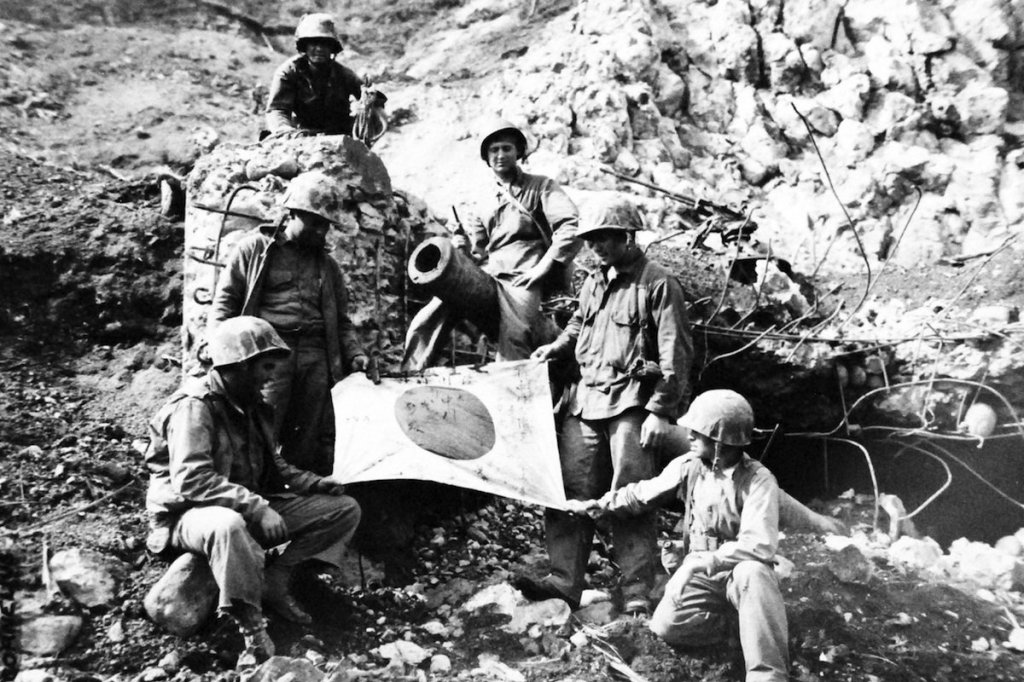
Nonetheless, Truman was quite cognizant of the human costs of the continuing war against Japan. US casualties in the Pacific continued to mount. U.S. marines and soldiers encountered tenacious Japanese resistance on the island of Okinawa, which would serve as a staging ground for the invasion of Japan. U.S. forces would suffer close to 75,000 casualties taking Okinawa. Truman was afraid that an invasion of Japan would look like “Okinawa from one end of Japan to the other.” By February 1945, the Japanese military leaders had concluded that they could not win the war but their honor dictated that they could not accept the ignominy of unconditional surrender. Japan’s war ending strategy became clear, inflict so many casualties on a war-weary America that it would relax its demands for unconditional surrender and negotiate a lenient peace. This strategy, it was hoped would, at a minimum, safeguard the Emperor, and potentially preserve the armed forces and shield them from prosecution for war crimes. Japan still had at least 700,000 soldiers in Manchuria and had begun to transfer some of these forces home to bolster homeland defenses against an expected U.S. invasion. Soviet assistance would be needed to pin down these forces.
A Not so Secret, Secret
Truman had learned of the Manhattan Project only after being sworn into office but it was at the Potsdam Conference on July 25, 1945 where he was informed that the first atomic weapon had been tested successfully. Truman told Stalin at Potsdam that the United States was about to use a new kind of weapon against Japan. Stalin feigned surprise and interest in Truman’s announcement but he was already quite aware of this new weapon. The Soviets had earlier infiltrated the top secret program. Klaus Fuchs, a German-born British physicist, who was working on the project passed on detailed information about its progress to Moscow. At the end of the conference, the allies issue a stern ultimatum calling for the immediate and unconditional surrender of Japan, warning that Japan would face “prompt and utter destruction” if it failed to comply.
Dawn of the Atomic Age
With Japanese leaders rejecting the Potsdam ultimatum, Truman grappled with the idea of using the bomb to hasten and end to the war without invading Japan. Returning home from Potsdam on the cruiser Augusta, Truman and his advisors carefully considered the moral and ethical questions surrounding the use of the atomic bomb, especially against civilians, and balanced these concerns against political and military interests. Some advisors suggested conducting a demonstration of the bombs destructive capabilities as a warning, hoping that Japan would come to its senses and surrender without having to use the bomb. Others dismissed this approach, doubting that a demonstration without a loss of life or property would be sufficient to compel the Japanese to surrender. In the end, Truman authorized the use of the bomb over the moral reservations of Secretary of War Henry Stimson, General Dwight Eisenhower and a number of the Manhattan Project scientists. “It is an awful responsibility that has come to us,” Truman wrote. On the morning of August 6, the first atomic bomb, nicknamed Little Boy, was dropped on the city of Hiroshima. The bomb immediately devastated its target. Approximately 80,000 people were killed as a direct result of the blast, and another 35,000 were injured. At least another 60,000 would be dead by the end of the year from the effects of the atomic fallout. The atomic age had begun.

With confirmation that the bombing of Hiroshima was successful, Truman informed the American public of this new destructive weapon. In his address Truman explained that the secret project had been in development for some time and that the United States and its allies had been engaged in a race with Nazi Germany to determine who could develop it first. He added that it had the destructive power of over 20,000 tons of TNT. Truman also expounded on why he decided in favor of using the atomic bomb, “Having found the bomb we have used it. We have used it against those who attacked us without warning at Pearl Harbor, against those who have starved and beaten and executed American prisoners of war, against those who have abandoned all pretense of obeying international laws of warfare. We have used it in order to shorten the agony of war, in order to save the lives of thousands and thousands of young Americans. We shall continue to use it until we completely destroy Japan’s power to make war. Only a Japanese surrender will stop us.”
The Soviets Make Good on their Word
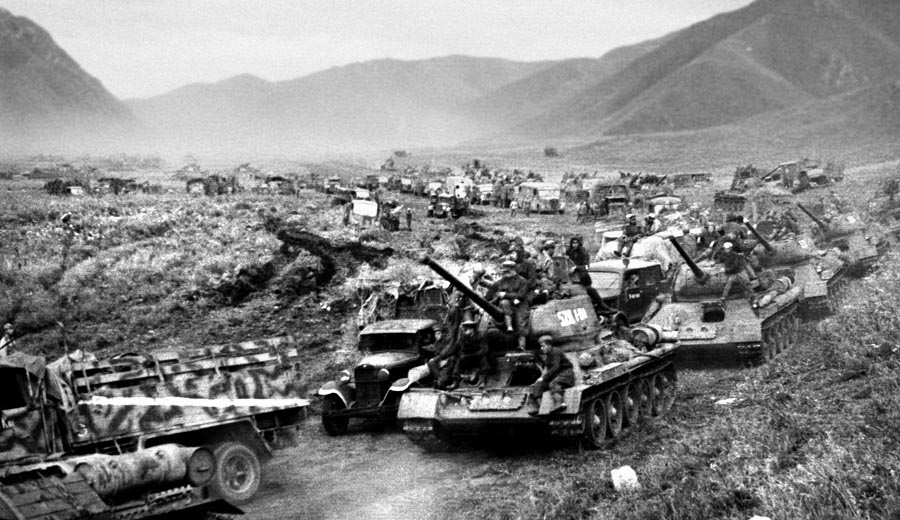
In the meantime, the Soviets were preparing to honor their promise to enter the war against Japan, despite having signed a five year neutrality pact in 1941. Soviet planning for operations in the Far East against Japan began as early as March 1945, after Stalin’s commitment at Yalta. Articles denouncing the Soviet-Japanese non-aggression pact and accusing the Japanese of engaging in aggressive actions against the Soviet Far East soon began appearing in Soviet newspapers. In April, the Soviets informed Japan that they would not extend their non-aggression pact, set to expire in 1946, and began shifting their military might eastward. They were expecting to face close to 1.5 million Japanese soldiers in theater. It would take three months to move sufficient military force to the east and preparations were never fully completed. Nevertheless, true to its word, the Soviet Union declared war on Japan on August 8, exactly three months to the day, after Nazi Germany was defeated. On August 9, the Red Army began offensive military operations against Japanese forces in Manchuria. Japan was surprised by the speed and timing of the offensive. The Japanese had had been monitoring Trans-Siberian Railway traffic and other Soviet military activity east of Manchuria but they did not believe a Soviet attack was likely in August 1945 and they had no confirming evidence of where a Soviet attack would occur. Invading on three fronts with 90 divisions, the Soviets penetrated deep into Manchuria as the Japanese defenders quickly collapsed. With the destruction of its largest remaining military force and losing much of its economic base in Manchuria, Japan’s prospects for parlaying a prolonged war into a conditional surrender and lenient peace grew dimmer.
Endgame
The destruction of Hiroshima alone did not have the intended effect of compelling an immediate and unconditional Japanese surrender, an outcome that was not unexpected in Washington. The willingness of the Japanese military to fight to the bitter end was abundantly clear and the United States had at least two more atomic bombs it was prepared to drop on Japan. On August 9, a second atomic bomb, nicknamed Fat Man, was dropped on the city of Nagasaki with similar devastating effect. Upwards of 70,000 people were killed from the blast in Nagasaki and tens of thousands would die later from radiation poisoning. The United States was preparing to drop a third atomic bomb on the city of Kokura if Japan did not surrender. However, further attacks would prove unnecessary. The specter of additional atomic bomb attacks along with the ongoing Soviet offensive in Manchuria was enough to convince Emperor Hirohito to accept an unconditional surrender, against the wishes of Japan’s military leaders. After several days of behind-the-scenes negotiations and a failed coup d’état by the military, Hirohito gave a recorded radio address across the Empire on August 15 announcing the surrender of Japan to the Allies. One September 2, aboard the United States battleship USS Missouri, the Japanese government signed the Japanese Instrument of Surrender, officially ending the hostilities.
Why Did Japan Ultimately Surrender?
For the United States, its long been accepted that the two atomic bombs dropped on Hiroshima and Nagasaki were the primary factors in compelling Japan’s surrender and without their use the United would have been forced to carry out a prolonged and costly invasion of the Japanese homeland. However, more recent scholarship suggests that the Soviet declaration of war and subsequent offensive against Japanese forces in Manchuria may have been more instrumental in convincing Japanese leaders to sue for peace. Complex existential decisions, such as the one that confronted the Japanese leadership in August of 1945 rarely are driven by a single cause or reason but are the synthesis of competing and complementary factors shaped by the interests, biases, and perceptions of the individual decision-makers. Japan’s decision to surrender probably was a sober calculation weighing the likelihood of further Atomic bomb strikes and the impossibility of fighting a two-front war with the United States and the Soviet Union. Nevertheless, we should re-examine the Soviets role in the Pacific War, short-lived as it may be, and consider that the Soviet Union deserves greater weight in the accepted historical narrative of how the war ended.
The Soviet declaration of war fundamentally altered Japan’s strategic calculus. Japan’s war fighting strategy was predicated upon Soviet neutrality and avoiding a two front war. It had also hoped to use the Soviets as intermediaries in negotiating a more favorable end to the war. News that the Russians would not extend the non-aggression pact unnerved the Japanese military leadership some of whom who now expected that the Soviets would monitor Japan’s declining military strength and enter the war at an opportune moment. In June 1945, Deputy Chief of the Imperial Japanese Army General Staff Kawabe Toroshiro said, “The absolute maintenance of peace in our relations with the Soviet Union is one of the fundamental conditions for continuing the war.” Japan would continue to dangle proposals to the Soviets to maintain their neutrality, such as offering territorial concessions, but Moscow repeatedly rebuffed these overtures. In one single stroke, the Soviet declaration of war negated bot Japan’s warfighting and diplomatic strategy leaving it few other options than surrender.

 Tragedy and Farce