
In 1914, as all of Europe’s statesmen and diplomats girded themselves for the coming calamity that would become known as World War I, others labored below the surface seeking to head off this descent into the abyss. One such figure was Jean Jaures, leader of the French Socialist party. In the weeks before the outbreak of the war, Jaures tried to organize general labor strikes in France and Germany to force their governments to step back from war and negotiate a peace. He urged all socialist to resist their nation’s call to arms and to unite in the interest of the working class and stop the march to war. Jaures was perhaps Europe’s best and last chance to avoid the coming cataclysm, a chance that was snuffed out by an assassin’s bullet on July 31, 1914.

Jaurès was born into a lower middle-class family that had been impoverished by business failures. He was a towering intellect and a professor of philosophy and historian. However, he was more drawn to politics than teaching. Because of his life experiences, Jaures was always drawn to the plight of the working class. He was a socialist but not in doctrine. His socialism did stem from Marx it was he argued, “the product of history, of endless and timeless sufferings.” He believed that man was good, that society could be made good and the struggle to make it so was to be fought daily. In a sense he was closer to Eduard Bernstein and the evolutionary socialists who argued that the working class was not sinking into impoverishment but making gains and that socialism cold be achieved by working within the system than the more revolutionary Marx who believed it could only be achieved through violent revolution.
As leader of the French socialist party and a brilliant orator, Jaures exercised a powerful voice in the Second International, an organization of 33 socialist parties from around the world working to advance the proletarian revolution. As Europe’s diplomatic crises multiplied in the early part of the 20th century, Jaures tried to move the Second International to focus more on how the socialist parties of Europe might prevent a European wide conflagration that seemed increasingly imminent. In 1907 the Second International adopted a resolution stating, “If a war threatens to break out, it is the duty of the working classes and their parliamentary representatives in the countries involved, supported by the coordinating activity of the International Socialist Bureau, to exert every effort in order to prevent the outbreak of war by the means they consider most effective. The resolution further added, “In case war should break out anyway, it is their duty to intervene in favor of its speedy termination and with all their powers to utilize the economic and political crisis created by the war to rouse the masses and thereby to hasten the downfall of capitalist class rule.” However, the resolution did not answer the question of how.
For Jaures, the answer was clear, the general strike. The concept of the general strike which provoked heated debate amongst the various members of the Second International. The idea was divisive, especially amongst more orthodox Marxists who believed that war was a natural and unavoidable consequence of capitalism and necessary for advancing the proletarian revolution. At the August 1910 Congress of the Second International in Copenhagen, James Keir Hardie a member of the British Labour Party, proposed a new resolution, which called for a general strike in case of war, in order to simultaneously paralyze mobilization in the relevant countries. The delegates agreed that it was necessary to discuss the resolution, but decided to defer that to the next congress, on August 1914.
As war became increasingly more likely, in the wake of Archduke Frank Ferdinand’s assassination, Jaurès tried to rally the forces of international socialism to prevent a war. Jaurès prophetically warned earlier that a war would unleash the most terrible holocaust since the Thirty Years war An emergency meeting of the executive International Socialist Bureau in Brussels in July 1914 with all the big-wigs of the international socialist movement attending. All the leaders talked about all-out resistance but it soon became clear that the last chance for peace was slipping through Jaurès’ fingers. Jaurès pressed all the attending leader to call a general strike but there would be no general strike. There was no support. All preconceived notions that class interest would supersede nationalism were shattered. One by one all the great socialist leaders rejected Jaurès’ call. Victor Adler, the great Austrian socialist noted the war was popular in Austria, and the Austrian socialists would no resist it. Adler’s comments were echoed by all the other great socialist leaders. What every one failed to grasp was that in all the countries of Europe, everyone believed some one else was responsible for the coming conflict.
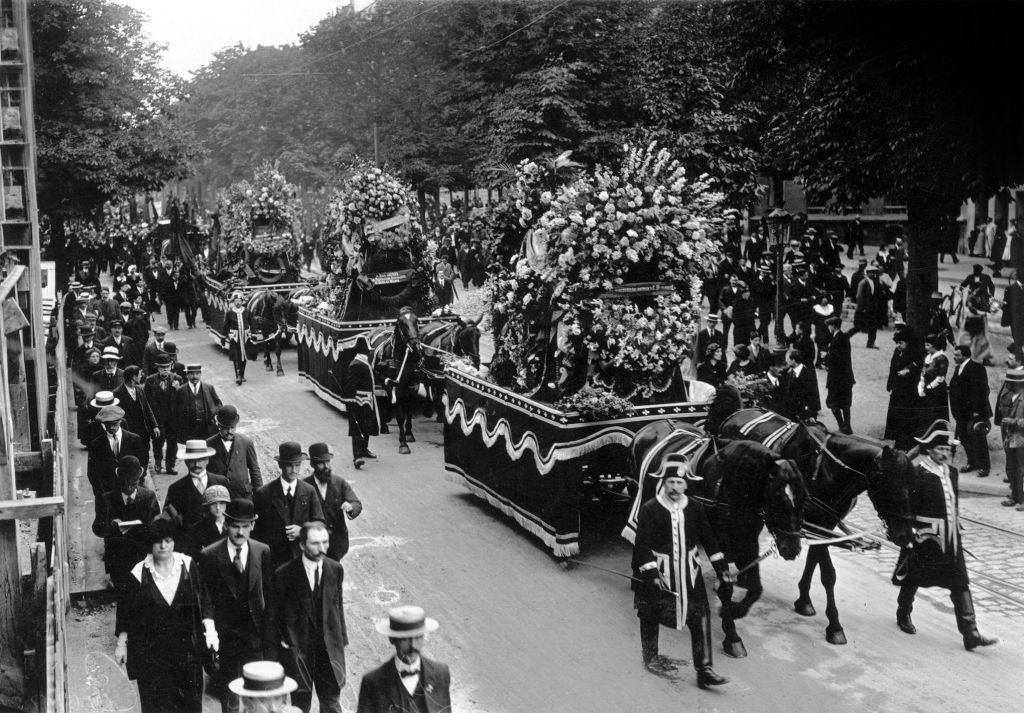
Frustrated and dejected, Jaurès returned to Paris. He spoke passionately at one of the last anti-war rallies. Two days later on July 31st Jaurès was assassinated by a over zealous French nationalist, Raoul Villain, who was fearful of Jaurès’ power to prevent France from going to war.

 Tragedy and Farce