
In the cold night air of December 25, 1776, General George Washington and his rag tag Continental Army crossed the icy Delaware River and surprised 1500 of King George’s Hessian mercenaries at Trenton, scoring a much needed victory after a string of disastrous defeats earlier in the year.
By the end of 1776, the Continental Army was in bad straits. The year began with great promise. In March, the Continentals drove the British out of Boston and on July 4, the thirteen colonies declared their independence. However, a series of disastrous defeats in and around New York City forced Washington to flee the city and retreat all across New Jersey to Pennsylvania, putting the whole revolution in doubt. Moreover, the enlistments of many of the Continental soldiers were set to expire at the end of the year. Washington needed a bold move to keep his Amy together and restore faith and confidence in the revolutionary enterprise.
After much contemplation and consideration of alternatives, Washington decided he would cross the Delaware River and carry out a surprise attack on the Hessian garrison at Trenton while they were celebrating Christmas. Washington’s plan required the crossing to begin as soon as it was dark enough to hide his army’s movements on the river. However, most of the troops did not reach the crossing point until about 6 pm, about ninety minutes after sunset, putting the operation behind schedule. Moreover, the weather was growing progressively worse, turning from drizzle to rain to sleet and snow.

Washington was among the first of the troops to cross, going with Virginia troops. During the crossing, several men fell overboard but no one died. By 3 am all of his forces and artillery—2400 men in all— were across the river in New Jersey. Around 4 am Washington’s Army began their March toward Trenton. Many of the troops did not have boots and wore rags around their feet in the snow but Washington rode up and down the column urging his men to persevere.
Behind schedule because of the storm, the Americans arrived on the outskirts of Trenton around daybreak on the 26th. Washington split his force into two columns. One, commanded by Nathaniel Greene attacked from the north, while a second under John Sullivan advanced from the west to cut the line of retreat. The Hessians were completely surprised. They attempted to rally but their commander Colonel Johan Rall was fatally wounded and they quickly surrendered. Hessian casualties included 22 killed, 92 wounded, 918 captured. Four hundred would manage to escape. The Americans suffered two frozen to death and five wounded.
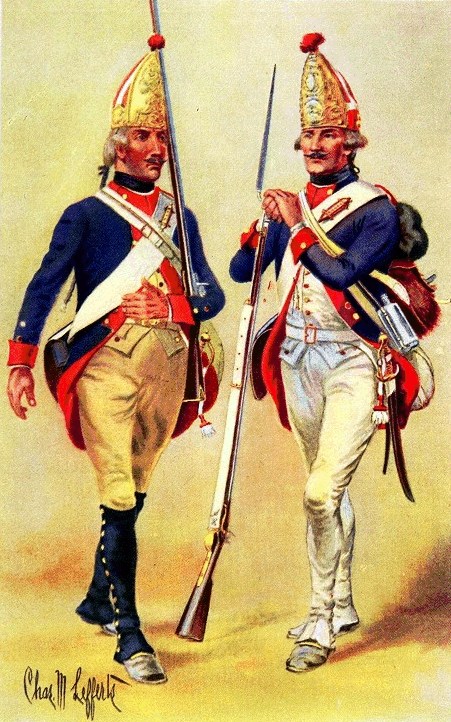
Washington had won a much needed victory. The army that the British thought was all but defeated had destroyed a major garrison with very light casualties, capturing critical supplies in the process. Recognizing he could not hold Trenton, Washington slipped back across the river to Pennsylvania. However, over the next ten days Washington would cross and recross the Delaware again fighting a delaying action at the Battle of the Assunpink and winning another stunning victory at the Battle of Princeton before settling down for winter at Morristown.

 Tragedy and Farce