On January 17, 1781, a combined force of Continental Regulars, dragoons, and militia, under General Daniel Morgan decisively defeated a British Army at the crucial Battle of Cowpens in the backcountry of South Carolina. It was a decisive victory that would boost American morale after the British capture of Charleston and the disastrous defeat at the battle of Camden. It also put in motion a series of events that would push the Redcoats northward culminating in their final defeat at Yorktown and the establishment of American independence.
The British Move South
After their crushing defeat at Saratoga in 1777 and the entry of the French into the war, the British faced the unsavory prospect of becoming bogged down in an increasingly costly war. To hasten a favorable end to the conflict, the British redirected their focus to the southern colonies. The rebellion was always the strongest in the New England and Mid-Atlantic colonies and the British Secretary of State for the American Department, Lord George Germain, believed that Great Britain could expand the war into the south with greater success and less cost by taking advantage of the large number of loyalists there.
In December 1778, the British seized Savannah, Georgia and eight months later repulsed a combined Franco-American effort to retake the city. After re-asserting their authority over Georgia, the British turned their attention to South Carolina. In May 1780, the British captured Charleston and 5,000 American soldiers after a six week siege. Seeking to roll back British gains, the Continental Congress dispatched General Horatio Gates, “the hero of Saratoga,” to command the remaining American military forces in the South, against the recommendation of General George Washington. Gates suffered a humiliating defeat in August at the battle of Camden, where he rapidly fled from the battlefield, leaving his subordinates behind to be taken prisoner.
The Battle of Camden
The British did indeed find strong support from loyalists in the cities and population centers of South Carolina like Charleston and Georgetown but they didn’t anticipate the strong resistance they encountered in the backcountry. In the wake of Gates’ defeat at Camden, irregular bands of militia fighters under men like Francis Marion, Thomas Sumter and Andrew Pickens emerged, engaging in hit and run tactics against loyalist and British military forces. In October 1780, General Washington appointed his most capable subordinate General Nathanael Greene, to replace Gates. Greene inherited what for all intents and purposes was a skeleton army and quickly set about trying to replenish its ranks. He placed key men as leaders in several states to secure supplies of all kinds and new recruits. He finally arrived in North Carolina to take command of his hastily formed army in December 1780.
War in the Backcountry
Greene made a bold decision to divide his small army into two. He sent a combined force of 300 Continental regulars and 700 militia under General Daniel Morgan to the western part of South Carolina where a brutal civil war was being fought between patriot and loyalist militias. Morgan, a brilliant tactician was tasked with hampering British operations in the backcountry and to bolster patriot morale. Believing that Morgan’s army was planning to attack the strategically important Fort Ninety Six, held by loyalist forces, British commander General Cornwallis sent the brash and despised cavalryman, Lieutenant Colonel Banastre Tarleton and his 1,100 Dragoons to destroy Morgan. Tarleton and his men were widely reviled. Shortly after the fall of Charleston, Tarleton and his men allegedly butchered a contingent of American soldiers under Colonel Abraham Buford who were trying to surrender at the Battle of Waxhaws. The incident would become known as “Bufford’s Massacre” and the subject of an intensive propaganda campaign by the Continental Army to bolster recruitment and incite resentment against the British.
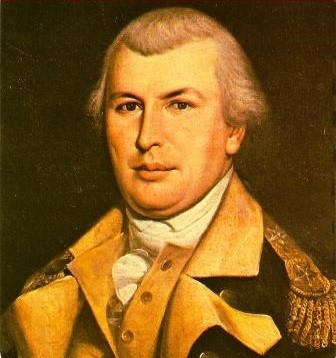
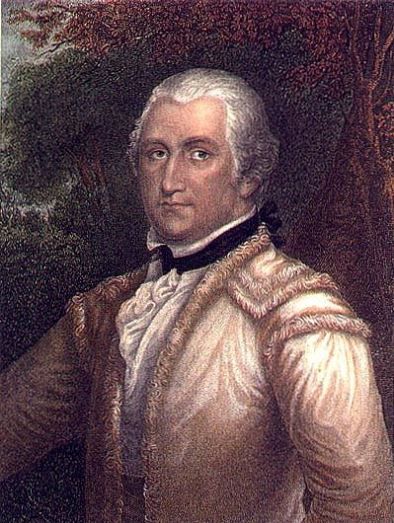
Left: Nathanael Greene, Center: Banastre Tarleton, Right: Daniel Morgan
British advance scouts located Morgan’s army on January 12, 1781 and Tarleton’s Dragoons doggedly hunted down the Americans. Morgan, ever the shrewd commander, continued to dodge a major engagement with the British until he could find favorable ground. On January 16, Morgan decided to make a stand at the Cowpens, a well-known crossroads and frontier pasturing ground.
Aware that the British were closing in, Morgan anticipated that Tarleton would conduct a frontal assault on his army the following day and proceeded to set a trap for the overly aggressive cavalry commander. He carefully positioned his forces into three progressively stronger defensive lines. The first consisted of select sharpshooters from Georgia and the Carolinas. Militia under Andrew Pickens constituted the second line. Continental Regulars from Maryland and Delaware made up the third and final line. That evening, Morgan explained the plan to his men. He wanted the militia to fire two shots before retreating and reforming behind the regulars. Morgan hoped his first two lines would slow and deplete Tarleton’s advance before his Contintenals dealt the decisive blow, a double envelopment.
Morgan Springs his Trap
The following day the battle went very much as Morgan had planned. Just before sunrise, Tarleton’s advance guard emerged from the woods in front of the American position and, as expected, he ordered the small group of Dragoons to drive the American skirmishers back. Shielded by trees and other natural obstacles, the American sharpshooters picked off a number of Tarleton’s Dragoons forcing them to retreat. Upping the ante, Tarleton deployed his infantry forward to clear out the skirmishers , who then fell back and joined the second line of militia as planned. The infantry pressed forward and ran into Morgan’s second line consisting of Andrew Pickens’ militia. From there, the Americans, delivered two deadly volleys, thinning the British ranks, before retreating.
After driving back two successive lines of militia, Tarleton believed the Americans to be in full retreat. In the hope of delivering a coup de grace, Tarleton sent forward the 17th Dragoons in a mounted charge. Watching the cavalry advance, Morgan ordered his own dragoons, under Lt. Col. William Washington to meet the attack. Washington and his men charged forward and beat back the British horsemen.
Tarleton finally committed his reserves and sent the 71st Highlanders forward. Instead of facing more militia, they encountered a third and final line composed of Continental Regulars from Maryland and Delaware, who were some of the best trained and most disciplined soldiers in the entire Continental Army. They unleashed a powerful volley which brought the enemy advance to a grinding halt. Morgan subsequently launched a counterattack. In a double envelopment, the Continentals slammed in Tarleton’s center with bayonets while Pickens’ militia and Washington’s horsemen struck the British flanks simultaneously. Tarleton’s line crumbled and what was left of his command fled from the field. The battle was over in less than an hour. It was a complete victory for the Americans. British losses were staggering: 110 dead, over 200 wounded and 500 captured. Morgan lost only 12 killed and 60 wounded.
The Marylanders overrun the British 7th Regiment of Foot (The Royal Fusiliers).
Aftermath
The Battle of Cowpens proved to be a turning point in the War for Independence in the south, one that would eventually lead to Cornwallis’ surrender ten months later at Yorktown. In the months following the battle, Greene and Cornwallis’ armies clashed in a number of battles in which the Americans were driven from the field but only at great cost to the British. Greene best summed up this dynamic declaring, “We fight, get beat, rise, and fight again.” Greene’s strategy of “bleeding” the British would culminate in the Battle of Guilford Courthouse where Cornwallis was victorious but only at the expense of one-third of his force and some of his best officers. Watching his army wither away, Cornwallis opted to withdraw to his supply base at Wilmington to rest and refit. With his army still not in a condition to engage Greene by the middle of April, Cornwallis decided to shift his operations and began moving north to Virginia, a decision that would eventually lead to his demise at Yorktown.
On January 13, 1991, Soviet military forces, brutally killed 13 Lithuanian protestors and injured over 700 others in Vilnius, in an effort to quash Lithuania’s independence movement and to restore full Soviet authority over the rebellious Soviet Socialist Republic. The crackdown in Lithuania would be repeated in neighboring Latvia in the ensuing weeks and herald a counterattack by Soviet hardliners to rein in the nationalist impulses and centrifugal forces unleashed by Soviet President Gorbachev’s Perestroika and Glasnost reforms. This hardline backlash would culminate in the failed August 1991 coup that would eventually lead to the collapse of the USSR.
The collapse of communist regimes in the fall of the previous year, served as an inspiration for many of the non-Russian Soviet Socialist Republics that had long chaffed under Soviet rule, especially the Baltic States who were forcibly annexed by the Soviets in 1940. In March 1990, the Soviet Socialist Republic of Lithuania, under nationalist leader Vytautas Landsbergis, boldly challenged Soviet authority by declaring its sovereignty and independence from Moscow. Neither Moscow nor the West recognized Vilnius’ declaration, and the Kremlin embarked on a subtle campaign of economic coercion and psychological operations to bring Lithuania back into line.
Left: Vytautas Lansbergis, Right: Mikhail Gorbachev
Gorbachev imposed an economic blockade on the Lithuanian Republic, which led to a rise in inflation and a shortage of goods and energy supplies, and undermined faith and confidence in the Lithuanian leadership. In early January, Lithuania was forced to sharply increase prices. Soviet authorities used these actions to foment unrest and opposition to Lithuanian authorities and to create a pretext for military intervention. Internationally, it was favorable timing for a military intervention because the world was distracted by Saddam Hussein’s occupation of Kuwait and the impending U.S. military action to oust him.
In early January, Soviet authorities organized a rally in front of the Supreme Council of Lithuania. Protesters tried to storm the parliament building but were driven away by unarmed security forces using water cannons. Despite a Supreme Council vote the same day to halt price increases, the scale of protests and provocations backed by the pro-Soviet Lithuanian Communist Party increased. During a radio and television address, Landsbergis called upon independence supporters to gather around and protect the main governmental and infrastructural buildings.
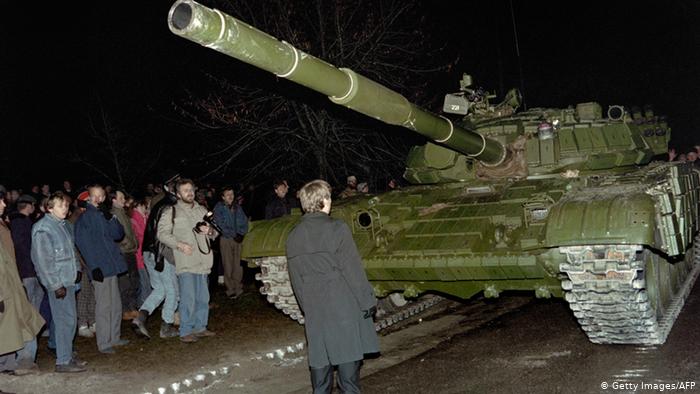
Lithuanian Protestors blocking a Soviet tank
On January 8-9, the Kremlin began to dispatch crack military forces to Lithuania, including the 76th Guards Airborne Division and the elite ALPHA counterterrorism unit explaining these deployments were needed to ensure constitutional order and the effectiveness of laws of the Lithuanian SSR and the Soviet Union. On the 10th, Gorbachev addressed the Lithuanian leadership, demanding a restoration of the constitution of the USSR in Lithuania and the revocation of all anti-constitutional laws. He also warned that military intervention could be possible within days. When Lithuanian officials asked for Moscow’s guarantee not to send armed troops, Gorbachev did not reply.
The following day, Soviet military forces sprang into action seizing critical buildings, transportation nodes, and means of communication. That evening, the pro-Soviet Lithuanian Communist Party announced the creation of the “National Salvation Committee of Lithuanian SSR” and claimed to be the only legitimate government in Lithuania. Overnight, Deputy Minister of Defense of the Soviet Union, General Vladislav Achalov, arrived in Lithuania and took control of all military operations. On the other side independence supporters from all over Lithuania started to encircle the main strategic buildings: the Supreme Council, the Radio and Television Committee, the Vilnius TV Tower and the main telephone exchange to prevent the military from seizing these important locations.
What transpired on the next day and what would become known as “Bloody Sunday” would decisively shape not only the outcome of this standoff but the deconstruction of the USSR over the next eight months. Early on the 13th, Soviet tanks and armored personnel carriers departed their bases and headed to the Vilnius TV Tower and the main telephone exchange. Upon arrival in the vicinity of the TV tower, tanks start to fire blank rounds to intimidate and disperse the protestors defending the tower. Failing in that effort, tanks and soldiers encircled the TV tower firing live ammunition overhead and into civilian crowds gathered around the building. Tanks and armored personnel carriers drove straight through the lines of people. Fourteen people were killed in the attack, most of them shot and two crushed by tanks.
Soviet tanks trampling Lithuanian protestors
Fifty miles west of the Lithuanian capital a small television station in the Lithuanian city of Kaunas was broadcasting news and video of the crackdown to the West. News of the brutal murder of innocent Lithuanians prompted strong condemnation from the Europeans and outrage inside the rest of the USSR. The United States’ reaction was more tempered. The United States was preoccupied with the imminent onset of Operation Desert Storm against Iraq and there were concerns that sharp public criticism of Gorbachev risked complicating these impending military operations. President George H.W. Bush denounced the incident, but was notably careful not to criticize Gorbachev directly, instead directing his remarks at “Soviet leaders.”
Inside the USSR, there was anger and apprehension. More than 100,000 protestors gathered in Moscow to denounce the military’s actions in Lithuania. A spokesman for then Russian President, Boris Yeltsin, prophetically warned, “ I do not exclude the possibility that Russia could be next, although perhaps Georgia would preceede us.” The spokesman, Pavel Voshchanov, was correct that there would be more crackdowns. He was just wrong about the next target. In less than two weeks, similar events would play out in neighboring Latvia.
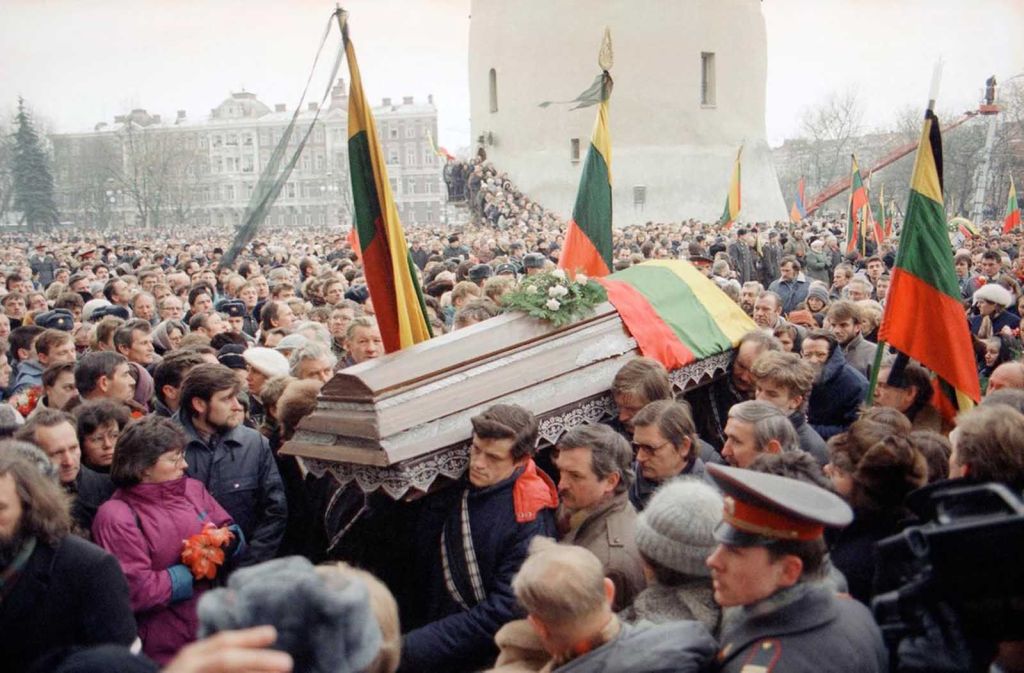
National funeral for the Lithuanian martyrs killed by Soviet troops
I remember these events distinctly. I just returned to Georgetown after Christmas break and was getting ready for the start of my second semester of graduate school. The world was on edge because of tensions in the Persian Gulf but for those of us Soviet watchers this crackdown was a wake-up call. Since at least December 1988, when Gorbachev announced at the UN, the Soviets would unilaterally cut its military by 500,000 men, we had seen largely a continuing positive trend in how the Soviets conducted themselves in the world. In February 1989 the Soviets pulled out of Afghanistan and later in the fall Gorbachev essentially renounced the Brezhnev Doctrine and allowed the communist regimes in Eastern Europe to be overthrown. The events in Lithuania were a reminder that there were still hardline forces that would fight tooth and nail to put the nationalist genie back in the bottle and preserve the USSR. Little did we know at the time this was the first step in the dissolution of the USSR.
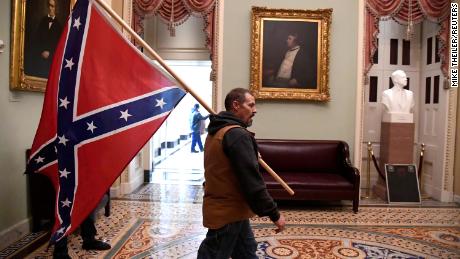
There are so many images that have emerged from last week’s insurrection at the Capitol that are distasteful, un-American, and just downright frightening. One image, in particular, continues to haunt me and has burned a lasting picture in my mind. That image is this picture. A Confederate Flag being paraded around the Capitol more than 160 after the Civil War ended with the defeat of the Confederacy.
A supporter of President Donald Trump carries a Confederate battle flag on the second floor of the U.S. Capitol near the entrance to the Senate after breaching security defenses, in Washington, U.S., January 6, 2021
The mere presence of the Confederate flag in the hallowed halls of the Capitol alone is an abomination. The context of its appearance, as part of a violent attack, is a mockery of the 365,000 dead Union soldiers, let alone the hundred of thousands that were maimed and injured, who sacrificed their lives to ensure that the Confederacy would never triumph. If you live in Virginia, as I do, is hard no to be cognizant of those facts. The hundred or so miles separating Washington DC and Richmond is some of the bloodiest terrain in our country. Places like Fredericksburg, the Wilderness, and Cold Harbor are a forever reminder of the human cost that have been made in order to save what President Lincoln called the last best hope on earth.
At the same time, there is something else so disturbing in this picture. A story that is not immediately observable to the casual eye but one that a friend of mine astutely pointed out. The picture in the background is a portrait of Massachusetts Senator Charles Sumner. In May 1856, Sumner was beaten within an inch of his life with a cane by Congressman Preston Brooks of South Carolina after he delivered a stinging anti-slavery speech on the floor of the Senate.
Sumner was the junior Senator from the Bay State and a strong abolitionist Republican. He fancied himself as a great orator along the lines of Cicero but for many, even within the Republican Party, he was a bit of a blowhard. In May 1856, the country was being torn apart over the issue of extending slavery and the Kansas territory had become ground zero. The Kansas-Nebraska Act, which was passed two years earlier, stipulated that the people of the two territories themselves should decide whether to enter the Union as a free or slave state, effectively repealing the Missouri Compromise of 1820. Abolitionist settlers and pro-slavery Border Ruffians from neighboring Missouri pored into the state fueling a low grade civil war.
Massachusetts Senator Charles Sumner
A day after pro-slavery partisans sacked the abolitionist stronghold of Lawrence Kansas, Sumner gave a speech on the floor of the Senate entitled “Crimes Against Kansas,” in which he identified two main culprits Senator Stephen Douglass of Illinois and Senator Andrew Butler of South Carolina. Sumner attacked both men but reserved his sharpest and most insulting commentary for Butler. Mocking the South Carolina senator’s stance as a man of chivalry, the Massachusetts senator charged him with taking “a mistress . . . who, though ugly to others, is always lovely to him; though polluted in the sight of the world, is chaste in his sight—I mean,” added Sumner, “the harlot, Slavery.”
Butler, who was an older man 60 years of age, was not present when Sumner made his remarks. However, his younger kinsman, Congressman Preston Brooks heard the remarks and was outraged. Brooks contemplated challenging Sumner to a duel to defend the honor of his relative but instead chose a more insidious option. Shortly after the Senate had adjourned for the day, Brooks entered the Senate chamber, where Sumner quietly was working and proceeded to smash Sumner over the head repeatedly with his metal topped cane. Sumner rose and futilely tried to protect himself before collapsing to the floor. Bleeding profusely, Sumner was carried away. Brooks walked calmly out of the chamber without being detained by the stunned onlookers.
When word spread of Brooks’ heinous act, he was hailed as a hero by his constituents who mailed him walking sticks to replace the cane he broke attacking Sumner. Brooks escaped any accountability for his actions. He survived a House censure resolution and even though he resigned he was immediately re-elected. Sumner recovered slowly and returned to the Senate, where he served another 18 years but his health was never quite the same.
As I look at this picture of the Confederate flag with Sumner’s portrait in the background I am reminded that there must be accountability for last week’s violence and the perpetrators who despoiled the hallowed halls of the Capitol must not be allowed to become heroes and celebrities. Somewhere, Charles Sumner is rolling in his grave!
On January 8, 1815, a rag-tag collection of U.S. soldiers, marines, militia, merchants and business men and a contingent of pirates defeated a superior British army in a most lop-sided fashion at the battle of New Orleans bolstering national pride, preserving the sovereignty and territorial integrity of the young republic and thrusting Andrew Jackson into national prominence. The unfortunate tragedy was that the battle occurred eighteen days after American and British negotiators signed a peace treaty in Belgium ending the War of 1812 but word had not yet reached North America. The battle, however, was more than just a pointless coda or epilogue to an unpopular war. It served to shape the future course of American history. If the British had won the battle and occupied New Orleans, it is likely they would have abrogated the treaty and insisted on territorial concessions from the Louisiana territory, stymying American expansion westward. The victory also shaped how America viewed the war and itself. It allowed the young nation to forget how close it came to military defeat, financial bankruptcy, and dissolution of the union, instead ushering in a period of optimism, national unity, institution building and internal improvements aimed at fostering increased trade and economic prosperity.
The United States declared war against Great Britain in June of 1812 but the British, for the most part, approached the unwanted conflict with a mix of patience and restraint, devoting most of their attention and resources to the struggle against Napoleonic France. The defeat of Napoleon in the Spring of 1814, however, allowed the British to refocus much of their effort on their American foe. That summer, a British army of 7,500 battle-tested veterans under General Robert Ross arrived in the Chesapeake Bay threatening both Washington and Baltimore. In August, the British routed a hastily assembled American force at the Battle of Bladensburg and that same night proceeded to burn Washington DC. Two weeks later, the British carried out a combined land and naval attack on Baltimore but were repulsed at Fort Mc Henry and forced to retreat.
Major General Andrew Jackson
As the British troops departed the Chesapeake Bay, there was a great deal of uncertainty on both sides about what would happen next. Peace talks had begun in Belgium in August and the British had hoped that that the burning of Washington and the capture of Baltimore would force the Americans to sue for peace on terms favorable to Great Britain. However things did not go as planned. There was also growing pressure in London to end the war as soon as possible because of the financial strain that decades of continuing conflicts were placing on the British treasury. Despite this pressure, British war hawks decided to look South. Unable to capture Baltimore, they would attack the city of New Orleans. Situated on the Mississippi River, New Orleans was the crown jewel of the Louisiana purchase in 1803 and a prosperous port. If Great Britain could seize New Orleans it would gain control over the Mississippi river and much of the trade that depended on it. It would also give the British strong leverage to press the Americans to hand over the Louisiana territory as part of any peace treaty.
Almost three months after their defeat at Baltimore, a fleet of sixty British warships carrying almost 15,000 soldiers, sailors and marines arrived some 60 miles east of New Orleans, on December 8. Word of the fleet’s arrival confirmed what American planners had been anticipating since at least mid-November. Secretary of War James Monroe put Major General Andrew Jackson in charge of organizing New Orleans’ defenses. Jackson was a controversial and somewhat divisive figure. Know as “Old Hickory” because of his toughness and determination, he was also rash and quick tempered, which earned him both friends and foe alike. Moreover, his friendship with Aaron Burr, who was tried and acquitted of treason in 1807, did not endear him to the Madison Administration. Nonetheless, Jackson had proven himself an effective and more than capable military leader at a time where others were failing quite miserably. He spent much of the previous year battling a hostile faction of the Creek Indians, allied to the British, called the “Red Sticks” and harassing British operations along the Gulf Coast. Jackson eventually defeated the Red Sticks, forcing the Creeks to cede 23 million acres to the young republic while driving the British from Pensacola in Spanish controlled Florida.
Upon arriving in New Orleans, Jackson soon began to familiarize himself with the local terrain and to assemble an army to defend against the impending British attack. He declared martial law, which was extremely unpopular with the public, and ordered every available weapon and able-bodied man around to come to the defense of the city. His force grew into a 4,500-strong patchwork of army regulars, Tennessee and Kentucky militiamen, free blacks, New Orleans aristocrats and Choctaw tribesmen. After some hesitation, he even accepted help from Jean Lafitte and his band of pirates who would provide much needed supplies and critical skills that would be crucial to the outcome of the battle.
Although the appearance of the British fleet was a clear signal that they were intent on attacking New Orleans, there was still a great deal of ambiguity as to which direction the attack would come. Jackson thought the attack would most likely come overland from the North where there would be fewer geographical and logistical challenges. However, in an effort to maintain some element of surprise, the British decided to attack from the south, despite the more difficult terrain. On the morning of December 23, British infantry landed just below New Orleans and began to move north through nearby bayous and swamps toward the city.
British movements in the Gulf of Mexico
As American scouts learned of the British movements, they quickly sent word back to Jackson that a British advance guard of over 2,000 troops was less than 10 miles from the city. Jackson, however, wasn’t sure that these movements weren’t anything more than a feint. Nonetheless, in his typical fashion, he made a decisive decision. Turning to his aides Jackson declared, “Gentlemen, the British are below and we must fight them tonight.” Jackson quickly assembled 2,100 of his men and moved out to meet the British threat, vowing that no British soldier would enter the city unless it was over his dead body.
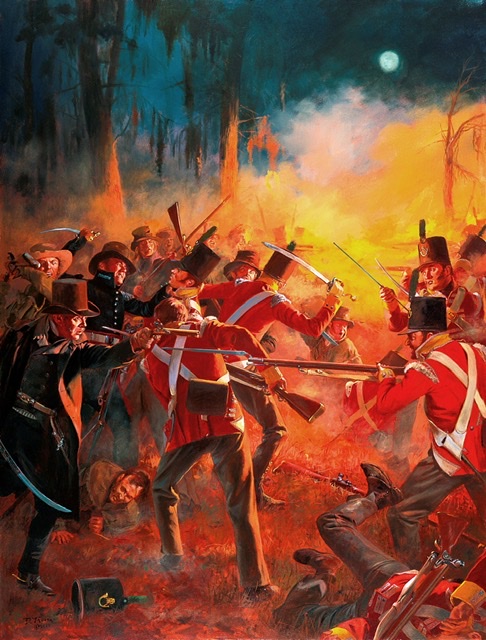
That evening Jackson and his troops struck the unsuspecting British in a brutal but inconclusive attack that would become known as “The Night Battle.” Scores of vicious little firefights, many hand to hand, erupted all across the field in the pitch black night while a slow moving fog rolled in further hampering command and control. The attack would last more than four hours with Jackson’s motley band giving the British veterans all they could handle. One British lieutenant later wrote, “We fought with the savage ferocity of bull-dogs.” With his men exhausted and running low on ammunition, Jackson called off the attack around midnight and ordered his troops to fall back two miles north to the Rodriguez Canal located near Chalmette Plantation along the Mississippi River. American casualties totaled 24 killed, 115 wounded, and 74 missing, while the British reported their losses as 46 killed, 167 wounded, and 64 missing. Amongst the hardest hit of the American units was a rifle company composed primarily of New Orleans lawyers and merchants.
The Night Battle of December 23, 1814.
The outcome of the Night Battle was inconclusive but it had visibly shaken the British. British commander Major General John Keane abandoned his plan to attack New Orleans the following day. Jackson must have gathered a formidable army with large reserves, otherwise he never would have carried out such a reckless nighttime attack, Keane surmised.
Conversely, Jackson considered renewing the attack the next day. However, after learning that the British were being reinforced and digging in, he opted to improve his defenses instead. Employing slave labor, he turned the Rodriguez canal into defensive trench and built a seven foot tall line of breastworks consisting of earthen ramparts reinforced by timber and large cotton bales covered in mud. Behind these ramparts, Jackson deployed his artillery. These fortifications were christened “Line Jackson” and a posed a formidable defense, stretching three-quarters of a mile from the east bank of the Mississippi River to a large Cyprus swamp. Jackson also began to build defensive positions on the west bank of the Mississippi River to guard against a British flanking maneuver. Here the Americans would make their stand.
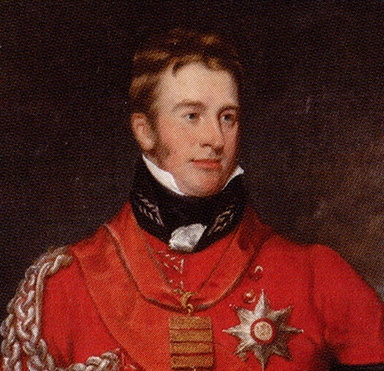
Christmas day brought a shake up in the British high command. Major General Edward Pakenham, brother-in-law to the Duke of Wellington, arrived to take command of the British army from General Keane. Pakenham distinguished himself fighting against Napoleon in the Peninsular campaign and was well respected among ranks. He really wasn’t interested in serving in the American war, but in October 1814 was selected to take command of the army following the death of its original commander, Major-General Robert Ross, near Baltimore. Pakenham had hoped to rendezvous with the fleet before the army went ashore but adverse winds delayed his arrival till mid-December.
Upon his arrival, Pakenham immediately was disturbed by what he found. Keane’s failure to advance left the British Army trapped on a three-quarters of a mile wide isthmus, wedged between the Mississippi on its left and and a virtually impassable swamp on the right. These geographical obstacles limited the army’s maneuvering room and made it more vulnerable to American artillery and rifle fire. By this time, the campaign advanced so far on both sides that there was little Pakenham could do in terms of changing strategy, naval and army placements. Nevertheless, Pakenham’s concerns, were counterbalanced by his low opinion of Jackson’s men, whom he derisively referred to as “dirty shirts,” and his unwavering confidence that they would crumble before the might of British regulars.
Major General Edward Pakenham
Pakenham moved the entire 8,000 man British Army forward to the Chalmette Plantation on December 27 and over the next several days carried out a number of probing attacks that were beaten back. Penned in by geographical obstacles and left with few other options, Pakenham began planning for a direct assault on the American line. He would cross the Mississippi River downstream with a strong force and overwhelm Jackson’s thin line of defenders on the river bank opposite the Rodriguez Canal. From there, these troops would open an enfilading fire on Jackson’s line with the captured artillery. Meanwhile, several columns of heavy infantry would conduct a frontal assault seeking to punch a hole in Jackson’s line. Conceptually, it was a reasonably thought out plan. However, like most plans the devil was in the execution.
The British launched their attack just before sunrise on January 8 but things began to go awry from the outset. Over night, the navy was able to transfer only half of the appropriated 1400 troops across the river because of unexpected difficulties. Moreover, the forces that did reach the other side were significantly behind schedule after landing further down river because of strong currents. At daybreak they were still four miles from their objective which should have already been taken. Pakenham patiently waited for sounds of battle from across the river but none were forthcoming. Further complicating matters on the other side, the ladders and fascines needed to scale the American fortifications had been misplaced. Around 4 o’clock the British commander told an aide, “I will wait my plans no longer.” With daybreak quickly approaching, Pakenham issued orders to begin the assault.
The British plan was to send two columns against the Jackson’s position. The left column, the Third Brigade, led by British Major General John Keane, included elements of the 95th Rifles, the 7th Regiment of Foot (Royal Fusiliers), the 93rd Foot (Sutherland Highlanders), and the 1st West India Regiment. Keane’s brigade was to play a largely diversionary role, attacking along the extreme right of the American position. It was hoped that the column’s advance along the river bank would protect it from the Americans’ artillery and rifle fire until they could get close enough to charge the enemy works. The main attack was targeted against the American center-left at the far eastern portion of the field near the edge of the cypress swamp. This column, the 2nd Brigade, was led by General Samuel Gibbs, Pakenham’s deputy and included the 44th Regiment of Foot (East Essex), the 4th Foot (King’s Own), and the 21st Foot (Royal Scots Fusiliers). Light troops, including units of the 95th Foot (Rifles) advanced through the swamp itself to protect the right flank of the main attack. The 44th Regiment was to lead the column, carrying ladders and fascines to bridge the canal and scale the rampart. A third brigade, commanded by General John Lambert, constituted a reserve.
A single Congreve rocket signaled the beginning of the attack and the British troops stepped forward toward the American line with resolve and determination. These were veteran soldiers, the best of the best, who fought all across Europe and defeated Napoleon. Nevertheless there was a grim resignation about them, that in storming the American fortifications, many were unlikely to survive the day. Colonel Robert Dale, commander of the famed 93rd Highlander regiment, reportedly gave his watch and a letter to the regimental physician. “Give these to my wife,” he somberly declared, “I shall die at the head of my regiment.”
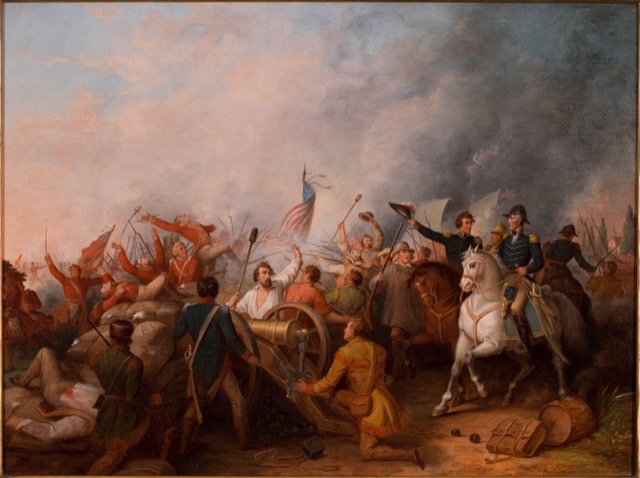
Initially, the British advance was hidden by the early morning darkness and a dense fog. Nevertheless, Jackson and his men knew the British were coming. They loaded their artillery and muskets and patiently waited secure behind their protective wall. As the sun began to rise and the fog burned away, American artillery and riflemen now had clear sight lines of the entire landscape in front of them. American artillery, especially the batteries manned by Lafite’s pirates, were deadly accurate, cutting gaping holes in the British formation, sending both men and materials flying in the air. As the British continued to draw closer, their ranks were cut down by musket fire.
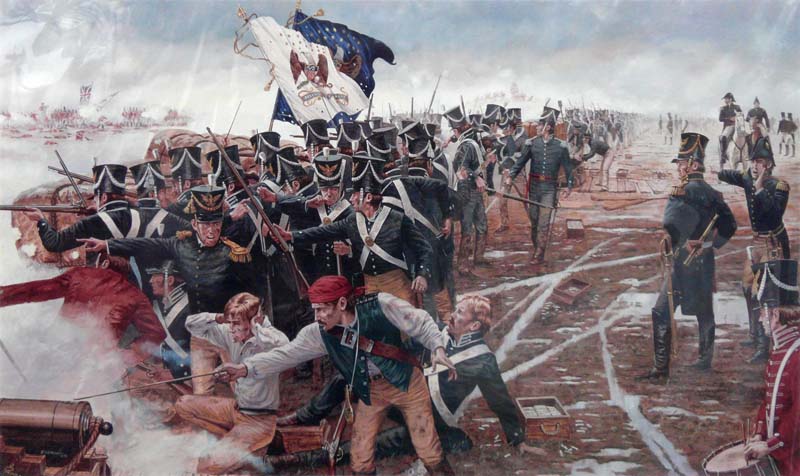
The U.S. 44th Infantry takes aim at their British foe.
The main British thrust on the right was struggling against the entrenched Americans. Gibbs’ brigade was being decimated by the Kentucky and Tennessee militia who were deadly accurate with their muskets. Three to four deep behind their protective wall, the Americans were able to keep up a constant and withering fire, largely shielded from British muskets and artillery. One surviving British officer later claimed that the American line looked like a row of fiery furnaces. Approaching the canal, the attack began to falter. The 21st and 44th regiments were disintegrating rapidly under a hail of grapeshot and musket fire. Gibbs tried to rally his troops but without the necessary ladders and fascines, the remaining forces started to fall back in panic. He later would fall mortally wounded, pierced by four musket balls, about 20 yards from the wall.
With the attack on the right quickly collapsing, Pakenham ordered Keane to send the famed 93rd Highlanders to come to the aid of Gibbs’ brigade. Led by Keane himself, the 900 man tartan clad regiment marched diagonally across the field coming under a storm of musket and artillery fire. The Highlanders took gruesome losses as they struggled across the muddy open field. Their commander, Colonel Robert Dale fell dead as he predicted. His body riddled by grapeshot. After making contact with the remainder of Gibbs’ brigade, Keane also fell seriously wounded. He was shot through the neck and groin, and had to be taken from the field. About a 100 yards out from the American fortifications the regiment paused confused. Leaderless and with its ranks significantly diminished, the regiment was uncertain as whether to press on or fall back.
Watching Gibbs’ brigade disintegrate and the Highlanders wavering under the deadly American fire, Pakenham rode forward to try and rally his men. “Shame! Shame!” the general called out to his fleeing soldiers. “Recollect that you are British soldiers. Forward gentlemen, forward,” he shouted. Suddenly, a burst of grapeshot shattered his left knee and killed the horse from under him. Struggling to his feet, Pakenham was wounded a second time in his right arm before more grapeshot tore through his spine. As he was carried from the field, Pakenham’s last words before he died reportedly were to order Lambert’s reserves forward.
British forces enjoyed more success on their left where a battalion of light infantry captured an under strength redoubt at the extreme right of the American line. However they proved unable to hold their prize. Driving out the defenders in ferocious hand to hand combat, the battalion commander, Lieutenant Colonel Robert Rennie climbed to the top of the redoubt and shouted, “The enemy’s works are ours!” Within minutes Rennie was struck dead by a musket ball as the 7th U.S. Infantry counter attacked and drove the few remaining British forces back across the field.
Rennie’s attack on the U.S. redoubt
Across the river, British Colonel William Thornton and his 700 troops who were supposed to begin their attack much earlier were finally engaging the Americans. Thornton’s men first encountered an advanced American outpost manned by about 200 hungry and poorly armed Kentucky militia who put up little resistance and fled. Pressing forward, the British approached the main American defensive line about a mile up river. The American defenses on this side of the river were far less formidable than the other side, consisting of only a waist high dirt wall and a shallow ditch. There were also far fewer defenders to man the entire line resulting in gaps between the various units. Thornton organized his troops and stormed the American line causing panic and confusion and sending the American forces, scurrying in retreat. The British captured 12 cannons but luckily they were spiked before they could be turned on Jackson’s men across the river. Nevertheless, Thornton’s success proved too little too late to prevent the slaughter on the opposite bank.
With Pakenham dead, and both Generals Gibbs and Keane gravely wounded, command of the British Army passed to Major General John Lambert. Lambert and his brigade of reserves moved forward to assess the rapidly deteriorating situation. Lambert, examining the carnage across the field determined the situation was unsalvageable. Of the three thousand troops in the main British advance, two-thirds lay dead or dying on the field. Lambert ordered the remaining British forces to fall back and advanced his brigade to cover their retreat. The battle was over. The British army lingered in Louisiana for the next several days, but its remaining officers knew that any chance of taking the New Orleans had passed. After an abortive naval attack on nearby Fort St. Philip, the British boarded their ships and sailed back into the Gulf of Mexico.
The battle of New Orleans is remarkable for both its brevity and its casualties. In little over 30 minutes, the British lost 285 killed and 1265 wounded. In addition, 484 were taken prisoner. Many of whom pretended to be dead, surrendering once the shooting stopped. Of the wounded, at least half were “permanently disabled” which meant the the loss of a limb. American losses were minuscule in comparison. Jackson’s men, behind their protective wall, had lost only 13 men killed, 30 wounded, and 19 missing or captured. Future President James Monroe would later praise Jackson by saying, “History records no example of so glorious a victory obtained with so little bloodshed on the part of the victorious.”












 Tragedy and Farce