
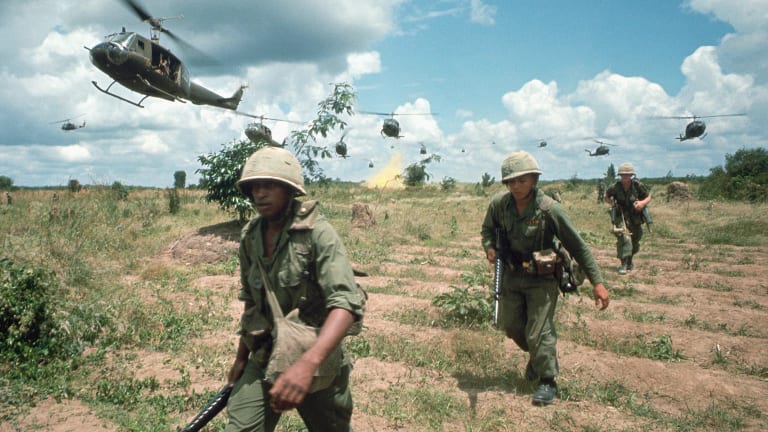
On March 8, 1965, two marine battalions waded ashore at Da Nang, South Vietnam marking the first deployment of US ground forces to South Vietnam. Ostensibly intended to guard a major U.S. airfield used for carrying out bombing runs over North Vietnam, these troops represented a marked escalation in U.S. involvement in the conflict. The U.S. role had been steadily growing since the Gulf of Tonkin incident in August the previous year and Congress had essentially written the Johnson administration a blank check to respond. Since then, Johnson opted to increase U.S. involvement. He approved a two-stage bombing campaign against the Vietnamese Communists. The first stage targeted attacks against the Ho Chi Minh trail in Laos, seeking to impede the infiltration of Communist insurgents into South Vietnam. The second phase involved a sustained bombing campaign dubbed “Rolling Thunder” against North Vietnam. By the end of March, the U.S. Joint Chiefs of Staff asked the Johnson administration for another three divisions and authorization to engage in offensive combat operations. President Johnson now committed the United States to a major war, a Vietnamese Civil War that it could not win, without ever forthrightly saying so. U.S. military forces in Vietnam would later peak around 500,000 troops. The conflict would end 10 years later in April 1975, as US helicopters evacuated American embassy personnel from Saigon and the North Vietnamese Army united Vietnam under communist rule. American loses would reach 50,000 troops in what up until the war in Afghanistan, America’s “longest running war.”
Into the Quagmire

 Tragedy and Farce