
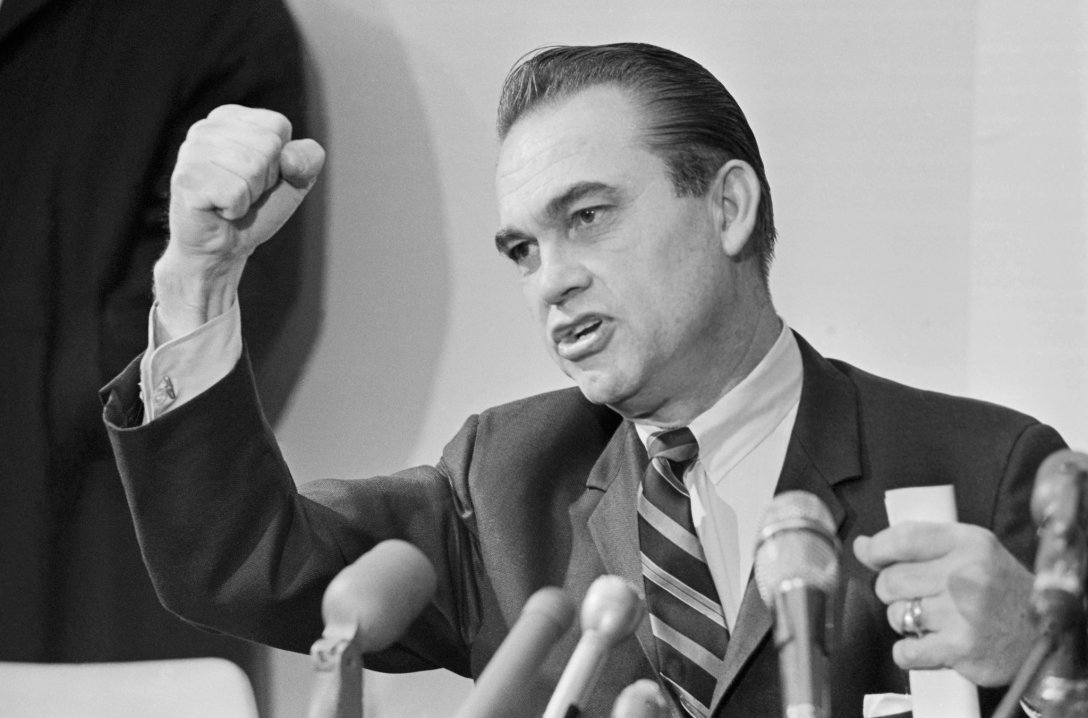
On May 15, 1972, the controversial Governor of Alabama, George Wallace, was shot five times by Arthur Bremer in Laurel, Maryland while campaigning for the 1972 Democratic presidential nomination. One of those bullets would lodge itself in Wallace’ spinal chord cutting short his campaign and leaving him paralyzed from the waist down the rest of his life. Known for having coined the words “Segregation now, Segregation tomorrow, Segregation forever,” was a central figure in the opposition to the Civil Rights Movement. He also was a charismatic figure and a talented politician with a natural ability to commune with the common man using a mix of race and rage.
Wallace’s paralysis would prompt a great deal of soul searching within him and place him squarely on the road to racial redemption and reconciliation. In 1979, he went to a church in Montgomery, Ala., where the Rev. Dr. Martin Luther King Jr. had once been pastor. There, he spoke of having learned the meaning of suffering, “I think I can understand something of the pain that black people have come to endure,” he said. “I know I contributed to that pain, and I can only ask your forgiveness.”
In 1982, Wallace ran for Governor a fourth time and won. In that race, he carried all 10 of the state’s counties with a majority black population, nine of them by a better than two-to-one margin. Wallace would go on to hire a black press secretary, appoint more than 160 blacks to state governing boards and double the number of black voter registrars in Alabama’s 67 counties. In part, it was the politics of patronage but on a deeper level it was using his waning political power to make amends with those he once scorned. In 1998, civil rights icon John Lewis, who suffered at the hands of Wallace’s state troopers on the Edmund Pettis bridge in 1965 would write that George Wallace should be remembered for his capacity to change, not his racism. Lewis would write, “I can never forget what George Wallace said and did as Governor, as a national leader and as a political opportunist. But our ability to forgive serves a higher moral purpose in our society. Through genuine repentance and forgiveness, the soul of our nation is redeemed. George Wallace deserves to be remembered for his effort to redeem his soul and in so doing to mend the fabric of American society.”

 Tragedy and Farce