
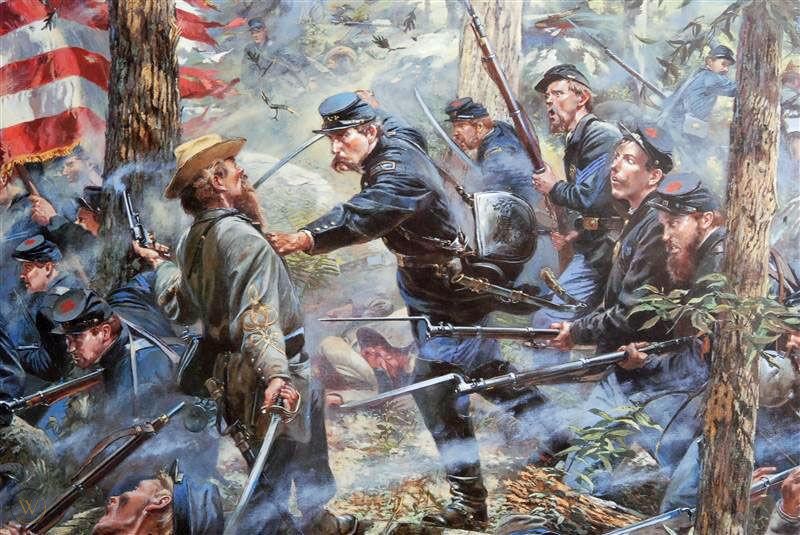
On July 2, 1863, Colonel Joshua Chamberlain and 350 determined volunteers from the 20th Maine Infantry Regiment beat back repeated Confederate assaults on the Union position at Little Round Top at the Battle of Gettysburg thwarting General Robert E. Lee’s plan for a decisive victory on Northern soil that would secure European recognition of the Confederacy and possibly bring Great Britain and France into the war on the side of the South.
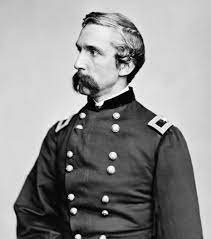
The first day was a clear and unequivocal victory for the Confederates. Lee’s army pushed the Union I and XI Corps south of town. However, Ewell’s failure to deliver the coup de grace and drive Union forces from their stronghold atop Cemetery Hill presented Lee with a dilemma. Should he follow the recommendation of his trusted “Old Warhorse” General James Longstreet to retreat, get between the Union Army and Washington, and to initiate a battle at a time and place of its choosing. Lee, the normally bold and aggressive strategist would have nothing to do with a retreat. He wanted to press his first day advantage.
For the better part of the day Lee and his staff vigorously debated the merits of continuing the battle or retreating. Six out of the seven corps that formed the Union Army of the Potomac were now on the field outnumbering the Confederates. In addition, they occupied a strong defensive position south of town in the shape of a fish hook. Union forces entrenched on Cemetery Hill constituted the barb of the hook while a long line of troops running along Cemetery Ridge formed the shaft. Longstreet argued it was imprudent to attack such a fortified position. However, the left flank of the Union army was exposed, ending at a lightly defended hill with the colorful name of Little Round Top. Here, Lee would focus his attack.
The Confederates began their assault around 4:30 pm led by Major General John Bell Hood’s Division. The right of Hood’s division, General Evander Law’s Alabama brigade spearheaded the attack on Little Round Top. In an effort to obscure their advance, Law’s men scaled the neighboring larger hill, Big Round Top. By the time they were in position to launch their attack, the men from Alabama were already exhausted and without water on what was a sweltering July day. Moreover, Confederate efforts to conceal their intentions went for naught. Union observers spotted the Confederate advance and reinforcements, including the 20th Maine, were rushed to Little Round Top. Chamberlain and his regiment arrived on the scene, taking up a position at the extreme left of the Union line, roughly 15 minutes before the Confederate attack began.
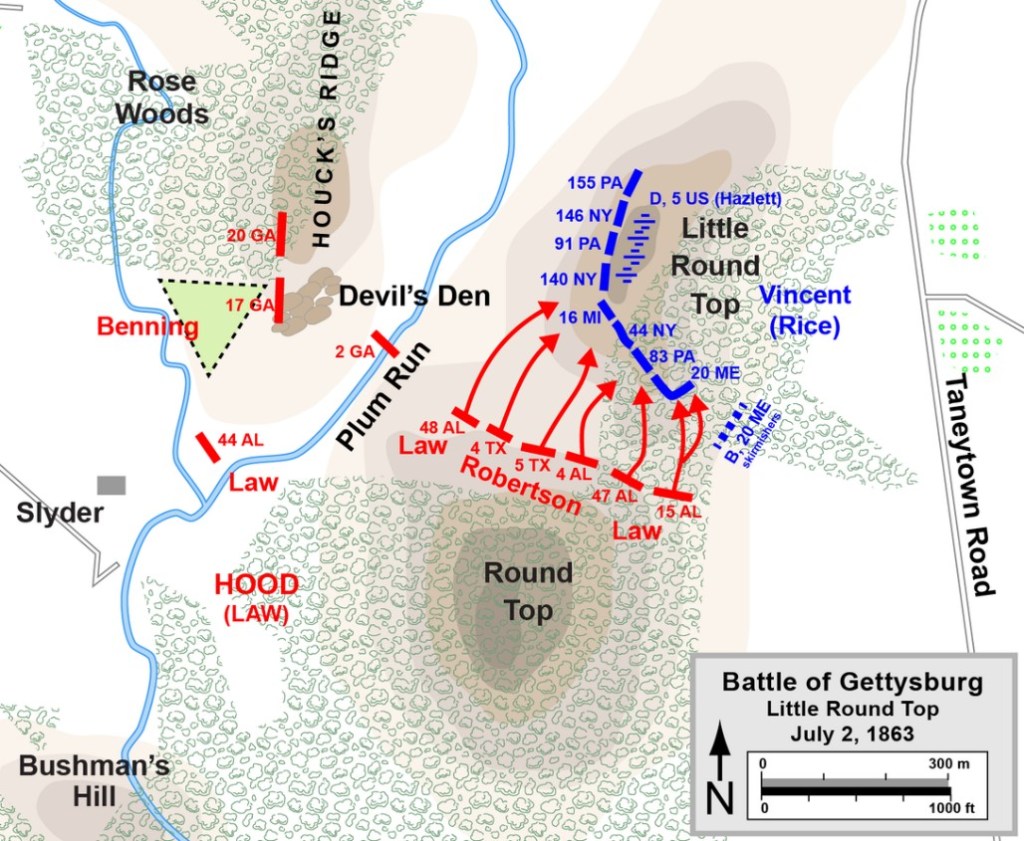
The Confederates stormed up the side of Little Round Top led by the 15th Alabama Regiment. Over the course of an hour, the 20th Maine repulsed two determined Confederate charges seeking to dislodge the Federals, sending the Alabamians tumbling back down the hillside. The Confederates launched a third charge against the 20th Maine as the regiment exhausted its ammunition. Faced with few good options, Lieutenant Colonel Chamberlain quickly ordered his men to fix bayonets and charge downhill to meet the advancing Confederates. Chamberlain’s counterattack would sweep the Alabamians from the field and for all intents and purposes end any further Confederate attacks against Little Round Top.
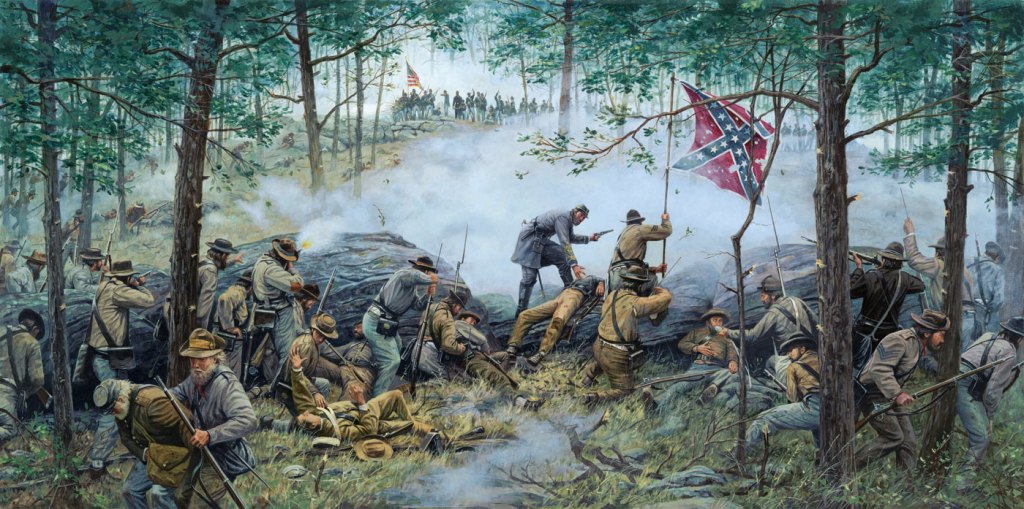
Despite their setback at Little Round Top, the Confederates would continue their echelon attack up and down the Emmitsburg Pike. The two sides would fight an incredibly bloody battle in the Wheat field in which control of the field passed back and forth between the two sides with the Union ultimately prevailing. Confederate General Ambrose Wright’s brigade of Georgians almost broke the Union line further up the Emmitsburg Pike if it were not for the timely arrival of the 1st Minnesota Regiment that blunted the Georgian advance and sent them retreating back towards Seminary Ridge. A twilight attack against entrenched Union forces on Culp’s Hill by General Edward “Allegheny” Johnson’s division was also turned back. The second day ended as a clear victory for the Union. All of Lee’s assaults had been repulsed. Even though the battle would continue into a third day, it was anti-climatic as the decisive Union victory on day two all but ensured the Confederates defeat.

 Tragedy and Farce