
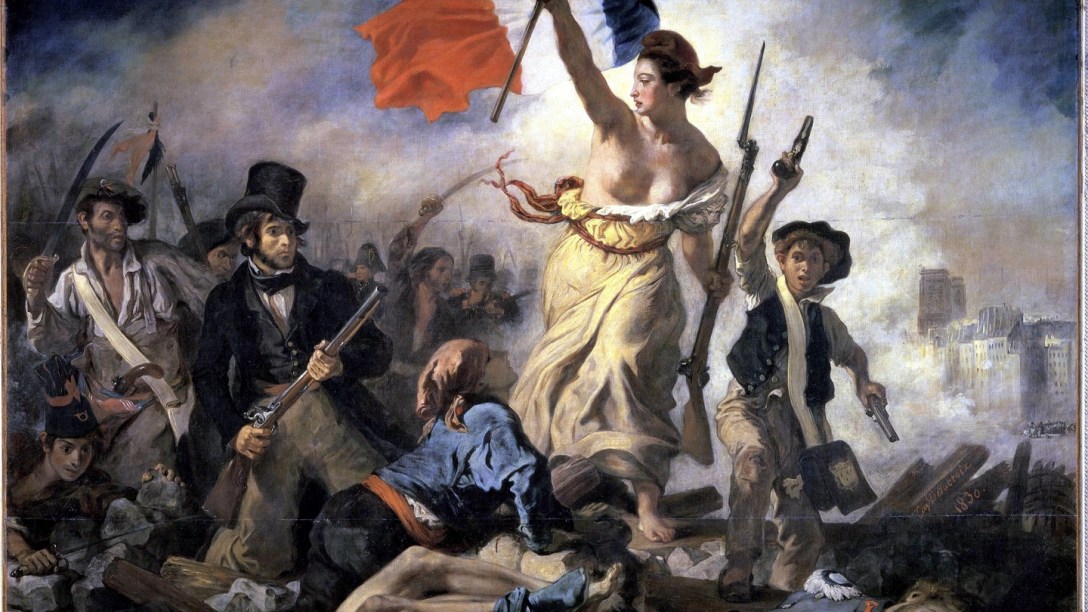
On July 14, 1789, Parisian mobs stormed the Bastille—a notorious prison and symbol of royal tyranny—in what is generally regarded as arguably the beginning of the French Revolution. Inspired by the American Revolution, the French Revolution would prove to be a watershed event in the history of Western civilization helping spread many of the ideas that now form the foundation of modern liberal democracy. It would also inspire Karl Marx and other future socialists, with its emphasis on egalitarianism. However, the Revolution, which was originally a popular uprising against the absolute power of the king and the vast inequality between the rich and the poor, would eventually consume itself giving way to the dictatorship of Napoleon Bonaparte and eventually a restoration of the monarchy.
By the mid-1780s, France found itself in deep economic crisis. Decades of war against Great Britain, especially support for the American colonies in their war for independence, had emptied the state coffers. Moreover, an inefficient and regressive taxation system in which the urban poor and middle class paid most of the taxes and the nobility lived lives of luxury combined with two decades of poor harvests left the country on the brink of financial ruin and a social implosion.
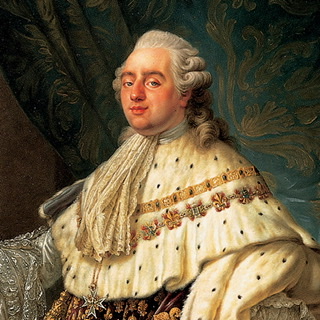
King Louis XVI sought to replenish the state treasury by raising taxes, including a universal land tax from which the nobility would no longer be exempt. However, he lacked the authority on his own to levy any new taxes. The only institution in France with that power was the Estates General an assembly representing France’s clergy, nobility and middle class. The King agreed to convene the Estates General in May 1789, which had not met since 1614, to garner support for his proposed reforms. The assembly consisted of equal numbers of representatives of each estate, and voting had been by order, with the First Estate (the clergy), the Second Estate (the nobility), and the Third Estate (middle class and peasants) each receiving one vote. Under this framework, the Third Estate routinely was outvoted by the combined vote of the nobility and clergy. Now representing roughly 95 percent of the population, the Third Estate demanded political power commensurate with the amount of the population it represented. Members argued that the Third Estate should be doubled in size and that voting should be by headcount and not order. However, a majority of the clergy and nobility balked at this idea.
Unsatisfied, the Third Estate now decided on a more radical course of action. They declared themselves the National Assembly, that was representative of all the people. This new National Assembly expressed its desire to include the other two Estates in its deliberations but also made it clear that it was determined to conduct the nation’s affairs without them. Faced with a growing insurrection and a threat to his absolute power, King Louis XVI tried to prevent the National Assembly from meeting by locking them out of the Salle des États, claiming it needed to be prepared for a royal speech. On 20 June, the Assembly met in a tennis court outside Versailles and swore not to disperse until a new constitution had been agreed. Messages of support poured in from Paris and other cities; by 27 June, they had been joined by 100 clergy and 47 members of the nobility. On July 9 the Assembly reconstituted itself as the National Constituent Assembly.
A showdown between the crown and the general public was looming. The only questions remained how and when and what would be the catalyst. On 11 July, Louis XVI, acting under the influence of the conservative nobles, dismissed his finance minister, who had been sympathetic to the Third Estate, and rumors soon spread that he was preparing to use the military to shut down the Assembly. The news brought crowds of protestors into the streets who thought this was the beginning of a conservative coup and soldiers of the elite French Guards refused to disperse them. Paris was soon consumed with riots, anarchy, and widespread looting. The mobs now had the support of the French Guard, including arms and trained soldiers who were sympathetic to the people.

Events came to a head on July 14, when a mob, with the support of the disgruntled French Guard, stormed the Bastille in search of arms and ammunition and to release the large number of political prisoners rumored to be held behind its walls. After several hours of fighting the Governor of the prison surrendered. Shortly thereafter he was executed and his headed paraded around the city on a pike. Although the revolutionaries found stores of arms and ammunition, there were only seven prisoners at the Bastille: four forgers, two noblemen held for “immoral behavior”, and a murder suspect. Nonetheless, a blow had been struck against Royal authority and noble privilege.
The storming of the Bastille had fundamentally changed the balance of power and revealed the monarchy for the sclerotic and delegitimized institution it had become. It also put in motion a series of events over the next decade that would set not only France but the entire European continent aflame. By 1791, the moderates who held power following the attack on the Bastille gave way to more impatient and revolutionary Jacobin elements of the Sans Culottes—the working class—amidst growing food shortages and a worsening economic crisis. The following August, these revolutionaries would arrest Louis XVI, his wife Marie Antoinette, and the rest of the Royal family. The King was executed by guillotine the subsequent January for allegedly conspiring with Austria and Prussia to overthrow the revolution and his wife suffered the same fate nine months later.
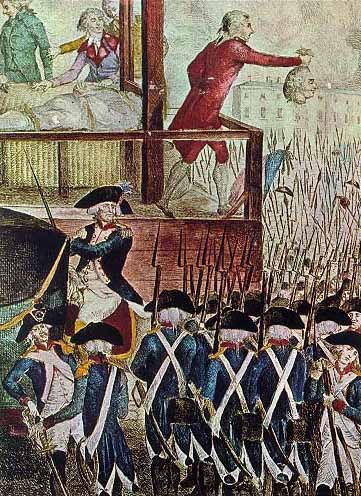
The execution of the royals ushered in the most violent and bloody phase of the revolution, known as the “Reign of Terror.” Over a 10 month period, 17,000 suspected enemies of the revolution were guillotined without a public trial or any legal assistance. Many of the killings were carried out under orders from Maximilian Robespierre, one of the Jacobin leaders who dominated the draconian Committee of Public Safety that had been set up to root out enemies of the revolution. Intoxicated by his power, Robespierre called for increasingly more executions and purges, even though the threat to the revolution, at home and abroad, had receded. By the summer of 1794 many had begun to turn against Robespierre and his excesses. An uneasy coalition of moderates and revolutionaries formed to oppose Robespierre and his followers. On July 27, 1794 Robespierre was arrested and the next day he and 21 of his supporters were guillotined without a trial.
The death of Robespierre would bring the Reign of Terror to an end and lead to a less radical and less violent phase of the revolution. Executive power was now invested in the hands of a five-member Directory (Directoire) appointed by parliament. The Directory, however, would fail to distinguish itself as an effective governing body. The Directory’s four years in power were riddled with financial crises, popular discontent, inefficiency and, above all, political corruption. On November 9, 1799, as frustration with the Directory reached a fever pitch, a young and brash General named Napoleon Bonaparte staged a coup d’état, abolishing the Directory and appointing himself France’s “First Consul.” The event marked the end of the French Revolution and the beginning of the Napoleonic era, in which France would come to dominate much of continental Europe.

 Tragedy and Farce