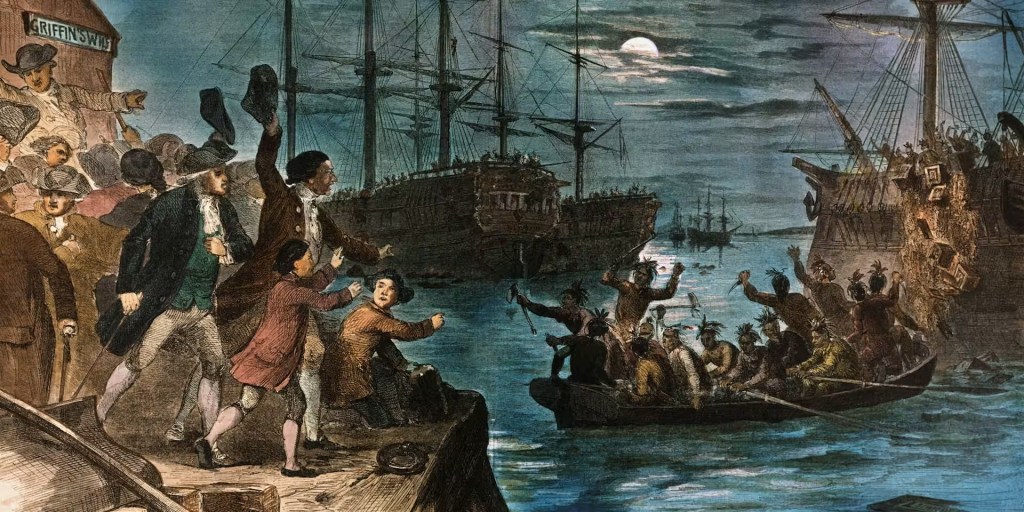
December 16, 1773: The Boston Tea Party

On the night of December 16, 1773, over 100 Bostonians disguised as Mohawk or Narragansett warriors  boarded three merchant ships of the British East India Company moored at Griffin’s Wharf in Boston Harbor and proceeded to dump  342 chests of tea overboard in what would become known as the Boston Tea Party. It was organized and carried out by the Sons of Liberty—a secretive organization led by Samuel Adams and John Hancock—who were the driving force of opposition to British rule over the colonies. The tea party was an act of protest driven by long standing colonial grievances against British rule but the primary complaint was the Tea Act of 1773 and the fact that the American colonies were taxed as subjects of the British crown but denied representation in Parliament. The tea party set off a series of British punitive measures known as the “Coercive” or “Intolerable” Acts that eventually plunged New England and the remaining American Colonies  into armed rebellion against British rule two years later.

In the decade prior to the tea party, Great Britain was facing serious economic difficulties. It emerged victorious from a seven year struggle against arch rival France in 1763, known as the French and Indian War in North America, but its treasury was depleted. Moreover, the British economy was mired in a recession as a result of policies that were implemented to finance the war. The British government looked for new and untapped means to replenish its coffers and beginning in 1764 it levied a series of new taxes and customs duties on the American Colonies to raise more revenues. Over the next, eight years the British Parliament in London passed the Sugar Act, Stamp Act, and the Townshend Acts, provoking violent protests by the outraged colonists. 

The colonist anger stemmed from a deep seated  conviction that the power to tax derived from the consent of the governed, a principle dating back to 1215 and the Magna Carta. The colonists were already paying taxes levied by their colonial legislatures for public goods and services and since there was no colonial representation in parliament, they argued, London had no right to impose additional taxes and duties on the colonies. British authorities disagreed. As such, the brewing crisis was not simply about taxes but about the power relationship between Great Britain and the colonies.

By the 1770s, relations between the American colonist and the British government had become increasingly acrimonious, if not confrontational, with Boston serving as ground zero for all anti-British sentiment and protests. In March 1770, British troops, who had been deployed to Boston earlier to quell violent protests over the Townshend Acts, opened fire on a small group of angry Bostonians, who had been heckling them, killing five in what would become known as the Boston Massacre. The massacre only served to further roil an already indignant public. In May 1773, the British Parliament passed the Tea Act which was intended to help the East India Company, one of Britain’s most important commercial institutions, stave off financial ruin and reassert its authority over the increasingly rebellious American colonies.

The Tea Act was a complex plan that actually lowered the price of tea but it also forced the colonists to pay a tax of three pence on every pound of tea while granting the East India Company a monopoly on the tea market in the colonies. Many colonists denounced the act, seeing through it for what it was, a ruse to make them accept Parliament’s right to tax them. Moreover, the act threatened to put smugglers and legitimate importers out of business because it undercut the price of tea that smugglers were offering and the tea had to be purchased from designated consignees. As a result a nexus of opposition  emerged to include radical political activists, smugglers, and the merchant class.
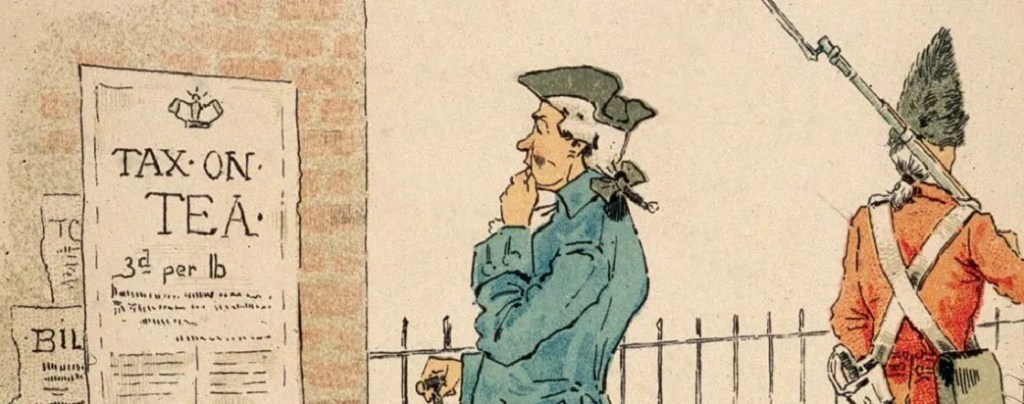
The first tea ships of the East India Company began to reach North America in November of 1773. Seven ships were bound for Boston, New York, Philadelphia and Charleston. The ships encountered strong opposition in all four cities and in New York, Philadelphia, and Charleston the ships were prevented from unloading their cargo and forced to return home. In Boston, a defiant Royal Governor, Thomas Hutchinson, was determined to assert his authority demanded that the ships be allowed to dock and that colonial merchants pay the duties on the cargo. On 28 November, the Dartmouth, arrived in Boston Harbor. It was soon joined by two other ships, the Eleanor and the Beaver. Threats from the Sons of Liberty and other like-minded groups prevented the ships from unloading their tea while Hutchinson would not allow the ship to leave the port without the customs duties being paid. The stage was set for a historical showdown.

On the afternoon of December 16, nearly 5,000 Bostonians crammed into the Old South Meeting house to listen to Samuel Adams, John Hancock, and others debate a course of action to resolve the tea crisis. Late in the day, word spread that a last ditch effort to persuade Hutchinson to send the ships back had failed. Frustrated by the impasse Adams concluded, “This meeting can do nothing more to save the country!” With those words the meeting came to an abrupt close, and it was the signal for the Sons of Liberty to carry out a more radical plan, one which they had been preparing for for some time.

As the people filed out of the Old South Meeting House, a mob began to form and shouts of “Boston Harbor, a teapot tonight!” filled the air. The mob made its way towards Griffin’s Wharf where the three ships of the East India Company were moored. Along the way, 150 Sons of Liberty donned disguises as Mohawk and Narragansett warriors to conceal their identities and avoid any future retribution for acts they were about to carry out. The affair was planned and executed meticulously. The mob boarded the ships roughly around 7pm under a cover of darkness meeting little resistance from the ships’ crews. They proceeded to pry or smash open the 342 tea chests dumping their contents overboard into harbor. The conspirators were careful to ensure that no other property or people were vandalized or harmed or that anyone from within their ranks stole any of the tea. After three hours of heated work, they dispersed from the ships and returned to their homes, with each man having sworn an oath of secrecy about the affair.

Word of the tea party reached London little over a month later prompting a strong response from the British Government. British Prime Minister Lord North was determined to reassert British authority over the rebellious colonists and teach them a lesson they would not forget. In March 1774, British Parliament passed the first of a series of measures known as the “Intolerable Acts” intended to punish the colonists for their tea escapade. The first measure was the Boston Port Act which authorized the Royal Navy to blockade Boston, effectively shutting down the port to almost all commerce and trade until the tea was paid for. The port closure halted virtually all maritime trade, causing massive job losses, shuttered businesses, and created a humanitarian crisis as food supplies became scarce. The second, which was passed in May, was the Massachusetts Governing Act which ended the Massachusetts Constitution and the free election of local officials. Instead, it gave the Royal Governor the power to appoint local officials which posed a direct threat to representative government in the colony. On the same day, parliament also approved the Act for the Impartial Administration of Justice which gave the governor the ability to move a trial to another colony or Great Britain if it is determined “that an indifferent trial cannot be had within the said province.” The Act eliminated the right to a fair trial by one’s peers, removing an established judicial principle dating to Magna Carta. The fourth and final punitive measure was the Quartering Act passed in June which obligated the colonist to pay for housing British soldiers in North America. Lastly, Parliament wanted someone with a stronger hand to implement these acts and replaced Thomas Hutchinson with General Thomas Gage as Governor of Massachusetts, effectively putting the colony under military rule. In addition to serving as Royal Governor, Gage was also Commander-in-Chief of British forces in America. Gage and four fresh regiments set sail for Boston in mid-April 1774. 

It was the fervent hope of the Crown that these strict and punitive acts would serve as punishment for the colony of Massachusetts and as a warning and threat to the other American colonies as well. The calculation was that other colonies would soon submit to British authority and resume their place as subordinates to Parliament and the Crown out of fear of similar reprisals.

However, these measures backfired on the British. Other colonies recoiled in horror at what they witnessed. After seeing the power Great Britain leveled on Massachusetts, other colonies quickly became sympathetic with their fellow colonists and began to wonder how much longer it would be before the same type of actions would be done to their own cities or colonies. The other American colonies soon sent aid and supplies to the beleaguered people of Boston.

On top of the fear these acts caused in colonies throughout America, they also forced the colonists to begin asking more important questions. These questions included: where had Great Britain received its authority? And to what degree did they have the right to use such force on the colonies? The word tyranny was used to describe the actions of Parliament and the Crown.  Men like George Washington in Virginia would write, “Shall we supinely sit, and see one province after another fall a sacrifice to despotism?” In a years time, “the shot heard around the world” would ring out on Lexington green marking the beginning of the American Revolution.
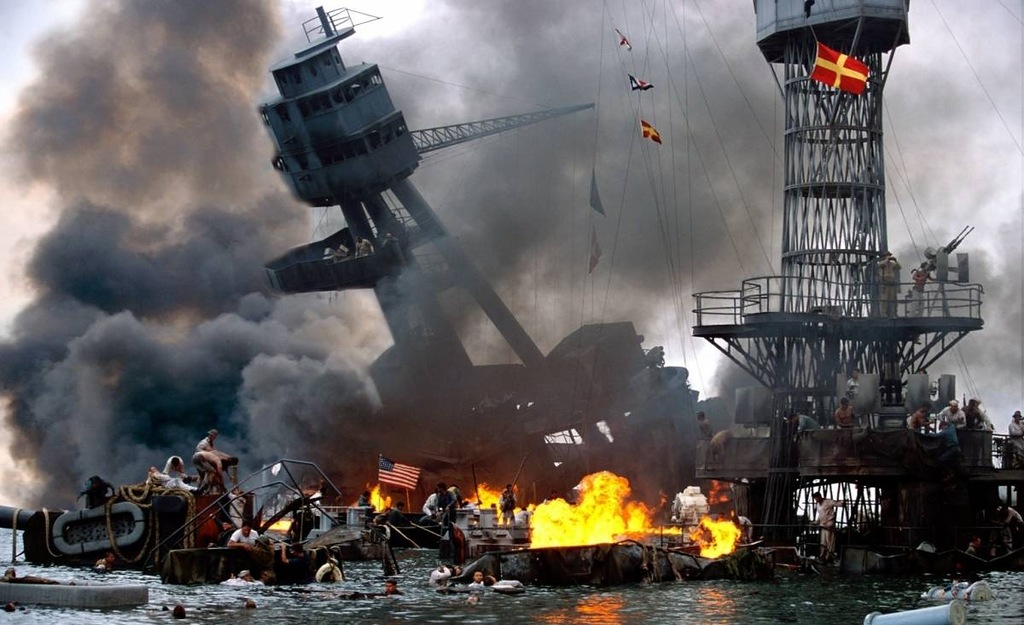
December 7, 1941: A Day of Infamy


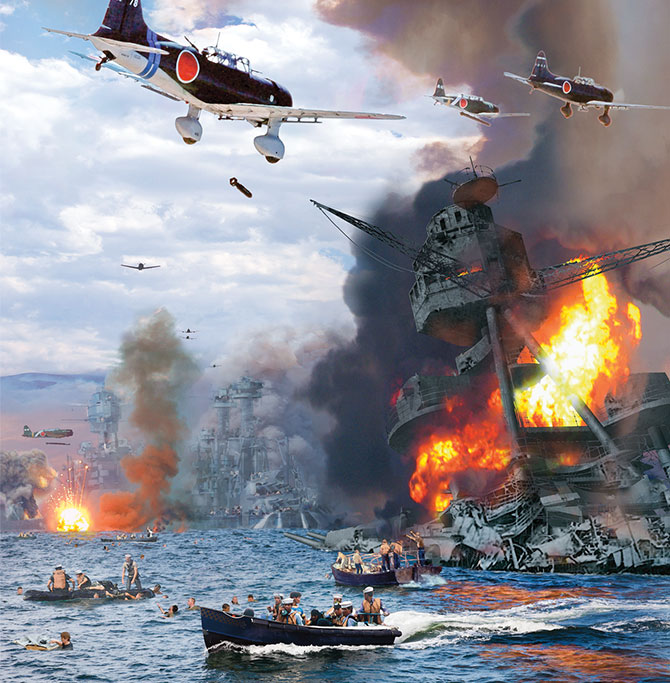
In the early morning hours of Sunday December 7, 1941,  over 350 Japanese dive bombers, torpedo bombers and fighter aircraft carried out a devastating surprise attack on the US Pacific Fleet at Pearl Harbor in a day that President Franklin D. Roosevelt declared would “live in infamy.”  The attack was the culmination of months of progressively deteriorating  bilateral relations, punctuated by a debilitating U.S. oil embargo in response to Japan’s increasing militarism and aggressive territorial expansion across the Asia-Pacific region. By 1941, the Japanese had come to believe that war with the US was inevitable and that its best hope for victory was a short and decisive conflict. The preemptive strike was an audacious gamble designed to neutralize the US Pacific Fleet, prevent the US from interfering in its plans to conquer Southeast Asia and force the United States to sue for peace from a position of weakness. The attack would have the opposite effect initiating a four year war that would include the detonation of two atomic bombs over Hiroshima and Nagasaki and Japan’s ultimate capitulation. 

With great secrecy, a Japanese naval task force of 67 ships, including six aircraft carriers, departed its home base in the Kuril Islands on November 26, en route to a rendezvous point 230 miles northwest of the Hawaiian Islands. From there, the six carriers would carry out a two waves of attacks against the unsuspecting US fleet at Pearl Harbor. The first wave was to target the airfields and stationary aircraft as well as the eight battleships the US had docked at Pearl Harbor. Japanese military leaders believed the loss of these ships would be a terrible blow to American morale and naval power and hasten its capitulation. The second wave would target lesser value ships such as cruisers, destroyers, and other stationary targets like dry docks and oil tanks.

The first Japanese aircraft took off from their carriers on December 7, around 6am, heading in a south easterly direction toward Pearl Harbor. Roughly two hours later, Mitsuo Fuchida, the young captain who commanded the first wave, broke radio silence shouting, “Tora, Tora, Tora,” code word to inform the Japanese fleet that they had indeed achieved surprise. Striking hard and fast, Japanese dive bombers destroyed hundreds of US military aircraft neatly arrayed on the ground at the Naval Air Station on Ford Island and the adjoining Wheeler and Hickam fields. At the same time, the eight battleships of the  US fleet were perfect targets for the Japanese pilots. Within 30 minutes, four US battleships— the Arizona, Oklahoma, West Virginia, and California—were sunk and the remaining four badly damaged. The Arizona quickly sank after it was struck eight times by Japanese bombs, one of which hit a forward ammunition magazine blasting the ship into two. The Oklahoma was hit by four torpedoes and capsized. Both the West Virginia and the California would also sink upright in the shallow water of the harbor after multiple bomb and torpedo hits.

As the first wave of attackers were completing their run, a second wave hit the US fleet around 8:50 am but it was much less successful than the first. The second wave inflicted more destruction on the already badly damaged battleships and sank several lesser value light cruisers, destroyers and minelayers. However, the second wave failed to destroy critical fleet infrastructure, like the submarine base,oil storage depots, and dry docks that would allow the US to recover more quickly. Moreover, the Japanese failed to destroy the three US aircraft carriers of the Pacific Fleet which had been sent to sea on maneuvers days earlier. 

Total US personnel loses that day included just over 2400 killed, almost half of whom were trapped in the USS Arizona and another 1,200 wounded. All eight battleships that were present were either sunk or heavily damaged as well as 13 other smaller ships. However, all but the Arizona and Oklahoma were eventually repaired and returned to service years later in the war. The US also lost almost 400 aircraft. In comparison, Japanese loses were minuscule: 29 aircraft an and 5 midget submarines. Damage to the US Pacific Fleet was severe but not the unequivocal knock out blow Japanese military planners sought.
Japanese Rear Admiral Chuichi Hara best summed up the results by saying, “We won a great tactical victory at Pearl Harbor and thereby lost the war.”

On December 8, at 12:30 p.m., Roosevelt addressed a joint session of Congress and, via radio, the nation in which he spoke his immortal words. The Senate followed with a near unanimous declaration of war against Japan. Three days later Nazi Germany and Fascist Italy declared war on the United States in solidarity with Japan. The United States now found itself in the middle of another world war.

The attack on Pearl Harbor immediately united a divided nation. Public opinion had been moving towards support for entering the war during 1941, but considerable opposition remained until the attack. Overnight, Americans united against the Empire of Japan in response to calls to “Remember Pearl Harbor. Within 30 days of the attack on Pearl Harbor, over 130,000 men would enlist for military service. Many of these men would have their chance at revenge six months later at the Battle of Midway where the US inflicted a crushing defeat on the Japanese Navy, changing the trajectory of the war in the Pacific in its favor.


August 27, 1776: The Battle of Long Island

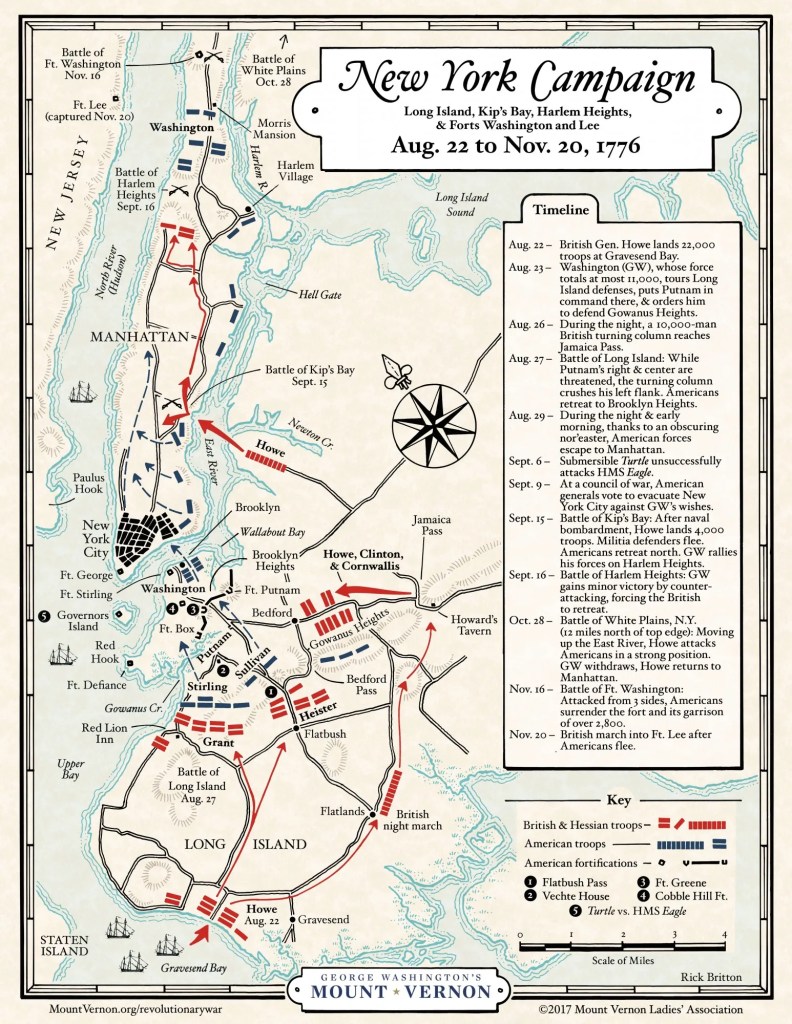
On August 27, 1776, British Redcoats routed General George Washington and his fledgling Continental Army at the Battle of Long Island, paving the way for the seizure of New York City which the British would hold until the end of the Revolutionary War in 1783. The battle was the first major engagement for the Continental Army following its creation on June 14, 1775 and its inexperience and lack of discipline showed. The scale and scope of the defeat raised serious doubts about whether Washington was the right person to command the army and nearly ended the American experiment in independence and self-governance before it began

In the Spring of 1776, optimism and patriotic fervor was on the rise throughout the thirteen colonies. British military forces had been forced to vacate Boston and given the blood spilled at Lexington and Concord and Bunker Hill, it was clear there was no turning back. Political discourse no longer centered around a redress of colonial grievances but increasingly focused on full-fledged independence from Great Britain. The will for independence was certainly there, as evidenced by the promulgation of a Declaration of Independence in Philadelphia on July 4. The question remained, however, whether the colonist could win their freedom, let alone keep it, for Great Britain was not about  to let them go without a fight.

After British troops were forced to withdraw from Boston to Nova Scotia, all eyes turned to New York City, where it was expected that British would try to return and occupy the crucially important city, with its strategic location and deep sheltered harbor. In April, Washington raced his 19,000 man Continental Army to New York City ahead of the British. However, he quickly recognized that defending the city was nearly impossible. The city consisted of three islands—Manhattan, Staten Island and Long Island— and all of their shorelines were suitable for an amphibious landing which made it difficult to predict where exactly the British might land. Moreover, the Royal Navy’s ability to control the rivers and water ways that cut through New York City would allow British warships to bring their heavy guns to almost any fight.  Writing to his brother John, Washington offered a blunt assessment of the situation: “We expect a very bloody summer at New-York … and I am sorry to say that we are not, either in men or arms, prepared for it.”

The first British warships were sighted near Sandy Hook, New Jersey, on June 29, 1776, and within hours, 45 ships would drop anchor in Lower New York Bay. One American soldier was so awed by the fleet, he declared that it looked like “all London afloat.”  Of these ships were some of the most powerful in the Royal Navy such as the 64-gun Asia and the 50-gun Centurion and Chatham. The guns on these ships alone outnumbered the combined firepower of all American shore batteries. On July 2, British troops began to land on Staten Island. By mid-August, the British fleet numbered over 400 ships large and small, including 73 warships and 8 ships of the line, while the army had grown to 32,000, more than the entire population of New York City.

On August 22, 20,000 British and Hessian troops departed Staten Island and made an amphibious landing at Gravesend Bay on the southwestern shore of Long Island. Washington had built fortifications and deployed half his army here in anticipation of a British landing. General William Howe was in overall command of all British troops. However, the battle plan was conceived of by his second in command, General Henry Clinton. Clinton’s plan was to split the army into three divisions. Two divisions would make feints directly against the Americans entrenched on the wooded hills of the Gowanus Heights. The largest division, 10,000 men personally under Clinton’s command, would make an overnight march through an unguarded pass on the left of the American line and turn their flank by surprise.

As the battle commenced in the early morning hours of August 27, the British executed their plan flawlessly and with great success. One division of British regulars under General James Grant and one of Hessian mercenaries under General Leopold Phillip von Heister kept the American defenders fixed and distracted as Clinton maneuvered to turn their flank. Around 9 am, the British sprung their trap as Clinton’s Division reached Bedford village behind the American line and engaged the defenders. At the same time, the two other divisions now turned their feints into full-fledged attacks.  With bayonets fixed, the Hessians charged the American left under General John Sullivan and fighting descended into vicious hand to hand combat as the Hessians ruthlessly butchered the Americans. The inexperienced Continentals were now caught between a hammer and an anvil and in danger of being cut off from their route of retreat. Recognizing the danger of their situation, Sullivan’s men panicked and fled pell-mell towards their fortifications at Brooklyn Heights.

With the American left flank disintegrating before their eyes, the American right now began to feel the full weight of Grant’s attack. General William Alexander and his brigade put up stiff resistance for two hours, but the collapse of the American left put his brigade’s position increasingly in peril. Threatened with encirclement, Alexander ordered his brigade to fall back.  He personally led 250 Marylanders in a bayonet charge against an overwhelming British force creating a crucial window of time for more of his soldiers to escape to their fortifications in Brooklyn Heights. Alexander was eventually taken prisoner and only nine of the original 250 made it to the safety of Brooklyn Heights. Watching the battle on the right unfold, Washington remarked “Good God, what brave fellows I must lose.”

By noon, the battle had largely ended. But when the dust cleared the total number of Americans killed, captured, and wounded reached nearly 2200. Although Washington managed to survive a catastrophic day, he wasn’t out of danger yet. His army remained divided between Manhattan and Long Island and the portion that remained on Long Island was exhausted and penned up, with Howe’s army in front of it and the East River at its back. On August 29th, Washington made the unavoidable decision to withdraw his troops from Brooklyn Heights. That evening, under a cover of darkness and fog, a Massachusetts regiment composed of mostly sailors and fishermen ferried the endangered troops back across the East River on flat bottom boats to the temporary safety of Manhattan.  

Washington’s defeat opened the door to a series of equally disastrous losses that ultimately allowed the British to seize full control of New York City. On September, 15, the Americans were routed again at the Battle of Kipp’s Bay as British troops established a foothold on Manhattan Island. Washington would score a minor victory at the Battle of Harlem Heights the next day but suffer another ignominious and demoralizing defeat at White Plains on October 28. Three weeks later American forces were driven from Forts Washington and Lee giving the British full control of New York City. Washington and his army retreated into New Jersey and were chased across the Delaware River into Pennsylvania. The almost uninterrupted progression of defeats in the summer and fall of 1776 squelched much of the optimism from earlier in the year and cast grave doubt on the viability of the revolution and George Washington’s competency as a military commander. Only Washington’s bold decision to cross the icy Delaware River on Christmas night and wage a surprise attack on the Hessian garrison at Trenton would restore faith and optimism in the cause and tamp down doubts about his suitability uas a military commander.

August 20-21, 1968: The Soviet Invasion of Czechoslovakia


On August 20-21, 1968, the combined armies of the Soviet Union, Poland, Hungary, and Bulgaria invaded Czechoslovakia to topple the reformist government of Alexander Dubcek and to ensure that Prague remained firmly entrenched in the Soviet orbit and under communist rule. This Soviet-led intervention was the third time since 1953 in which Moscow was forced to use military power to ensure its control over its East European satellites. It also further underscored the fundamental tenet of Soviet policy toward the region, the idea of limited sovereignty. Diversity within the Eastern Bloc was permissible only within the context of strict Soviet control and universal conformance on two key points: loyalty to the Soviet Union in foreign affairs and the primacy of the communist party in the domestic sphere.

Of all of Moscow’s East European satellites, Czechoslovakia was the last to succumb to full Soviet control and therefore was late to experience de-Stalinization.  Since 1948, Czechoslovakia had been ruled by Communist hardliners Klement Gottwald and Antonin Novotny who ensured that unlike Poland or Hungary, Czechoslovakia remained a hardcore Stalinist state firmly within the Soviet sphere of influence. However, by the 1960s the Czech economy began to falter, and cracks within the ruling Communist Party emerged as popular dissatisfaction with communist rule was on the rise.

In early 1968, Novotny was ousted as the head of the Czechoslovakian Communist Party and replaced by Alexander Dubcek in what would become known as the “Prague Spring.”  In many ways, Dubcek was a forerunner to future Soviet leader Mikhail Gorbachev. Dubcek, like Gorbachev, sought to breathe new life into the Communist system and insisted that all reforms would take place within the framework of the Marxist-Leninist state. Nonethless, as he implemented reforms he began to lose control of the process.  Dubcek relaxed censorship while encouraging greater policy debate and limiting the powers of the secret police. He also pledged to put more emphasis on the production of consumer goods, while suggesting the possibility of a multiparty government and democratic elections ten years in the future. From Moscow’s perspective, it appeared that Dubcek was dismantling Communist rule not reforming it.

Soviet leaders were increasingly alarmed by what was happening in Czechoslovakia and the model it might provide for the Soviet people and the other Communist states of Eastern Europe. However, Soviet leadership was divided between those who wanted to avoid a replay of the 1956 Hungarian crisis and counseled patience and those who argued for a swift military solution to the problem. In Eastern Europe there was surprisingly strong support for the latter. The hardline Communist leaders of East Germany and Poland—Walter Ulbricht and Władysław Gomułka—were especially apprehensive and argued for a decisive military intervention.  Gomułka’s support for the use of force was a particularly ironic twist because his rise to the top of the Polish communist party in October 1956 against Moscow’s wishes, almost triggered a Soviet military intervention in Poland. In July, the Kremlin insisted on consultations with their Czechoslovak counterparts to better understand the situation. Dubcek defended his reform agenda and resisted demands he reverse course but reaffirmed Czechoslovakia’s alliance with the Soviet Union and the Warsaw Pact.

As Dubcek struggled to convince the Soviets and his fellow East Europeans of his continued allegiance, momentum for a military intervention was growing in Moscow and the other East European capitals. On 3 August, representatives from the Soviet Union, the German Democratic Republic, the People’s Republic of Poland, the Hungarian People’s Republic, the People’s Republic of Bulgaria and Czechoslovakia met in Bratislava in a last-ditch effort to reach a compromise and avoid military force. The meeting did little to resolve the standoff and only resulted in a vaguely worded declaration subject to contradictory interpretations. The declaration addressed the principles of equality, sovereignty, and territorial integrity while reaffirming the participants unshakable fidelity to Marxism–Leninism, proletarian internationalism, and the implacable struggle against bourgeois ideology and all “antisocialist” forces. More disturbing were the repeated references to fraternal assistance, code word in Soviet parlance for military intervention, and the idea that it was right and duty of all communist states to intervene in another if communist rule were ever endangered or replaced by a non-communist system. This idea would form the basis for what became known as the Brezhnev Doctrine.

At an August 16-17 meeting, the Soviet Politburo unanimously passed a resolution to “provide help to the Communist Party and people of Czechoslovakia through military force”. At an August 18 Warsaw Pact meeting, Brezhnev announced that the intervention would go ahead on the night of 20 August, and asked for “fraternal support”, which the national leaders of Bulgaria, East Germany, Hungary, and Poland duly offered. East German military forces were left out of the invasion at the last minute for fear of reawakening memories of the 1939 German invasion and provoking strong resistance. Romania refused to participate in the intervention and its leader Nicolai Ceausescu condemned the invasion in a August 21 public address calling it a “grave error” that “constituted a serious danger to peace in Europe and for the prospects of world socialism.” His address was perceived as a gesture of disobedience towards the Soviet Union. However, Ceausescu escaped the Kremlin’s ire largely because he continued to run Romania as a hard-core communist state and did not threaten to leave the Warsaw Pact.

Around 11 pm on August 20, more than 200,000 troops and 2,000 tanks from the Soviet Union, Poland, Hungary, and Bulgaria rolled across the border into Czechoslovakia. Armed resistance to the invasion was negligible, but protesters immediately took to the streets. The invaders quickly occupied the capital of Prague and spread out to take control of other major cities, key points of communication, and airports. Soviet leader Leonid Brezhnev insisted on the participation of at least some of Moscow’s Warsaw Pact allies in the intervention to give it a veneer of legitimacy.  Nevertheless, Soviet military forces did most of the heavy lifting.

The invasion caught most of Czechoslovakia and the world by surprise. Although resistance to the invasion was negligible, unlike the 1956 Hungarian Uprising, protesters immediately took to the streets. Within hours, Dubcek, along with other government leaders, was arrested and flown to Moscow in hand cuffs for interrogation. He was surprisingly allowed to return to Prague on August 27, where in an emotional address he acknowledged the error of his ways and agreed to curtail his reforms. He was forced to gradually dismiss reformist aides and government officials who were quickly replaced by hard-line Communists. After anti-Soviet rioting broke out in April 1969, he was removed as first secretary of the Czechoslovak Communist Party and replaced by Gustav Husak, a hardliner who was willing to work with the Soviets. Dubcek was later expelled from the Communist Party and briefly served as ambassador to Turkey, before being made a minor forestry official in Slovakia.

In the years that followed, Husák consolidated his power, further purging the government and communist party of Dubcek loyalists, reimposing centralized control over the economy and reinstating the power of the security service. He also ensured that Czechoslovakia once again became a cooperative member of the Warsaw Pact. Husak’s rule would come to be known as the “Reluctant Terror.” It was characterized as one of strict adherence to Soviet policy objectives and the minimum amount of repression necessary to achieve these objectives and prevent a return to Dubcek- style reformism. As a result, the regime was neither a complete return to Stalinism nor al liberal one either. Husak would continue to rule Czechoslovakia until November 1989 when he and the rest of the communists were overthrown in what became known as the Velvet Revolution

November 9-10, 1938: Kristallnacht, the Beginning of the Holocaust

On November 9–10, 1938, Nazi leaders unleashed a series of pogroms against the Jewish population in Germany, annexed Austria, and in the Sudetenland which was seized from Czechoslovakia a month earlier. This event came to be called Kristallnacht (The Night of Broken Glass) because of the shattered glass that littered the streets after the vandalism and destruction of Jewish-owned businesses, synagogues, and homes. Kristallnacht was an unmistakable harbinger of the horrors yet to come and is widely regarded as the beginning of the Holocaust.

German officials claimed that Kristallnacht had erupted as a spontaneous outburst of public sentiment in response to the assassination of Ernst vom Rath. Vom Rath was a German embassy official stationed in Paris. Herschel Grynszpan, a 17-year-old Polish Jew, had shot the diplomat on November 7, 1938. A few days earlier, German authorities had expelled thousands of Jews of Polish citizenship living in Germany from the Reich; Grynszpan had received news that his parents, residents in Germany since 1911, were among them. Grynszpan’s parents and the other expelled Polish Jews were initially denied entry into their native Poland. They found themselves stranded in a refugee camp near the town of Zbaszyn in the southern border region between Poland and Germany. 

 In reality it was a purposeful, well orchestrated, act of state terror.  Vom Rath died on November 9, 1938, two days after the shooting. The day happened to coincide with the anniversary of the failed 1923 Beer Hall Putsch, an important date in the Nazi calendar. The Nazi Party leadership, assembled in Munich for its commemoration and chose to use the occasion as a pretext to launch a night of antisemitic excesses. Propaganda minister Joseph Goebbels, a chief instigator of the Kristallnacht pogroms, suggested to the convened Nazi ‘Old Guard’ that ‘World Jewry’ had conspired to commit the assassination. He announced that “the Führer has decided that … demonstrations should not be prepared or organized by the Party, but insofar as they erupt spontaneously, they are not to be hampered.”

The violence was largely prompted or provoked by Hitler’s Sturmabteilung (SA) but also included many ordinary German who held anti-Semitic prejudices and joined in the pogrom. The SA was the paramilitary wing of the Nazi Party and often referred to as “Storm Troopers” and the “Brown Shirts.” The SA were mostly violent street thugs and embittered veterans of the First World War who fought Jews, communists, and other perceived enemies of the Reich who they judged to be responsible for Germany’s defeat in the war and her subsequent hardships. Many members wore civilian clothes to support the fiction that the disturbances were expressions of ‘outraged public reaction.’ The “spontaneous” rioters also were to take no measures endangering non-Jewish German life or property; they were not to subject foreigners (even Jewish foreigners) to violence; and they were to remove all synagogue archives prior to vandalizing synagogues and other properties of the Jewish communities.

The SA led mobs shattered the shop windows of an estimated 7,500 Jewish-owned commercial establishments and looted their wares. Jewish cemeteries became a particular object of desecration in many regions. Many synagogues burned throughout the night in full view of the public and of local firefighters, who had received orders to intervene only to prevent flames from spreading to nearby buildings. The mobs also attacked Jews in their homes while forcing Jews they encountered to perform acts of public humiliation. Up to 30,000 Jewish males were arrested, with most of them transferred from local prisons to Dachau, Buchenwald, Sachenhausen, and other concentration camps. The Nazis also determined that the Jews should be liable for the damages caused during “Kristallnacht.” “The Decree on the Penalty Payment by Jews Who Are German Subjects” also imposed a one-billion mark fine on the Jewish community, supposedly an indemnity for the death of vom Rath. 

“Kristallnacht” provided the Nazi government with an opportunity at last to totally remove Jews from German public life. It was the culminating event in a series of anti-Semitic policies set in place since Hitler took power in 1933. In the weeks that followed, the German government promulgated dozens of laws and decrees to deprive Jews of their property and of their means of livelihood. Many of these laws enforced “Aryanization” policy—the transfer of Jewish-owned enterprises and property to “Aryan” ownership, usually for a fraction of their true value. Ensuing legislation barred Jews, already ineligible for employment in the public sector, from practicing most professions in the private sector. The legislation made further strides in removing Jews from public life. German education officials expelled Jewish children still attending German schools. German Jews lost their right to hold a driver’s license or own an automobile. Legislation restricted access to public transport. Jews could no longer gain admittance to “German” theaters, movie cinemas, or concert halls.

On November 15, 1938, one week after Kristallnacht, President Franklin D. Roosevelt denounced Nazi Germany’s terror attack on Jews, saying, “I myself could scarcely believe that such things could occur in a twentieth-century civilization.” FDR made an exception to his practice of off-the-record press conferences by allowing newspapers to quote this statement from his meeting with reporters that day. The president also announced that he had recalled the US ambassador to Germany, Hugh Wilson. The United States was the only nation to recall its ambassador and would not replace him until after the end of the war in 1945. 

The 1956 Hungarian Uprising: A Fight for Freedom

On 23 October 1956, the people of Hungary rose up in a brave yet futile effort to overthrow their Soviet imposed communist government and set up a more democratic and pluralistic political system free of Soviet oppression. The uprising lasted 12 days before Soviet tanks rolled into Budapest deposing the government of Imre Nagy and thwarting the Hungarian revolutionaries efforts to escape the Soviet camp. The uprising presented the Soviet Union with the most serious challenge to its authority in Eastern Europe since the end of World War II. It also revealed the persistent, paradoxical, challenge the Kremlin would face in managing its East European satellites over the next 30 years; the contradiction between its determination to maintain absolute control over these states and building legitimate, viable Communist regimes that could exist without constant Soviet support or intervention.

At the end of World War II, Red Army troops occupied nearly all of the states of Eastern Europe, making their subordination to the Soviet Union almost inevitable. Soviet leader Josef Stalin acknowledged this fact in April 1945 commenting to Milovan Djilas, a high-ranking official in the Yugoslav Communist party, “This war is not as in the past; whoever occupies a territory also imposes on it, it’s own social system. Everyone imposes their own system as far as their army can reach.” The establishment of communist rule in Hungary roughly followed a similar pattern to that of the other East European states. Employing what head of the Hungarian Communist Party Matyas Rakosi termed “salami tactics” the communist proceeded to divide the non-communist opposition while gradually seizing power with the support of the occupying Red Army lurking in the background. By 1948, Hungary’s communists had gained total power over the country, and in 1949 the country was proclaimed a “peoples’ republic” with Rákosi as its absolute ruler.

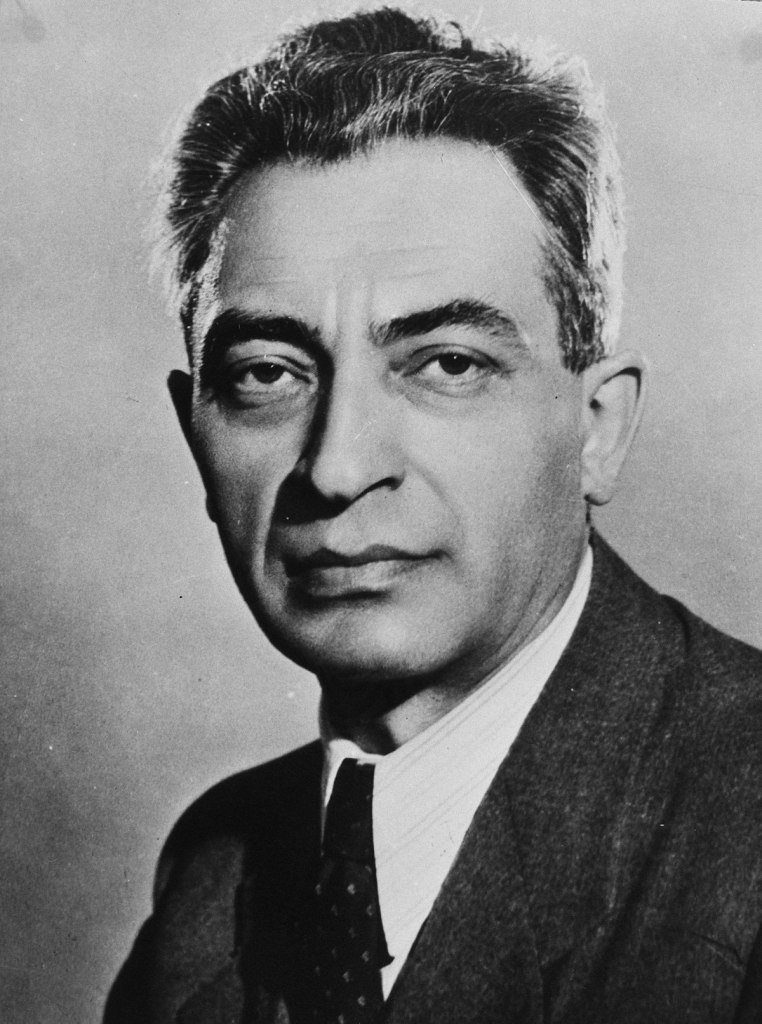
Hungary’s communist leaders

Rakosi set about rapidly transforming Hungary into a Soviet style communist state. He instituted Stalinist political and economic programs, resulting in Hungary experiencing one of the harshest dictatorships in Europe. Rakosi set up the dreaded AVH, the state political police, to identify and root out regime opponents who were subject to show trials. On the economic front, the government collectivized agriculture and it extracted profits from the country’s farms to finance rapid expansion of heavy industry. Industrial production rose steeply, but the standard of living did not; the production of consumer goods was limited and that of agriculture stagnated. Hungary’s free market economy was replaced by a Soviet command style economy in 1949 and trade was reoriented away from Western Europe towards the Soviet Union. In addition, Hungary, having sided with the Nazis, was obligated to pay reparations to the Soviet Union, Czechoslovakia, and Yugoslavia to the tune of 20 percent of its annual income. By the early 1950s, the imposition of Soviet-style economic policies and the payment of war reparations were impoverishing the Hungarian people fueling anti-Soviet political discontent as the payment of foreign debt and the heavy industrialization of the country took precedence over the material needs of the Hungarian people.

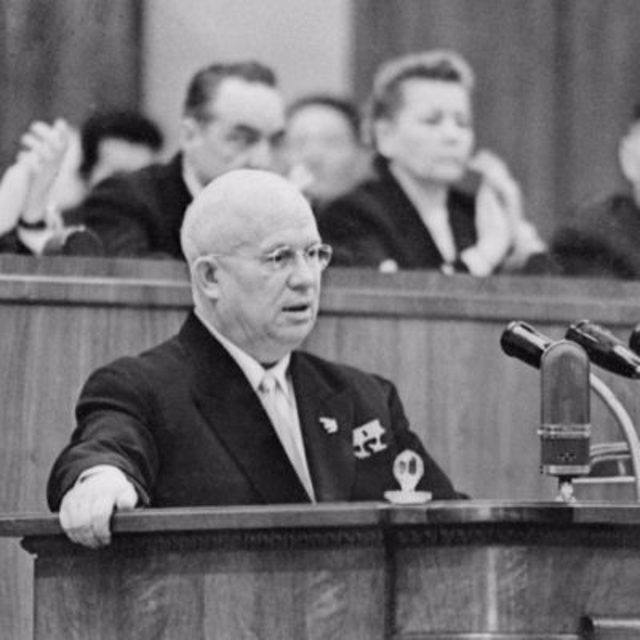
The year 1956 was a tumultuous one in the Soviet Union and its East European satellites. It had been three years since Soviet leader Josef Stalin’s death and Nikita Khrushchev finally prevailed in a three-way power struggle to succeed him. In February, at the Twentieth Party Congress of the Communist Party of the USSR, Khrushchev gave a “secret speech” condemning Stalin. In a tirade that lasted hours, he denounced Stalin’s “cult of personality,” the party purges of the 1930s, the gulags, and his blunders in World War II. He accused Stalin of negligence, deceit, and incompetence which cost millions of Soviet lives. 

Khrushchev at the 20th Party Congress

Although Khrushchev’s address was intended to help consolidate his power and mobilize domestic support for a reform agenda in the Soviet Union, it had far reaching implications for the entire Communist Bloc. No where was its impact felt more profoundly than in the six countries of Eastern Europe where their leaders, who were installed by Stalin and were building mini-Stalinist regimes, now found their legitimacy compromised. Khrushchev argued that the Stalinist model was not the only acceptable model of communist development and that there were different roads to socialism. In Poland and Hungary, the people were beginning to chafe under Communist rule, Khrushchev’s speech led to increased protests and demands for political and economic reforms.

In Hungary, popular anger at Communist rule continued to grow rapidly and the government proved unwilling or unable to stop it. In July, Khrushchev facilitated the replacement of hard-line communist ruler Matyas Rakosi with another Stalinist hardliner, Erno Gero. Gero tried to defuse public anger and demonstrate to Moscow he was adhering to the party line of de-Stalinization by allowing the body of Lazlo Rajk, a communist reformer who had been executed in the 1949 Stalinist purges, to be buried in Budapest. His burial on October 6, 1956, brought to the surface anger over past Stalinist injustices against Hungary over the years, and the funeral march quickly transformed into a mass political demonstration. Anti-regime opponents, mostly urban intellectuals and students, began to make bolder and bolder demands of the government while calls for political and economic change soon spread to the working class and peasants as well.

Left: Matyas Rakosi; Center: Erno Gero; Right: Imre Nagy

On the afternoon of 23 October, a restless crowd of 20,000 marched through Budapest and gathered at the statue of Józef Bem, a Hungarian-Polish hero of the 1848 Hungarian Revolution. Here they issued a list of demands known as the “Sixteen Points,” which included political reforms, democratization, the removal of Erno Gero and other Hungarian Stalinists, and the withdrawal of all Soviet military forces. What began as a series of peaceful student demonstrations now began to evolve into something much larger and by the evening there were more than 200,000 people on the streets calling for change.
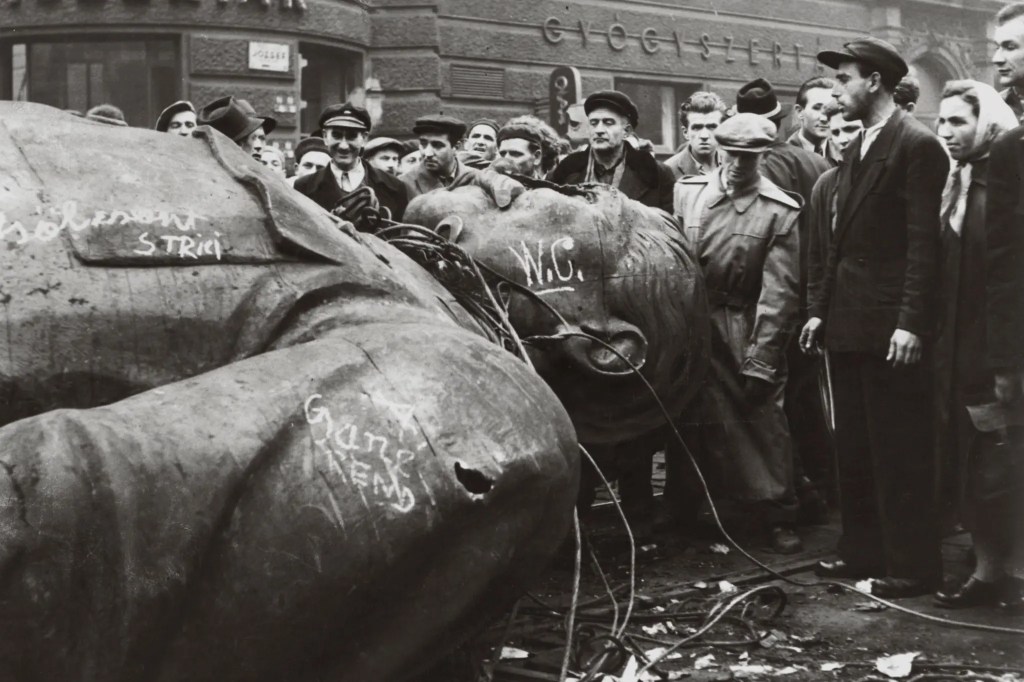
In response, Gero went on the radio that evening and denounced the protesters as fascists and agents of imperialism and vowed that there would be no concessions. Gero’s defiant statements only further outraged the protesters and inflamed an already combustible situation. An angry crowd marched to the center of Budapest and defiantly tore down a ten-meter-high bronze statue of Stalin. They looped steel cables around its neck, pulled it to the ground with trucks and defaced the fallen icon. Elsewhere in Budapest, another group battled police outside a local radio station while units of the Hungarian military were besieged and attacked. Revolutionaries took over public buildings, destroyed Soviet symbols and freed political prisoners who had been locked away for years. The protest now became an armed uprising. The Hungarian Revolution had begun.

The Hungarian people take down Stalin

Fighting escalated quickly and the Hungarian government was quickly losing control of the situation as well as its security apparatus. Gero ordered the Hungarian military to quash the demonstrations and reestablish order, but many soldiers resisted cracking down on their fellow citizens and some even joined the protests. Acknowledging that his grip on power was slipping, Gero quickly appealed to his Soviet overlords for assistance. Khrushchev lacked confidence in Gero and was initially hesitant to dispatch Soviet military forces to quell the protests but incoming reports from the Soviet Ambassador in Budapest, Yuri Andropov, assured the Kremlin that military intervention was necessary. The next day, Soviet Defense Minister Georgiy Zhukov ordered 6,000 Soviet troops and 700 tanks into downtown Budapest. In return for Soviet military backing, however, Khrushchev insisted that Gero bring back Imre Nagy back into a high-level government position to appease the disgruntled populace. On the morning of October 24, Nagy was again named Prime Minister.

Neither the Soviet army nor the return of Imre Nagy did much to daunt the citizens of Budapest or defuse the crisis. Over the next several days, barricades went up throughout the city while fierce fighting raged between these revolutionaries and the Soviet Army , the Hungarian military, and the State Security Police. Shortly after being appointed Prime Minister, Nagy addressed the nation on radio calling for a ceasefire and promising to institute political reforms. His appeal did nothing to quell the revolutionary fervor. Not a single revolutionary stood down or handed over a weapon.

Russians Go Home!”

Nagy was a tragic figure about to be swept up in a wave of revolutionary tumult that he failed to fully grasp and was powerless to stop. Nagy appealed to the pre-revolutionary Hungarian public because he was a reformer and a moderate and not a hardline Stalinist like Rakosi and Gero but he was still a dedicated communist. Like Khrushchev, he believed that there were different pathways to socialism not just the single, rigid, Soviet model, insisted upon by Stalin. He wanted to build a distinctly unique communist system that reflected the national characteristics of the Hungarian people. The problem for Nagy was that Hungary’s young revolutionaries no longer wanted reform. They wanted to overthrow the system. Back in the government, Nagy quickly saw his dream of a new Hungary firmly on a peaceful path to reform communism under his leadership slipping away. He tried to steer a middle course acting as a bridge between the revolutionaries and the various Communist Party factions but for the people of Hungary the time for restraint, halfway measures and middle courses had passed.

Massacred unarmed Hungarians at Kossuth Square.

With no signs that order was close to being restored, two high-level Soviet Politburo members— Anastas Mikoyan and Mikhail Suslov— traveled to Budapest on October 25 to troubleshoot the situation which was clearly deteriorating. Mikoyan and Suslov arrived to find a government that was no longer functioning and a Hungarian Communist Party that was in shambles. The two Soviet emissaries undressed Gero mercilessly for his handling of the crisis and suggested he resign at once and flee the country. He was quickly replaced by János Kádár as head of the communist party. The Soviets hoped that the new team of Nagy and Kadar would be able to right the ship but the situation was about to get worse. That morning, Hungarian and Soviet military forces opened fire on a group of unarmed protesters in Kossuth Square demanding Gero’s resignation, killing hundreds and wounding many more. As word of the massacre spread throughout Budapest, the revolution quickly devolved into an all-out existential war between ragtag groups of young, poorly armed, and undisciplined rebels and the Soviet army, supported by the few Hungarian military forces that remained loyal to the government.

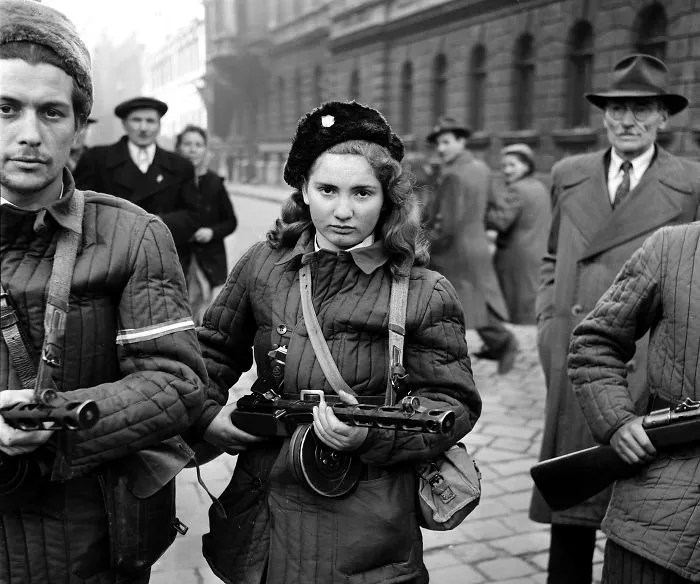
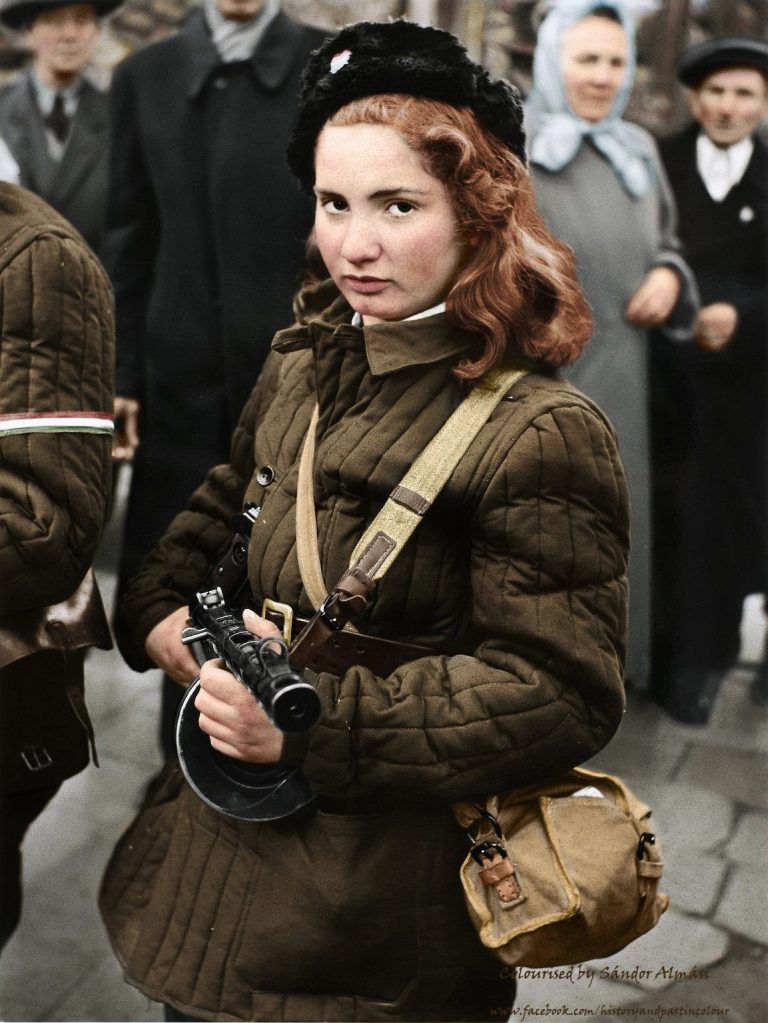
Erika Kornelia Szeles, a 15 year-old Hungarian anti-communist fighter. She was killed during the revolution

Amidst the growing violence, Nagy continued to try and stake out ground as a bridge between the revolutionaries and hardliners inside the Hungarian Communist Party but his efforts found little traction. On October 27, He announced the formation of a new cabinet that included moderate communists as well as four non-communist ministers in the naive hope the revolutionaries would lay down their arms and embrace the new government. Instead, his announcement met with jeers and the resistance from the revolutionaries. Throughout Hungary, revolutionary councils already assumed the responsibilities of local governments from the defunct Communist party and had mobilized strikes to halt the economy and the functioning of civil society. Moreover, too much blood had been spilled by Hungary’s revolutionaries to settle for anything less than their full demands.

The crisis in Hungary was reaching an inflection point. Almost a week had passed since violence first erupted on the streets of Budapest and Soviet military forces still continued to struggle to suppress the revolution. The young Hungarian freedom fighters refused to be intimidated by Soviet military force and their confidence was growing daily. Conversely, Soviet troops were increasingly exhausted and demoralized with many growing more sympathetic to the Hungarian cause. The Kremlin was not prepared to allow Hungary to leave the Soviet bloc but it needed to find a way to extricate itself from the situation. What to do in Hungary prompted heated debate inside the Soviet Politburo. Hardline Stalinist holdovers like Vyacheslav Molotov, Kliment Voroshilov, and Lazar Kaganovich, who saw the situation in Hungary as an opportunity to discredit Khrushchev, argued strenuously for doubling down on a military solution. However, more moderate voices like Khrushchev and Defense Minister Georgiy Zhukov, who days earlier favored deploying troops, were more conciliatory and cautious urging flexibility. Zhukov argued that the option of military escalation should be kept in reserve but they also needed to consider pulling Soviet forces from the streets of Budapest to create an opening for a negotiated resolution to the crisis.
Khrushchev wanted to reach a deal with the Hungarians that would keep the essence of Soviet rule but allow for a little more independence from Moscow. For that, the Kremlin needed some semblance of a functioning Hungarian government which made Nagy still very relevant to Moscow. The Soviets also needed an opportunity to pull back without losing face. That opportunity presented itself late in the evening of October 27 when Nagy and Kadar approached Mikoyan and Suslov about the possibility of a cease fire and the withdrawal of Soviet troops from Budapest. With Kadar taking the lead, the four men hammered out the broad framework of a agreement and around noon the following day a ceasefire was announced.

The Hungarian people initially greeted the cease fire with considerable skepticism but as the Soviets withdrew their military forces from Budapest over the next several days it came to be seen as a great victory. In the absence of Soviet troops, the Hungarian people set about dismantling the Communist system. Nagy dispensed with his customary moderation and embraced the idea of revolution. On October 30, he announced that the one-party system was being abolished and replaced with a multiparty democratic system. Thousands of political prisoners that had been incarcerated by the regime were released including, Cardinal József Mindszenty, the head of the Hungarian Catholic Church, who received a lifetime sentence in 1949 for opposing Communist rule. Angry mobs of anti-Communist revolutionaries also began to hunt down and execute members of the hated AVH, the Hungarian secret police, and other Communist party functionaries. By November 4, over 200 Communist party officials had been summarily executed.
Within days, Khrushchev regretted his decision to pull out Soviet military forces from Budapest. Increasingly pessimistic reports from Mikoyan and Suslov only served to confirm Moscow’s worst fear; Hungary was trying to break away from the socialist bloc. On the morning of October 31, Khrushchev convened an emergency session of the Politburo to decide what to do in Hungary once and for all. Where as days earlier the prevailing opinion in the Politburo was to give peace a chance, it was now clear from the deteriorating situation in Budapest that the Soviet Union had no other recourse than military force. Citing concerns about Soviet prestige, the unity of the socialist camp, and domestic political concerns, Khrushchev argued that the challenge in Hungary could not go unanswered, “We must take the initiative in restoring order in Hungary,” he declared.  On 1 November, Nagy formally announced Hungary’s withdrawal from the Warsaw Pact and Hungary’s international status as a politically non-aligned country. This step ensured that there was no turning back for the Soviets.

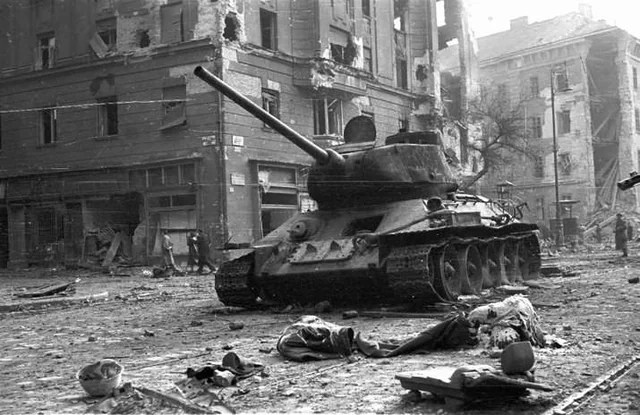
The Soviets quickly began preparations to oust Imre Nagy’s revolutionary government and restore Communist rule. Khrushchev informed Moscow’s Warsaw Pact allies of their plan for Hungary which met with little objection except from Poland’s leader, Wladyslaw Gomulka, who assumed power almost two weeks earlier against Soviet wishes. Soviet military forces also surreptitiously began returning. On November 1, Soviet tanks poured across the border into Hungary and when preparations were complete 150,000 Soviet troops from ten divisions and armed with the most modern equipment ringed Budapest. The Hungarians were not oblivious to the Soviet troop movements. Intelligence reporting had trickled in from Hungarian military forces loyal to the new revolutionary government and other observers but Nagy refused to believe the reports and convinced himself he still remained in favor with Moscow. Moreover, there was little Hungary could do at this juncture other than fight back.

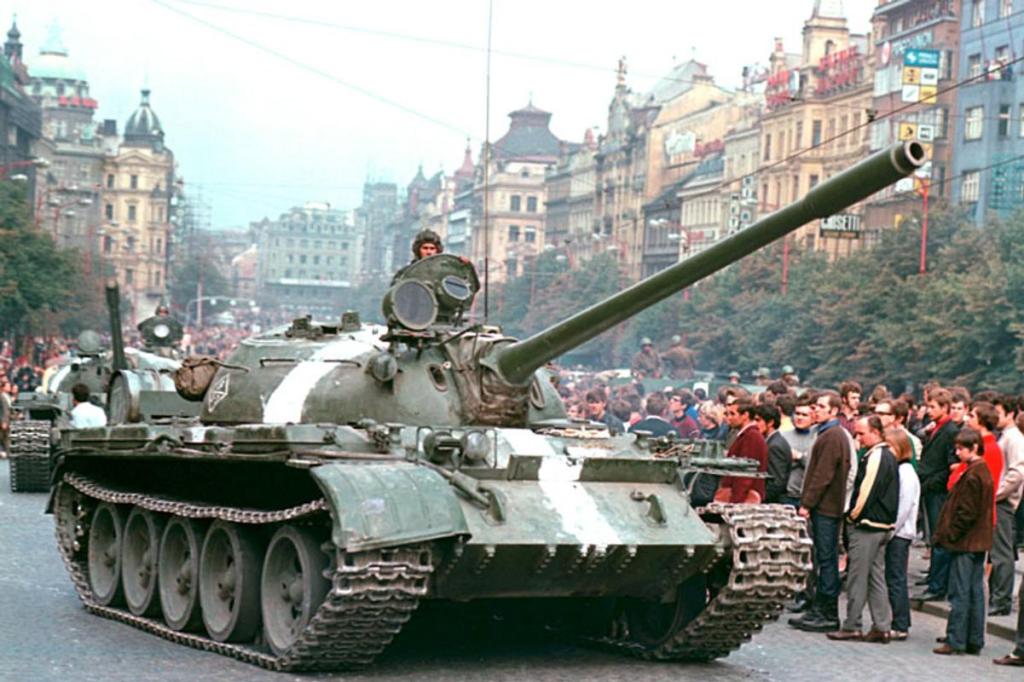
Soviet tanks on the streets of Budapest

Shortly before dawn on November 4, “Operation Whirlwind”, the Soviet invasion of Hungary, commenced as Soviet tanks rolled into Budapest to depose the government of Imre Nagy. Around 5:30am Imre Nagy broadcast his final plea to the nation and the world, announcing that Soviet forces were attacking Budapest before taking refuge in Yugoslavia’s embassy. Later that day, Janos Kadar, Nagy’s deputy prime minister and titular head of the Hungarian Communist Party, operating under direction from Moscow, declared the formation of a counter-revolutionary government. Fighting would spread through out the city, but the brave Hungarian revolutionaries who previously stalemated the Soviets were no match for the overwhelming firepower Moscow brought to bear this time around. Although sporadic fighting would continue over the next week Hungary’s fate was sealed. When all the guns were finally silenced, roughly 3000 Hungarians and 700 Soviet army troops were killed in the uprising since October 23.

With most of Budapest under Soviet control by 8 November, Janos Kádár became Prime Minister of the Hungarian “Revolutionary Worker-Peasant Government” and General Secretary of the Hungarian Communist Party, a position he would hold until 1988. Imre Nagy would suffer a far more terrible fate. After holding up in the Yugoslav embassy for two weeks, he was lured out of the embassy under false promises, arrested, and deported to Romania. On June 16, 1958, Nagy was tried and executed for treason alongside his closest allies, and his body was buried in an unmarked grave.

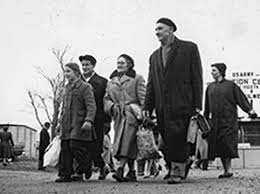
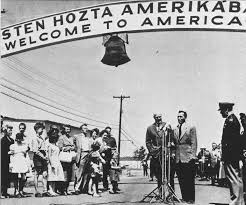
In the immediate aftermath of the Soviet invasion, many thousands of Hungarians were arrested. Eventually, 26,000 of these were brought before the Hungarian courts, 22,000 were sentenced and imprisoned, 13,000 were interned, and 229 were executed. Approximately 200,000 Hungarians fled Hungary to Austria as refugees as a result of the uprising. More than 30,000 of these refugees would be airlifted by the US military and resettled in the United States as part of Operation Safe Haven. Upon arrival, the Hungarians were temporarily housed at Camp Kilmer, in Piscataway New Jersey where multiple federal agencies assisted them through a resettlement process to become the newest members of American society. Many settled in nearby New Brunswick, which had an already thriving Hungarian-American community.


Trafalgar: Nelson’s Legendary Naval Victory, October 21, 1805

On October 21, 1805, a British naval fleet under the command of Admiral Horatio Nelson, destroyed a combined Franco-Spanish fleet at the Battle of Trafalgar, permanently ending Napoleon’s plans for invading Great Britain and ensuring that England would remain the world’s dominant naval and commercial power for the next century. Trafalgar is one of the most famous naval battles in history and it is remembered as Nelson’s greatest victory, but it would come at great personal cost, his life. After the French defeat at Trafalgar, Napoleon would forgo any immediate efforts to rebuild the French Navy. Instead, he sought to destroy Great Britain’s capacity to make war by closing off Europe’s markets to British trade through a European wide embargo, known as the Continental System. These actions would put in motion a series of events that eventually would lead to his disastrous invasion of Russia seven years later and his subsequent defeat and exile to the isle of Elba.

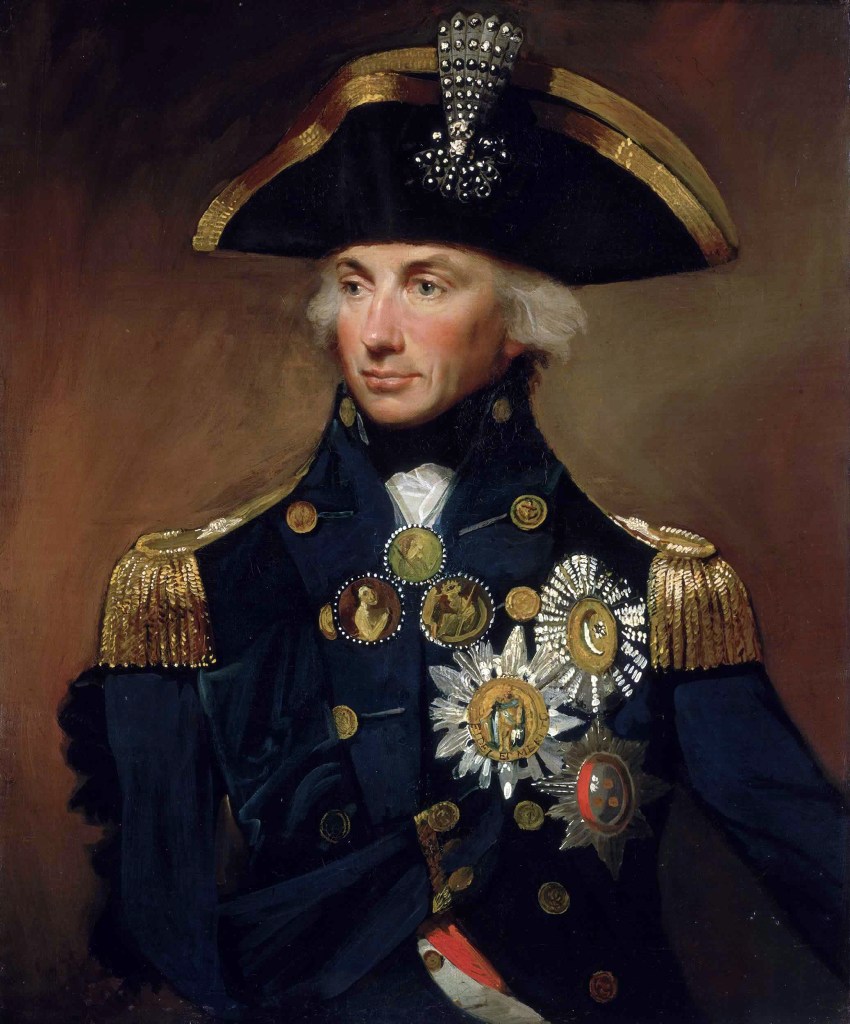
By 1805 Nelson was already a national hero and regarded as one of Great Britain’s bravest and most able military officers. From 1793 until his death at Trafalgar, Nelson was involved in battle after battle, risking life and limb for king and country. In 1794, he lost sight in his right eye at the Battle of Calvi in Corsica. Three years later he lost his right arm, slightly above his elbow, leading a doomed assault on the Spanish island of Tenerife in which his arm was hit by a musket ball. At the battle of the Nile in 1798 his daring and courage completely decimated the French fleet, destroying all but two ships. He scored another impressive victory against the Danes at the Battle of Copenhagen, where he defied orders to break off the engagement. Nelson famously put his telescope to his blind eye, claiming he did not see the signal. A charismatic, born leader, Nelson was beloved by both his men and the British public, and it was said that wherever he went the air was filled with huzzahs.

In the Spring of 1803, Great Britain and Napoleon once again found themselves at war after the collapse of the Treaty of Amiens which provided a brief 14-month respite after almost a decade of constant war. From roughly 1792-1802, Great Britain and its coalition partners, Austria and Russia, wagged a continuous struggle to contain the pernicious Jacobin influences of revolutionary France. By the time the Treaty of Amiens was signed in March 1802, both Britain and France were in desperate need of peace. Each side’s finances were in complete disarray—Napoleon would be compelled to sell the Louisiana territory to the United States during this period—and domestic challenges in both countries had become more pressing. Nonetheless, in an effort to achieve a mutually acceptable peace, certain contentious issues were papered over, and neither side was ever quite able give up the suspicion that the other was simply using the peace as an interregnum to gather strength and resume hostilities.

Napoleon recognized that he could never fully realize his grandiose ambitions without defeating Great Britain or at least crippling its war fighting capacity. With the onset of war, he began to expand the port at Boulogne, assemble a new 200,000-man army and build a fleet of barges all specifically for the invasion of England. Napoleon boasted, “With God’s help I will put an end to the future and very existence of England.” He then proceeded to construct a monument in Boulogne to commemorate his anticipated victory. Any successful invasion, however, required control over the English Channel and both the French fleet and their Spanish allies remained bottled up in their ports by a British blockade.

In March of 1805, Napoleon was ready to move against the British and he devised an elaborately complex plan to lure Nelson and the British fleet away from the Channel by threatening Britain’s valuable sugar plantations in the West Indies. The Franco-Spanish fleet under Vice Admiral Pierre-Charles de Villeneuve would slip the British blockade in Toulon; race across the Atlantic; double back and rendezvous with another smaller French fleet before clearing the Channel for the invasion. At first his plan looked like it might succeed as Nelson took off in pursuit, but it soon unraveled. On his return, Villeneuve missed his rendezvous and in late July he was intercepted by a smaller British fleet and forced into a fierce but inconclusive battle. Instead of linking up with the French fleet at Brest and driving off the British Channel squadrons as Napoleon insisted, he elected to sail his damaged fleet back to the port of Ferrol in Northern Spain before moving south to Cadiz. At the same time. Napoleon’s position on the continent took a turn for the worse. Austria and Russia once again joined Great Britain in a coalition against France and an angry and frustrated Napoleon was now compelled to put his invasion plans on indefinite hold. On August 25, his invasion force broke camp near Boulogne and marched into Germany, ending any immediate threat of invasion.

Although the threat of invasion receded, Nelson was determined to destroy the Franco-Spanish fleet once and for all. With Villeneuve ensconced in Cadiz, Nelson and his flagship the HMS Victory left the Royal Navy dockyard at Portsmouth on September 14 and sailed towards the Spanish coastline. Hoping to lure the combined Franco-Spanish force out from Cadiz harbor and engage it in a decisive battle, Nelson kept his main force out of sight approximately 50 miles (80 km) offshore and sent a squadron of frigates to keep watch on the harbor. Villeneuve previously fought Nelson in 1798 at the disastrous Battle of the Nile and he wanted no part battling him again. He also knew, from first-hand experience, that the British possessed better guns, better gunpowder, and their crews were far quicker and more accurate with those guns than the French.  But he also faced competing pressures to leave Cadiz. The port city was in the midst of a Yellow Fever outbreak and its food stocks and other supplies were dwindling. Most importantly, he was quickly losing favor with Napoleon because of his inaction. On 16 September, Napoleon directed Villeneuve to put to sea at the first favorable opportunity, go to Naples and land the soldiers his ships carried to reinforce his troops there, then fight decisively if they met a numerically inferior British fleet. Villeneuve hesitated to deploy once again further infuriating Napoleon.

Two developments served to convince Villeneuve that the time had come to depart Cadiz and bring this prolonged drama to its inevitable climax. In early October, Nelson dispatched six of his ships to Gibraltar to gather supplies for the fleet. When Villeneuve was informed that Nelson’s fleet now numbered only 21 ships, he surmised that his increased quantitative advantage might be enough to compensate for his crews’ inferior training. More importantly though, Villeneuve received word on October 18, that Napoleon intended to replace him with his old service rival, Admiral Francois Etienne Rosily. Rosily was already in Madrid and reportedly was on his way to Cadiz to relieve him. Rather than submit to such indignity and humiliation Villeneuve hastily sped up the work of readying his fleet for sea — he would slip out port before Rosily arrived. Villeneuve’s goal was not Napoleon’s, but a personal quest that might win him glory in France. He would seek out Nelson’s fleet, which he knew to be nearby, and destroy it. On the morning of October 19, the Franco-Spanish fleet departed Cadiz and by the evening of the next day the two fleets cautiously were moving towards each other and an inevitable battle.

At dawn on 21 October the British observed Villeneuve’s Combined Fleet eleven miles away, approaching Cape Trafalgar and Nelson gave the order to ‘prepare for battle’. The French were sailing in line off Cape Trafalgar, while the British came in from the west, gradually forming two columns. The first led by Nelson himself aboard his flagship Victory and the second led by his close friend, Admiral Cuthbert Collingwood aboard the Royal Sovereign. Although the British Fleet was outnumbered, the enemy totaling nearly 30,000 men and 2632 guns to Nelson’s 18,000 men and 2148 guns, Nelson was confident that his strategy and the superior skill of his crews would lead to victory.

Nelson didn’t simply want to defeat the enemy, he wanted to annihilate it so that Great Britain, its colonies, its trade, and its commercial interests would never come under threat from France ever again. Nelson’s battle plan was simple if not unconventional for the day. Naval battles of the time traditionally were fought with the two opposing fleets drawing themselves up to form two parallel lines of battle. Nelson instead intended to sail his ships perpendicular into the enemy line, pierce it in two spots, create massive confusion, and bing about what he called a “pell-mell battle,” of individual ship-to-ship actions where superior British gunnery, seamanship, and morale would destroy the enemy in detail before the unengaged ships could come to their aid. The main drawback of this strategy was that the leading British attackers would be subjected to direct raking broad side fire at their bows, to which they would be unable to reply. 


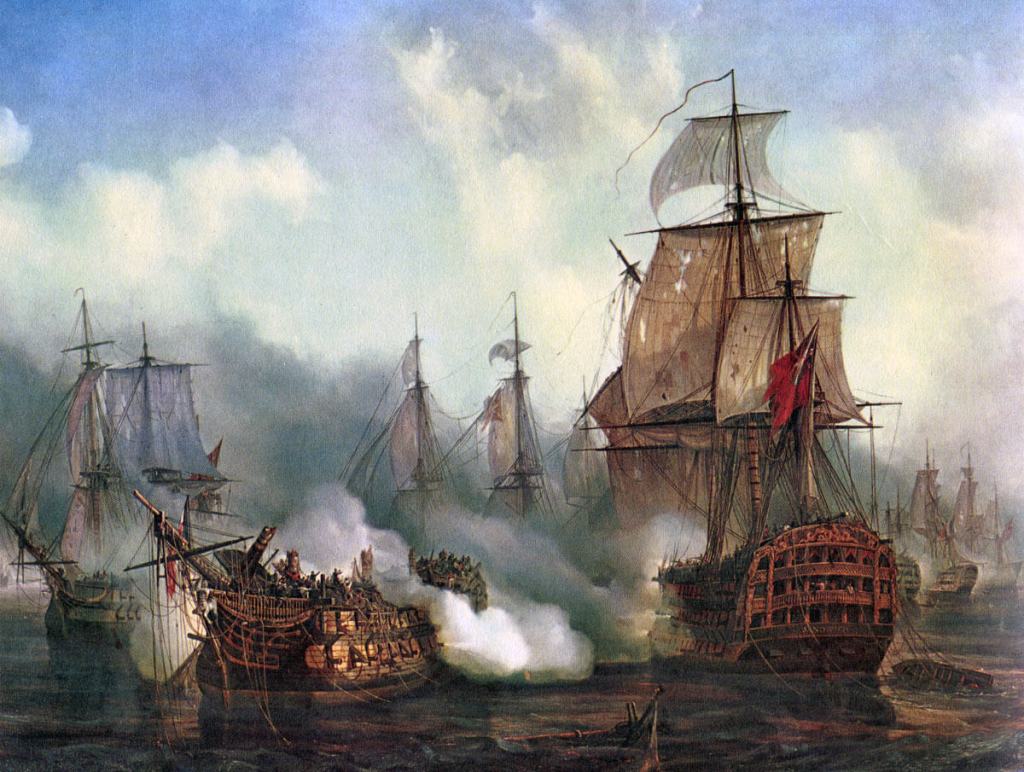
The British fleet was closing on its French and Spanish foes around 11:45 am when Nelson issued his immortal call to arms, “England expects every man to do his duty.” Shortly thereafter Nelson belayed his final signal to engage the enemy and with that he and Collingwood advanced their respective columns toward the enemy fleet. Nelson’s strategy worked almost perfectly but at great cost. Collingwood, in the Royal Sovereign, outpaced Nelson and was the first to come under enemy fire.  Multiple blasts from the French and Spanish ships ripped through the Royal Sovereign’s sails and rigging but failed to stem its advance. Aiming for a gap between the French ship Fougueux and the Spanish Santa Anna, the Royal Sovereign pierced the enemy line and poured a devastating broadside side through the stern of the Santa Anna inflicting terrible damage on the ship and her crew. After the Royal Sovereign delivered its first salvo against the Santa Anna, the two ships became intertwined trading shot for shot until both ships were little more than splintered wrecks. Just before 1:30, the Spanish ship surrendered.

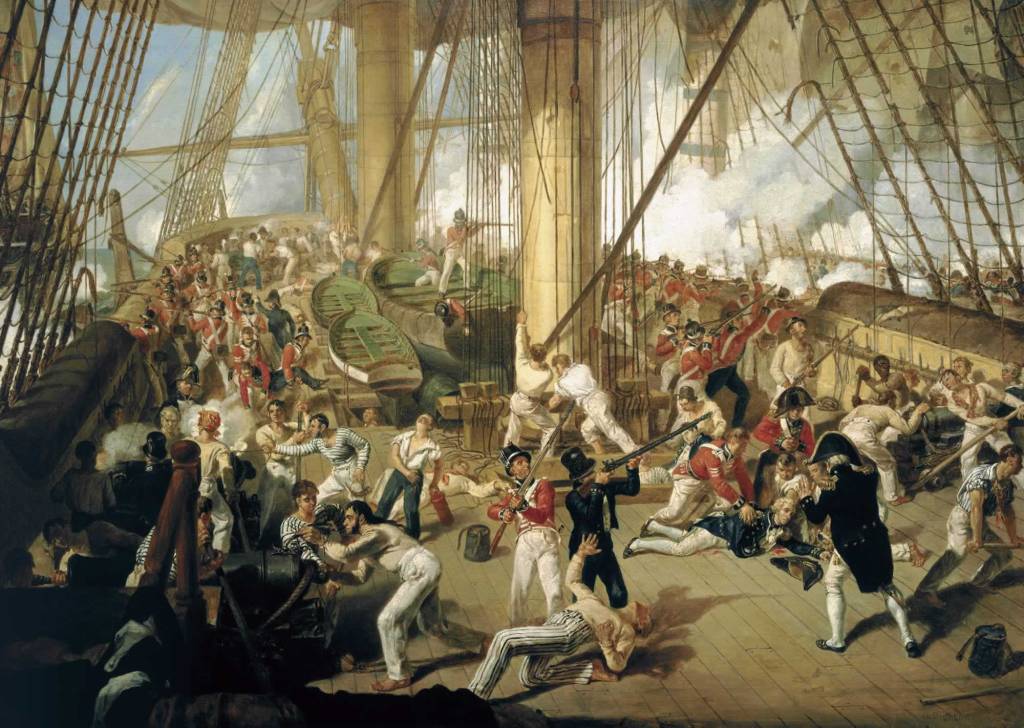
Meanwhile, Nelson’s advance was slowed by diminishing winds, leaving the Victory even more exposed to French fire and unable to respond. Approaching the enemy line, the Victory began to take on serious damage. Her mizenmast was shot away. Her wheel was smashed as well, blown to pieces by a lucky shot. Her foremast was riddled, and her sails were pockmarked with holes. Nevertheless, the Victory pressed on severing the enemy line between Villeneuve’s flagship Bucentaure and the Redoutable Passing behind the Bucentaure, Victory unleashed a devastating double shot broadside through its stern, disabling the ship and killing or wounding almost half the crew. After delivering its attack, the largely unnavigable Victory ran its bowsprit into the rigging of the 74-gun Redoutable ensnaring the two ships.

Bound together the two ships pounded away at one another from a few yards away. Superior British firepower — a 26-gun advantage — and a faster rate of fire gave Victory a decided edge as it inflicted significant structural damage on the French warship. At the same time, the tangled ships also formed a single battlefield where a fierce melee broke out between British sailors and marines and their French counterparts, with the French proving far more effective at small arms combat than anticipated.  French sharpshooters firing from the rigging of the Redoutable. laid down a murderous fire on the crew of the Victory with muskets and grenades, drenching the deck with blood.  Around 1:15 pm, tragedy struck the British fleet when Nelson, who defiantly paced the deck directing the battle, was shot by a French sniper and fell mortally wounded. He was rushed below deck with his face covered to hide his identity and prevent the spread of demoralizing rumors. As Nelson lay dying below deck, the battle with the Redoutable was reaching a climax. Sensing that the battle was moving his favor, the French Captain was preparing a boarding party to overwhelm the Victory, when another British ship – the 98 gun Temeraire—came up on the other side of the Redoutable, close enough to almost touch the French ship, unleashing a thunderous volley from  from her 32-pounder carronades massacring the French crew. With his ship taking on water and barely afloat and his crew decimated, the captain of the Redoutable struck his colors and surrendered his ship around 1:40pm. When the Redoutable surrendered  it was more a shattered hulk than a warship, with 522 of his 670 men dead or wounded.

As more and more of the British fleet entered the frey, the battle largely proceeded according to Nelson’s plan. French and Spanish ships of the enemy center and rear were isolated and defeated in detail. By the time the battle ended around 4 pm, the British took 22 vessels of the Franco-Spanish fleet and lost none. The combined French and Spanish fleet suffered roughly 4,400 men kiled in action, 2,500 wounded and up to 8,000 captured. Among those taken prisoner, was the French commander,Vice Admiral Villeneuve, who was later paroled, returned to France, and committed suicide the following April after his requests to return to military service were denied. The British lost 458 killed and about 1,200 wounded, with most of these casualties occurring on the Victory and the Royal Sovereign. Nevertheless the death of Nelson eclipsed the entire combined total of French and Spanish casualties in terms of importance. On receiving the news of Nelson’s death, King George III is alleged to have said, in tears, “We do not know whether we should mourn or rejoice. The country has gained the most splendid and decisive victory that has ever graced the naval annals of England; but it has been dearly purchased.””We have lost more than we have gained.” 

Great Britain’s victory at Trafalgar ensured British naval supremacy for the next century and beyond. The Royal Navy was never again seriously challenged by the French Navy or any other coalition of naval forces and Napoleon never revived his plans to invade England. Napoleon would remain in power for another 10 years but the French defeat at Trafalgar would put him on the path that would lead to his ultimate downfall.

Unable to defeat Great Britain with military force Napoleon turned to economic warfare in an attempt to impoverish her. By 1806, Napoleon was once again in control of much of continental Europe and in November of that year he issued a series of decrees essentially closing European ports to British trade, an embargo that would become the “Continental System.” Napoleon calculated Britain depended completely upon trade with Europe for its prosperity, so cutting off trade with continental Europe would ruin the British economy and force it to sue for peace. Since Napoleon had no navy with which to blockade Britain’s ports, his embargo would only work if every European nation participated in closing their ports to British commerce. Napoleon’s intent to enforce the embargo led to a series of ruinous military campaigns, most consequentially his 1812 invasion of Russia, after Tsar Alexander I left the blockade and reopened his ports to British trade. The invasion proved disastrous, resulting in the destruction of his Grande Armée, and marking the start of Napoleon’s downfall that would result in his defeat and his first exile to the island of Elba in 1814.


Tragedy at Babi Yar, Ukraine, September 29-30, 1941

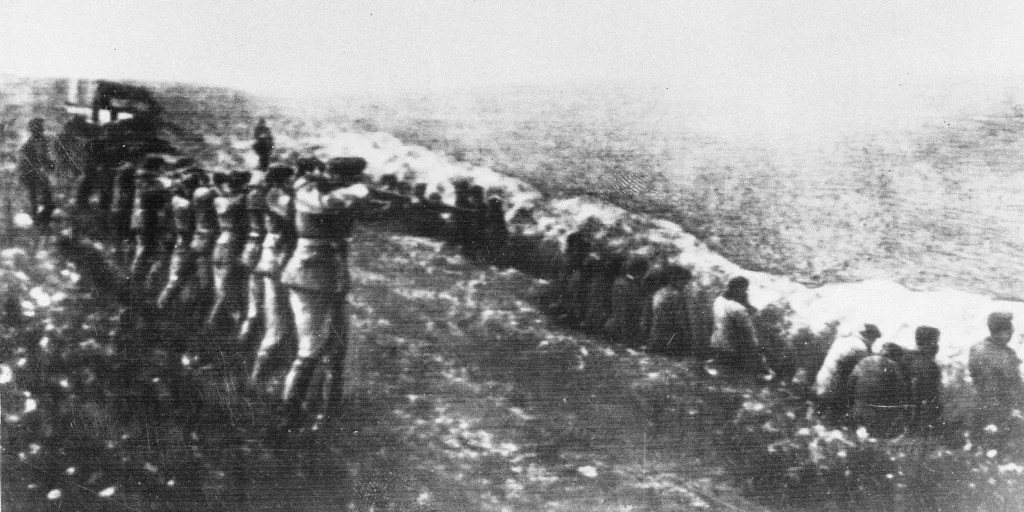
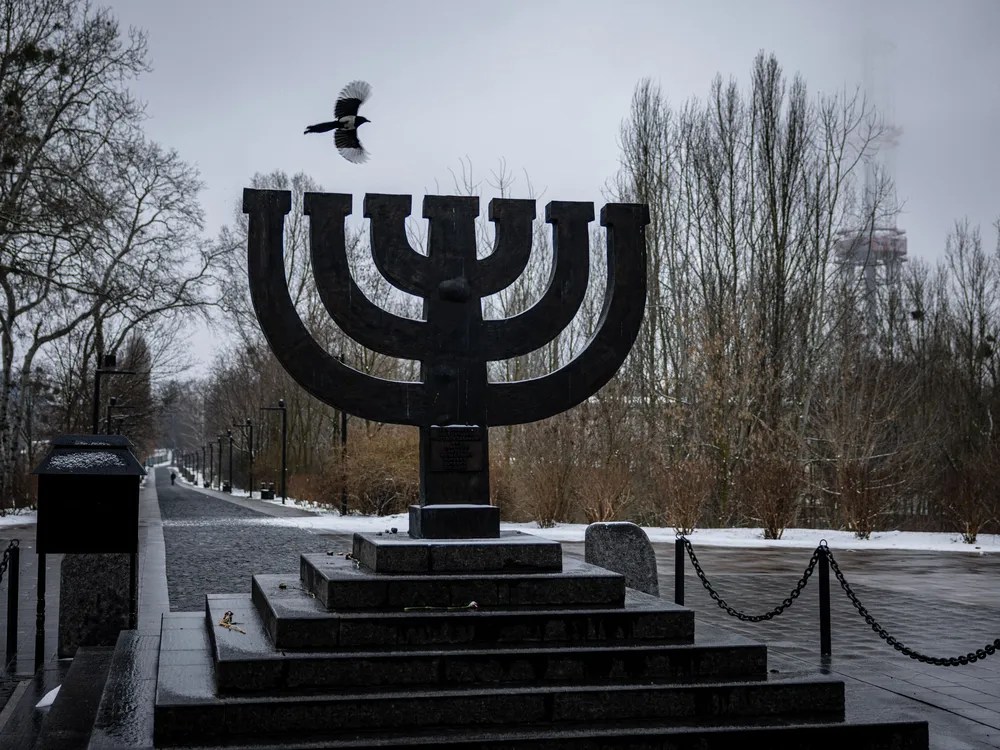
On September 29-30, 1941, the Nazis carried out a mass execution of over 33,000 Soviet Jews at the Babi Yar ravine just outside of Kyiv, Ukraine. The Jews were told they were being relocated and were marched in small groups to the outskirts of the city. There they were stripped naked, their possessions confiscated, and machine-gunned into the ravine by mobile killing squads associated with the Nazi SS called Einsatzgrupen and some Ukrainian auxiliary police. It was one of the largest mass executions of World War II and the apex of the “Bullet Holocaust,” the period before 1942 when the Nazis transitioned to a more systematic approach to exterminating Europe’s Jews using poison gas and “death camps” such as Auschwitz in occupied Poland. 

The Babi Yar Memorial Complex outside Kyiv

Nazi Germany invaded the Soviet Union on June 22, 1941 and as the German Wehrmacht advanced deeper into the USSR a wave of executions followed in its wake. In places such as Lithuania, Latvia, Belarus, Moldova and Ukraine, Jews were rounded up and summarily shot by the Einsatzgrupen and local anti-Semites, all in accordance with Adolf Hitler’s racial ideology of creating Lebensraum, or “living space” for the 1000-year German Reich. 

The Nazis seized Kyiv, the capital of the Ukrainian Soviet Socialist Republic, on September 19 and the Einsatzgrupen units were ordered  to exterminate all Jews and Soviet commissars found there.  By the time Germans reached Kyiv in mid-September 1941, about 100,000 of the city’s prewar Jewish population of 160,000 already had fled or joined the Soviet military to fight the invasion. Those that remained were largely women, children, the elderly, and the infirm. During the first week of the German occupation of Kyiv, two major explosions rocked the city, destroying the military headquarters of the German Army Group South and killing a large number of German soldiers. Although the explosions were caused by mines left by retreating Soviet soldiers, the Germans used the sabotage as a pretext to murder those Jews who still remained in Kyiv. On September 26 the German Army and the SS concluded that Kyiv’s Jewish population wouldn’t be confined in a ghetto, but instead annihilated at Babi Yar.  Two days later, Nazi authorities in Kyiv ordered all Jewish residents to appear the next morning at an intersection in the city’s Lukianivka district, with all their personal documents, money and valuables and warm clothing. They were then marched through the city to Babi Yar where they were told to undress and lined up and shot. Infants were taken from their parents’ arms and thrown into the ravine.

Einsatzgruppen Executing Ukraine’s Jews at Babi Yar

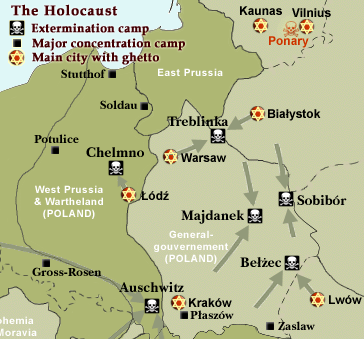
In late 1941, SS head Heinrich Himmler witnessed an Einsatzgruppen mass execution first-hand and concluded that shooting Jews was too costly, inefficient, and exerted too much stress on his men. In November Himmler decided a transition should be made away from mass shootings to the use of poison gas, especially with women and children. Experiments with the use of Zyklon B, a cyanide-based gas, had been in effect since September as well as mobile gas vans to murder mentally ill patients.  However, the gas vans were not popular with the Einsatzkommandos, because removing the dead bodies from the van and burying them was a horrible ordeal. On January 20, 1942, Himmler and numerous other Nazi officials involved in implementing the “Final Solution” met in the Berlin suburb of Wannsee to formalize plans for the total eradication of Europe’s 11 million Jews. Here it was decided that the Einsatzgruppen Mobil killing units would be replaced by permanent killing centers at   Auschwitz, Belzec, Chelmno, Majdanek, Sobibor, Treblinka, in occupied Poland.

America’s Bloodiest Day, September 17, 1862

On 17 September 1862, Confederate and Union military forces clashed near Antietam Creek in Western Maryland in what would become the bloodiest day in American history. The two armies together would suffer almost 23,000 killed or wounded and places named “the Cornfield,” “Bloody Lane” or “Burnside’s Bridge” would become forever etched in the collective memory of the nation. The outnumbered Confederates under General Robert E. Lee barely escaped a catastrophic defeat that might have ended the civil war two years sooner if it were not for the indecision of Union General George B. McClellan and his over abundance of caution. Lee’s narrow escape would allow the Confederacy to survive another two and a half years and prove the adage that sometimes it is better to be lucky than good.
The summer of 1862 was ending on a high note for the Confederacy after McClellan’s defeat in the Seven Days Battle and an impressive victory at Second Manassas. In Lee’s mind, momentum was on the side of the Confederacy, and it was time to bring the war to the North. It was time to invade Maryland. Although Maryland was a border state, many Marylanders held pro-Southern sympathies, and Lee calculated that a decisive victory on Maryland soil would not only demoralize the Union but bring Maryland into the war on the side of the Confederacy. It also was harvest time, and Lee wanted to take the war out of Virginia so that its farmers could collect their crops to help feed his army. Many of Lee’s troops were underfed and malnourished subsisting on field corn and green apples, which often gave them indigestion and diarrhea, negatively impacting their availability for combat.

Lee and his 55,000-man army crossed the Potomac River into Maryland on September 4. Three days later his ragged and barefoot army entered the city of Frederick where they encountered an unexpectedly cool reception. Instead of an outpouring of support and affection they found a lack of enthusiasm for their cause if not outright hostility. Several pro-southern citizens of Frederick could not believe that the victorious Confederate army that they heard about was so poorly clad while other stunned citizens just turned their backs. One unnamed citizen noted: “I have never seen a mass of such filthy strong-smelling men.” Lee expected that once he entered Frederick the Union garrisons at Harper’s Ferry and Martinsburg would be withdrawn, clearing the way for him to establish communications through the Shenandoah Valley. Lee could not continue his invasion with these troops sitting on his supply line. He audaciously divided his army and prepared to move deeper into the North while simultaneously seizing Harpers Ferry.

Word that Lee and his army were occupying Frederick prompted McClellan and his 100,000-man army to pursue the rebels. McClellan by nature, was overly cautious. He also consistently overexaggerated the strength of Lee’s army. As a result, his pursuit of Lee lacked the urgency the situation demanded. When McClellan finally reached Frederick on September 12, Lee already divided his army and began to move West. However, McClellan received a stroke of good luck near Frederick when soldiers from the 27th Indiana Regiment discovered a copy of Lee’s orders for the Harper’s Ferry operation, Special Orders no. 191, lying on the ground wrapped around three cigars in a recently abandoned Confederate camp. The discovery of the orders clarified the operational picture for McClellan and revealed that Lee’s army was divided and ripe for defeat in detail.

Now fully aware of Lee’s intentions, McClellan had a simple plan; attack and destroy each element of the Confederate army before it had a chance to reunite. McClellan boasted to Brigadier General John Gibbon of the famed Iron Brigade, “Now I know what to do! Here is a paper with which, if I cannot whip Bobby Lee, I will be willing to go home.” McClellan was determined to seize the initiative and the slowness that characterized his earlier movements disappeared as he raced his army toward the South Mountain range to attack Lee’s army Lee was aware that McClellan was closing in, so after crossing the mountain he sent word to Stonewall Jackson besieging Harper’s Ferry to quickly finish up the task. He also left a rear guard to defend the passes at Turner’s, Fox’s and Crampton’s Gaps to delay McClellan’s and allow time for his army to regroup. 

On September 14, advance elements of McClellan’s army engaged Confederate forces guarding the three passes in fierce fighting. The fight would last all day into nightfall and when it was over the Confederates still precariously held two of the three passes. The following day, the Federal garrison at Harpers Ferry surrendered and Lee ordered the forces at South Mountain to withdraw and rejoin the rest of his army near the small town of Sharpsburg. Stonewall Jackson and his men also hurried from Harpers Ferry to rejoin Lee’s army at Sharpsburg, with the exception of General A.P. Hill’s division which remained at Harpers Ferry to prevent Union forces from retaking the town.

Lee had strongly considered breaking off his Maryland Campaign and returning to Virginia but when he received the news of Harpers Ferry’s surrender he decided to remain. He used  much of September 16 to reorganize and reposition his army for a battle he knew was coming. In characteristic fashion, McClellan’s innate caution prevented him from taking advantage of an opportunity to crush Lee’s army before it could reunite. McClellan spent much of the two days following the battle at South Mountain drawing up plans instead of vigorously pursuing Lee’s exhausted men. When McClellan did arrive near Sharpsburg, on September 16, he discovered Lee had established a 2.5 mile long battle line behind Antietam Creek. That evening Union and Confederate forces skirmished,McClellan drafted a straightforward battle plan. The next day, his army would strike at each of Lee’s flanks simultaneously, followed by a massive assault on the Confederate center. Even though McClellan’s plan was straight forward, the execution of it was wanting.

The battle began the following morning at daybreak when the first brigades of General Joe Hooker’s I Corps entered the cornfield of farmer David Miller which would become ground zero for the initial phase of the battle. Hooker’s objective was simple, strike Lee’s left flank and drive it back past a small white stone structure known as the Dunker Church. There was no element of surprise to Hooker’s attack. Lee’s men were prepared and when the first Union troops exited the cornfield a brigade of Georgians rose from the ground, from about 200 yards away, and  unleashed a withering volley, knocking dozens from the ranks. Thousands of additional Federals were cut down in the tall corn rows and over the next four hours the field would change hands at least six times. Even when reinforcements from General Joe Mansfield’s XII Corps and General Edwin Summer’s II Corps managed to drive the rebels back to the Dunker Church and the West Woods, a vicious Confederate counterattack forced the Federals to withdraw. By mid-morning, both sides together would suffer around 10,000 killed and wounded by the time fighting in the cornfield and West Woods ended.

The 1st Texas Infantry Drives the Federals from the Cornfield

The focus of the battle soon shifted from the left to the center of the Confederate line. Here two brigades from Alabama and North Carolina occupied a strong defensive position in a fence-lined sunken farm road that would later become known as “Bloody Lane.” The road was worn down from years of wagon use and formed a natural trench for the defenders. Here, over the next three hours, hundreds of Union soldiers, including the famed Irish Brigade, with their colorful green banners, were cut down as they crested a ridge in front of the Rebel defenders. Two Union regiments eventually managed to flank the Confederate line and seized a slightly elevated position that allowed them to pour down a murderous fire upon the rebels. Several brigade and regimental commanders went down and the entire Confederate line began to break under the weight of the attack and a broken command structure. Soon the Confederates were fleeing back towards Sharpsburg with Federals in hot pursuit. With no reserves to commit, First Corps Commander, James Longstreet, masses an artillery barrage that sends the Federals reeling. The situation was so dire that Longstreet and his staff manned one of the rebel artillery pieces. By 1:00 pm, 2500 Confederate dead and wounded lined the sunken road. Union casualties totaled just under 3,000. The fight at the sunken road is a pivotal point in the battle that is the difference between a decisive Union victory and a tactical draw. There are no Confederate reserves left but McClellan grievously overestimated the strength of Lee’s army. Fearing a Confederate counterattack, he declines to deploy his two Corps he has in reserve which probably would have allowed him to cut Lee off from his escape route across the Potomac at Boetler’s Ford.

The final phase of the battle shifts to the Confederate right in the afternoon where a determined Union assault crushes the rebel flank and disaster is only averted by the timely arrival of General A.P. Hill’s division from nearby Harpers Ferry. The key players in this drama were General Ambrose Burnside and his 12,000 strong IX Corps, tasked with rolling up the Confederate flank and cutting off Lee’s retreat, and four undermanned Confederate brigades totaling about 3,000 men standing in his way. The stage is a 12-foot-wide stone bridge crossing Antietam Creek and the rocky high ground on the other side overlooking the bridge that is occupied by 500 Georgians.

Confederate dead in the Sunken Road

Burnside’s battle plan was to storm the bridge while enacting a crossing, miles downstream where the creek was shallow and could be forded more easily. Around 10 am he launched the first out of what would be three attempts, to seize the bridge. At the same time, he ordered one of his divisions South in search of a crossing point at Snavely’s Ford. The first direct attempt to take the bridge was a complete fiasco. The Connecticut regiment leading the attack came under a withering fire from the Georgians occupying the bluff overhead and within 15 minutes the regiment lost a third of its combat strength. The second assault led by a Maryland and New Hampshire regiment was equally ineffective and costly. By this point in time McClellan was growing impatient and pressing Burnside to take the bridge at all costs.  Around 12:30 Confederate volleys began to slack off as the Georgians occupying the bluff overhead began to run low on ammunition. Sensing an opportunity, one New York and one Pennsylvania regiment stormed the bridge under a heavy cover of canister and musket fire. With their ammunition depleted and word spreading that Union troops were crossing near Snavely’s Ford the Confederates fell back, allowing the Federals to cross unopposed.
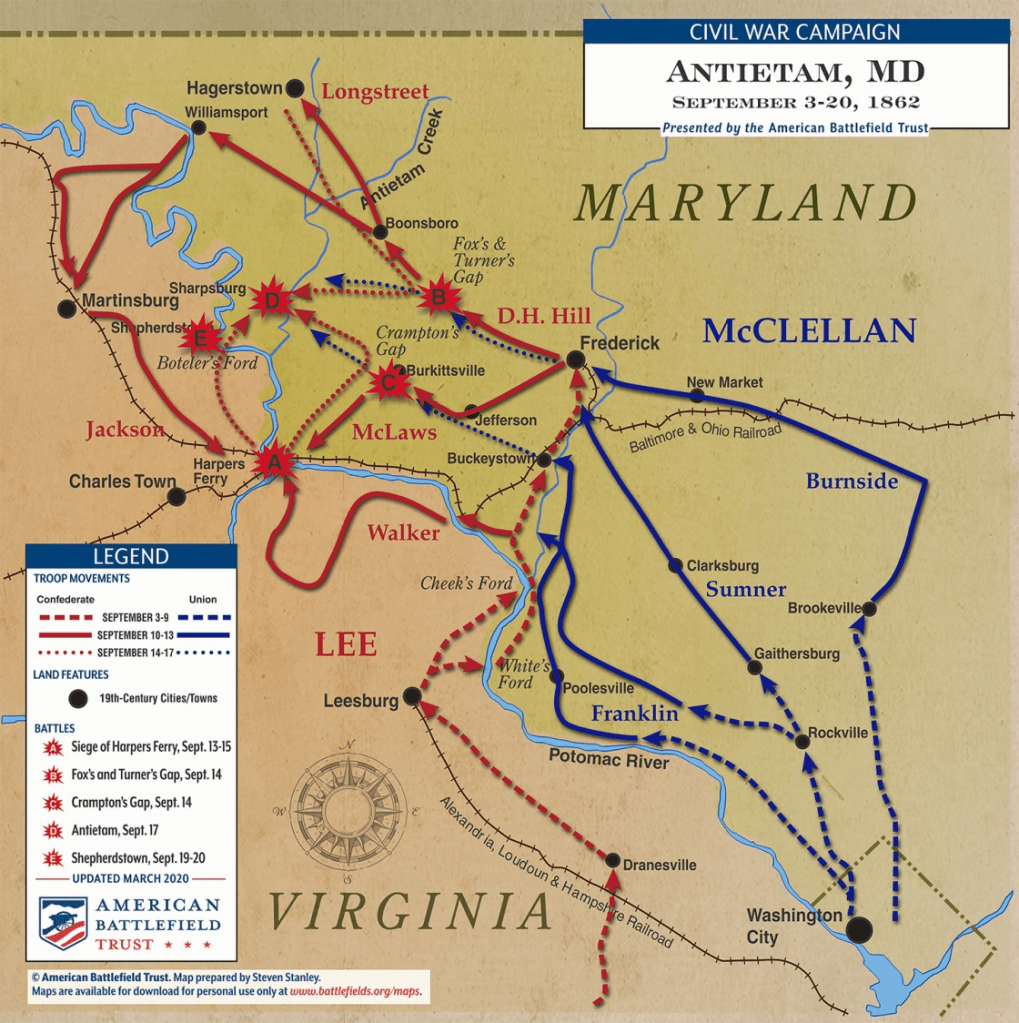
The 51st Pennsylvania Regiment Seizes the Stone Bridge

Burnside had finally taken the bridge but failed to advance with the urgency the situation warranted. He spent two hours moving three of his divisions, his artillery, and supply wagons across the creek before resuming the offensive. This delay proved crucial and was one of the key differences between a decisive Union victory and a tactical draw. It provided Lee with time to regroup and reorganize his beleaguered defenses following the collapse of his center and for General A.P. Hill’s division, which was marching from Harpers Ferry to arrive.

Around 4:00 pm Burnside’s IX Corps swept forward in a mile-wide battle line, driving back every thing in its way, as it pushed to cut off Lee’s retreat across the Potomac at Boteler’s Ford. The advance was led by the colorful Zouaves of the 9th New York infantry. Many of Burnside’s men were inexperienced but their umbers dwarfed the limited Confederate troops in this immediate sector. Lee and his staff were trying desperately to rally their broken forces and stave off a rout but just then, in a most dramatic fashion, General Maxcy Gregg’s brigade of South Carolinians, the vanguard of A.P. Hill’s division, slammed into the exposed left flank of Burnside’s army sending it reeling back down the hills and across Antietam Creek. One Union soldier from the 4th Rhode Island Regiment later described Hill’s counterattack, “They were pouring in a sweeping fire as they advanced, and our men fell like sheep at the slaughter.” By 5:30 the battle was over.

In many ways the battle of Antietam is a tale of failed opportunities, primarily on the Union side, and a contrast in leadership. The battle was a tactical draw, but it could have and should have been a decisive Union victory. It is easy to challenge some of the rationale underpinning Lee’s Maryland campaign. One can also question his decision to split his army in the face of a numerically superior enemy. However, in reviewing the course of the battle, one would be hard pressed to find fault with how Lee and the rest of the Confederate high command conducted the battle or could have better employed all the means at their disposal.

Left: Robert E. Lee, Right: Gerorge B. McClellan

The same cannot be said for McClellan who proved woefully inadequate. in his typical self-important fashion, cabled a situation report back to Washington the day after the battle writing, “Those in whose judgment I rely on tell me I fought the battle splendidly and that it was a masterpiece of art.” In reality, he fought the battle not to lose rather than trying win. As a result, he squandered opportunity after opportunity to inflict a decisive and catastrophic defeat on the rebel army. Throughout, the battle McClellan had kept two army corps, between 20,000-30,000 troops, in reserve. He mistakenly feared he was badly outnumbered by Lee and that should he be defeated he would need a reserve force to prevent Lee from moving further North. Had McClellan deployed those reserves in support of the attack on the Sunken Road, Burnside’s efforts to roll up the Confederate right flank, or even to launch a series of new attacks the following day most likely would have resulted in a decisive Union victory and possibly shortening the war by two years. McClellan would pay a steep price for his timidity. Two months later he would be relieved of his command by President Lincoln.

In the Nick of Time: The Battle of Vienna, September 12, 1683

On September 12, 1683, a combined Polish-German army under the leadership of the King of Poland, Jan Sobieski, routed the Ottoman Turks at the Battle of Vienna. For two months, the capital of the Habsburg Monarchy, was besieged by the Ottomans and brought to the point of near surrender before Sobieski’s relief force shattered the Turkish lines, breaking the siege. The battle would prove to be one of the most pivotal in history, a climactic struggle between Christianity and Islam, that would thwart any further Turkish expansion into Europe and put in motion what would become the slow steady decline of the Ottoman Empire over the next 200 years.

The Ottoman Empire was an aggressively expansionist power that sought to expand beyond its strongholds in Anatolia, the Near East, and the Levant and into the heart of Europe. The Ottomans first crossed the Bosporus and into Europe in 1346, sweeping through the Balkans, subjugating the Serbs, Greeks, Bulgarians, Albanians and other peoples. In May 1453, the Turks seized Constantinople, after an epic siege, closing the curtain on the once powerful Byzantine Empire and putting all of Europe on notice. Over the next century, the Ottomans, under Sultan Suleiman the Magnificent continued their steady advance northward, conquering the Kingdom of Hungary at the Battle of Mohacs in 1526 before finally being halted at the gates of Vienna in 1529. This was the first defeat inflicted on Suleiman, sowing the seeds of a bitter Ottoman–Habsburg rivalry that lasted until the 20th century.  In 1566, the Habsburgs once again defeated Suleyman’s army at the battle of Szigetvár again forcing the Ottomans to retreat.   However, Ottoman power was beginning to wane and a series of weak Sultans, palace intrigues, and unrest in other far corners of the empire precluded any further advances into Europe for 150 years.

Europe in the mid-17th century was weak, divided, and vulnerable to the Ottoman threat. The Thirty Years war between Catholics and Protestants that ended with the 1648 peace of Westphalia decimated the continent. By the second half of the century, much of Central Europe was still in rebuild mode; relations between Catholics and Protestants remained bitter and France and the Hapsburgs continued to vie for supremacy on the continent. Under these conditions, the Ottoman Sultan Mehemet IV accepted the recommendation of his overly ambitious Grand Vizier (Prime Minister) Kara Mustafa Pasha, that the time had come again to launch a major military campaign against the House of Habsburg. The Sultan sent notice to Habspurg Emperor Leopold I of his intentions, as was practice before declaring Jihad, and personally threated to take the emperor’s head. He also warned Leopold that he would kill the population of Vienna in its entirety unless they accepted Islam.

Grand Vizier Kara Mustafa Pasha

In late March of 1683, Kara Mustafa, now Serasker or Supreme Commander, and his 170,000 strong army departed Adrianople on the Tonsus river and began their long march north to Vienna. The march was onerous and slow going hampered by early Spring rains, poor roads, disease and illness and an extensive supply train. The Ottoman army reached Belgrade on May 3 where it was reinforced by the arrival of additional Tatar, Arab, Bosnian, Romanian vassals and Hungarian protestants in rebellion against the Habsburgs. After a month of incorporating these new reinforcements, the army resumed its march North, advancing quickly across the Hungarian plain.  When word reached Emperor Leopold that the Ottoman Army was approaching Vienna more swiftly than expected he quickly fled the capital for the safety of Linz 135 miles away. Another 60,000 residents allegedly followed suit soon after. In his stead, Leopold left behind a garrison of 15,000 troops under the command of Count Ernst Rüdiger von Starhemberg. Starhemberg was an experienced if not ordinary commander, but he exhibited a steely resolve and swore to “fight to the last drop of blood.”

Kara Mustafa and his army reached the outskirts of Vienna on July 14, one week after Leopold fled the city. He immediately demanded the city surrender, urging the defenders to “accept Islam and live in peace under the Sultan!” Starhemberg and his men vigorously rejected his appeal and over the next two days the Ottoman army encircled the city and prepared for an epic siege. Mustafa focused the Ottoman attack on what he considered to be the most vulnerable section of Vienna’s wall, the southwest. He ordered his artillery forward and once in position his guns began to bombard the city wall but with only marginal effect. The Turks were excellent artillerists, but the caliber of their artillery was too small to bring down Vienna’s reinforced stone wall. Instead, Mustafa altered his strategy and directed his engineers to dig a network of trenches and tunnels, directly toward the city so that they could detonate explosives under Vienna’s wall and exploit any potential breeches. At the same time, Turkish archers fired their arrows indiscriminately over the wall and into the city while the Janissaries fired their arquebuses at the defenders along the wall. 

For several weeks, Vienna’s defenders successfully beat back repeated enemy attacks but by early September their situation had become increasingly more desperate. Food, water, and ammunition were in short supply. Disease was rampant throughout the city and only a third of Starhemberg’s men remained fit for duty. All the while the Ottoman siege lines inched steadily closer.  

On September 2, Ottoman engineers finally managed to blast several gaps in a large section of the wall and two days later elite Turkish Janissaries almost penetrated into the city through a 30-foot breech before being driven back by a countercharge led by Starhemberg himself. The situation reached a critical point on September 8, when the Ottomans seized key defensive positions near the city walls. Anticipating a breach in the city walls, the remaining defenders prepared to fight inside the city hand to hand. For the next three days Ottoman forces pressed hard to break into the city but were repelled by the yeoman efforts of Starhemberg’s exhausted troops. The city was on the verge of surrender and the Ottomans on the threshold of a great victory. Vienna’s only hope was the timely arrival of the anxiously awaited relief army.

King of Poland, Jan Sobieski

As all these events were transpiring, the diplomatic efforts of Leopold and Pope Innocent XI were paying dividends as a relief army was gathered northwest of Vienna on September 11, under the guise of the Papal sponsored Holy League. Here, roughly 40,000-50,000 troops from the German states of Bavaria, Saxony, Franconia and Swabia and 18,000 Hapsburg troops under the very capable command of Charles V, Duke of Lorraine joined with 18,000 Polish soldiers, including Poland’s famous Winged Hussars (Heavy Cavalry) under King Jan Sobieski. Sobieski assumed command over the entire relief force given his lofty status and prepared to relieve the beleaguered city the next day.

Kara Mustafa did not take the threat of the relief army seriously enough and refused to give up his dream of taking Vienna once and for all. He rejected the advice of his commanders to give up the siege and focus on the threat posed by Sobieski’s Army. Instead, he kept up the pressure on Vienna, diverting only six thousand infantry, twenty-two thousand Tatar cavalry, and six cannons, to confront the relief force. Moreover, no field fortifications were created, and no defensive lines established. The Ottoman camp was completely open to attack.

Early on Sunday, September 12, the Holy League army began their assault on the largely unprepared and poorly defended Turkish encampment. The left wing of the army under the command of Charles, the Duke of Loraine, struck first. A mix of Imperial Habsburg  and Saxon infantry moved downhill bearing a huge white banner with a scarlet cross, the Army of Christ Crucified. The center, composed of Bavarian and Franconia troops followed and one Ottoman military official watching the advance from afar remarked, “It looked as if a flood of black pitch was pouring downhill crushing and burning everything that opposed it.” After sweeping away Ottoman skirmishers, the Holy League force engaged their Ottoman foes demonstrating a tenacity the Turks had not seen before. After heavy fighting and repelling multiple Ottoman counter attacks, the Christians inflicted significant losses on the Ottomans and were poised for a breakthrough by mid-Afternoon.
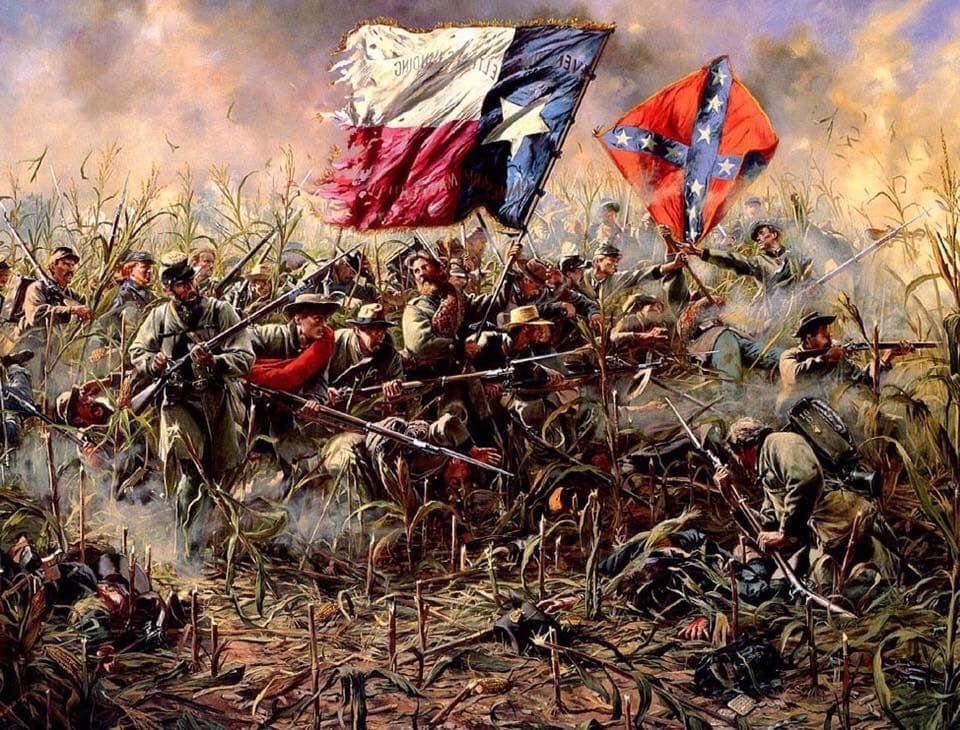

On the right, the rugged and ravine filled terrain of the battlefield delayed the arrival of the Poles and their cavalry. By 4:00pm the Poles finally reached flat and easy ground suitable for their horses and formed up ready to enter the fight. After praying the rosary, Sobieski sent forward a detachment of 120 hussars—heavy cavalry—to probe for weaknesses in the Ottoman line. The hussars inflicted and received many casualties but demonstrated that the Ottoman lines were weak and vulnerable.
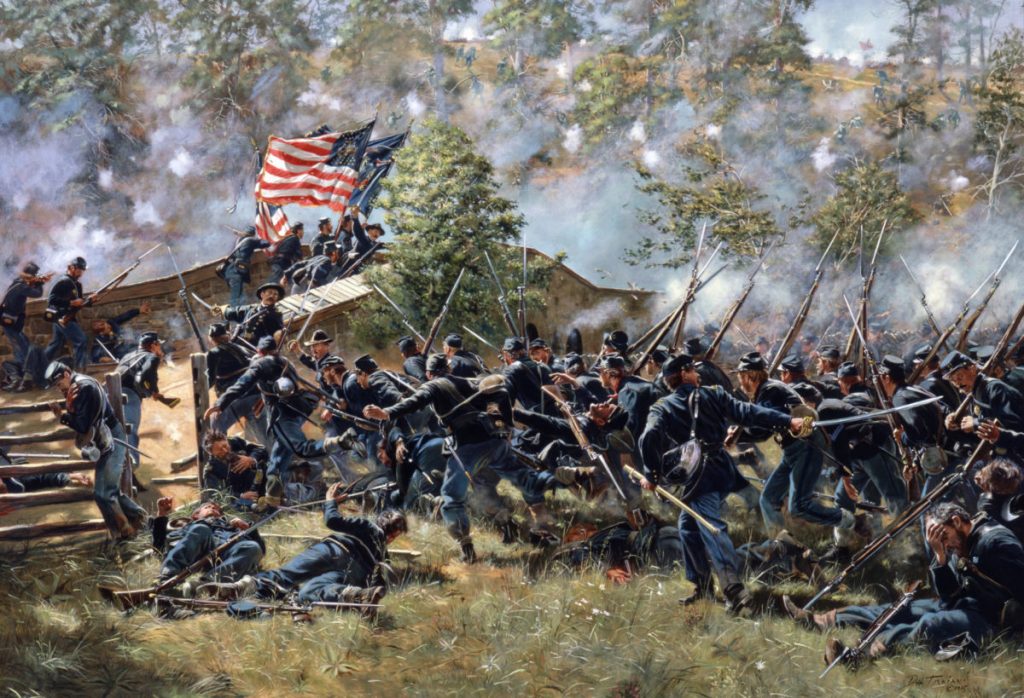
The climactic scene of the battle occurred around 6:00 when Sobieski launched one of the largest cavalry charges in history. Approximately 18,000 horsemen, including 3,000 heavy Polish Lancers or Winged Hussars, led by Sobieski himself, thundered across the battlefield towards the beleaguered Ottoman camps. The charge was massive but meticulously timed, coinciding with a coordinated push by the German and Habsburg forces from the north, who by this time had recuperated from their heavy fighting earlier in the day. The charge quickly broke the battle lines of the Ottomans, who were already exhausted and demoralized and were now fleeing the battlefield in the face of the combined onslaught. Sobieski’s horsemen headed directly towards the Ottoman camps and Kara Mustafa’s headquarters, while the remaining Viennese garrison sallied out of its defenses to join in the assault. Mustafa knew the battle was lost but his will to fight remained undiminished. He tried to rally his forces to no avail. Only the argument that his own death would cause the destruction of the remaining Ottoman troops persuaded Mustafa to break off the melee. Seizing the Holy Banner of the Prophet and his private treasure, the Grand Vizier fled the battlefield in disgrace. When the battle was over and the Holy League was victorious, Sobieski paraphrased Julius Caesar declaring “Venimus, vidimus, Deus vicit.” We came, we saw, God conquered!


The battle for Vienna was a tremendous loss for the Ottoman Empire, which would never again seriously threaten the city.  All told, the Ottomans suffered upwards of 70,000 killed, wounded, or missing between the siege and battle. The magnitude of the defeat was not lost to Kara Mustafa who sought to escape the Sultan’s vengeance by blaming his defeat on subordinate commanders, executing those that might inform the Sultan of the Grand Vizier’s mishandling of the Ottoman army. Mehmed IV remained unconvinced. Mustafa would pay for his failure. On December 25, 1683, in Belgrade, the sultan’s emissaries executed the Grand Vizier by strangulation and sent his head to Constantinople. 

The Ottoman defeat at Vienna reversed four centuries of expansion and set the stage for the reconquest of Hungary and other lands in the Balkans by the Habsburg’s and their allies. The Ottomans would fight on for another 16 years, before being forced to sign the Treaty of Karlowitz in 1699, which would cede much of Hungary to the Habsburgs.