On August 28, 1955, a fourteen year old African-American boy from Chicago, Emmett Till, was kidnapped, brutally murdered and tossed into the Tallahatchie River for allegedly whistling or making inappropriate advances at a white woman while visiting his relatives in Mississippi. Till’s murder would spark a wave of righteous indignation across the nation because of the sheer brutality of the lynching and the young age of the victim. Although Till’s murder would go unpunished, it would prove to be a watershed moment for race relations in the United States serving as a spring board for the Civil Rights movement and the eventual demise of the Jim Crowe South.
The summer of 1955 was a hot one in the United States. Racial tensions were at a pitch in the wake of the Supreme Court’s landmark decision in the case of Brown v. Board of Education which declared race-based segregation unconstitutional. Embittered Southern whites regarded the Court’s decision as a threat to the established racial hierarchy and white supremacist power structure and vowed a campaign of “massive resistance.” In the months before Till’s murder, Rev. George Lee and Lamar Smith were separately shot and killed in Mississippi after organizing black voter-registration drives. In both cases, investigations identified credible white suspects but potential witnesses were afraid to talk and no charges were ever brought. Seeking to escape the boredom of another Chicago summer, Mamie Till Mobley sent her only child to visit her relatives in Money, Mississippi. Before leaving, Mrs. Till Mobley urged her son to be careful and to watch how he behaved in front of white people, warning that Chicago and Mississippi were completely different. “Even though you think you’re perfectly within your right, for goodness sake take low,” she said, according to subsequently published accounts. “If necessary, get on your knees and beg apologies,” she told him. This was the cauldron of hate fourteen year old Emmett Till was about to enter.
Till arrived at the home of his uncle Mose Wright in the Mississippi Delta town of Money on August 21. Three days later he and his two cousins headed to the local grocery store to buy some candy. The store mostly served the local sharecropper population and was owned by a poor white couple, 24-year-old Roy Bryant and his 21-year-old wife Carolyn. Carolyn Bryant was working the front of the store alone that day; her sister-in-law was in the rear of the store watching the Bryant children. What actually happened next is subject to multiple conflicting accounts but most claim that Till had whistled at Bryant or had engaged in some other unacceptable advance that violated the mores of Jim Crowe Mississippi. Bryant stormed out of the store and warned she was going to get a pistol.
Till and his cousins immediately understood the gravity of the situation. They quickly fled the scene at the urging of some of the older men around town hoping to avoid any unwanted violence. Till refrained from telling his uncle what had happened, fearful of what reprimand might happen and pleaded to return home to Chicago immediately. A few days later, Roy Bryant and his half brother , J.W. Millam went to Mose Wright’s home, in the dead of night, and abducted the terrified 14-year old at gun point. They marched Till to the back of their pick up truck and tied him up before driving off to an isolated barn where they proceeded to teach the young boy a deadly lesson. There they beat Till mercilessly as the boy begged for his mother. They poked out his eye and finally shot him in the head. Once dead, they tied a 75-pound cotton-gin fan around his neck with barbed wire and tossed his body into the Tallahatchie River demonstrating absolutely no remorse for what they had done.
The barn where Emmett Till was tortured and killed
When Till’s body was pulled from the river, his mother could barely identify her son. Mississippi officials pressured Mamie Till Mobley to quickly burry her son in a closed casket ceremony seeking to downplay the murder and move on. Mamie Till Mobley was a strong black woman and she was determined that her only son would not die in vain. Instead, she returned the badly disfigured body to Chicago, where she held an open casket funeral intending to capture the nation’s attention and shine a spotlight on the rampant racism and white supremacist violence directed at African-Americans in the South. The train carrying Till’s body was greeted by large crowds and over 200,000 people paid their respects during the four days of public viewings. Jet Magazine published an expose of photos of Till’s mangled body and his grieving mother at the funeral and the photos reverberated across the nation and around the world. These images would galvanize a movement and inspire African-American Americans to put life and limb at risk in pursuit of the rights, racial equality and justice promised to them as American citizens under the constitution. Less than six months later, an African-American woman in Montgomery Alabama, Rosa Parks, was arrested and fined for refusing to give up her bus seat to a white passenger. When asked why she refused to move Parks explained that she thought about going to the back of the bus but then she thought about Emmett Till and she couldn’t do it.
Roy Bryant and J.W. Millam were arrested for murder within days after Till’s body was discovered but the likelihood of two white men being convicted of murdering an African-American boy in 1950s Mississippi was somewhere between slim and none. The two men were quickly put on trial in September and battle lines were immediately drawn. Northern outrage at the murder prompted many Southerners to resent what they derisively called outside interference and rally in support of the suspects. When Bryant and Millam could not afford an attorney, every lawyer in the county donated their services and $10,000 was collected from local businessmen in support of Bryant and Millam’s defense. Moreover, many whites showed up to watch the trial, bringing their children, picnic baskets and ice cream cones. Meanwhile, African American spectators were relegated to the back and looked on in fear and anger. This was the reality of the Jim Crow South for African Americans. A black man could be killed by a white man without any care or consequence. Neither Bryant nor Millam would be called to the stand to testify and they would eventually be acquitted by an all white male jury after only 67 minutes of deliberations. Jurors later admitted in interviews that although they knew Bryant and Milam were guilty of Till’s murder, they did not think imprisonment or the death penalty were appropriate punishments for white men who had killed a black man. After the verdict was read, Bryant and Millam defiantly walked out of the courtroom lit up cigars and kissed their wives in celebration.
Left to Right: J.W. Millam, Juanita Millam, Carolyn Bryant, Roy Bryant.
Months later, the two men confessed to killing Till in an interview with Look magazine in exchange for $4,000, however, because of the precedent of double jeopardy in U.S. law, they were never tried again for the murder. In 2017, Carolyn Bryant recanted her testimony, that Till had grabbed her wrist and used sexual obscenities admitting that he had never touched, threatened or harassed her. “Nothing that boy did could ever justify what happened to him,” she said.
Emmett Till’s story would be a historical footnote if it were the exception but it wasn’t. Lynchings were a way of life in the Jim Crow South. They were a tool of extralegal terror intended to intimidate and control African-Americans and maintain a white supremacist power structure by denying them their constitutional rights as American citizens. From 1882 to 1968, 4,743 lynchings occurred in the U.S., according to records maintained by NAACP. The highest number of lynchings during that time period occurred in Mississippi, with 581 recorded. Georgia was second with 531, and Texas was third with 493. Most of these acts of racial terror went unpunished and many occurred with the active participation of law enforcement. Because most African-Americans in the South were denied their right to vote, they could neither elect judges, sheriffs and other officials more representative and protective of their interests or serve on juries. In 2022, President Joe Biden signed the Emmett Till Antilynching Act into law, making lynching a federal hate crime after more than a century of failed efforts in Congress to pass similar legislation.
On August 23, 1939, Soviet Foreign Minister Vyacheslav Molotov and German Foreign Minister Joachim von Ribbentrop signed the notorious Nazi-Soviet Non-Aggression Pact paving the way for Hitler to invade Poland and precipitating what would become World War II. Under the terms of the agreement, Nazi Germany and the Soviet Union agreed to refrain from any military aggression against each other for a period of ten years. The agreement also included a secret protocol partitioning Poland and dividing Central and Eastern Europe into “spheres of influence.” The pact was a cynical gambit between two seemingly implacable ideological foes that allowed Hitler to invade Poland without fear of becoming caught up in a two-front war. For Soviet leader Josef Stalin it was a calculated gamble to delay an almost inevitable German attack on the Soviet Union and regain territories lost during the Russian Revolution, Civil War, and the 1920 Polish- Soviet War.
German tanks and aircraft brutally attacked Poland in blitzkrieg fashion on September 1, 1939, crushing all resistance from the brave but antiquated Polish military. On September 17, the Soviet Red Army entered Poland from the East, as stipulated in the Molotov-Von Ribbentrop Pact, effectively partitioning Poland out of existence. Stalin would justify the entrance of Soviet troops into Poland as a necessary security measure to protect Poland’s Belarusian and Ukrainian minorities. However, Stalin held more insidious ambitions. Hundreds of NKVD secret police officials followed in the footsteps of the Red Army. Their mission was to organize sham referenda in which the Belarusian and Ukrainian minorities of eastern Poland would petition to join the Soviet Union and root out any opposition to Soviet rule. By November, the Soviet Union annexed all Polish territory it occupied. Some 13.5 million Polish citizens suddenly became Soviet subjects following bogus referenda conducted in an atmosphere of terror and intimidation. The NKVD subsequently carried out a campaign of political violence and repression targeting Polish authority figures, such as military officers, police and priests for arrests and execution. Hundreds of thousands of people would be deported from eastern Poland to Siberia and other remote parts of the Soviet Union between 1939 and 1941.
The Soviets would repeat a similar script the following summer regarding the three Baltic States of Lithuania, Latvia, and Estonia. According to the terms of the Molotov-von Ribbentrop Pact the Baltic States were consigned to a Soviet sphere of influence. These three states had been reluctant components of the Russian Empire prior to World War I but emerged from its wreckage as independent states afterward. In the fall of 1939, Stalin coerced the Baltic States into signing mutual assistance treaties with the USSR after invading Poland from the East. These treaties allowed the Soviets to establish military bases in these countries and deploy up to 30,000 troops in each state. Moscow claimed that a Soviet military presence was necessary to protect Lithuania, Latvia, and Estonia from attacks by Nazi Germany. In June 1940, Stalin falsely accused the Baltic States of engaging in anti-Soviet conspiracies and issued an ultimatum to Lithuania demanding that additional Soviet troops be allowed to enter Lithuania and that a new pro-Soviet Lithuanian government be formed. Similar ultimatums were issued to Latvia and Estonia within days. The Red Army subsequently occupied Lithuania on 15 June, Latvia on 16 June, and Estonia on 17 June.
Over the next month, NKVD operatives poured into the Baltic States and began preparations for bogus elections to form new pro-Soviet governments. Between July 21-23, these new puppet governments declared themselves Soviet Socialist Republics and issued a “request” to be incorporated into the USSR. On August 3, Lithuania became the first Baltic State to be absorbed into the Soviet Union followed by Latvia and Estonia. Much like eastern Poland, the Baltic States were subject to an extreme policy of Sovietization, including arrests, executions and mass deportations. These terror tactics continued into the post-war period as agriculture in the Baltic States was collectivized and resistance to Soviet rule increased. More than 300,000 people from Estonia, Latvia and Lithuania would be deported to remote areas of the Soviet Union by the 1950s. Following the end of World War II, the Red Army waged a decade long counterinsurgency against Lithuanian partisans known as the “Forrest Brothers,” resisting Sovietization.
Stalin’s final territorial conquests as part of Molotov-von Ribbentrop were the Romanian provinces of Bessarabia (modern day Moldova) and Northern Bukovina (part of Ukraine). Throughout the 19th century ownership of Bessarabia shifted back and forth between the Russian and Ottoman Empires in a series of wars. In January 1918, Romanian military forces marched into Bessarabia, seizing the province from the Bolsheviks amidst the chaos of the Russian Civil War. The Bolsheviks never forgot the Romanians perfidy. On 26 June 1940, Soviet Foreign Minister Molotov sent an ultimatum to the Romanian government demanding the evacuation of the Romanian military and civil administration from Bessarabia and the northern part of Bukovina or risk way with the Soviet Union. Reluctant to give in to Soviet demands, the Romanians turned to their Nazi allies in Berlin for advice and protection. Berlin advised Bucharest to appease the Soviets and on June 28 Soviet military forces began entering Bessarabia unopposed. One month later the Moldavian Soviet Socialist Republic was proclaimed on August 2, 1940.
The Soviets consistently defended Stalin’s decision to sign a non-aggression pact with Hitler as a correct and necessary measure to ensure the security of the Soviet Union, given the suspect nature of the security guarantees Great Britain and France were offering. For years the Soviets also denied the existence of any secret protocols in the Molotov-von Ribbentrop Pact and claimed that the Baltic States were incorporated into the Soviet Union at their own request. The United States never officially recognized the Soviet annexation of the Baltic States and for years up until the collapse of the Soviet Union, there were Lithuanian, Latvian and Estonian embassies on 16th street in Washington DC.
In August 1989, Soviet leader Mikhail Gorbachev finally acknowledged the existence of the Molotov-Von Ribbentrop Pact’s secret protocols and that Nazi Germany and the Soviet Union illegally divided up parts of Eastern Europe into spheres of influence before the start of World War II. It was an ill-conceived plan intended to placate the Baltic Republics and quell their growing demands for greater autonomy and independence. However it did little of the sort because Gorbachev stopped short of admitting that the Baltic States were forcibly incorporated into the Soviet Union. On August 23, 1989, the 50th anniversary of the pact, over one million people created a 400 mile human chain linking Estonia, Latvia and Lithuania in a symbol of solidarity and a call for a restoration of their independence and statehood.
Russian President Putin has subsequently walked back Gorbachev’s admission, amidst an overall down turn in relations with the West since 2014. Putin has denounced what he considers Western attempts to rewrite history by transferring blame for unleashing World War II from the Nazis to the Soviet Union. Putin has defended the pact as a necessary realpolitik choice made by Stalin under challenging circumstances while rehashing old Soviet disinformation that the Baltic States joined the Soviet Union of their own free will. Lastly, he has tried to recast Poland not as an innocent victim of Nazi-Soviet treachery but as the architect of many of its misfortunes, noting that Poland illegally annexed Czechoslovakian territory following the Munich Conference.
On November 15, 1864, Major General William T. Sherman and his 62,000 man army of grizzled veterans departed Atlanta and began their now famous 300 mile march across the state of Georgia laying a path of destruction that would drive a stake through the heart of the Southern Confederacy and hasten an end to the war.
War is Hell!
Major General William T. Sherman’s capture of Atlanta in early September 1864 was a pivotal moment in the American Civil War. For all intents and purposes, it was a victory that all but ensured the re-election of President Lincoln two months later and squelched any Southern hopes for a negotiated peace on terms favorable to the Confederacy. By the fall of 1864, the Confederacy was in dire straits and Sherman was intent on expediting its demise. Southern morale was at its nadir. The loss of Atlanta was a significant blow and another reminder of the long-standing ineptitude of Confederate military leaders in the West. In Virginia, Confederate military fortunes were growing more dim. The bloody battles of the Wilderness, Spotsylvania, and Cold Harbor severely degraded the army which now found itself stuck in trenches around Petersburg, surrounded by a more numerous and better equipped foe. There was also an emerging peace movement within some of the Southern states, calling for an end to the war and a reunion with the North. Sherman was convinced the war would only end when Southern political will was broken and the South’s capacity for warfare destroyed. Determined to make Georgia “howl” he developed an audacious plan to break the back of the Confederacy. He would march his 62,000 man army 300 miles across Georgia from Atlanta to Savannah, destroying all the railroads, manufacturing industries, and plantations and farms along the way that were sustaining the Confederate war effort in Virginia.
Sherman’s plan was a bold gambit that carried great risk. He would detach the army from its supply lines and live off the land, as it marched clear across Georgia to Savannah. Both President Lincoln and Lieutenant General Ulysses S. Grant, Sherman’s close friend and commanding officer initially opposed the plan. Even though they recognized its strategic possibilities, they worried that the army could become trapped deep inside hostile territory and cut off from its base of supply. Sherman rebutted these concerns warning that it would be more dangerous to try and occupy Georgia because his army and supply line would be subject to constant guerrilla attacks. However, by destroying Georgia’s railroads, factories, warehouses, and farms, Sherman argued, he could degrade its ability to contribute to the Confederate war effort. After the main Confederate army withdrew into Tennessee, Grant reconsidered his objections. Grant advised President Lincoln that he thought the plan sound and telegraphed Sherman on November 2, “On reflection I think better of your proposition… I say then go on as you propose!”
Sherman and his staff were meticulous in their planning, pouring over census maps that showed county-by-county crop yields, railroads, and manufacturing industries to help guide their foraging and path of destruction. Sherman would later comment, “No military expedition was ever based on sounder or surer data.” Yet Sherman’s foraging plans were not simply about sustaining the army. It was also a psychological operation. Sherman aimed to bring the “hard hand of war” to a civilian population that heretofore had escaped the war’s privations and depredations. He believed that only by unleashing the pain and suffering of the war directly onto the population could he completely undermine Confederate morale and bring the war to a more rapid conclusion. As one of Sherman’s staff observed, “Evidently it is a material element in this campaign to produce among the people of Georgia a thorough conviction of the personal misery which attends war and of the utter helplessness and inability of their rulers, State or Confederate, to protect them.
On to Savannah
As Sherman’s army moved out of Atlanta it laid waste to the business and industrial sector of the city to ensure that the Confederates could salvage nothing of value. Contrary to the image of a city burned to the ground that was popularized by the movie Gone with the Wind, only about 30 percent of the city was actually destroyed by Sherman’s men. Nevertheless, the general clearly was contemptuous of the city which he saw as a symbol of Confederate resistance and a major supply hub, complaining, “Atlanta! I have been fighting Atlanta all this time. It has done more to keep up this war than any—well Richmond perhaps. All the guns and wagons we’ve captured along the way—all marked Atlanta.” Sherman later would proudly describe exiting the city in his memoirs, “Behind us lay Atlanta, smoldering and in ruins, the black smoke rising high in the air and hanging like a pall over the ruined city. Some band, by accident, struck up the anthem of “John Brown’s Body”; the men caught up the strain, and never before or since have I heard the chorus of “Glory, glory, hallelujah!” done with more spirit, or in better harmony of time and place.” Sherman’s path of destruction had begun.
Sherman organized his army into two roughly equivalent wings of 30,000 troops and marched his forces south toward Savannah, keeping the two wings about 30 miles apart to confuse the enemy and obscure his intentions. The right wing—the Army of Tennessee—was commanded by Major General Oliver Howard and consisted of the XV and XVII Corps. The left wing—the Army of Georgia—was commanded by Major General Henry Slocum and was made up of the XIV and XX corps. In addition, Sherman also had two brigades of cavalry under Brigadier General H. Judson Kilpatrick. Together, Sherman’s forces significantly outnumbered the 13,000 Confederate cavalry, infantry, and local militia that Confederate commanders from the Department of South Carolina, Georgia, and Florida were able to scratch together. In fact, Georgia’s rivers, creeks, and swamps would prove to be greater obstacles to Sherman’s advance than any Confederate military force.
True to his promise, Sherman’s army lived off the land as it cut a thirty mile wide path of destruction through Georgia, pillaging farms and plantations while destroying high value targets such as railroads, factories, telegraphs, mills, cotton gins, and warehouses. Union troops would heat the torn up iron rails until they were redhot and bend them into contorted shapes know as “Sherman’s neckties” leaving a trail of this twisted iron as they advanced. At the same time, Sherman ordered his troops to “forage liberally” and issued Special Field Order 120 which required every brigade to organize a foraging detachment under the direction of one of its more “discreet” officers with a goal of keeping a consistent three-day supply of gathered foodstuffs. Other ill-disciplined soldiers hunted for jewelry, silverware, and other concealed valuables. These foragers quickly became known as “bummers” as they ransacked farms and plantations across rural Georgia, striking fear and anger among the Georgian people. Sherman’s army needed the supplies, but they also wanted to teach Georgians a lesson: “it isn’t so sweet to secede,” one soldier wrote in a letter home, “as [they] thought it would be.”
Sherman’s army encountered its first organized military resistance on 22 November near the town of Griswoldville, which was home to a pistol and saber factory. A desperate group of 3,000 Georgian militia, mostly old men and teenage boys, attacked the smaller rear guard of the right wing of Sherman’s army. Although the Confederates outnumbered Sherman’s rearguard by almost 2:1, they were facing experienced troops armed with new Spencer repeating rifles. The Confederates charged the Union line three times with disastrous results, including 650 men killed or wounded compared to 62 casualties on the Union side. The results were so tragically lopsided that Southern troops largely refrained from initiating any further battles beyond cavalry skirmishes. Instead, they fled South ahead of Sherman’s troops, wreaking their own havoc as they went: They wrecked bridges, chopped down trees and burned barns filled with provisions before the Union army could reach them.
As Howard’s right-wing repulsed the futile Confederate attack on its rear guard, Slocum’s wing advanced toward the Georgian state capital at Milledgeville. Georgia’s governor and other state officials urged bold resistance from the public but as Slocum’s troops approached the outskirts of the capital, the governor and legislators quickly fled. On November 24, Slocum’s wing entered Milledgeville where they celebrated Thanksgiving, much to the chagrin of the local populace, and enacted a mock legislative session in the statehouse where they pretended to vote Georgia back into the union.
Over the next few weeks, Sherman’s army advanced steadily toward Savannah, meeting with only minimal resistance. Kilpatrick’s cavalry beat back repeated attacks from Confederate horsemen while Sherman’s engineers and pioneer brigades proved exceptionally adept at pontooning rivers and clearing the many obstacles deliberately placed in their path. The army marched from sun-up to sun-down, covering as many as fifteen miles a day. The men traveled light. Each man carried a musket and about 40 rounds in his cartridge box but to speed their way they reduced their discretionary holdings largely to a change of undergarments, their individual mess kit, and a shelter half which they typically wrapped up in their blankets slung across their left shoulder. Meals were limited to a sparse breakfast and a supper at the end of the day. There were no breaks for lunch and the men were expected to eat whenever and whatever they could on the march. When the army did stop it was usually reserved for foraging or some act of destruction.
A Moment of Shame
Sherman’s advance also attracted a growing number of escaped slaves, who greeted them as emancipators, and followed behind the army for protection as it pushed toward Savannah. These followers set the stage for one of the more shameful episodes of the entire war. On December 9, the left wing of Sherman’s army approached Ebeneezer Creek with a large body of Confederate cavalry nipping at its heels. The creek had become swollen and impassable without a bridge. Union Brig. General Jefferson Davis, who commanded the 14th Army Corps ordered his engineers to quickly assemble a pontoon bridge so the army could cross and escape further harassment. Once the bridge was completed, Davis ordered his men to quickly cross over the creek. After the last Union soldier made it across the creek, Davis ordered his men to cut the ropes of the bridge leaving behind 800 former slaves that were soon massacred by the Confederate cavalry. Several Union soldiers on the other side of the creek tried to help, wading in as far as they could to pull in those on floating devices and pushing logs out to the few refugees still swimming but these efforts proved futile. Those who were were not killed by the Confederates that day were captured and returned to slavery. Davis was never reprimanded for this cowardly shameful act an in fact Sherman defended him, blaming the freed slaves for ignoring his advice not to follow the army.
Less than two weeks later, Sherman and his army had reached the outskirts of Savannah. The 10,000 Confederate soldiers who were responsible for defending the city abandoned their trenches and quickly fled north into South Carolina. On December 21 Savannah’s mayor formally surrendered the city to Sherman. In a telegram to President Lincoln, Sherman wrote, “I beg to present you as a Christmas gift the City of Savannah, with one hundred and fifty heavy guns and plenty of ammunition and about twenty-five thousand bales of cotton.”
The Move North
Sherman’s march proved to be an unqualified success while its destructive impact was staggering. It devastated the war making potential of the Confederacy and demoralized the Southern Civilian population and in doing so hastened an end to the war. Sherman, by his own account, estimated a total Confederate economic loss of $100 million (more than $1.5 billion in the 21st century) in his official campaign report. His Army destroyed 300 miles (480 km) of railroad, numerous bridges and miles of telegraph lines. It seized 5,000 horses, 4,000 mules, and 13,000 head of cattle. It confiscated 9.5 million pounds of corn and 10.5 million pounds of fodder, and destroyed uncounted cotton gins and mills. Between 17,000-25,000 slaves were also liberated.
Sherman and his army remained in Savannah for a month, gathering its strength before turning North to unite with General Grant’s army in Virginia and crush the Confederate Army of Northern Virginia once and for all. Sherman and cut a similar path of destruction through the Carolinas. One Georgian woman, Emma Florence LeConte, after the fall of Savannah, wrote in her diary, ”Georgia has been desolated. They are preparing to hurl destruction upon the State they hate most of all, and Sherman the brute avows his intention of converting South Carolina into a wilderness.” In some respects his march through South Carolina was much worse than Georgia because South Carolina was the first state to secede from the Union and was responsible for the rebellion. Marching through the South Carolina capital of Columbia, Sherman left the city a charred ruin. Sherman denied any responsibility for the burning of Columbia. He claimed that the raging fires were started by evacuating Confederates and fanned by high winds. Sherman later wrote: “Though I never ordered it and never wished it, I have never shed any tears over the event, because I believe that it hastened what we all fought for, the end of the War.”
Sherman entered North Carolina where he proceeded to engage the second largest Confederate Army under General Joe Johnstone. However Johnstone’s army was no match for Sherman’s men. Johnstone’s men were outnumbered three to one and completely demoralized. Johnstone told Confederate President Jefferson Davis, “Our people are tired of the war, feel themselves whipped, and will not fight. Our country is overrun, its military resources greatly diminished, while the enemy’s military power and resources were never greater and may be increased to any extent desired. … My small force is melting away like snow before the sun.” On April, 26, 1865, Sherman accepted Johnstone’s surrender, less than three weeks after Lee surrendered to Grant at Appomattox. It was the virtual end for the Confederacy, although some smaller forces west of the Mississippi River. The war was over.
On the evening of October 16, 1859, the radical abolitionist John Brown and a band of like-minded co-conspirators quietly slipped into the sleepy Virginia town of Harpers’ Ferry. Nestled between the confluence of the Potomac and Shenandoah Rivers, Harper’s Ferry was home to a U.S. armory and rifle works. Their plan was simple, seize the federal arsenal and use the weapons to foment a slave insurrection throughout the South that would destroy the institution of slavery once and for all. Although Brown and his men would ultimately fail in their mission, the raid would send shockwaves throughout the country, and drive it down an almost irrecoverable path towards certain civil war.
John Brown in 1859
A Nation on the Brink
The United States in the decade before the Civil War was a country fraying apart at the seams. It was an increasingly polarized nation bitterly divided over the issue of slavery, which permeated all political discourse and debate. The Founding Fathers largely sidestepped the issue of slavery at the Constitutional Convention in order to create a document acceptable to all. However, in doing so they left a number of questions unanswered, most importantly the extension of slavery. In a number of compromises designed to placate slaveholders, the Constitution implicitly endorsed the institution of slavery where it already existed, but it said nothing about whether slavery would or would not be allowed in any new territories or states that might enter the union subsequently. As the nation steadily expanded its frontiers in the first half of the 19th century, that question alone tore the nation asunder, especially because with the admission of each slave or non-slave state the existing balance of power between pro-slavery and anti-slavery forces shifted. As such, American politics became a constant struggle between pro-slavery and anti-Slavery forces for political power and what side would gain the upper hand. The tension inside the country was summed up succinctly by the New York Tribune publisher, Horace Greeley, in 1854, “”We are not one people. We are two peoples. We are a people for Freedom and a people for Slavery. Between the two, conflict is inevitable.”
The 1850s were a particularly tumultuous decade that only served to sharpen the dividing lines between those who supported slavery and its unlimited expansion and those who did not. For the opponents of slavery, the decade was a series of setbacks that only served to increase their anger. In 1850, Congress adopted a controversial Fugitive Slave Law as part of a larger compromise to admit California to the union as a free state. This new law drew the scorn of many northerners because it forcibly compelled all citizens to assist in the capture and return of runaway slaves. In 1854, the Kansas-Nebraska Act was passed allowing people in the territories of Kansas and Nebraska to decide for themselves whether or not to allow slavery within their borders, effectively invalidating the 1820 Missouri Compromise, which precluded the admission of any new slave states north of Missouri’s southern border. The act would touch off a bloody guerilla war in Kansas between pro and anti-slavery forces while infuriating many northerners who considered the Missouri Compromise to be a binding agreement. Three years later the U.S. Supreme Court ruled in its infamous Dred Scott decision, that the Federal Government had no authority to restrict the institution of slavery. All of these developments only served to convince the more radical anti-Slavery elements that the Federal Government was under the thrall of “slave power,” a cabal of wealthy Southern slaveholders who wielded disproportionate influence in Washington and that more deliberate and decisive action would be needed to end slavery.
For all the angst that permeated the abolitionists and the anti-slavery forces about the disproportionate influence that the South wielded over the Federal government, pro-slavery elements were equally uneasy about their standing. The slave holding states continued to view Northern abolitionists as a persistent threat to their prosperity and way of life. They clearly understood that if slavery did not continue to expand they would soon find their political power and their ability to defend their interests eroded with the admission of each new free state to the union. Southerners enthusiastically supported the annexation of Texas in 1845 and most favored war with Mexico a year later as a means to acquire more territory to create additional slave states, despite opposition from anti-slavery forces in the north. At the same time, increasingly aggressive agitation by Northern abolitionists stoked ever present fears in the South of violent slave insurrections. For many in the South, memories of Nat Turner’s 1831 slave revolt in southern Virginia in which Turner and his accomplices killed 55 white men, women, and children were still fresh.
The Making of an Anti-Slavery Crusader
It is against this backdrop of a sharply divided nation, that John Brown would enshrine his place in American history as a key figure in the struggle against slavery and the road to disunion. Brown was a complicated man, part patriarch, zealot, warrior, terrorist and visionary all rolled into one. Gaunt and haggard in appearance, and with a flowing white beard, Brown cut the image of an American Moses who would lead the slaves out of bondage. Driven by a fervent belief that slavery was immoral and an abomination, Brown saw himself as an “instrument of God’s will” in the war against slavery and dedicated himself to eradicating it by any means necessary.
Brown’s abolitionist identity formed at an early age but it would evolve in a more radical direction as the nation’s sectional divide over slavery intensified. Born in 1800 in Connecticut, he grew up in a deeply religious Calvinist family with overtly strong anti-slavery views. In 1805, Brown’s family relocated to Hudson, Ohio a key stop on the Underground Railroad where he and his father, Owen, became more directly involved in efforts to bring the slaves to freedom. At the age of 12, Brown had his first real encounter with the evils of slavery, witnessing the beating of an African-American boy, who was about his age. Brown recalled that the boy was “badly clothed, poorly fed, and beaten before his eyes.” Outraged at what he had seen, Brown swore “eternal war with slavery.” However, it was until the passage of the Fugitive Slave Law in 1850 and the Kansas-Nebraska Act in 1854 that Brown would make a name for himself within abolitionist circles.
Terror of the Kansas Prairie
Even though Brown continued to make a name for himself within abolitionist circles, it was not until 1856 when the territory of Kansas became a battleground between pro and anti-slavery forces that he became a figure of national significance. Like many others at the time, Brown was outraged by the passage of the Kansas-Nebraska Act, which he saw as nothing more than a betrayal of the Missouri Compromise and a craven capitulation to the slaveholding caste by the highest levels of government. In 1855, Brown’s sons—John, Jr, Jason, Frederick, Owen, and Salmon—immigrated to Kansas in search of new economic opportunities and to advance the free-soil cause. Brown struggled with the decision of whether or not to follow his sons to Kansas. At 55, he was an older man and as the patriarch of such a large family, he was also responsible to provide for the welfare of his wife and his younger children. He also was still committed to making the North Elba settlement a success. Nonetheless he could not shake the sense that Kansas would become ground zero in the struggle against slavery. In the end Brown, chose not to follow sons, opting instead to focus his energy on the North Elba project. However, it was also clear that he harbored no objections to their move declaring, “If you or any of my family are disposed to go to Kansas or Nebraska, with a view to help defeat Satan and his legions in that direction, I have not a word to say; but I feel committed to operate in another area of the field.”
Yet as Kansas descended deeper into violence and chaos, Brown could not resist the gravitational pull of the fight. By early spring 1855, the situation was becoming increasingly volatile as hundreds and thousands of well-armed, pro-slavery, “Border Ruffians” crossed over from Missouri on the eve of legislative elections seeking to intimidate Kansas’ anti-slavery settlers, known as Jayhawkers, and to cast fraudulent ballots to impose a pro-slavery state government. In May, Brown received an urgent letter from his son, John Jr., asking for more guns, ammunition, and money to counter the growing threat. “Every slaveholding state is furnishing men and money to fasten slavery upon this glorious land by means no matter how foul,” his son wrote. Not one to shrink from a fight, especially against slavery, Brown was determined to fulfil his son’s request and decided he would deliver the goods himself. That June, Brown attended an abolitionist convention in Syracuse, New York, where he sought to drum up financial support to help purchase firearms and ammunition for his sons and other anti-slavery settlers. He spoke feverishly about the deteriorating situation in Kansas and circulated his son’s letter for added effect. Initially, many of the convention participants were reluctant to respond favorably to Brown’s pleas, fearing that more weapons would only further enflame the situation. At the end of the day, Brown persuaded enough participants to contribute to the cause and he made preparations to travel to Kansas. In August, John Brown loaded up his wagons and headed west with his son Oliver and son in law Henry Thompson. “I’m going to Kansas,” he declared, “to make it a Free state.”
On 21 May, over 800 pro-slavery ruffians led by former U.S. Senator from Missouri David Atchison descended upon the abolitionist stronghold of Lawrence Kansas and proceeded to ransack the town. Thundering into town uncontested, they terrorized the citizenry, looted homes and businesses, and destroyed two newspaper offices, tossing the printing press of an abolitionist newspaper into a nearby river. As the coup de grace, they destroyed the Free State Hotel, built by the abolitionist Emigrant Aid Company, as a temporary residence for newly arrived anti-slavery settlers.
News of the heinous attack spread quickly. Brown and his sons rushed to the defense of the town but were too late to prevent its destruction. Brown was furious. He was appalled by the damage that was done but he was equally incensed that not a single abolitionist fired a gun in defense of the town. About the same time, news from Washington reached Kansas that abolitionist Senator Charles Sumner was nearly beaten to death with a cane by pro-slavery Congressman Preston Brooks, while giving a speech on the Senate floor titled “The Crimes Against Kansas.” Both of these incidents only served to reinforce his belief in the Old Testament concept of justice, “an eye for an eye,” and the folly of non-violent abolitionism.
The attack on Lawrence was a turning point for Brown. One that would put him firmly and irreversibly on the path to a violent war against slavery. No longer willing to sit idly by and frustrated by the caution and inaction of leadership of Kansas’ free state movement, Brown vowed to retaliate for the attack on Lawrence. “Now something must be done… Something is going to be done now,” he told a small group of followers.
In Brown’s mind, pro-slavery forces needed to be taught a lesson, one that would resonate and not be easily forgotten. His next step would thrust him into national prominence and bring about his vision of a violent war against slave power in Kansas. On May 24, Brown, along with four of his sons and three other anti-slavery men descended upon a pro-slavery settlement along Pottawattamie Creek to exact their revenge. There, in the middle of the night, they dragged five pro-slavery men from their homes and brutally executed them with broad swords. Word of what would become known as the Pottawattamie Massacre, quickly spread. Brown repeatedly denied involvement in this criminal action but his growing militant reputation and that of his family made them prime suspects.
The executions did not have the intended “restraining effect” that Brown sought. Instead they ushered in an extended period of retaliatory violence known as “Bleeding Kansas,” in which the Brown family would play a leading role. In early June, Brown and a band of free-state militia ambushed the camp of a pro-slavery ruffians who were hunting down Brown and his family in response to the Pottawatomie Massacre. After a three-hour gun battle, Brown and his militia defeated the pro-slavery forces in what would become known as the Battle of Black Jack. It was what Brown himself called, “the first regular battle between Free-State and proslavery forces in Kansas” and what would become the opening salvo in his war against slavery.
Over the next six months, Brown steadily emerged as a national symbol in the struggle against slavery as the conflict between pro-slavery and anti-slavery partisans spread across the Kansas prairie. Brown’s standing would peak in August when several hundreds of pro-slavery fighters attacked the free-state settlement of Osawatomie, where Brown resided. With only forty men available, he led a vigorous but unsuccessful defense of the settlement. Although Brown was unable to prevent the destruction of Osawatomie, he did manage to score a major propaganda victory. By the end of the year, Brown was one of the most beloved or hated figures in Kansas. Back east, he had achieved the status of a cult figure among some New England abolitionists and was now known as “Osawatomie Brown” or “Old Osawatomie” and Broadway plays were written about him. Nevertheless, Brown’s rise to prominence was not without great personal cost. In the course of the struggle for Kansas, he lost his son Frederick who was ambushed alone by pro-slavery partisans and his son-in-law Henry Thompson who was mortally wounded at the Battle of Black Jack.
By 1857 the situation in Kansas was stabilizing as free-state forces gained the upper hand. Brown and three of his sons returned east in November 1856, and spent the next two years going back and forth from Kansas to New England raising funds. Brown couched his requests for support it terms of helping free-state settlers in Kansas but in reality he planned to use the money to fight slavery elsewhere. Brown’s experiences in Kansas only further convinced him that the war against slavery could and should be taken to the South where a major blow against the entire system of slavery might be struck. Brown’s focus once settled on Harper’s Ferry.
The Die is Cast
Brown secured the backing of six prominent abolitionists, known as the “Secret Six,” and assembled an invasion force. His “army” grew to include 22 men, including five free Black men and three of Brown’s sons. Among the five free Black men was Dangerfield Newby who joined Brown’s band after his efforts to purchase the freedom of his wife and seven children who were enslaved in Virginia failed. Brown hoped to recruit Frederick Douglass and Harriet Tubman to his cause boasting, “When I strike, the bees will swarm.” Ultimately, Douglass and Tubman refused to join Brown’s endeavor, sure that the venture would fail. Undeterred, Brown and his co-conspirators rented the Kennedy farm in Maryland, across the river from Harpers Ferry and prepared for their raid.
The Kennedy Farm
Brown and his cohorts entered Harpers Ferry under the cover of night the evening of Sunday, October 16. They cut the town’s telegraph wires and quickly seized control of the unsuspecting armory. After taking control of the armory, Brown sent small detachments of men to kidnap several prominent local slave owners, including Col. Lewis W. Washington, a great-grandnephew of the first president. The following morning, the residents of Harpers awoke to news that their town had been overrun by radical abolitionists. Word of the raid quickly spread and armed militia units from nearby Shepherdstown, Martinsburg, and Frederick, Maryland poured into town. Brown and a dozen of his men found themselves surrounded, holed up in a small brick engine house with stout oak doors. Later that night a company of 90 U.S. Marines arrived, led by Colonel Robert. E. Lee and Lieutenant JEB Stuart, and took command of the situation.
Trapped in the engine house, the situation was becoming more bleak. Only four of Brown’s men remained unwounded while the bloody corpses of the slain, including Brown’s 20-year-old son, Oliver, lay on the floor of the engine house. Another son, Watson, lay mortally wounded. On the morning of the 18th, Lee sent Stuart forward under a flag of truce to negotiate Brown’s surrender. Brown asked that he and his men be allowed to retreat across the river to Maryland, where they would free their hostages. Stuart promised only that the raiders would be protected from the mob and receive a fair trial. “Well, lieutenant, I see we can’t agree,” replied Brown.
The Engine House
With Brown now refusing to surrender, Lee ordered the Marines to storm the engine house. In the melee that followed Brown and his cohorts were overwhelmed by the Marines. The whole affair lasted three minutes. Of the 22 men who slipped into Harpers Ferry less than 36 hours before, seventeen men died in the fighting and five, including Brown himself, were taken prisoner. Brown was indicted for treason, first-degree murder and “conspiring with Negroes to produce insurrection,” on October 25. He and his other surviving followers were hanged before the end of the year.
John Brown on Trial
Given the horror and the demands for immediate justice that Brown’s actions provoked in the South, he was quickly brought to trial in Charles Town, Virginia on October 26. In less than a week, Brown was found guilty of treason, first-degree murder and “conspiring with Negroes to produce insurrection.” He was sentenced to death. On December 2, Brown exited the Charles Town jail and escorted to the gallows under the armed guard of six companies of infantry. Before his execution, he handed his guard a slip of paper that read, “I, John Brown, am now quite certain that the crimes of this guilty land will never be purged away but with blood.” Around 11:00 am, a sack and rope were placed on Brown’s head and around his neck. Brown told his guard, “Don’t keep me waiting longer than necessary. Be quick.” And with those words, Brown passed into history.
Brown’s execution stirred strong contradictory emotions in the North and South. In the North, Brown was celebrated as a martyr in the righteous war to end slavery. In the South he was reviled as the manifestation of the region’s worst nightmare. His words would prove prophetic. In little over a year later Lincoln would be elected President, South Carolina would secede from the Union and the nation plunged into civil war.
On September 24, 1957, President Dwight D. Eisenhower ordered 1,200 troops from the 101st Airborne Division to forcibly integrate Little Rock Central High School in the face of strong public opposition and determined resistance from Arkansas Governor Orval Faubus. These troops would escort nine African-American teens—Minnijean Brown, Elizabeth Eckford, Ernest Green, Thelma Mothershed, Melba Patillo, Gloria Ray, Terrence Roberts, Jefferson Thomas and Carlotta Walls—into the school, forcing a high profile showdown between state and Federal authorities. Although federal troops would clear the way for their entrance that day, “the Little Rock Nine,” would be subject to constant threat, abuse, and harassment the remainder of the year while the state and the rest of the South developed new strategies to avoid desegregation.
Brown v. Board of Education: The Battle Begins
The landmark 1954 Supreme Court ruling in Brown v. Board of Eduction, which declared segregation unconstitutional, sent shockwaves through out Arkansas and the rest of the South prompting vows of “massive resistance.” Many Southern states initial impulse was to simply ignore the ruling for as long as possible and slow roll the court-ordered desegregation. However, this strategy became increasingly untenable. Foot dragging on the issue had become so prevalent in the South, the court issued a second decision in 1955, known as Brown II, ordering school districts to integrate “with all deliberate speed.” At the same time, the National Association for he Advancement of Colored People (NAACP) also pressed the issue by registering black students in previously all-white schools in cities throughout the South. In Arkansas, the local chapter of the NAACP carefully selected these nine students who it believed had the intelligence, determination, and fortitude to succeed in breaking the color barrier.
In response to these dual pressures, the Little Rock school board voluntarily came up with a plan for gradually integrating the school system. The first schools to be integrated would be the high schools beginning in September 1957. Among these was Little Rock Central High School where this drama would play out. The school board’s plan was deeply divisive prompting a wave of bitterness and resentment amongst a large swathe of the white community in Arkansas. Two pro-segregation groups formed to oppose the plan: The Capital Citizens Council and the Mother’s League of Central High School.
Blockades and Protests
On September 2, 1957 the night prior to what was to be the Nine’s first day in Central High classrooms, Arkansas governor Orval Faubus ordered the state’s National Guard to block their entrance. Faubus said it was for the safety of the nine students warning that violence and bloodshed might break out if black students were allowed to enter the school. On the advice of the school board, the nine African-American students delayed their arrival till the second day, where they encountered a large angry white mob in front of the school, spewing racial epithets, threatening violence and engaging in acts of denigrating behavior. One of the most iconic images of that day was of Elizabeth Eckford, who arrived alone that morning to confront the mob. Eckford, whose family was too poor to afford a telephone, did not get word ahead of time of plans to coordinate their arrival. Eckford was greeted with chants of “two,four, six, eight, we ain’t gonna integrate.” Eckford would recount her experience that day in very stark terms, “They glared at me with a mean look and I was very frightened and didn’t know what to do. I turned around and the crowd came toward me. They moved closer and closer. Somebody started yelling, “Drag her over this tree! Let’s take care of that nigger!”
Elizabeth Eckford approaching Little Rock Central High School on her own
All nine students were prohibited from entering the school that day in what would prove to be the opening salvo in a much larger battle. Sixteen days later a federal judge ordered the National Guard removed and on September 23, the Little Rock Nine attempted to enter the school again. Though escorted by Little Rock police into a side door, another angry crowd gathered and tried to rush into Central High. Fearing for the lives of the nine students, school officials sent the teens home. They did, however, manage to attend classes for about three hours.
The next day, following a plea from Little Rock’s mayor, Woodrow Mann, President Dwight Eisenhower federalized the National Guard and sent U.S. Army troops to the scene. On September 25, the nine African-American teens entered Little Rock Central High School, personally guarded by soldiers from the Army’s 101st Airborne Division, and began regular class attendance. The Federal government forcibly imposed its authority but the struggle to integrate was far from over. Over the course of the school year, the nine African-American teens were subjected to daily harassment, jeers, and violence at the hands of many white students. For example, Melba Patillo was kicked, beaten and had acid thrown in her face while Gloria Ray was kicked down a flight of steps. At the same time, state authorities regrouped and changed tactics. In September of the following year, Governor Faubus closed all of Little Rock’s high schools for the entire year pending a public vote, to prevent African American attendance. Little Rock citizens voted 19,470 to 7,561 against integration and the schools remained closed for an entire year.
Aftermath
The showdown to integrate Little Rock Central High School was a precursor of things to come through out the entire South over the next decade as white supremacists and segregationists maneuvered to resist integration. Faubus’ use of the national guard and his decision to closed down Little Rock’s public high schools would be replicated by segregationist governors in Mississippi, Alabama, Virginia, and elsewhere. In September 1962, the small university town of Oxford Mississippi was turned into a war zone as Federal Marshals battled with violent white supremacists mobs seeking to prevent African-American James Meredith from attending the University of Mississippi, in what would become known as the “Battle of Oxford.” A year later Alabama Governor George Wallace personally stood in the doorway to the registrar at the University of Alabama to stop African-American Vivian Malone Jones from attending. In Virginia, Prince Edward County would close down its public school system from 1959-1964 rather than comply with court-ordered integration.
On August 28, 1955, a fourteen year old African-American boy from Chicago, Emmett Till, was kidnapped, brutally murdered and tossed into the Tallahatchie River for allegedly whistling at a white women in a lewd manner while visiting his relatives in Mississippi. Till’s murder would spark a wave of righteous indignation across the nation because of sheer brutality of the lynching and the young age of the victim and become the catalyst for what would become known as the Civil Rights movement.
The summer of 1955 was a hot one in the United States. Racial tensions were on the rise in the wake of the Supreme Court’s landmark decision in the case of Brown v. Board of Education which declared race-based segregation unconstitutional. Bitter and angry Southern whites vowed a campaign of “massive resistance” to counter the court’s orders to desegregate and other threats to what they perceived as their way of life. In the months before Till’s murder, Rev. George Lee and Lamar Smith were separately shot and killed in Mississippi after helping organize black voter-registration drives. It was against this backdrop that Mamie Till sent her only child to visit her relatives in Money, Mississippi, hoping to escape the boredom of another Chicago summer. Before he left for Mississippi, Mrs. Till urged her son to be careful and to watch how he behaved in front of white people there because Chicago and Mississippi were completely different. “Even though you think you’re perfectly within your right, for goodness sake take low,” she said, according to subsequently published accounts. “If necessary, get on your knees and beg apologies.”
Till arrived at his uncle Mose Wright’s home on August 21. Three days later, he and his two cousins, had skipped church where their uncle was preaching and instead headed to the local grocery store to buy some candy. The grocery store mostly served the local sharecropper population and was owned by a poor white couple, 24-year-old Roy Bryant and his 21-year-old wife Carolyn. Carolyn Bryant was alone in the front of the store that day; her sister-in-law was in the rear of the store watching children. What actually happened on August 21 is subject to multiple conflicting accounts but most claim that Till had whistled at Bryant or had engaged in some other lewd advance, something that was a serious taboo in the Jim Crowe South. Bryant stormed out of the store and warned she was going to get a pistol.
Till and his cousins immediately understood the gravity of the situation. They quickly fled the scene at the urging of some of the older men around town hoping to avoid any unwanted violence. Till refrained from telling his uncle what had happened, fearful that he might incur a reprimand and pleaded to return home to Chicago. A few days later, Roy Bryant and his half brother , J.W. Millam went to Mose Wright’s home, in the dead, of night, and abducted the terrified 14-year old at gun point. They marched Till to the back of their pick up truck and tied him up before driving off to an isolated barn where they proceeded to teach the young boy a deadly lesson. There they viciously beat Till as the boy begged for his mother. They poked out his eye, shot him in the head, and tied a 75-pound cotton-gin fan to his neck with barbed wire before tossing his body into the Tallahatchie River with no remorse for what they had done.
The barn where Emmett Till was beaten and killed
When Till’s body was pulled from the Tallahatchie river, his mother could barely identify her son. Nevertheless, Mamie Till was determined that her only son would not die in vain. Mississippi officials pressured her to burry Emmett in Mississippi in a closed casket ceremony hoping to avoid a spectacle. Mamie Till ignored the pressure and brought Emmett Till’s badly disfigured body back to Chicago where she held an open casket funeral hoping to capture the nation’s attention and shine a spotlight on the deep racism and white supremacist violence directed at African-Americans in the South. The train carrying Till’s body was greeted by large crowds while over 200,000 people paid their respects during the four days of public viewings. Jet Magazine published an expose of photos of Till’s mangled body and his grieving mother at the funeral that went reverberated across the nation and around the world. These images would accelerate the civil rights movement and inspire African-American Americans to put life and limb at risk in pursuit of racial equality and justice. Less than six months later, an African-American woman in Montgomery Alabama named Rosa Parks was arrested and fined for refusing to give her bus seat to a white passenger. When asked why she refused to move Parks explained that she thought about going to the back of the bus but then she thought about Emmett Till and she couldn’t do it.
Left: Emmett Till’s disfigured corpse, Right: Mamie Till at the funeral
Within a day after Till’s disappearance, both Bryant and Millam were arrested but the chances of two white men being convicted of murdering an African-American boy in 1950s Mississippi were somewhere between slim and none. The two men were put on trial in September and battle lines were quickly drawn. Every lawyer in the county donated their services and $10,000 was collected from local businessmen in support of Bryant and Millam’s defense. Moreover, many whites showed up to watch the trial, bringing their children, picnic baskets and ice cream cones. Meanwhile, African American spectators were relegated to the back and looked on in fear. Neither Bryant nor Millam would be called to the stand to testify and they would eventually be acquitted by an all white male jury after only 67 minutes of deliberations. Jurors later admitted in interviews that although they knew Bryant and Milam were guilty of Till’s murder, they did not think imprisonment or the death penalty were appropriate punishments for white men who had killed a black man. After the verdict was read, Bryant and Millam defiantly walked out of the courtroom lit up cigars and kissed their wives in celebration.
Left: J.W. Milam and his wife Right: Roy Bryant and Carolyn Bryant
Months later, the two men confessed to killing Till in an interview with Look magazine in exchange for $4,000, however, because of the precedent of double jeopardy in U.S. law, they were never tried again for the murder. In 2017, Carolyn Bryant recanted her testimony, admitting that Till had never touched, threatened or harassed her. “Nothing that boy did could ever justify what happened to him,” she said.
Thirty years ago this week, Soviet hardliners carried out an ill-fated attempt to overthrow Soviet President Mikhail Gorbachev, seeking to stave off what they perceived as the looming disintegration of the Soviet Union. In doing so, these coup plotters unleashed powerful centrifugal forces, accelerating the outcome they sought to prevent. Four months later, the hammer and sickle flag of the Soviet Union was lowered from the Kremlin for the last time; and with it, the country passed into what Leon Trotsky famously called the “dustbin of history.”
Mikhail Gorbachev
In March 1985, Gorbachev came to power inheriting a country that was clearly at risk of falling behind and badly in need of systemic reform. Gorbachev’s twin policies of Glasnost and Perestroika were largely aimed at reforming the Soviet system to make it more responsive to the needs of the state and the Soviet people. However, instead of revitalizing the country, they would undermine the foundational institutions that kept the system afloat. Gorbachev’s tinkering around the margins of the Soviet command economy always fell short of the structural reforms needed to breathe new life into the system. His “new thinking” in Soviet foreign policy, which was intended to create an international environment more conducive to internal reforms, would lead to a relaxation in Cold War tensions and most importantly the collapse of communist rule in Eastern Europe. However, in the end, all it achieved was to ensure that Gorbachev would be remembered more fondly abroad than at home.
It was Gorbachev’s opening up of the Soviet political system which would ultimately lead to the country’s demise. For decades, Soviet leaders ruled with an iron hand stamping out any dissension or opposition the deemed a threat to their socialist state but such practices also contributed to the overall stagnation of the country. In promoting his concept of Glasnost, which loosely translates into openness, Gorbachev sought to encourage debate and the exchange of ideas that might produce new solutions to the country’s problems, Grant the Soviet people more freedom, and to put a “human face” on the Soviet system by making it less repressive. Instead these reforms raised uncomfortable questions about Soviet history, created new platforms for regime critics and opponents to challenge Soviet central authority, and unleashed pent up ethnic nationalism that undermined the legitimacy of the state and the instruments of coercion that Soviet leaders relied on to keep everything in order.
Coup instigators Alexander Tizyakov, Vasily Starodubtsev, Boris Pugo, Gennady Yanayev and Oleg Baklanov announce Gorbachev’s “illness” and the imposition of a State of Emergency.
For all intents and purposes, it was the growing demands for independence among the non-Russian Soviet Socialist Republics and Gorbachev’s consent to sign a new Union treaty that would devolve more power and authority to the republics than the center propelled the coup plotters into action. Soviet leaders, much like the Russian Czars, had long seen ethnic nationalism as a threat to the territorial integrity and cohesion of the state and once Gorbachev let this genie out of the bottle, he found it increasingly difficult to push it back in. Unwilling to resort to the large scale use of violence to keep the country together, especially after the fallout from the January 1991 Soviet military crackdown in Lithuania, Gorbachev agreed to hand over more power and authority to the republics as a price to keep the country together.
Determined to stymie any plans for a new Union treaty, the coup plotters moved to detain Gorbachev on the evening of August 18 while at his dacha in Crimea. They demanded that Gorbachev declare a state of emergency or resign and name Soviet Vice President Gennady Yanaev acting President in order to restore order. Gorbachev refused. The following day the coup plotters, now calling themselves “the State Committee for the State of Emergency”, appeared on television and announced that Gorbachev was ill and that they were taking over.
Soviet tanks on the streets of Moscow
The coup attempt was poorly conceived and executed from the outset but it’s failure was not a foregone conclusion. When the coup conspirators appeared on stage the following day to announce Gorbachev had resigned and they were taking over some were nervous and visibly shaken. For example, Prime Minister Valentin Pavlov was sweating and trembling profusely demonstrating clear signs of hypertension and stress, which did not convey confidence. At the same time the coup plotters failed to arrest President of the Russian republic, Boris Yeltsin, who had become a fierce critic and thorn in the side of the Soviet leadership. The position of the President of Russia was a fairly new one, a direct result of Gorbachev’s reforms, and Yeltsin was using the post to challenge the a legitimacy of the Soviet authorities. KGB Chairman Vladimir Kryuchkov ordered the elite KGB Alpha commandos to surround Yeltsin’s residence. However, Yeltsin and his people had gotten word of what was happening and he fled just before the Alpha commandos arrived.
Hundreds of tanks and armored vehicles poured into downtown Moscow in a massive show of force but the Soviet military was divided in its loyalties, despite Defense Minister Yazov and other senior defense officials being part of the coup. In 1957, the Soviet military played a key role in squashing a move by rival Communist Party officials to oust Khrushchev but the military was not asked to fire on their own people. By 1991, however, the Soviet military had been called on to use violence to suppress domestic unrest in Georgia, Azerbaijan, and Lithuania and there was little appetite within the military to play a greater role in domestic politics. Although there was a clash between some Soviet troops and protestors that left three dead, the military, for the most part, sought to straddle the fence looking for indicators of who was likely to prevail.
Ultimately, Yeltsin proved to be the pivotal figure in this drama. The photo of Yeltsin atop a Soviet tank outside the Russian White House, rallying the resistance to the coup became the defining image of this ordeal. Yeltsin’s courage and leadership would inspire over 200,000 people in Moscow to take to the streets in defiance of the coup plotters. On August 20, the conspirators ordered the KGB’s elite Alpha and Vymple commandos, paratroopers, and OMON forces to storm the White House. These orders were rejected when it was clear these forces were outnumbered and any action would lead to considerable blood shed. Facing unexpected large scale resistance, and unresponsive instruments of coercion, the coup plotters began to lose their nerve and the conspiracy began to unravel.
On August 21, KGB Chairman Kryuchkov and several other conspirators flew to Crimea to meet with Gorbachev to negotiate a way out of the mess they created. Gorbachev refused. That afternoon Defense Minister Yazov ordered all military units to withdraw from Moscow. Around 5:00 pm Yanayev signed a decree dissolving the State Committe for the State of Emergency and it was clear the coup had failed. The following day Gorbachev returned to Moscow and the coup plotters were arrested.
Gorbachev returning from Crimea
In the end, the coup plotters accelerated the outcome that they so earnestly sought to prevent. Over the next several months, Yeltsin and Gorbachev would battle for primacy as Gorbachev sought to preserve Soviet central authority while Yeltsin tried to seize more power and authority for the institutions of the Russian republic. At the same time, the non-Russian republics increasingly declared their independence from Moscow. The fate of the Soviet Union was ultimately decided on December 1, 1991, when the people of Ukraine voted overwhelmingly in favor of independence. It was now clear that the Soviet Union could no longer be preserved, despite Gorbachev’s best efforts. A week later Yeltsin and the new presidents of Belarus and Ukraine met just outside of Minsk and agreed to dissolve the Soviet Union and replace it with a much weaker and uncertain arrangement, the Commonwealth of Independent States.
On August 15, 1969, over 400,000 people gathered at Max Yasgur’s dairy farm in upstate New York for three days of peace, love, and music that would forever be known simply as Woodstock. The festival organizers never envisioned that their event would draw over 400,000 people. They had anticipated at most 25,000-30,000 and as a result the facilities were not equipped to provide sanitation or first aid for the number of people attending; hundreds of thousands found themselves in a struggle against bad weather, food shortages, and poor sanitation. As the number of attendees exploded and traffic on the New York highways heading to the festival continued to grow, New York Governor Nelson Rockefeller threatened to call out the National Guard. Nevertheless, the event remained largely peaceful.
Ritchie Havens opened the first day of the event on Friday afternoon at 5pm. The first day was some what low key featuring a number of folk artists and solo acts. It was headlined by Havens, Melanie and Joan Baez. Baez, who was six months pregnant, closed the first day of the festival around 2:00 am.
The second day began around noon. Santana was the first big name act to take the stage around 2:00 pm. Their set would be highlighted by a stunning performance of Soul Sacrifice, in which Carlos Santana would show off his guitar mastery. Other day two performers included The Who, Creedence Clearwater Revival, Janis Joplin and the Grateful Dead, who would play a 50 minute long version of “Turn on your Love Light.” The Jefferson Airplane would close out the second day schedule around 8:00 am the following day with Grace Slick prancing around the stage in a white jump suit belting out lyrics that would come to define a generation, “When the truth is found to be lies and all the joy within you dies….”
Left: Carlos Santana, Joe Cocker, Grace Slick, Janis Joplin, Crosby,Stills, Nash and Young
Day three was threatened by more rain but in some ways is the most memorable. Joe Cocker opened the last day followed by Country Joe MacDonald and the Fish, Ten Years After, the Band and Crosby Stills Nash and Young. Jimi Hendrix would close out the festival with his memorable rendition of the Star Spangled Banner.
Woodstock would go down as a seminal event in music history but for all the big name acts that attended a number of prominent bands were invited but declined the invitation. The Rolling Stones would pass because Mick Jagger was making a film in Australia and Keith Richards girlfriend Anita Pallenberg had just given birth. The Doors were invited but chose not to attend believing the event would be a cheap knock off of the 1967 Monterey Pop Festival. Bob Dylan demurred because he had signed on to do the Isle of Wight festival later in the month. Joni Mitchell would pass on the event on the advice of her manager because of a previously scheduled appearance on the Dick Cavett show. She would later compose the song “Woodstock” inspired by what she saw on television.
On August 9, 1974, President Richard M. Nixon departed departed the White House for the last time, bringing to an end the two year long national nightmare known as the Watergate Scandal. Facing certain impeachment and removal from office, Nixon resigned the prior evening in a prime time television broadcast to avoid the humiliation. Driven by Nixon’s paranoia and insecurity, it was a scandal that would rope in presidential aides at the highest level and eventually be traced back to the President himself. Fundamental principles of American Democracy, such as the rule of law, would come under fire from a President determined to evade responsibility for any criminal wrongdoing. The Watergate Scandal would forever change the course of American politics shattering the American public’s trust and confidence in its leaders and institutions.
In the Beginning…
Late in the evening on June 17, 1972, five men were arrested at the National Democratic Headquarters in the Watergate Hotel in Washington DC in what appeared to be a routine burglary at first glance. Follow on investigations revealed that these men—identified as Virgilio Gonzalez, Bernard Barker, James McCord, Eugenio Martinez, and Frank Sturgis— were not your ordinary run of the mill petty criminals but operatives working for the Committee for the Re-election of President Richard Nixon. They had been caught wiretapping phones and stealing documents as part of a larger campaign of illegal activities developed by Nixon aide G. Gordon Liddy to ensure Nixon’s re-election. On September 15, 1972, a grand jury indicted the five office burglars, as well as Liddy and another Nixon aide E. Howard Hunt for conspiracy, burglary, and violation of federal wiretapping laws. President Nixon denied any association with the break-in and most voters believed him, winning re-election in a landslide. At the urging of Nixon’s aides, five pleaded guilty to avoid trial; the other two were convicted in January 1973.
Left: Virgilio Gonzalez, James McCord, Eugenio Martinez, Bernard Barker, and Frank Sturgis
Nixon’s passionate denials aside, there was a pervasive sense, as well as evidence, that there was more to this story than simply five low level campaign workers acting independently in criminal activities against their political rivals. There were unanswered questions and numerous threats that all pointed to a darker conspiracy and greater White House involvement. On February 7, 1973, the United States Senate voted unanimously to create a Senate select committee to investigate the 1972 Presidential Election and potential wrongdoings. The committee which consisted of four Democratic and three Republican Senators, was empowered to investigate the break-in and any subsequent cover-up of criminal activity, as well as “all other illegal, improper, or unethical conduct occurring during the Presidential campaign of 1972, including political espionage and campaign finance practices.” Committee hearings were broadcast live on television in May 1973 and quickly became “must see TV” for an inquiring and curious nation. Although Nixon repeatedly declared that he knew nothing about the Watergate burglary, former White House counsel John Dean III testified that the president had approved plans to cover up White House connections to the break-in. Another former aide, Alexander Butterfield, revealed that the president maintained a voice-activated tape recorder system in various rooms in the White House which potentially contained information implicating the President in a criminal conspiracy. Only one month after the hearings began, 67 percent believed that President Nixon had participated in the Watergate cover-up.
The Scene of the Crime: The Watergate
The Saturday Night Massacre
The revelation that there were recordings of potentially damaging information implicating Nixon and his efforts to prevent their disclosure soon became the central drama of the story. Nixon struggled to protect the tapes during the summer and fall of 1973. His lawyers argued that the president’s executive privilege allowed him to keep the tapes to himself, but the Senate committee and an independent special prosecutor named Archibald Cox were all determined to obtain them. On October 20, 1973, after Cox refused to drop the subpoena, Nixon ordered Attorney General Elliot Richardson to fire the special prosecutor. Richardson resigned in protest rather than carry out what he judged to be an unethical and unlawful order. Nixon then ordered Deputy Attorney General William Ruckleshaus to fire Cox, but Ruckelshaus also resigned rather than fire him. Nixon’s search for someone in the Justice Department willing to fire Cox ended with the Solicitor General, Robert Bork. Though Bork said he believed Nixon’s order was valid and appropriate, he considered resigning to avoid being “perceived as a man who did the President’s bidding to save my job”. This chain of events would go down in history as the “Saturday Night Massacre” and further turn the American public against Nixon. Responding to the allegations that he was obstructing justice, Nixon famously replied, “I am not a crook.”
Left: Special Prosecutor Archibald Cox; Center: Attorney General ElliotRichardson; and Deputy Attorney General William Ruckleshaus
Things went from bad to worse for the White House in the new year. On February 6, 1974, the House of Representatives began to investigate the possible impeachment of the President. Less than a month later, on March 1, 1974, a grand jury indicted several former aides of Nixon, who became known as the “Watergate Seven”—H.R. Haldeman, John Ehrlichman, John N. Mitchell, Charles Colson, Gordan C. Strachan, Robert Maridan and Kenneth Parkinson for conspiring to hinder the Watergate investigation. The grand jury secretly named Nixon as an unindicted co-conspirator. However the special prosecutor dissuaded them from an indictment of Nixon, arguing that a president can be indicted only after he leaves office, creating a precedent that lasts even today.
No Way Out
Nixon eventually released select tapes in an effort to tamp down growing public criticisms and perceptions that he was hiding something. The President announced the release of the transcripts in a speech to the nation on April 29, 1974 but noted that any audio pertinent to national security information could be redacted from the released tapes. This caveat almost immediately fueled suspicions that the White House was indeed hiding something more damning. The issue of the recordings and whether the White House was obligated to comply with the Congressional subpoena tapes went to the United States Supreme Court. On July 24, 1974, in United States v. Nixon, the Court ruled unanimously that claims of executive privilege over the tapes were void. The Court ordered the President to release the tapes to the special prosecutor. On July 30, 1974, Nixon complied with the order and released the subpoenaed tapes to the public.
Nixon’s fate was largely sealed on August 5, 1974 when the White House released a previously unknown audio tape that would prove to be a “smoking gun” providing undeniable evidence of his complicity in the Watergate crimes. The recording from June 23, 1972, less than a week after the break-in, revealed a President engaged in in-depth conversations with his aides during which they discussed how to stop the FBI from continuing its investigation of the break-in. Two days later, a group of senior Republican leaders from the Senate and the House of Representatives met with Nixon and presented him with an ultimatum, resign or be impeached.
On August 8, in a nationally televised address, Nixon officially resigned from the Presidency in shame. The following day he and his family departed the White House one last time, boarded Marine One and flew to Andrews Air Force base where they were shuttled back to their home in California. Vice President Gerald Ford was sworn in as President shortly thereafter. He would issue a full and unconditional pardon of Nixon on September 8 immunizing him from prosecution for any crimes he had “committed or may have committed or taken part in” as president.
On August 2, 1964, three North Vietnamese torpedo boats attacked the USS Maddox in the Gulf of Tonkin in what appeared to be a blatant act of communist aggression. Two days later the Maddox, along with a second destroyer, the USS Turner Joy, claimed again to have come under fire from North Vietnamese patrol boats that allegedly fired at least 20 torpedoes at the U.S. ships. The Johnson administration would use these alleged incidents to argue for more direct U.S. military involvement in the escalating Vietnam conflict, even though the Maddox likely provoked the first attack and the second one never happened. Three days later, the U.S. Congress passed what would become known as the Gulf of Tonkin Resolution, effectively giving the Johnson Administration a blank check to wage war in Vietnam. The resolution was approved unanimously in the House while in the Senate only two Senators, Wayne Morse (D-OR) and Ernest Gruening (D-AK) opposed the resolution. Throughout the war, both Morse and Gruening would remain critics of U.S. involvement in Vietnam with Morse taking great issue with what he saw as the Johnson administration’s deceptive practices, especially the withholding of information from the public.
The USS Maddox (DD-731)
In reality, nothing about the incident was as reported. The USS Maddox was not the target of unprovoked Communist aggression. It was supporting South Vietnamese commando attacks and intelligence-gathering missions along the North Vietnamese coast. The South Vietnamese attacks were part of Operation Plan 34A (OPLAN 34A). Conceived by the U.S. military and carried out by the South Vietnamese Navy, OPLAN 34A was designed to harass the communist government in Hanoi and create opportunities to learn about North Vietnam’s military readiness and operations, in particular a new radar network the Soviets were installing. Moreover, the alleged August 4 attack never took place. The commander of the Maddox sent conflicting messages about the purported attack which would later be attributed to faulty equipment, poor weather, and overeager sonar men. A navy fighter jet from a nearby aircraft carrier also flew overhead for ninety minutes but failed to locate any North Vietnamese ships. The plane’s pilot, Commander James B. Stockdale wrote, “I had the best seat in the house to watch” and I saw “no boats, no boat wakes, no boat gunfire, no torpedo wakes—nothing but black sea and American firepower.” Lastly, an intelligence intercept in which North Vietnamese patrol boats reported the results of the the alleged August 4 attack to higher officials was in fact from the incident two days earlier and not confirmation of an additional attack.
This incident would also eventually raise troubling questions about whether President Johnson had deliberately misled the American public into the Vietnam War. On this dubious basis, the Johnson administration would plunge the United States into a ten year ground war in Vietnam. Having thoroughly defeated his Republican rival, Senator Barry Goldwater, in a landslide in the November 1964, Senator Hubert Humphrey and others within the Democratic Party, tried to convince Johnson that it was an opportune time to step back from Vietnam. Johnson disagreed and within six months U.S. aircraft would begin carrying out bombing runs over North Vietnam as part of Operation Rolling Thunder while 40,000 U.S. troops would be on the ground in South Vietnam. By the end of 1965, that number would expand to 184,000. The U.S. military troop presence in Vietnam would continue to grow, peaking at roughly 550,000 in April 1969. Approximately 50,000 servicemen and women would lose their lives over the course of this ten year war.
In a largely symbolic gesture, the U.S. Congress repealed the Gulf of Tonkin resolution in January 1971, as popular opinion grew against continued U.S. military involvement in Vietnam. Two years later, Congress passed the War Powers Act over the veto of President Richard Nixon. The War Powers Act was a direct reaction to the Gulf of Tonkin Resolution and Nixon’s illegal expansion of the war into Cambodia. It was also a determined attempt by Congress to reassert it’s oversight of U.S. foreign policy and reclaim its unique power to declare war, a power it had ceded to the presidency during both the Korean and Vietnam Wars. The War Powers Resolution allows a President to use U.S. forces in combat in the event of “a national emergency created by attack upon the United States, its territories or possessions, or its armed forces.” However, the President also needs to report to Congress within 48 hours of such a military action, and Congress has 60 days to approve or reject it. The legislation highlighted a significant constitutional issue: the President is the commander and chief of American armed forces, but Congress has the sole power to declare war. Although every President since it’s passage has rejected the War Powers Resolution as an infringement on their constitutional powers as Commander-in-Chief, they have all tended to take actions that have been “consistent with” rather than “pursuant to” the provisions of the act—in some cases, seeking congressional approval for military action without invoking the law itself. In this strange way, Presidents have complied with the spirit of the law without recognizing its legitimacy.


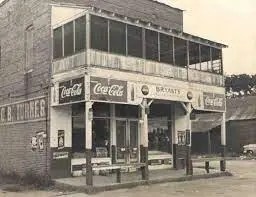

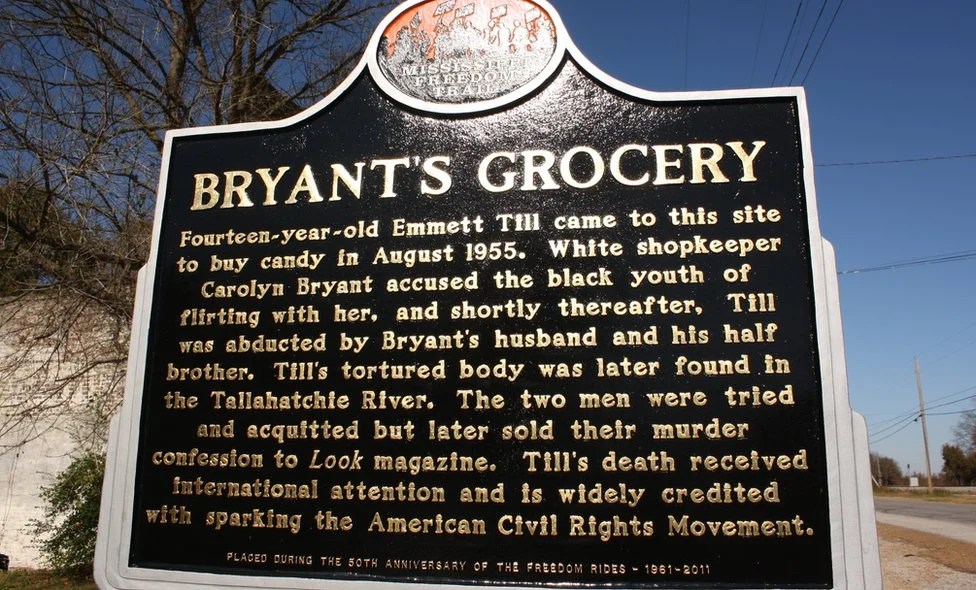
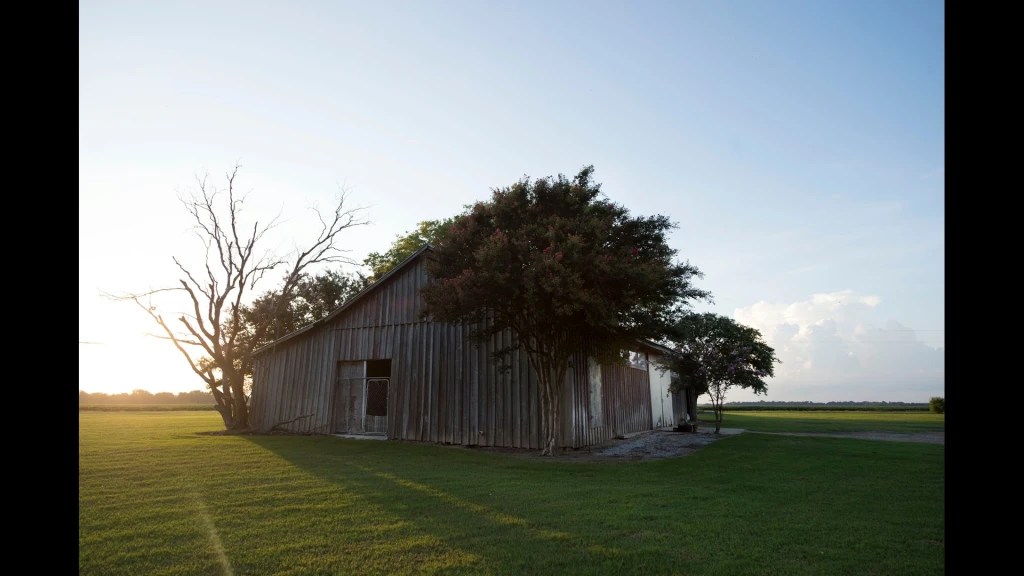


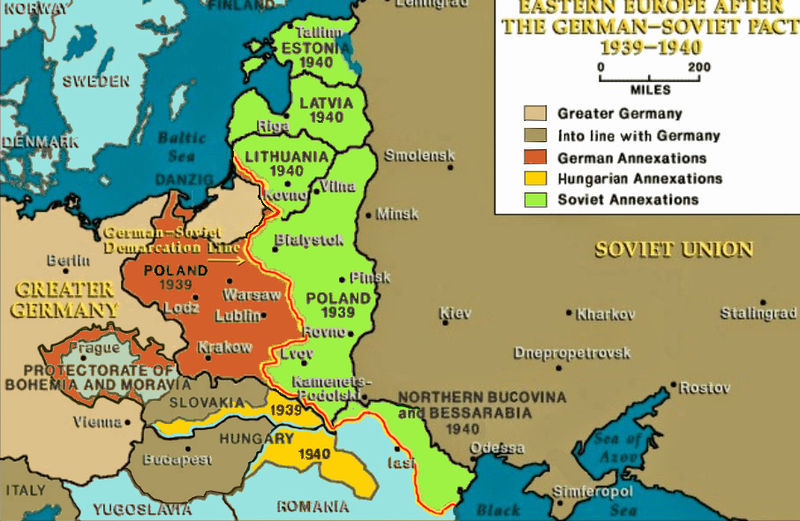
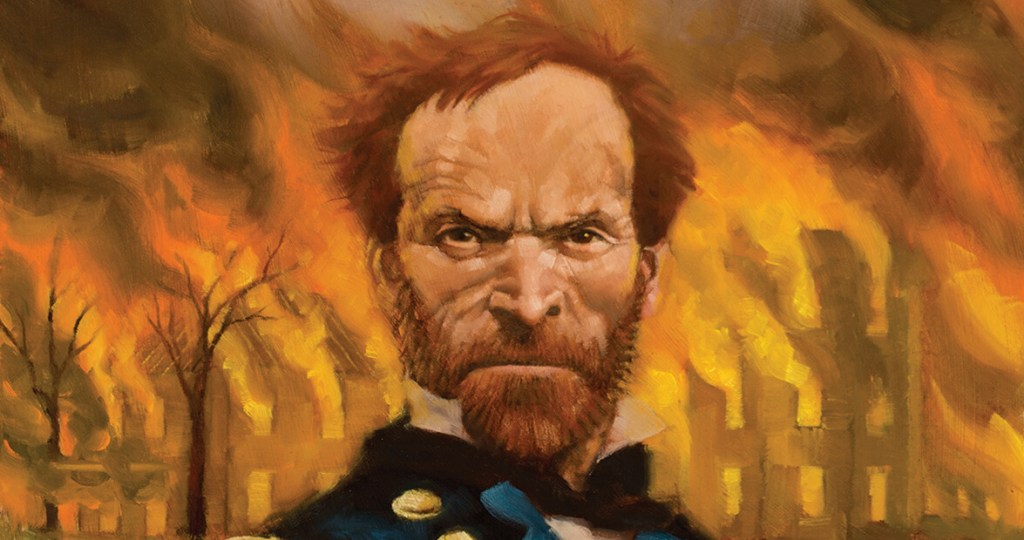
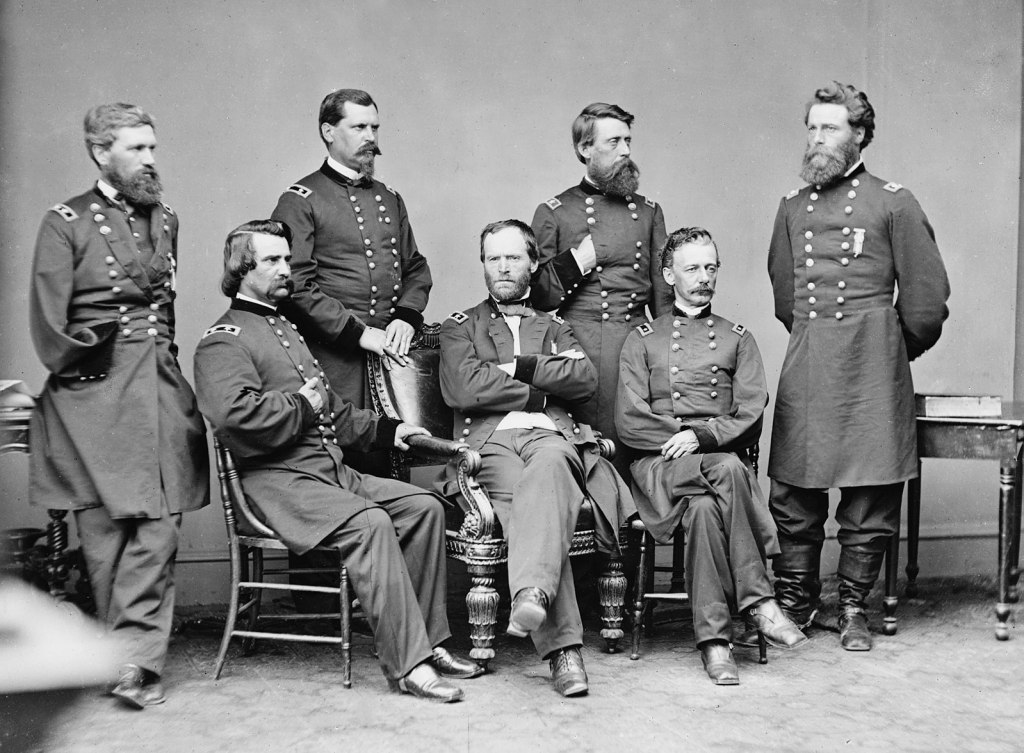
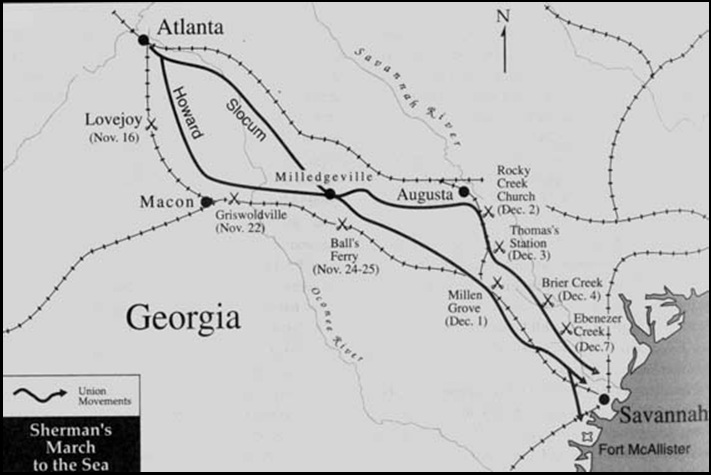
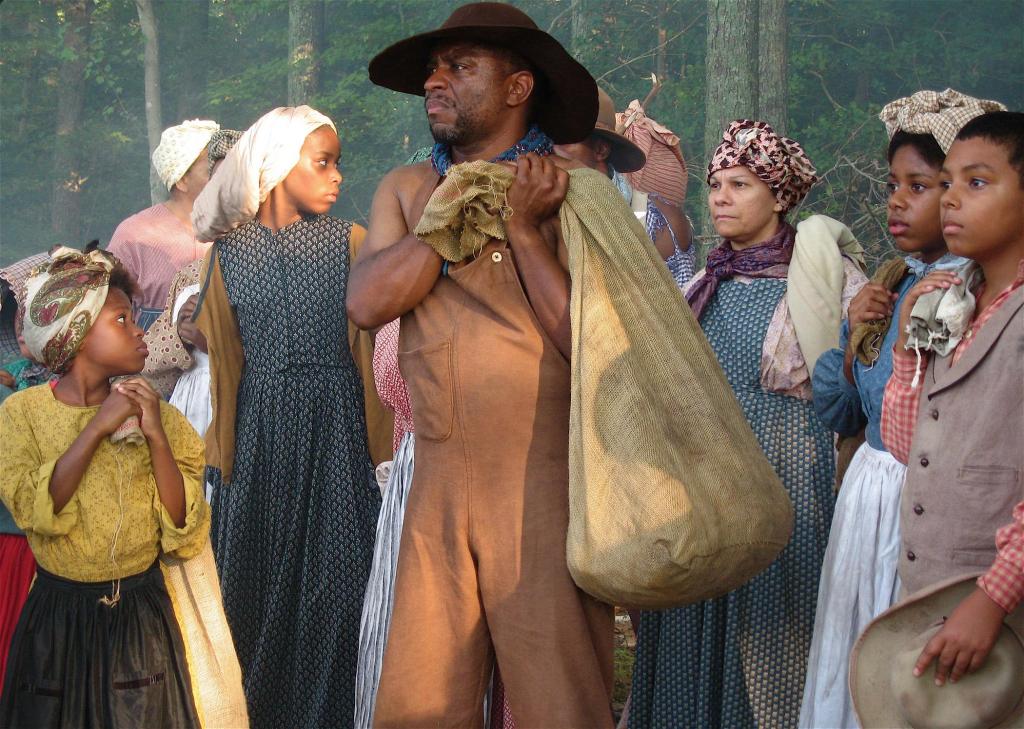


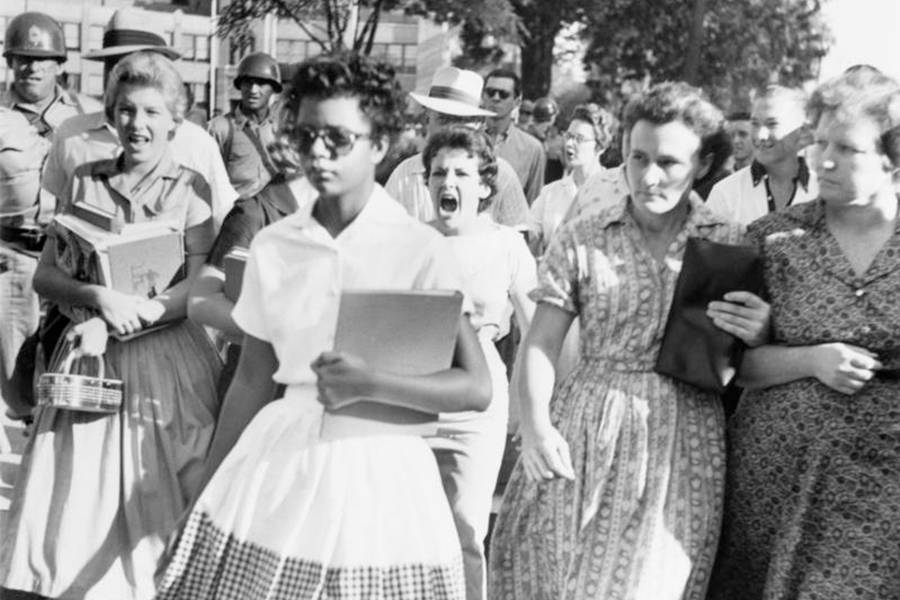
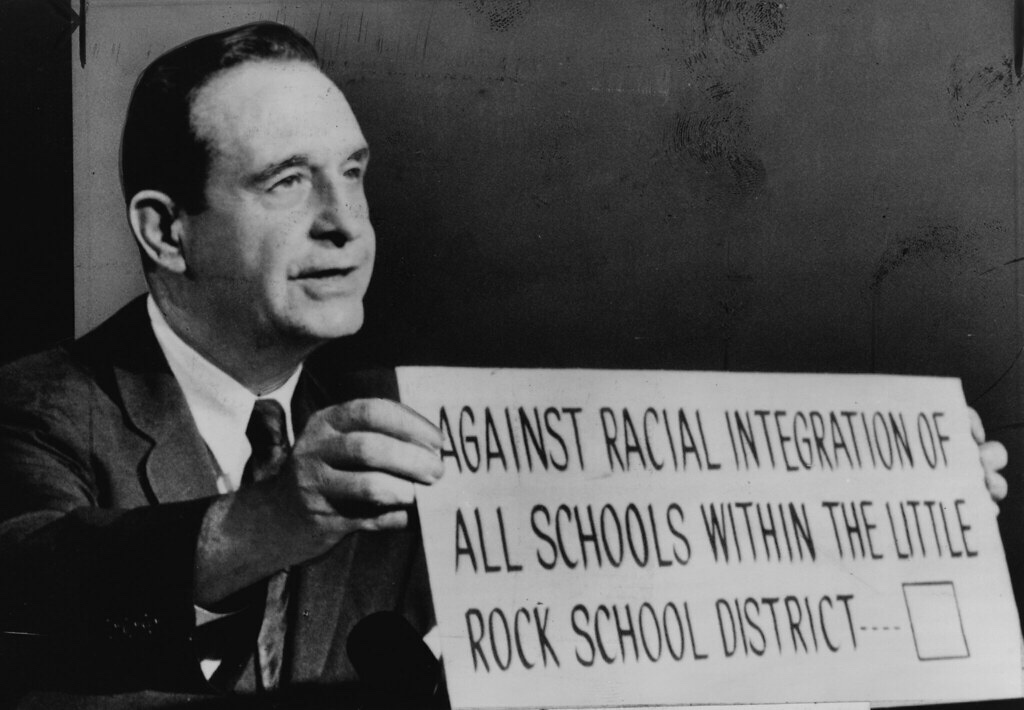

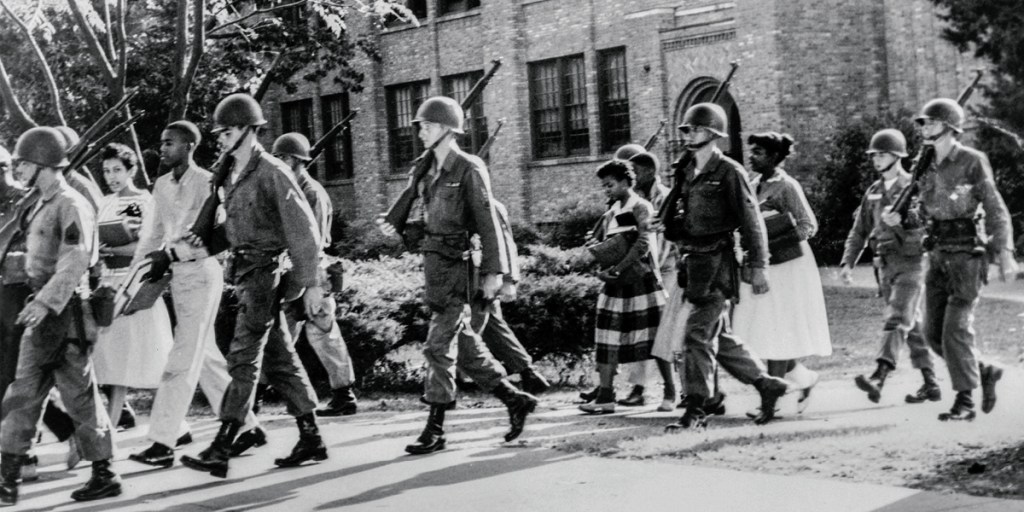
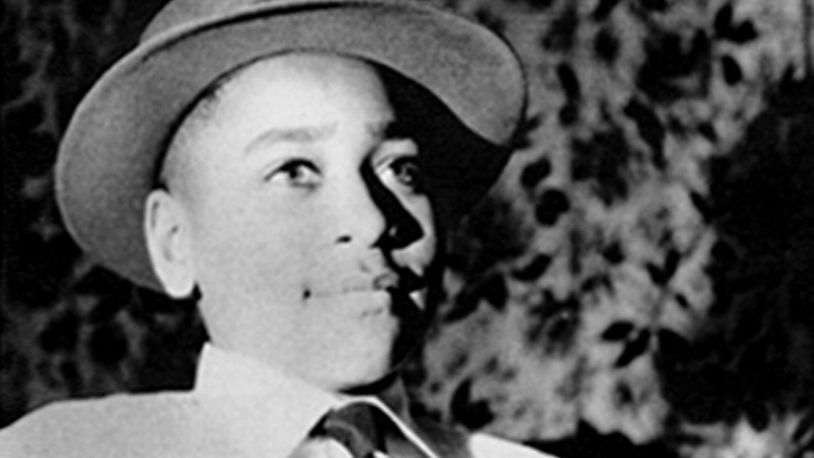
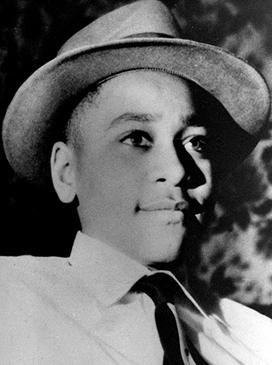
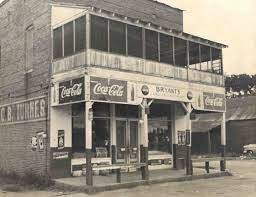
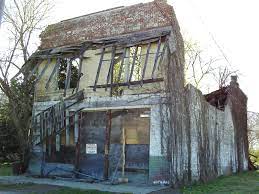

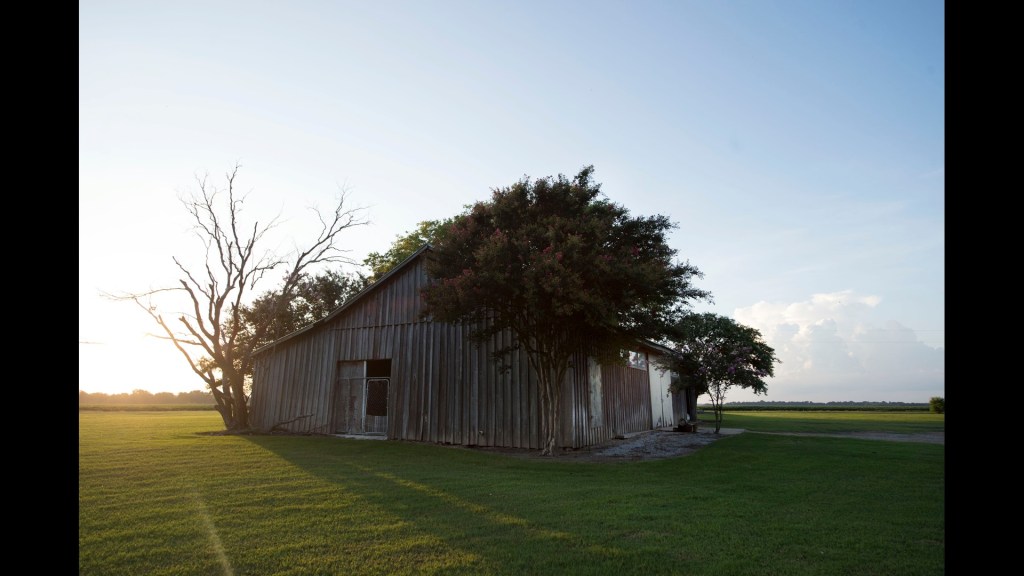

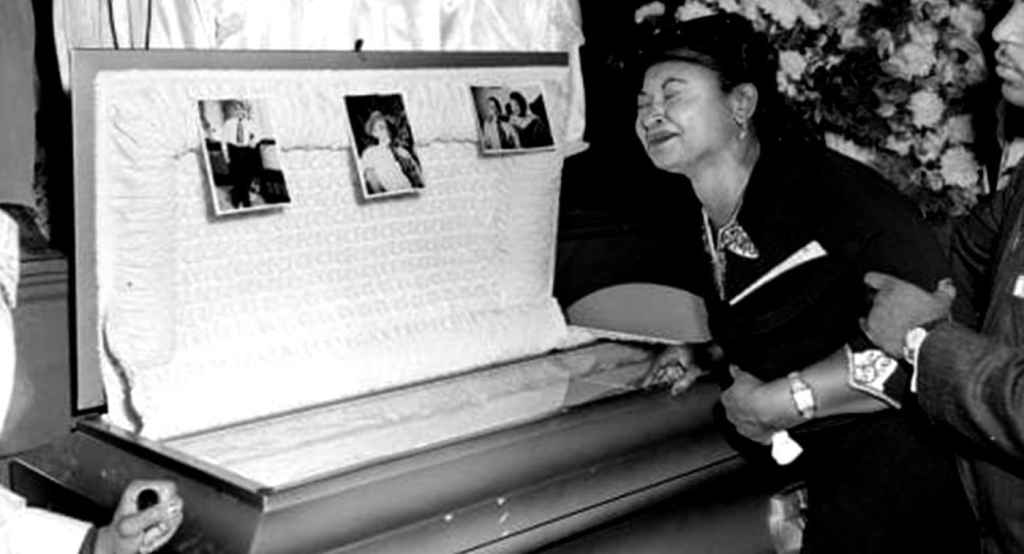

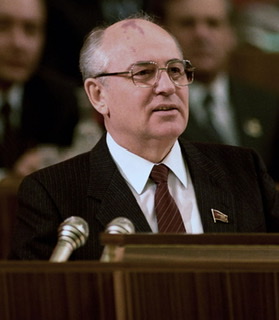


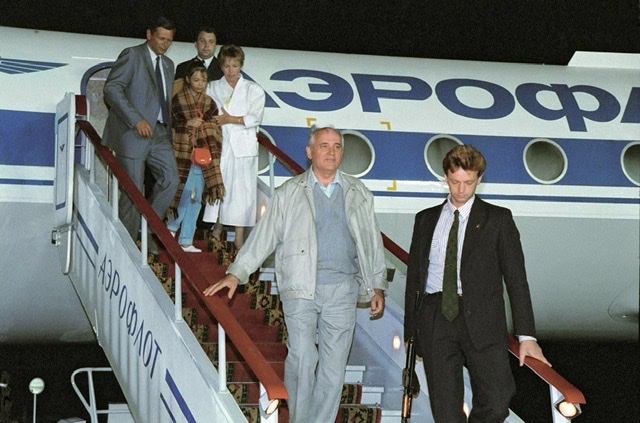
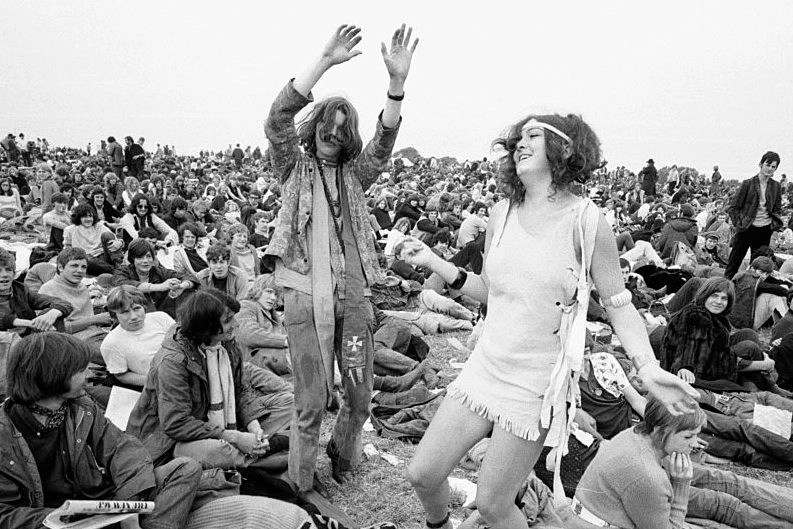

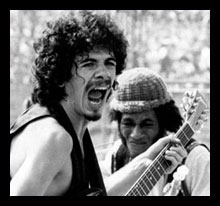


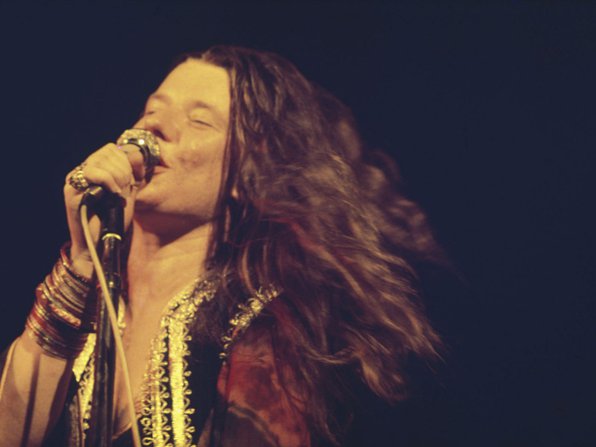
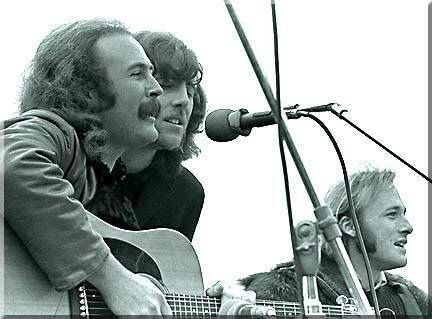
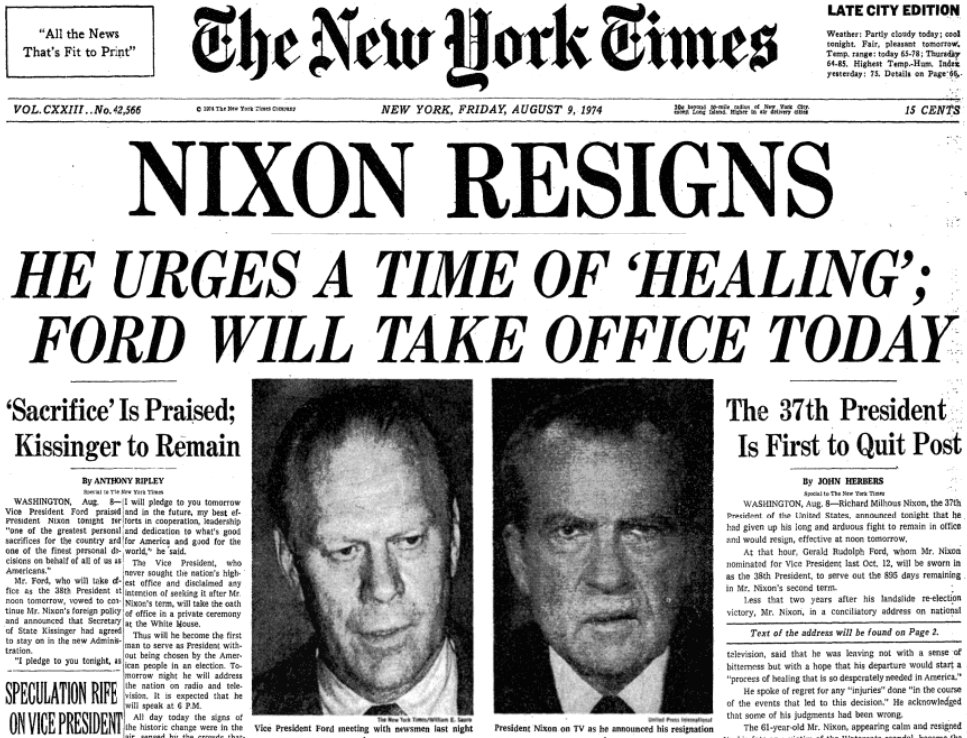


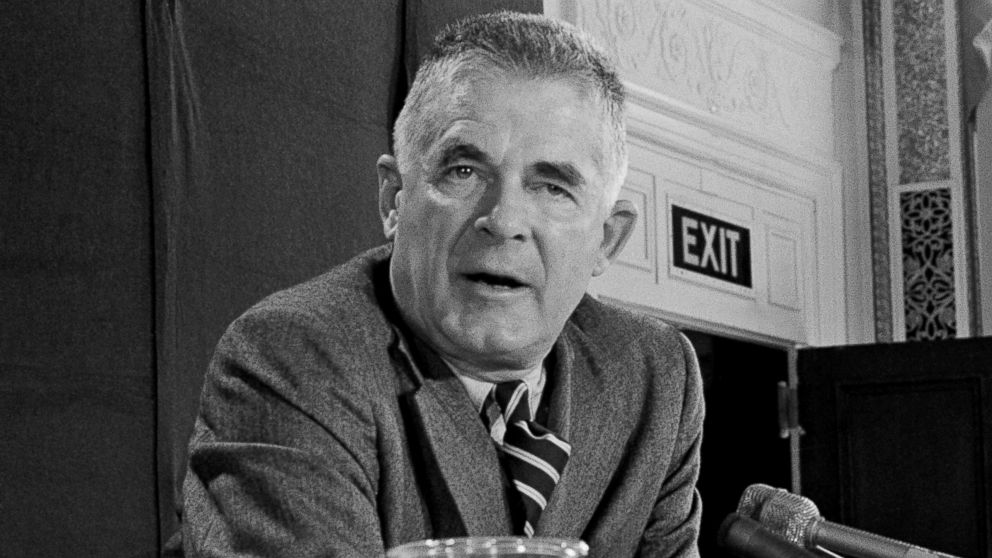
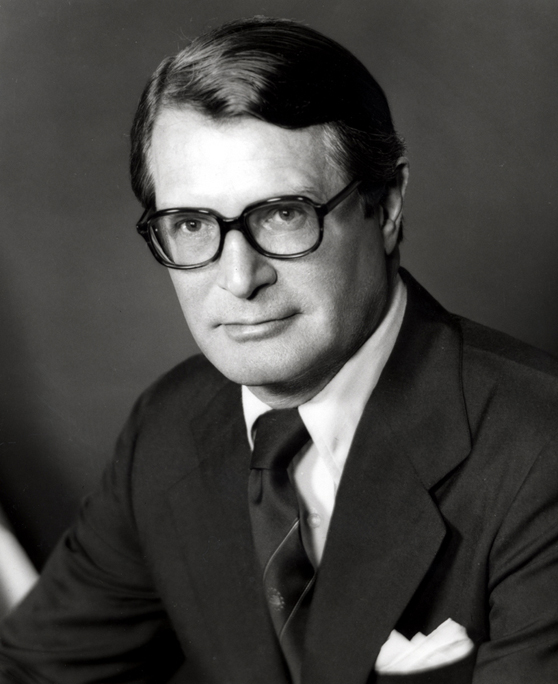



 Tragedy and Farce