

On August 2, 1964, three North Vietnamese torpedo boats attacked the USS Maddox in the Gulf of Tonkin in what appeared to be a blatant act of communist aggression. Two days later the Maddox, along with a second destroyer, the USS Turner Joy, claimed again to have come under fire from North Vietnamese patrol boats that allegedly fired at least 20 torpedoes at the U.S. ships. The Johnson administration would use these alleged incidents to argue for more direct U.S. military involvement in the escalating Vietnam conflict, even though the Maddox likely provoked the first attack and the second one never happened. Three days later, the U.S. Congress passed what would become known as the Gulf of Tonkin Resolution, effectively giving the Johnson Administration a blank check to wage war in Vietnam. The resolution was approved unanimously in the House while in the Senate only two Senators, Wayne Morse (D-OR) and Ernest Gruening (D-AK) opposed the resolution. Throughout the war, both Morse and Gruening would remain critics of U.S. involvement in Vietnam with Morse taking great issue with what he saw as the Johnson administration’s deceptive practices, especially the withholding of information from the public.
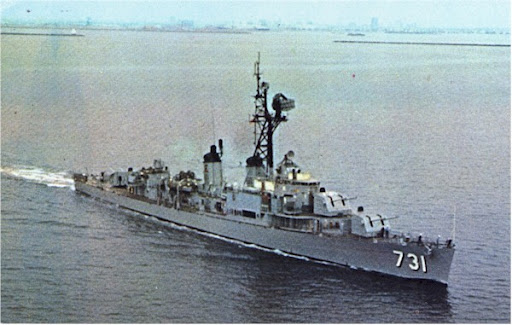
In reality, nothing about the incident was as reported. The USS Maddox was not the target of unprovoked Communist aggression. It was supporting South Vietnamese commando attacks and intelligence-gathering missions along the North Vietnamese coast. The South Vietnamese attacks were part of Operation Plan 34A (OPLAN 34A). Conceived by the U.S. military and carried out by the South Vietnamese Navy, OPLAN 34A was designed to harass the communist government in Hanoi and create opportunities to learn about North Vietnam’s military readiness and operations, in particular a new radar network the Soviets were installing. Moreover, the alleged August 4 attack never took place. The commander of the Maddox sent conflicting messages about the purported attack which would later be attributed to faulty equipment, poor weather, and overeager sonar men. A navy fighter jet from a nearby aircraft carrier also flew overhead for ninety minutes but failed to locate any North Vietnamese ships. The plane’s pilot, Commander James B. Stockdale wrote, “I had the best seat in the house to watch” and I saw “no boats, no boat wakes, no boat gunfire, no torpedo wakes—nothing but black sea and American firepower.” Lastly, an intelligence intercept in which North Vietnamese patrol boats reported the results of the the alleged August 4 attack to higher officials was in fact from the incident two days earlier and not confirmation of an additional attack.
This incident would also eventually raise troubling questions about whether President Johnson had deliberately misled the American public into the Vietnam War. On this dubious basis, the Johnson administration would plunge the United States into a ten year ground war in Vietnam. Having thoroughly defeated his Republican rival, Senator Barry Goldwater, in a landslide in the November 1964, Senator Hubert Humphrey and others within the Democratic Party, tried to convince Johnson that it was an opportune time to step back from Vietnam. Johnson disagreed and within six months U.S. aircraft would begin carrying out bombing runs over North Vietnam as part of Operation Rolling Thunder while 40,000 U.S. troops would be on the ground in South Vietnam. By the end of 1965, that number would expand to 184,000. The U.S. military troop presence in Vietnam would continue to grow, peaking at roughly 550,000 in April 1969. Approximately 50,000 servicemen and women would lose their lives over the course of this ten year war.

In a largely symbolic gesture, the U.S. Congress repealed the Gulf of Tonkin resolution in January 1971, as popular opinion grew against continued U.S. military involvement in Vietnam. Two years later, Congress passed the War Powers Act over the veto of President Richard Nixon. The War Powers Act was a direct reaction to the Gulf of Tonkin Resolution and Nixon’s illegal expansion of the war into Cambodia. It was also a determined attempt by Congress to reassert it’s oversight of U.S. foreign policy and reclaim its unique power to declare war, a power it had ceded to the presidency during both the Korean and Vietnam Wars. The War Powers Resolution allows a President to use U.S. forces in combat in the event of “a national emergency created by attack upon the United States, its territories or possessions, or its armed forces.” However, the President also needs to report to Congress within 48 hours of such a military action, and Congress has 60 days to approve or reject it. The legislation highlighted a significant constitutional issue: the President is the commander and chief of American armed forces, but Congress has the sole power to declare war. Although every President since it’s passage has rejected the War Powers Resolution as an infringement on their constitutional powers as Commander-in-Chief, they have all tended to take actions that have been “consistent with” rather than “pursuant to” the provisions of the act—in some cases, seeking congressional approval for military action without invoking the law itself. In this strange way, Presidents have complied with the spirit of the law without recognizing its legitimacy.



 Tragedy and Farce