

On May 24, 1856, John Brown, along with four of his sons and three other anti-slavery men descended upon a pro-slavery settlement along Pottawattamie Creek Kansas to avenge the sacking of the abolitionist stronghold of Lawrence, Kansas three days earlier.

On 21 May, over 800 pro-slavery ruffians led by former U.S. Senator from Missouri David Atchison descended upon Lawrence and proceeded to ransack the town. Thundering into town uncontested, they terrorized the citizenry, looted homes and businesses, and destroyed two newspaper offices, tossing the printing press of an abolitionist newspaper into a nearby river. As the coup de grace, they destroyed the Free State Hotel, built by the abolitionist Emigrant Aid Company, as a temporary residence for newly arrived anti-slavery settlers.
News of the heinous attack spread quickly. Brown and his sons rushed to the defense of the town but were too late to prevent its destruction. Brown was furious. He was appalled by the damage that was done but he was equally incensed that not a single abolitionist fired a gun in defense of the town. About the same time, news from Washington reached Kansas that abolitionist Senator Charles Sumner was nearly beaten to death with a cane by pro-slavery Congressman Preston Brooks, while giving a speech on the Senate floor titled “The Crimes Against Kansas.” Both of these incidents only served to reinforce his belief in the Old Testament concept of justice, “an eye for an eye,” and the folly of non-violent abolitionism.

The attack on Lawrence was a turning point for Brown. One that would put him firmly and irreversibly on the path to a violent war against slavery. No longer willing to sit idly by and frustrated by the caution and inaction of leadership of Kansas’ free state movement, Brown vowed to retaliate for the attack on Lawrence. “Now something must be done… Something is going to be done now,” he told a small group of followers.
Brown believed that the pro-slavery forces needed to be taught a lesson. In the middle of the night of May 24, Brown and his sons dragged five pro-slavery men from their homes and brutally hacked them to death with broad swords. Word of what would become known as the Pottawattamie Massacre, quickly spread. Brown repeatedly denied involvement in this criminal action but his growing militant reputation and that of his family made them prime suspects.
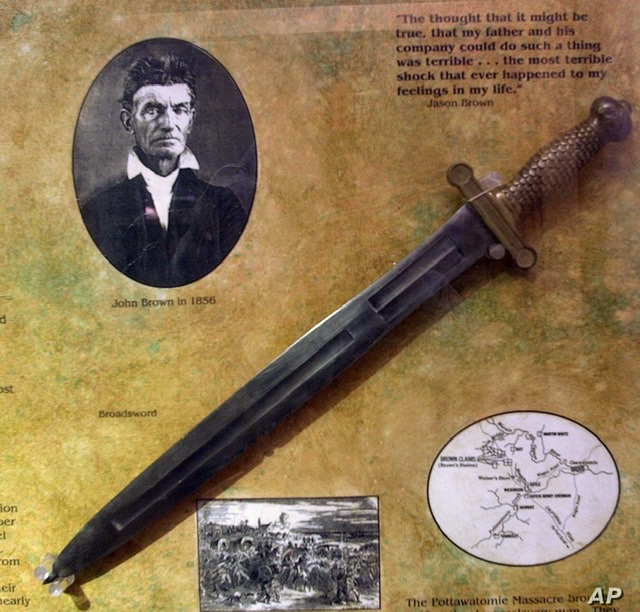
The executions did not have the intended “restraining effect” that Brown sought. Instead they ushered in an extended period of retaliatory violence known as “Bleeding Kansas,” in which the Brown family would play a leading role. In early June, Brown and a band of free-state militia ambushed the camp of a pro-slavery ruffians who were hunting down Brown and his family in response to the Pottawatomie Massacre. After a three-hour gun battle, Brown and his militia defeated the pro-slavery forces in what would become known as the Battle of Black Jack. It was what Brown himself called, “the first regular battle between Free-State and proslavery forces in Kansas” and what would become the opening salvo in his war against slavery that would culminate three years later with his failed attempt to seize the Federal Arsenal at Harper’s Ferry Virginia and start a slave insurrection.
 Tragedy and Farce