Desolation Road: Sherman’s March to Sea


On November 15, 1864, Major General William T. Sherman and his 62,000 man army of grizzled veterans departed Atlanta and began their now famous 300 mile march across the state of Georgia laying a path of destruction that would drive a stake through the heart of the Southern Confederacy and hasten an end to the war.

War is Hell!

Major General William T. Sherman’s capture of Atlanta in early September 1864 was a pivotal moment in the American Civil War. For all intents and purposes, it was a victory that all but ensured the re-election of President Lincoln two months later and squelched any Southern hopes for a negotiated peace on terms favorable to the Confederacy. By the fall of 1864, the Confederacy was in dire straits and Sherman was intent on expediting its demise. Southern morale was at its nadir. The loss of Atlanta was a significant blow and another reminder of the long-standing ineptitude of Confederate military leaders in the West. In Virginia, Confederate military fortunes were growing more dim. The bloody battles of the Wilderness, Spotsylvania, and Cold Harbor severely degraded the army which now found itself stuck in trenches around Petersburg, surrounded by a more numerous and better equipped foe. There was also an emerging peace movement within some of the Southern states, calling for an end to the war and a reunion with the North. Sherman was convinced the war would only end when Southern political will was broken and the South’s capacity for warfare destroyed. Determined to make Georgia “howl” he developed an audacious plan to break the back of the Confederacy. He would march his 62,000 man army 300 miles across Georgia from Atlanta to Savannah, destroying all the railroads, manufacturing industries, and plantations and farms along the way that were sustaining the Confederate war effort in Virginia.
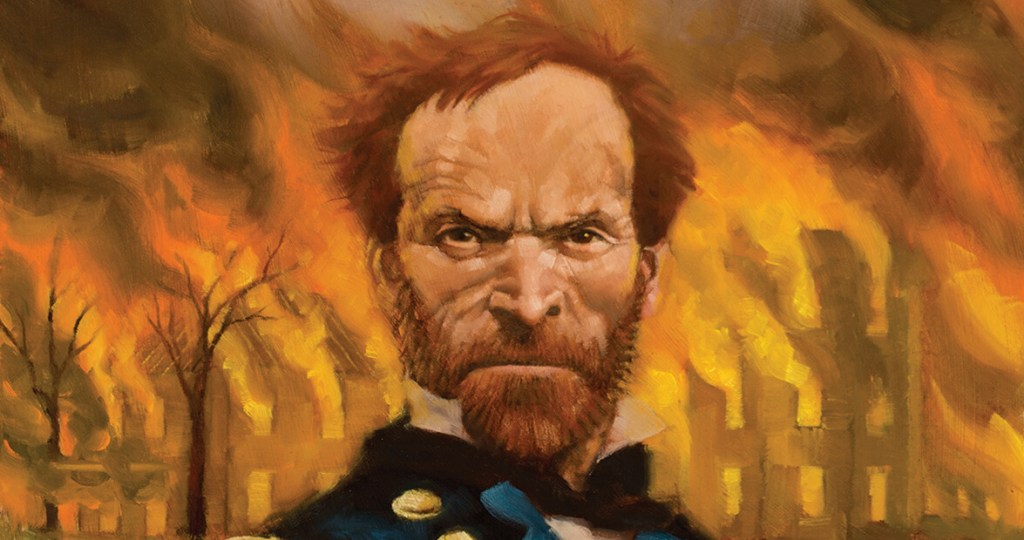
Sherman’s plan was a bold gambit that carried great risk. He would detach the army from its supply lines and live off the land, as it marched clear across Georgia to Savannah.  Both President Lincoln and Lieutenant General Ulysses S. Grant, Sherman’s close friend and commanding officer initially opposed the plan. Even though they recognized its strategic possibilities, they worried that the army could become trapped deep inside hostile territory and cut off from its base of supply. Sherman rebutted these concerns warning that it would be more dangerous to try and occupy  Georgia because his army and supply line would be subject to constant guerrilla attacks. However, by destroying Georgia’s railroads, factories, warehouses, and farms, Sherman argued, he could degrade its ability to contribute to the Confederate war effort. After the main Confederate army withdrew into Tennessee, Grant reconsidered his objections. Grant advised President Lincoln that he thought the plan sound and telegraphed Sherman on November 2, “On reflection I think better of your proposition… I say then go on as you propose!”

Sherman and his staff were meticulous in their planning, pouring over census maps that showed county-by-county crop yields, railroads, and manufacturing industries to help guide their foraging and path of destruction. Sherman would later comment, “No military expedition was ever based on sounder or surer data.” Yet Sherman’s foraging plans were not simply about sustaining the army. It was also a psychological operation. Sherman aimed to bring the “hard hand of war” to a civilian population that heretofore had escaped the war’s privations and depredations. He believed that only by unleashing the pain and suffering of the war directly onto the population could he completely undermine Confederate morale and bring the war to a more rapid conclusion. As one of Sherman’s staff observed, “Evidently it is a material element in this campaign to produce among the people of Georgia a thorough conviction of the personal misery which attends war and of the utter helplessness and inability of their rulers, State or Confederate, to protect them.

On to Savannah

As Sherman’s army moved out of Atlanta it laid waste to the business and industrial sector of the city to ensure that the Confederates could salvage nothing of value. Contrary to the image of a city burned to the ground that was popularized by the movie Gone with the Wind, only about 30 percent of the city was actually destroyed by Sherman’s men. Nevertheless, the general clearly was contemptuous of the city which he saw as a symbol of Confederate resistance and a major supply hub, complaining, “Atlanta! I have been fighting Atlanta all this time. It has done more to keep up this war than any—well Richmond perhaps. All the guns and wagons we’ve captured along the way—all marked Atlanta.” Sherman later would proudly describe exiting the city in his memoirs, “Behind us lay Atlanta, smoldering and in ruins, the black smoke rising high in the air and hanging like a  pall over the ruined city. Some band, by accident, struck up the anthem of “John Brown’s Body”; the men caught up the strain, and never before or since have I heard the chorus of “Glory, glory, hallelujah!” done with more spirit, or in better harmony of time and place.” Sherman’s path of destruction had begun.
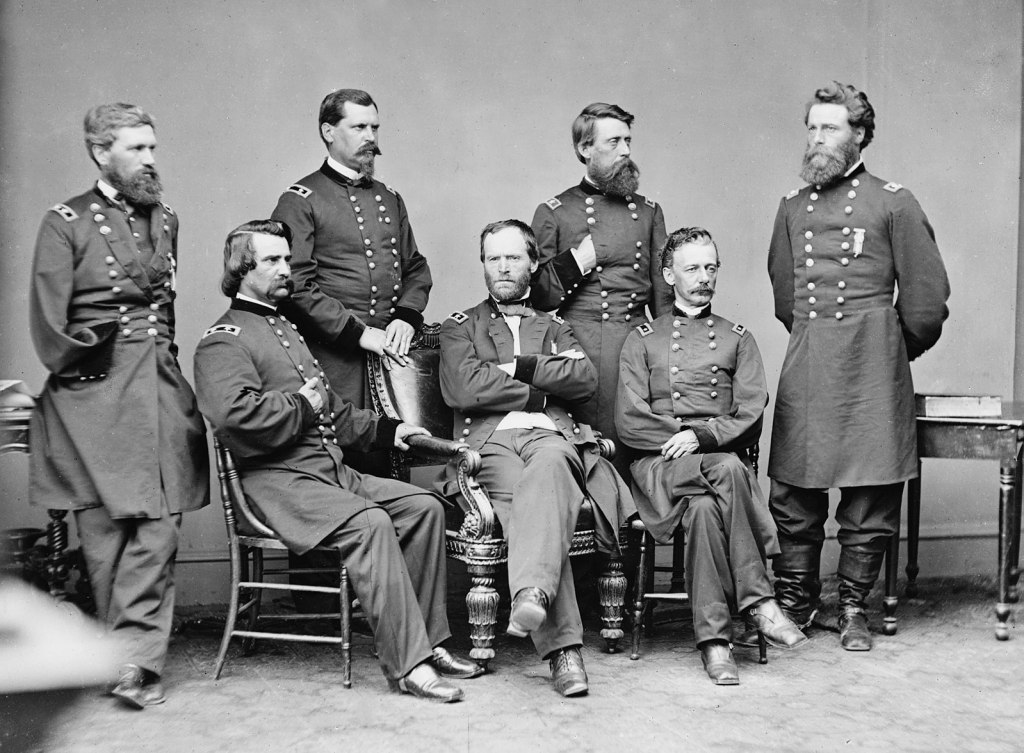
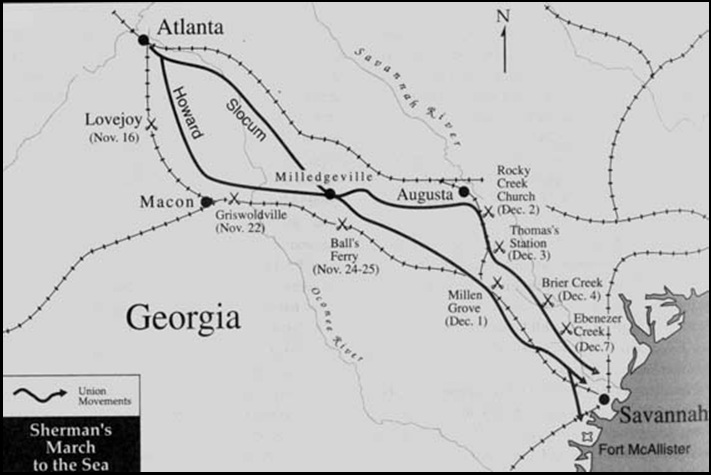
Sherman organized his army into two roughly equivalent wings of 30,000 troops and marched his forces south toward Savannah, keeping the two wings about 30 miles apart to confuse the enemy and obscure his intentions. The right wing—the Army of Tennessee—was commanded by Major General Oliver Howard and consisted of the XV and XVII Corps. The left wing—the Army of Georgia—was commanded by Major General Henry Slocum and was made up of the XIV and XX corps. In addition, Sherman also had two brigades of cavalry under Brigadier General H. Judson Kilpatrick. Together, Sherman’s forces significantly outnumbered the 13,000 Confederate cavalry, infantry, and local militia that Confederate commanders from the Department of South Carolina, Georgia, and Florida were able to scratch together. In fact, Georgia’s rivers, creeks, and swamps would prove to be greater obstacles to Sherman’s advance than any Confederate military force.
True to his promise, Sherman’s army lived off the land as it cut a thirty mile wide path of destruction through Georgia, pillaging farms and plantations while destroying high value targets such as railroads, factories, telegraphs, mills, cotton gins, and warehouses. Union troops would heat the torn up iron rails until they were redhot and bend them into contorted shapes know as “Sherman’s neckties” leaving a trail of this twisted iron as they advanced. At the same time, Sherman ordered his troops to “forage liberally” and issued Special Field Order 120 which required every brigade to organize a foraging detachment under the direction of one of its more “discreet” officers with a goal of keeping a consistent three-day supply of gathered foodstuffs. Other ill-disciplined soldiers hunted for jewelry, silverware, and other concealed valuables. These foragers quickly became known as “bummers” as they ransacked farms and plantations across rural Georgia, striking fear and anger among the Georgian people. Sherman’s army needed the supplies, but they also wanted to teach Georgians a lesson: “it isn’t so sweet to secede,” one soldier wrote in a letter home, “as [they] thought it would be.”

Sherman’s army encountered its first organized military resistance on 22 November near the town of Griswoldville, which was home to a pistol and saber factory. A desperate group of 3,000 Georgian militia, mostly old men and teenage boys, attacked the smaller rear guard of the right wing of Sherman’s army. Although the Confederates outnumbered Sherman’s rearguard by almost 2:1, they were facing experienced troops armed with new Spencer repeating rifles. The Confederates charged the Union line three times with disastrous results, including 650 men killed or wounded compared to 62 casualties on the Union side. The results were so tragically lopsided that Southern troops largely refrained from initiating any further battles beyond cavalry skirmishes. Instead, they fled South ahead of Sherman’s troops, wreaking their own havoc as they went: They wrecked bridges, chopped down trees and burned barns filled with provisions before the Union army could reach them.

As Howard’s right-wing repulsed the futile Confederate attack on its rear guard, Slocum’s wing advanced toward the Georgian state capital at Milledgeville. Georgia’s governor and other state officials urged bold resistance from the public but as Slocum’s troops approached the outskirts of the capital, the governor and legislators quickly fled. On November 24, Slocum’s wing entered Milledgeville where they celebrated Thanksgiving, much to the chagrin of the local populace, and enacted a mock legislative session in the statehouse where they pretended to vote Georgia back into the union.

Over the next few weeks, Sherman’s army advanced steadily toward Savannah, meeting with only minimal resistance. Kilpatrick’s cavalry beat back repeated attacks from Confederate horsemen while Sherman’s engineers and pioneer brigades proved exceptionally adept at pontooning rivers and clearing the many obstacles deliberately placed in their path. The army marched from sun-up to sun-down, covering as many as fifteen miles a day. The men traveled light. Each man carried a musket and about 40 rounds in his cartridge box but to speed their way they reduced their discretionary holdings largely to a change of undergarments, their individual mess kit, and a shelter half which they typically wrapped up in their blankets slung across their left shoulder. Meals were limited to a sparse breakfast and a supper at the end of the day. There were no breaks for lunch and the men were expected to eat whenever and whatever they could on the march. When the army did stop it was usually reserved for foraging or some act of destruction.

A Moment of Shame

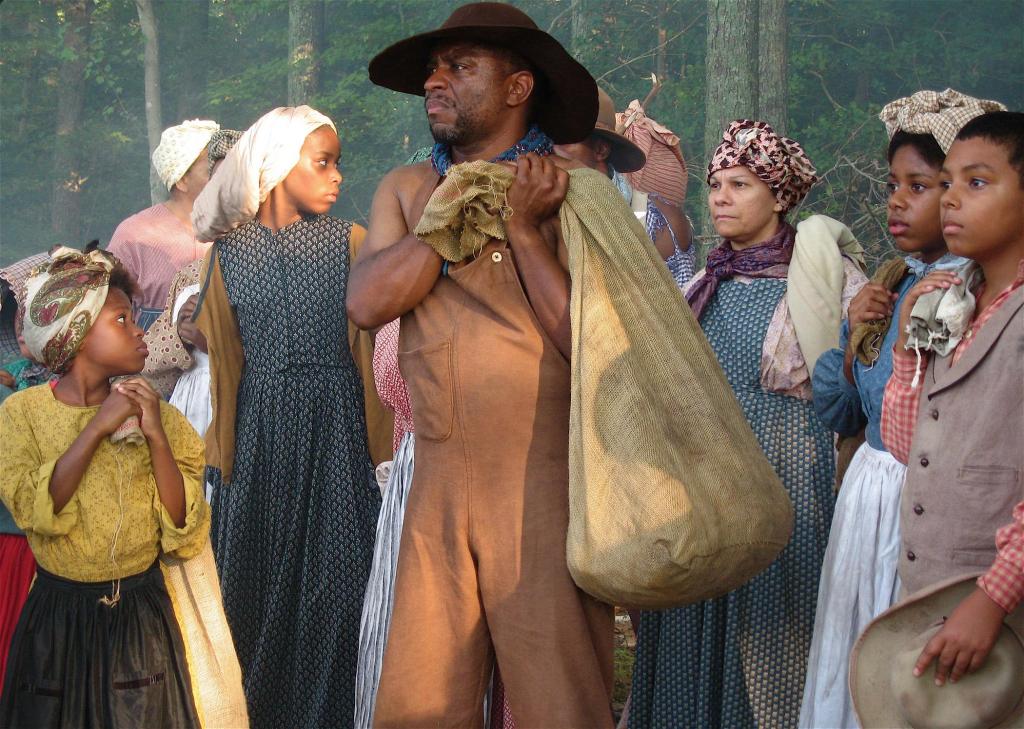
Sherman’s advance also attracted a growing number of escaped slaves, who greeted them as emancipators, and followed behind the army for protection as it pushed toward Savannah. These followers set the stage for one of the more shameful episodes of the entire war. On December 9, the left wing of Sherman’s army approached Ebeneezer Creek with a large body of Confederate cavalry nipping at its heels. The creek had become swollen and impassable without a bridge. Union Brig. General Jefferson Davis, who commanded the 14th Army Corps ordered his engineers to quickly assemble a pontoon bridge so the army could cross and escape further harassment. Once the bridge was completed, Davis ordered his men to quickly cross over the creek. After the last Union soldier made it across the creek, Davis ordered his men to cut the ropes of the bridge leaving behind 800 former slaves that were soon massacred by the Confederate cavalry. Several Union soldiers on the other side of the creek tried to help, wading in as far as they could to pull in those on floating devices and pushing logs out to the few refugees still swimming but these efforts proved futile. Those who were were not killed by the Confederates that day were captured and returned to slavery. Davis was never reprimanded for this cowardly shameful act an in fact Sherman defended him, blaming the freed slaves for ignoring his advice not to follow the army.
Less than two weeks later, Sherman and his army had reached the outskirts of Savannah. The 10,000 Confederate soldiers who were responsible for defending the city abandoned their trenches and quickly fled north into South Carolina. On December 21 Savannah’s mayor formally surrendered the city to Sherman. In a telegram to President Lincoln, Sherman wrote,  “I beg to present you as a Christmas gift the City of Savannah, with one hundred and fifty heavy guns and plenty of ammunition and about twenty-five thousand bales of cotton.”

The Move North

Sherman’s march proved to be an unqualified success while its destructive impact was staggering. It devastated the war making potential of the Confederacy and demoralized the Southern Civilian population and in doing so hastened an end to the war. Sherman, by his own account, estimated a total Confederate economic loss of $100 million (more than $1.5 billion in the 21st century) in his official campaign report. His Army destroyed 300 miles (480 km) of railroad, numerous bridges and miles of telegraph lines. It seized 5,000 horses, 4,000 mules, and 13,000 head of cattle. It confiscated 9.5 million pounds of corn and 10.5 million pounds of fodder, and destroyed uncounted cotton gins and mills. Between 17,000-25,000 slaves were also liberated.

Sherman and his army remained in Savannah for a month, gathering its strength before turning North to unite with General Grant’s army in Virginia and crush the Confederate Army of Northern Virginia once and for all. Sherman and cut a similar path of destruction through the Carolinas. One Georgian woman, Emma Florence LeConte, after the fall of Savannah, wrote in her diary, ”Georgia has been desolated. They are preparing to hurl destruction upon the State they hate most of all, and Sherman the brute avows his intention of converting South Carolina into a wilderness.” In some respects his march through South Carolina was much worse than Georgia because South Carolina was the first state to secede from the Union and was responsible for the rebellion. Marching through the South Carolina capital of Columbia, Sherman left the city a charred ruin. Sherman denied any responsibility for the burning of Columbia. He claimed that the raging fires were started by evacuating Confederates and fanned by high winds. Sherman later wrote: “Though I never ordered it and never wished it, I have never shed any tears over the event, because I believe that it hastened what we all fought for, the end of the War.”

Sherman entered North Carolina where he proceeded to engage the second largest Confederate Army under General Joe Johnstone. However Johnstone’s army was no match for Sherman’s men. Johnstone’s men were outnumbered three to one and completely demoralized. Johnstone told Confederate President Jefferson Davis, “Our people are tired of the war, feel themselves whipped, and will not fight. Our country is overrun, its military resources greatly diminished, while the enemy’s military power and resources were never greater and may be increased to any extent desired. … My small force is melting away like snow before the sun.” On April, 26, 1865, Sherman accepted Johnstone’s surrender, less than three weeks after Lee surrendered to Grant at Appomattox. It was the virtual end for the Confederacy, although some smaller forces west of the Mississippi River. The war was over.

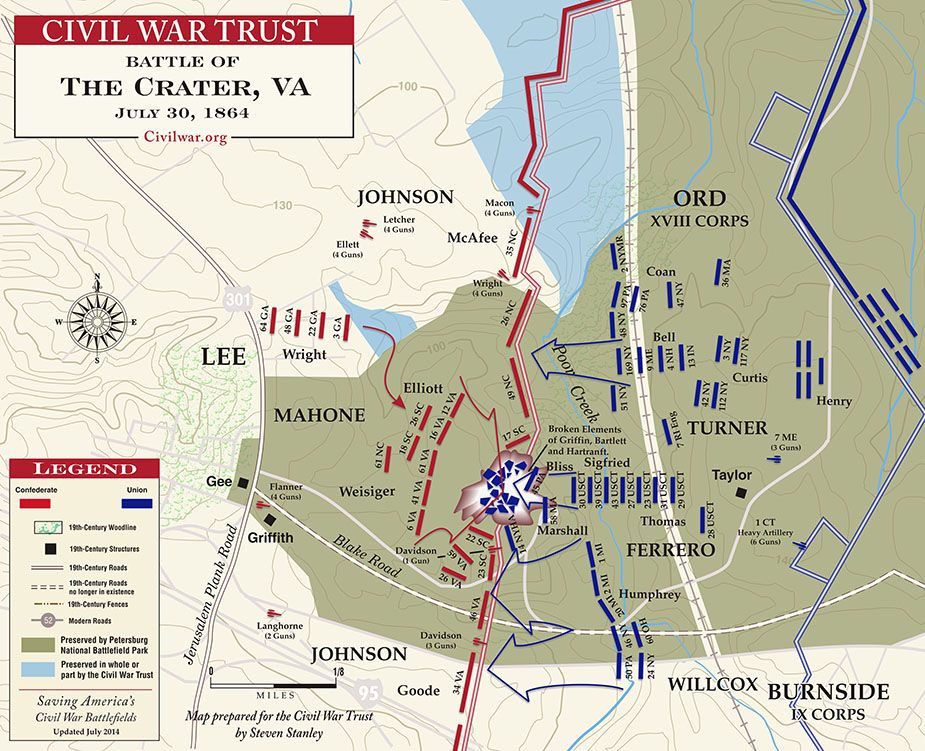
The Battle of the Crater, July 30, 1864

It’s the summer of 1864 and the fortunes of the Confederacy are on the wane. The Army of Northern Virginia is suffering from shortages across the board but one shortage is especially problematic, manpower. The Army of Northern Virginia is steadily being attritted. A series of bloody battles beginning in early May have sapped the Army and put it on the defensive. In early May, at the battle of the Wilderness, Confederate losses number over 11,000. A week later at Spotsylvania Courthouse, the South suffers another 10,000 casualties. In early June, the Confederates return the favor at Cold Harbor inflicting over 10,000 Union losses but they also suffer another 4,500 losses. In little over a month, General Lee has lost a quarter of his army. Lee knows he cannot continue losing men at this pace but he has few options. Lee writes to his son, “Where do we get sufficient troops to oppose Grant? He is bringing to him now the Nineteenth Corps, and will bring every man he can get.” Unlike his predecessors, General Grant is a fighter. He knows that he has Lee on the ropes and he won’t let up. Grant continues to push towards Richmond forcing Lee to move his army to stay between Grant and the rebel capital. Grant deprives Lee of the initiative and Lee is now forced to fight a defensive campaign against Grant’s numerically superior army, one that is not Lee’s strong suit.

Unable to get between Lee and Richmond, Grant turns his eye toward the critical rail junction of Petersburg, thirty miles south of the capital. Petersburg is vital to the supply of Richmond and its loss would make Richmond’s capture almost inevitable. Shortly after Cold Harbor, Grant marches his forces towards Petersburg and Lee races southward toward Petersburg knowing what its loss would mean. By June 18, Grant had nearly 100,000 men under him at Petersburg compared to the roughly 20,000-30,000 Confederate defenders. Grant realized the fortifications erected around the city would be difficult to attack and pivoted to starving out the entrenched Confederates. Grant had learned a hard lesson at Cold Harbor about attacking Lee in a fortified position but is chafing at the inactivity to which Lee’s trenches and forts had confined him. A regiment of Pennsylvania miners offered a proposal to break the impasse. They would dig a long mine shaft under the Confederate lines and detonate explosives directly underneath fortifications in the middle of the Confederate First Corps line. If successful, not only would all the defenders in the area be killed, but also a hole in the Confederate defenses would be opened. If enough Union troops filled the breach quickly enough and drove into the Confederate rear area, the Confederates would not be able to muster enough force to drive them out, and Petersburg might fall.

The plan was met with great skepticism but Grant did not reject it out of hand. Digging commenced in late June. On July 17, the main shaft reached under the Confederate position. Rumors of a mine construction soon reached the Confederates, but Lee refused to believe or act upon them. For two weeks he debated before directing countermining attempts, which were sluggish and uncoordinated, and failed to discover the mine.

A division of new African-American soldiers was specially trained to carry out the assault once the explosives were detonated. For weeks the division prepared itself for all the chaos potential challenges they might encounter in leading the assault. Despite this intensive training, a decision was made a day before the impending attack to replace the African-American soldiers with another division that was less prepared. Elements within the Union high command lacked confidence in the black soldiers’ combat abilities.

The explosive charges were detonated ‪at 4:44 a.m. on the 30th.‬ They exploded in a massive shower of earth, men, and guns creating a crater that was over 100 feet wide and 30 feet deep. The initial explosive charges immediately killed 278 Confederate soldiers. The remaining troops were stunned by the explosions and did not direct any significant rifle or artillery fire at the enemy for at least 15 minutes. However, the Union troops selected to lead the assault were unprepared for what they encountered. Instead of moving around the crater, they advanced down into it and soon became trapped. The Confederates, under Brig. Gen. William Mahone, regrouped and counterattacked. They began firing rifles and artillery down into the crater in what was later described as a “turkey shoot.” The plan had failed and the battle was lost. However, the strategic situation remained unchanged. Both sides remained in their trenches, and the siege would continue into March of the next year.

The Assassination of Abraham Lincoln, April 14, 1865

On April 14, 1865, President Abraham Lincoln was assassinated by John Wilkes Booth at Ford’s Theater in Washington DC while attending the play, “Our American Cousin.” Booth, a popular actor at the theater and southern sympathizer, had free access to all areas of the theater. Around 10 pm, He quietly slipped into the box where Lincoln and his wife were sitting and fired his single shot Derringer pistol into the back of the head of the President at point blank range with deadly effect. Booth quickly leaped from the box onto the stage, where he shouted “Sic semper tyrannis,” (Thus always to Tyrants) before bowing and fleeing into the night. Lincoln’s body was brought to a house across the street from the theater, where he would succumb to his wound around 7:30 am the following day. Lincoln’s assassination would forever alter the course of history, thrusting the woefully inept Vice President Andrew Johnson into the presidency. Johnson would prove ill-tempered and ill-suited for the challenge of putting the country back together after four years of civil war.

Portrait of an Assassin

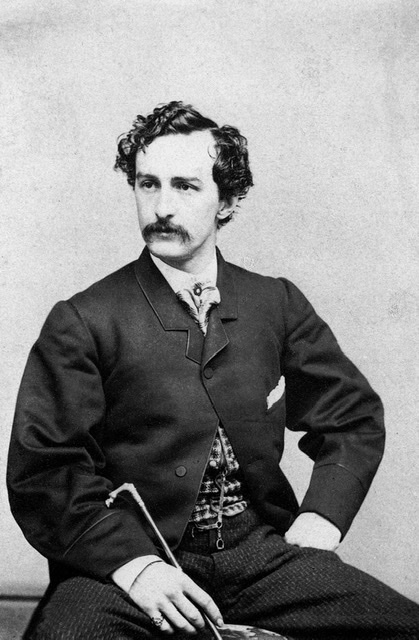
Booth was born into a well known family of Maryland thespians in 1838. His father, Junius Brutus Booth,  was a widely regarded British Shakespearean actor who immigrated to the United States with his mistress, Booth’s mother, in 1821 and is considered by many, the greatest tragic actor in the first half of the 19th century. His older brother Edwin followed in his father’s footsteps and was judged by many to be the greatest American Shakespearean actor of the 19th century. Thus it was not surprising that John Wilkes Booth would be drawn to the theater. He made his stage debut at the age of 17 in a production of Richard III by Baltimore’s Charles Street Theater. Although his initial performance was underwhelming he soon joined a Shakespeare production company in Richmond, Virginia where he earned rave reviews for his acting talents. Some critics called Booth “the handsomest man in America” and a “natural genius.”

Nevertheless, like many Maryland families, the Booths were politically divided. Junius and Edwin were staunch Unionist while the younger Booth harbored strong southern sympathies. He supported the institution of slavery and despised abolitionists. After the 1860 election and the beginning of the Civil War he would develop an intense hatred for Lincoln. There has been much speculation that John Wilkes Booth’s embrace of the southern cause was part of a larger sibling rivalry with his older brother Edwin and to step outside the shadow of his famous father. In 1860, Booth joined a national touring company performing in all the major cities north and south, where he soon began to equal if not  surpass his more famous brother in terms of popularity and acclaim. One Philadelphia drama critic remarked, “Without having [his brother] Edwin’s culture and grace, Mr. Booth has far more action, more life, and, we are inclined to think, more natural genius.” He was also becoming quite a wealthy actor, earning $20,000 a year (equivalent to about $569,000). 

With the outbreak of the Civil War in April 1861, Booth found it increasingly more difficult to conceal his Southern sympathies or his hatred for Lincoln. Booth, like most southerners abhorred Lincoln. He saw him as a “sectional candidate” of the North and a tool of the abolitionists to crush slavery. Lincoln’s suspension of habeas corpus and the imposition of martial law in Maryland in May 1861, outraged Booth. He saw these actions as evidence of Lincoln’s treacherous and duplicitous nature and his intent to overturn the republic and make himself king. Booth increasingly quarreled with his brother Edwin, who declined to make stage appearances in the South and refused to listen to his brother’s fiercely partisan denunciations of the North and Lincoln. In early 1863, Booth was arrested in St. Louis while on a theatre tour, when he was heard saying that he “wished the President and the whole damned government would go to hell.” He was charged with making “treasonous” remarks against the government, but was released when he took an oath of allegiance to the Union and paid a substantial fine.

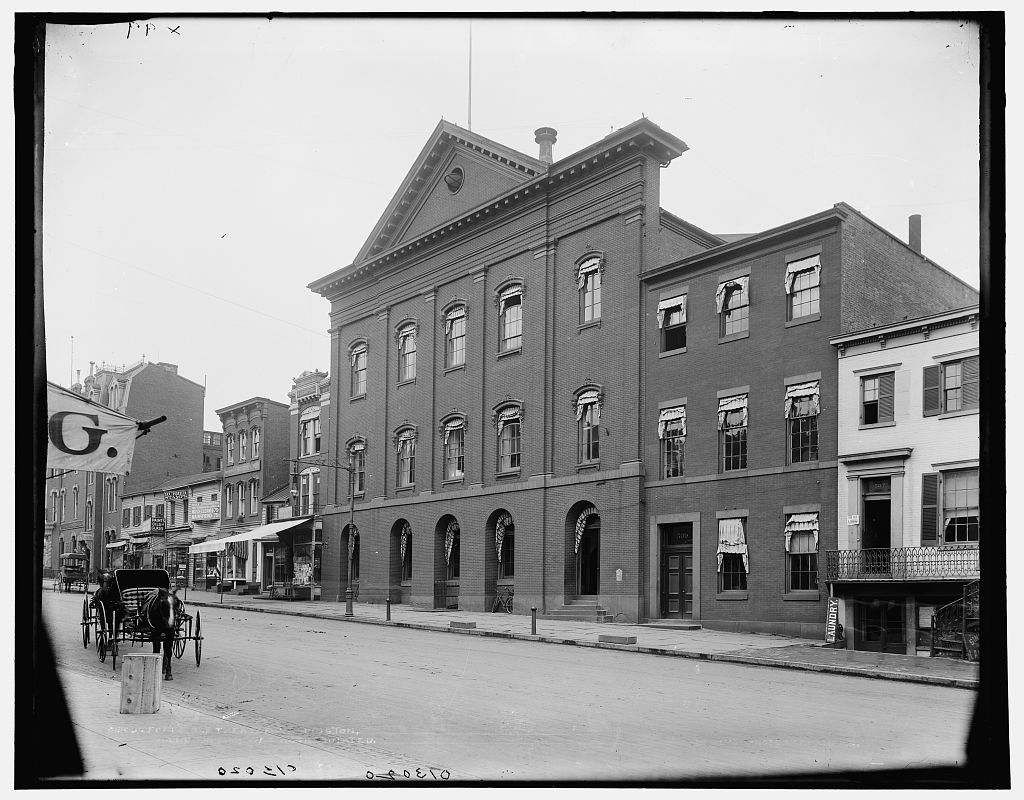
In November of 1863, A family friend John T. Ford opened 1,500-seat Ford’s Theater in Washington, D.C. Booth was one of the first leading men to appear there while Lincoln became one of the theater’s more prominent patrons. In his first role, Booth played a Greek sculptor making marble statues came to life. One evening when Lincoln was watching the play from his box, Booth was said to have shaken his finger in Lincoln’s direction as he delivered a line of dialogue. Lincoln’s sister-in-law, who was sitting with him turned to him and said, “Mr. Lincoln, he looks as if he meant that for you.”The President replied, “He does look pretty sharp at me, doesn’t he?” An admirer of Booth’s acting talents, Lincoln would invite Booth to visit the White House several times but Booth demurred.

Ford’s Theater

A Turn for the Worse

By 1864 the Confederacy’s hopes for victory were diminishing rapidly which only served to intensify Booth’s hatred of Lincoln whom he blamed for he war. After the battle of Gettysburg the previous summer, the Confederacy was hemorrhaging manpower with fewer and fewer options to replace its diminishing ranks. The situation became particularly acute after General Ulysses S. Grant, commander of the Union armies, suspended the exchange of prisoners of war with the Confederate Army to increase pressure on the manpower-starved South. It became absolutely dire following the terrible Confederate loses at the battles of the Wilderness, Spotsylvania, and Cold Harbor in the Spring of 1864. As the hopes of the Confederacy ebbed, Booth became increasingly distraught. Booth had promised his mother at the outbreak of war that he would not enlist as a soldier, but he increasingly chafed at not fighting for the South, writing in a letter to her, “I have begun to deem myself a coward and to despise my own existence.”

To assuage his own guilt and to reverse the declining fortunes of the Southern Confederacy, Booth began to conceive of a plan to kidnap Lincoln and take him to Richmond, believing he could ransom the President back to the Federal Government to free Southern troops. Lincoln’s re-election in November 1864 only further infuriated Booth and created an additional sense of urgency. Booth began to assemble a team of co-conspirators, a mix of Southern sympathizers and likely Confederate agents, who would assist him with the deed.

After Lincoln’s inauguration on March 4, 1865, Booth learned that the President would be attending the play Still Waters Run Deep at the Campbell Hospital on March 17 and considered it a perfect opportunity to kidnap Lincoln. His plan was to intercept the president’s carriage on his way to the play. Booth’s plan this day was spoiled by Lincoln’s change of plan. Instead he decided to speak to the 140th Indiana Regiment.

Murder Most Foul

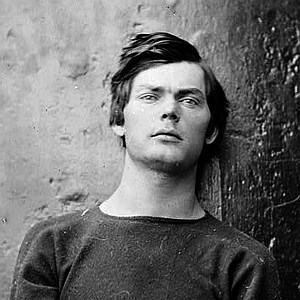
With his initial plans thwarted, Booth and his conspirators went back to the drawing board. However, the fall of Richmond on April 2nd and Lee’s surrender a week later at Appomattox made Booth’s kidnapping plot impractical and irrelevant. The collapse of the Confederacy filled Booth with despair but a speech Lincoln would give would drive Booth in a more deadly direction. On April 11, two days after Lee’s surrender, Lincoln addressed a large assembly of people outside the White House. Among those in the group were Booth and his accomplices David Herold and Lewis Powell. Lincoln’s speech focused largely on healing and putting the fractured nation back together. During his speech, Lincoln called for limited Negro suffrage—giving the right to vote to those who had served in the military during the war, for example. Hearing those words, Booth muttered to companions, “That means nigger citizenship. That is the last speech he will ever make.” He tried to convince one of those companions to shoot the president then and there.

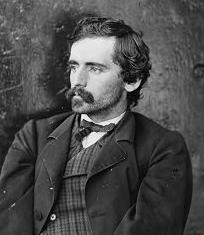
By this time an angry Booth was completely fixated on assassinating Lincoln. He told a friend that he was done with the stage. and that the only play he wanted to present henceforth was Venice Presseved, a play about an assassination. On the morning of Good Friday, April 14, 1865, Booth went to Ford’s Theater to get his mail. While there, he was told by The owner’s brother that the President and Mrs. Lincoln would be attending the play, Our American Cousin that evening, accompanied by Gen. and Mrs. Ulysses S. Grant. He immediately set about making plans for the assassination, which included making arrangements with the livery stable owner for a getaway horse and an escape route. Later that night, at 8:45 pm, Booth informed Powell, Herold, and Atzerodt of his intention to kill Lincoln. He assigned Powell to assassinate Secretary of State William Seward and Atzerodt to do the same to Vice President Andrew Johnson. Herold would assist in their escape into Virginia.

A modern day photo of Lincoln’s box as it looked in 1865

Booth entered Ford’s Theater one last time at 10:10 pm. In the theater, he slipped into Lincoln’s box at around 10:14 p.m. as the play progressed and shot the President in the back of the head with a .41 caliber Deringer pistol. Booth’s escape was almost thwarted by Major Henry Rathbone who was in the presidential box with Mary Todd Lincoln and his fiancée Clara Harris. Rathbone and Harris were guests of Mrs. Lincoln and last minute replacements for General Grant and his wife who opted to visit family in New Jersey instead. Booth stabbed Rathbone when the startled officer lunged at him before jumping from the box onto the stage. Rathbone would suffer from serious mental issues the rest of his life because of his failure to stop Booth.

Booth was the only one of the assassins to succeed. Posing as a pharmacy delivery man, Powell entered Seward’s home where he forced his way upstairs, stabbing the Secretary of State,who was bedridden as a result of an earlier carriage accident, before being subdued. Although Seward was seriously wounded, he would survive. Atzerodt lost his nerve and spent the evening drinking alcohol, never making an attempt to kill Johnson.

Manhunt

After jumping onto the stage, Booth fled by a stage door into an alley, where his getaway horse was waiting for him. He and David Herold rode off into southern Maryland, planning to take advantage of the sparsely settled area’s lack of telegraphs and railroads, along with its predominantly Confederate sympathies. He thought that the area’s dense forests and the swampy terrain made it ideal for an escape route before crossing the Potomac River back into rural Virginia.

Federal troops combed the rural area’s woods and swamps for Booth in the days following the assassination. The hunt for the conspirators quickly became the largest in U.S. history, involving thousands of federal troops and countless civilians. Secretary of War, Edwin M. Stanton, personally directed the operation.

On April 26, soldiers of the 16th New York Cavalry tracked Booth and Herold to a farm in Virginia, just south of the Rappahannock River, where they were sleeping in a barn. The soldiers surrounded the barn and threatened to light it on fire if they did not come out and surrender. Herold surrendered, but Booth cried out, “I will not be taken alive!” The soldiers set fire to the barn and Booth scrambled for the back door with a rifle and pistol.

Sergeant Boston Corbett shot Booth in the back of his head, severing his spinal chord. Paralyzed, the soldiers carried Booth to the steps of the barn. As he lay dying, he told his captors to tell his mother that he died for his country. Two hours later he was dead. By the end of the month, all of Booth’s co-conspirators were arrested except for John Surrat who fled to Canada and would be arrested a year later in Egypt.

After a seven week long military tribunal, four of Booth’s co-conspirators, Herold, Powell, Azterodt and Mary Surrat (John Surrat’s mother) were convicted and sentenced to death by hanging. Surrat would become the first woman executed by the Federal Government. Dr. Samuel Mudd, Samuel Arnold, and Michael O’Laughlen were sentenced to life in prison while Edmund Spangler was sentenced to six years. O’Laughlen died in prison in 1867 but Mudd, Arnold, and Spangler were pardoned in February 1869 by Johnson.

News of Linoln’s death was met with an outpouring of grief across the country. On April 18, Lincoln’s body was carried to the Capitol rotunda to lay in state on a catafalque. Three days later, his remains were boarded onto a train that conveyed him to Springfield, Illinois where he had lived before becoming president. Tens of thousands of Americans lined the railroad route and paid their respects to their fallen leader during the train’s solemn progression through the North. Frederick Douglass called the assassination an “unspeakable calamity” while General Ulysses S. Grant, called Lincoln “incontestably the greatest man I ever knew.” In the South Lincoln’s assassination was met with both joy and trepidation. Some believed Lincoln got what he deserved and saw Booth as a hero. South Carolina diarist Emma Le Conte wrote,”Hurrah! Old Abe Lincoln has been assassinated! It may be abstractly wrong to be so jubilant, but I just can’t help it. After all the heaviness and gloom… This blow to our enemies comes like a gleam of light.” Still others worried that all Southerners would be implicated, complicating efforts to heal the nation and put the divided country back together.