
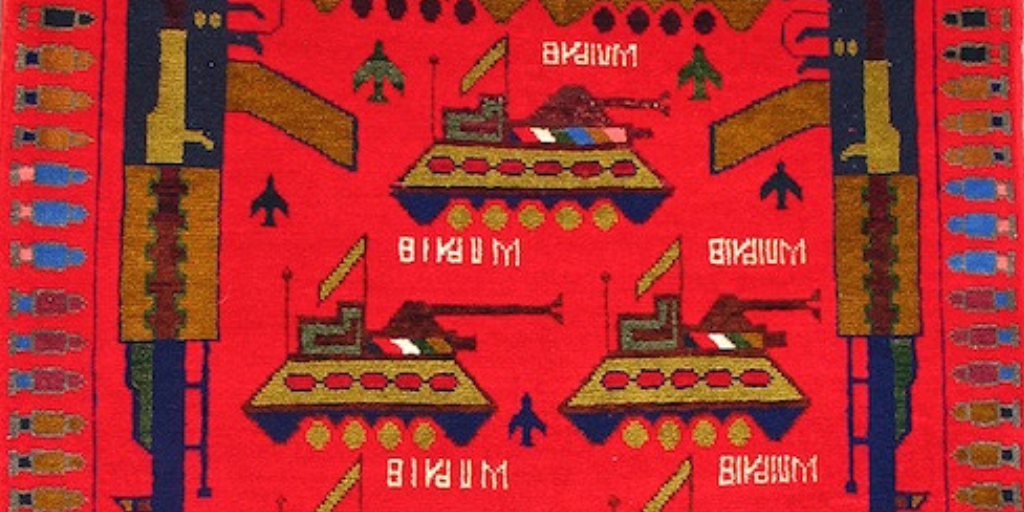
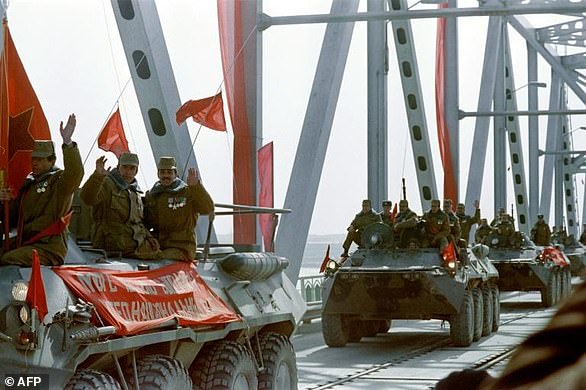
On February 15, 1989, Lt. General Boris Gromov, Commander of the Soviet 40th Army, crossed over the Amu Darya River from Afghanistan into the Uzbekistan completing the Soviet withdrawal from Afghanistan. The almost ten year Soviet occupation, which began on December 24, 1979 would leave scars on both countries. For the Soviet Union, Afghanistan was a quagmire; one that undermined public faith and confidence in the Soviet system and leadership, hastened an end to the Cold War, and eventually brought about the dissolution of the USSR. For Afghanistan, it was a traumatic event that plunged the country into almost 40 years of constant war and state failure. For the United States, the Soviet invasion of Afghanistan would put in motion a chain of events that would ultimately lead to the tragedy of September 11, 2001.
Prelude to a Catastrophe
The Soviet decision to invade Afghanistan was not one taken lightly by the Kremlin and was made only after months of debate and discussion. It was the predictable, if not unavoidable result of growing Soviet involvement in Afghan internal affairs over several years and powerful security and ideological concerns.
The Soviet Union enjoyed a long history of friendly cooperation with Afghanistan under King Mohammed Zahir Shah. It was the first country to recognize Afghanistan’s independence in 1919 and became Afghanistan’s main source of military and economic assistance in the post-World War II period. From 1956-77, the Soviet Union and its allies trained over 4,000 Afghan officers and delivered more than $600 million worth of military supplies. In the same period, the USSR also gave Afghanistan grants or credit lines totaling more than $1.3 billion, a sum which was exceeded in the Middle East and South Asia areas only by grants given to Egypt, India and Syria. Nonetheless, for nearly two decades the KGB also secretly funded and nurtured communist leadership networks at Kabul University and in the Afghan Army, training and indoctrinating 3,725 military personnel in the Soviet Union.
In 1973, the king was overthrown in a bloody coup orchestrated by his cousin Mohammad Daud Khan. Daud’s reign, however, would prove short-lived. In April 1978, he was ousted in a coup led by the Afghan Communists and elements of the military, which proceeded to proclaim a new Marxist Leninist state, the Peoples’ Democratic Republic of Afghanistan (PDRA). The Saur Revolution, as it became known, would usher in a period of prolonged upheaval and instability that ultimately dragged Moscow deeper and deeper into the proverbial quagmire.
The USSR welcomed the establishment of the PDRA even though it enjoyed cooperative relations with Afghanistan’s previous leaders. Nevertheless, the Peoples’ Democratic Party of Afghanistan (PDPA)—the Communists—was sharply divided into two rival factions, which did not bode well for the stability of the new Peoples’ Republic. The first faction, the Khalq, was led by Nur Muhammad Taraki and Hafizullah Amin and consisted largely of ethnic Pashtuns from the poorer cross-sections of Afghanistan. As committed Marxist-Leninists, Taraki and Amin sought to transform Afghanistan from a feudal nation into a Communist one as rapidly as possible. The other faction, the Parcham, led by Babrak Karmal, tended to be made up of Afghanistan’s ethnic minorities. The Parcham called for a gentler approach, arguing that Afghanistan was simply not ready for Communism and would not be for some time. Many Soviet diplomats and advisers concurred with the Parcham’s more measured approach, worried that an aggressive implementation of Communist reforms would provoke a rebellion within Afghanistan’s deeply conservative and Muslim society.
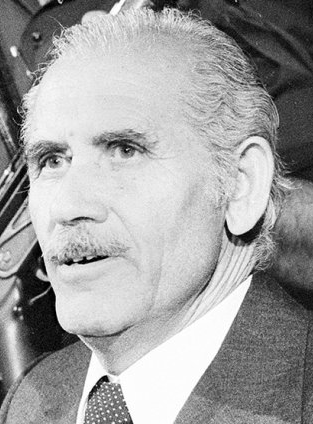
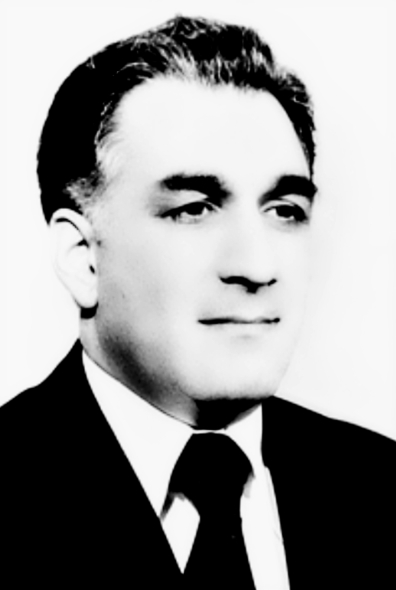

Immediately after coming to power, the Khalqis began to purge the Parchami faction, and instituted a Soviet-style program of modernizing reforms, including land reform and female literacy campaigns, which provoked the violent, conservative, Muslim backlash that Moscow predicted. On March, 15, 1979, a violent anti-government uprising occurred in the city of Herat. The government dispatched the 17th Army Division to quell the uprising but the unit mutinied and joined the uprising. Desperate, the Afghan government appealed to the Kremlin to intervene and restore order, as stipulated in the December 1978 Soviet-Friendship Treaty. The Afghan request prompted an emergency meeting of the Soviet Politburo two days later to consider a response. In accordance with the Brezhnev Doctrine, which proclaimed the irreversibility of Communist regimes, Soviet Foreign Minister Gromyko argued that “under no circumstances may [the USSR] lose Afghanistan.” However, there was little appetite amongst the Soviet military for an intervention at time and the appeal was rebuffed. Soviet Premier Alexei Kosygin responded to the Afghans, “We carefully studied all aspects of this action and came to the conclusion that if our troops were introduced, the situation in your country would not only not improve, but would worsen. One cannot deny that our troops would have to fight not only with foreign aggressors, but also with a certain number of your people. And people do not forgive such things.”
The Afghan government eventually suppressed the uprising in Herat without major Soviet assistance. However the death toll was a staggering 25,000 dead, which included 20 Soviet advisers caught up in the unrest. The revolt served as an alarm bell for Moscow and a reminder of the fragility of the Afghan Communist government. After Herat, the Soviets were convinced that neither Taraki nor Amin could control the deteriorating situation alone. Veteran diplomat Vasily Safronchuk was sent to Kabul to persuade Taraki and Amin to ease the pace of reform and broaden support for the regime by bringing non-Communists into the government. However, his advice fell on deaf ears in Kabul. In August, Moscow sent General Ivan Pavlovsky, the commander of the 1968 invasion of Czechoslovakia, to Afghanistan, ostensibly to provide recommendations on how to counter the growing insurgency but also to assess the situation for a possible military intervention. At the end of August, the Soviets also increased their on-ground advisors to 5000 and delivered large quantities of tanks and helicopter gunships to Bagram and Shindand airbases.
From Hell No to All In
What follows next is the story of how the Soviet leadership went from a categorical refusal to send military forces to suppress the the revolt in Herat and bolster their Afghan Marxist-Leninist clients, to the deployment of 80,000 troops to Afghanistan, nine months later to stabilize the country. Unlike the earlier decision in March, which was made by the entire fifteen-member Politburo, the decision to intervene militarily in December was driven ultimately by four men: Foreign Minister Gromyko, KGB Director Yuri Andropov, Defense Minister Dmitri Ustinov, and chief party ideologue Mikhail Suslov.
By the fall of 1979, the situation in Afghanistan had gone from bad to worse. The Afghan communists continued to ram through unpopular reforms at breakneck speed that only increased armed opposition in the countryside. At the same time, rivalries inside the Communist government only further destabilized the situation. Amin, who had tenuously co-existed with Taraki, used the Herat uprising to consolidate his power and lay the groundwork to eliminate his rival. At the end of March, Amin became Prime Minister. In July he assumed the duties of Defense Minister as well and began to purge the cabinet of Taraki loyalists. The Soviets were closely monitoring Amin’s accumulation of power with grave concern. Moscow had come to view Amin as the main obstacle to peace and stability in Afghanistan and clearly preferred Taraki. In early September, Taraki was summoned to the Kremlin and given explicit direction from Soviet leader Leonid Brezhnev to get rid of Amin.

On September 14, Taraki invited Amin, to a meeting at the presidential palace. It was supposed to be an ambush on Amin, orchestrated by Taraki’s Soviet advisers, but Amin was tipped off about the trap as he arrived. After a short but bloody shoot out, Amin escaped unharmed but more ruthless from the experience. As acting Defense Minister, Amin returned later that day with an Army contingent and placed Taraki under house arrest. He subsequently had Taraki executed on October 9, much to the shock of the Soviet leadership. News of Taraki’s execution deeply dismayed Brezhnev, who had personally assured the Afghan leader of his support and protection. “What a scum this Amin is,” Brezhnev is alleged to have remarked. Brezhnev’s strong reaction and sense of personal insult gave strong impetus to continuing discussions about the prospect of removing Amin.
Amin’s power grab only exacerbated Soviet apprehensions that the situation in Afghanistan was spiraling out of control. Taraki’s execution demonstrated a complete disregard for Moscow’s wishes and showed that he was unresponsive to Soviet counsel. Resistance to the government was also growing more violent as Islamic opposition fighters, the Mujahideen, declared a jihad against the Communists. Pakistani military assistance to the Mujahideen only further destabilized the situation. The Soviets feared that the government in Kabul would collapse dealing a crushing blow to their prestige and give rise to an anti-Soviet, Islamist Afghanistan on their southern border. However, one factor above all may have tilted the Soviet decision-making calculus toward a full scale military intervention to oust Amin and stabilize the situation.

As Amin showed a greater willingness to buck the Soviets while he consolidated power, he also began to reach out to the United States about improving relations. Amin almost certainly knew that his arrest and subsequent execution of Taraki were not well received in Moscow and that he probably needed a hedge against over dependence on the Soviet Union. On October 27, 1979, Amin met with acting American Chargé d’Affaires Archer K. Blood to discuss a possible rapprochement. Over the course of a forty minute meeting, Amin stressed his personal commitment to improving U.S.-Afghan relations, expressing his deep affection for the U.S. which he acquired during his time spent in the country as a student. He denied that Afghanistan was a Soviet puppet and declared that he could never sacrifice Afghan independence to any foreign demands, including from the Soviets. Blood came away from the meeting impressed by Amin and optimistic that he was truly interested in improving bilateral relations. Nevertheless, the United States still viewed Amin as a dangerous tyrant and Blood urged caution going forward citing a list of contentious issue in the relationship that would need to be addressed first. Amin was still held at least partly responsible for the murder of U.S. Ambassador Adolf Dubbs who was abducted at gunpoint in the middle of Kabul and killed in a botched rescue effort.
News of the meeting between Amin and Blood was met with alarm in Moscow. The Soviets had increasingly viewed Amin as a danger to stability inside Afghanistan. They now worried that he was seeking a Geo-political realignment, much like Egyptian President Anwar Sadat’s expulsion of the Soviet military in 1972, with equally negative repercussions for Moscow’s regional influence and security interests. Two days after the meeting, Soviet Foreign Minister Gromyko, KGB Director Yuri Andropov, and Defense Minister Dmitri Ustinov sent a report to the Central Committee warning that there were disturbing signs that the new Afghan leadership intended to conduct a “more balanced policy” in relation to the Western powers. They further speculated that the United States was warming to the possibility of an improvement in relations with Kabul and a whole sale Afghan Geo-political realignment based on their contacts with Amin. The KGB concluded that the CIA had begun to work with Amin to manipulate Afghanistan’s relationship with the Soviet Union. KGB officers on the ground in Afghanistan then convinced their superiors in Moscow that drastic measures were needed to save the Afghan revolution. Amin needed to be eliminated or at a minimum removed from office.
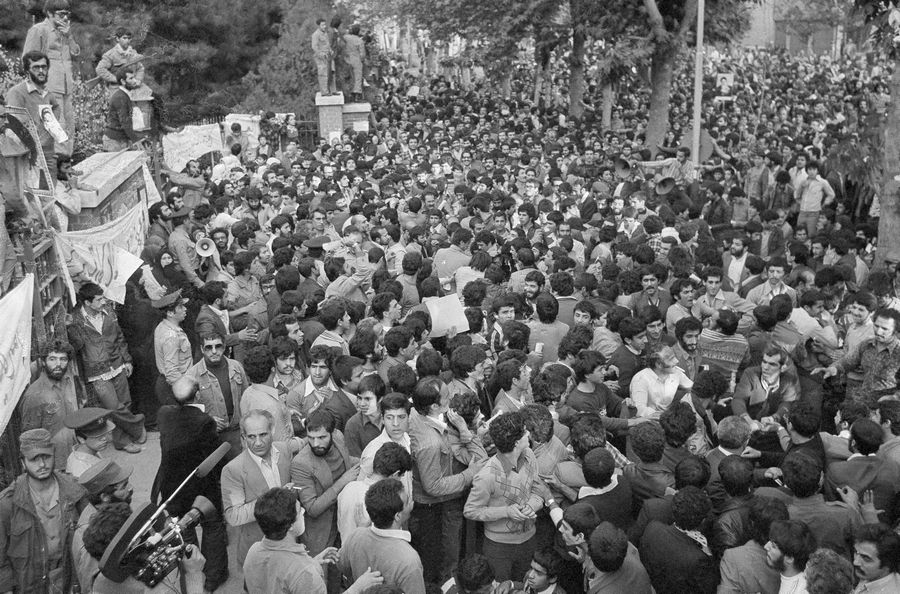
In the collective mind of the Soviet security apparatus, Afghanistan was a natural target for the U.S. In January 1979, the Iranian revolution had forced the abdication of long-time American ally Shah Mohammad Reza Pahlavi. The advent of a hostile regime led by Ayatollah Ruhollah Khomeini was a devastating blow to U.S. power and influence in the region and its prestige around the world. Moscow worried that Washington would try to recoup some of its lost influence through Afghanistan and more importantly find a replacement location for the highly secret intelligence collection sites it had maintained in Iran to track Soviet military activities.
At the same time, the Mujahideen insurgency in the countryside continued to grow with the Afghan army repeatedly proving itself ineffective, despite the increased Soviet involvement in guiding Afghan combat operations and logistics. Mutinies were spreading throughout the Army. In mid-October, the entire 7th Infantry Division, which was led by Taraki loyalists, revolted and launched an attack on the capital. After several days of heavy fighting, the mutiny was finally suppressed but it was clear the regime was divided and struggling to defend itself. The government in Kabul now controlled at most only 25 percent of the country.
By the end of November 1979, the prevailing view amongst the Soviet leadership was that Amin needed to be replaced because of his disloyalty and ineffectiveness. Soviet officials were making it known on the diplomatic circuit that, even though the USSR continued to provide weapons, equipment and advisors to the existing regime, Moscow was trying to come up with an alternative leader. On December 4, Andropov wrote Brezhnev with a solution. He had been contacted by exiled Afghan communists, including former Parcham faction head Babrak Karmal, who had “worked out a plan for opposing Amin and for creating ‘new’ party and state organs” and requested assistance. With Karmal now waiting in the wings, the question now became how and when to get rid of Amin.
On December 8, Brezhnev hosted a small group meeting of key Politburo members— KGB Director Yuri Andropov, Defense Minister Dmitri Ustinov, Foreign Minister Andrei Gromyko, and chief Party ideologist Mikhail Suslov— to review the situation in Afghanistan and determine next steps. These four men had come to dominate Soviet foreign policy especially as Brezhnev grew more ill and incapacitated. Leading the discussion, Andropov expressed reservations about Amin’s loyalty, his contacts with the United States, and his inability to curb the growing insurgency and anti-Soviet sentiment. Ustinov followed next warning that the deteriorating situation threatened the security of the Soviet Union’s southern border. Moreover, an Afghanistan more closely aligned with the United States could become a forward operating base for U.S. military forces including Pershing II missiles. The group tentatively agreed to direct the KGB to remove Amin and replace him with the Babrak Karmal. They also agree to send an undetermined number of Soviet troops to Afghanistan for the same purpose. These decisions were perfunctorily ratified by the larger Politburo on December 12, with Prime Minister Alexei Kosygin, who consistently opposed the idea of an invasion, noticeably absent.
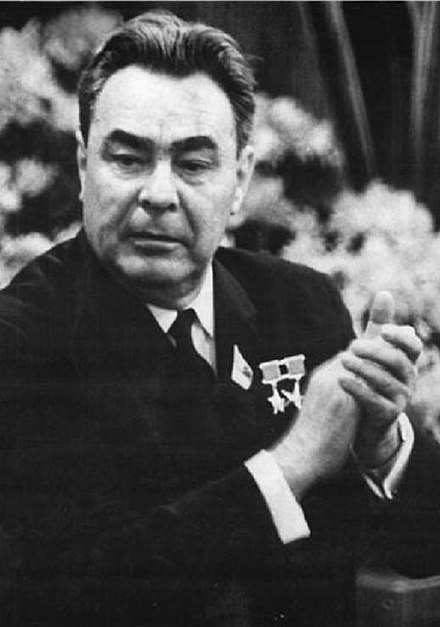
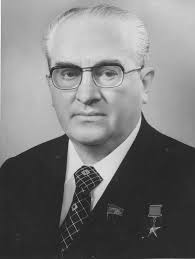
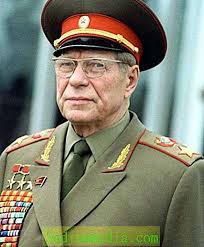

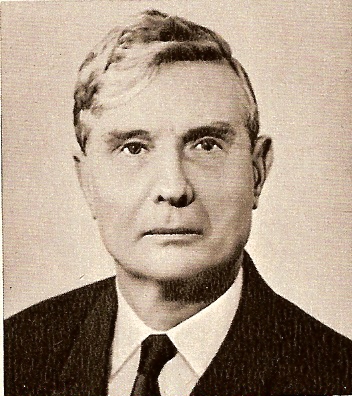
Defense Minister Ustinov informed Chief of the General Staff, Nikolai Ogarkov on December 10 that a decision had been made to send Soviet troops to Afghanistan and directed him to plan for a 70,000-80,000 man deployment. The General Staff had been planning for such a contingency since the Herat uprising and had been surreptitiously deploying military forces to Afghanistan and along its borders for weeks and months. Ogarkov and his deputy, General of the Army Sergei Akhromeev, however, were much less enthusiastic about the mission than Ustinov. Ogarkov argued that 80,000 troops were not enough for the mission. The 1968 invasion of Czechoslovakia, a country with more favorable terrain, required 500,000 troops. He further warned that the Afghan people never tolerated foreign intervention and that they risked turning the entire Muslim world against the Soviet Union. Ustinov overruled Ogarkov’s concerns sternly reminding him that his job was not to teach the Politburo its business but to carry out its orders.
On December 13, the KGB attempted to assassinate Amin by having one of his Soviet cooks slip poison into his favorite drink, Coca-Cola. However, the carbonation of the soda rendered the poison harmless allowing Amin to escape relatively unharmed. A couple of weeks later, the KGB attempted to poison his food again but the Soviet Embassy in Afghanistan, unaware of the plot, sent doctors to save him. The failure of the KGB assassination attempts left Moscow with few options other than military force to eliminate Amin.
The Die is Cast
Late in the evening of 24 December, units of the 103rd and 105th Airborne Divisions landed at Kabul airport and the military airfield at Bagram in the initial phase of what would become the Soviet invasion of Afghanistan. Over the next several days, waves of AN-22 and AN-24 military transport aircraft surged into Kabul and points South to include Shindad and Kandahar, carrying additional military forces, supplies and equipment. Engineers laid floating pontoon bridges across the Amu Darya near Termez and on Christmas Day Soviet tanks began to roll into Afghanistan. For months, Amin had been pressing Moscow to deploy additional military forces to help the Afghan Army defeat the Mujahideen insurgents in the countryside. So when these military forces suddenly began to arrive on Christmas Eve there was little immediate alarm or suspicion.
By the 27th the Soviets had assembled sufficient forces to control Kabul and began fanning out into the city, securing key communication nodes and the main ministries. On the evening of December 27, 700 special operators from the KGB Grom and Zenit groups, the 345th Independent Guards Airborne Regiment, and the 154th Separate Spetsnasz Detachment dressed in Afghan Amy uniforms attacked the Tajberg Palace. After about an hour of heavy fighting against Afghan National Army forces and the Presidential Guard inside and around the palace the battle ended with Amin’s body in a pool of blood. The next morning Radio Kabul announced, in Russian, that Amin had been tried and shot as an enemy of the people. By the end of December Babrak Karmal would be installed as President of Afghanistan while 80,000 Soviet troops occupied the country.

The Quagmire Begins
The Soviet invasion was intended to be a short and straight forward operation, similar to Hungary in 1956 and Czechoslovakia in 1968. Enter with overwhelming force, eliminate the problem individual or individuals and declare victory. And that is what Brezhnev seemed to have in mind. By the end of January 1980 Brezhnev considered the Afghanistan matter closed and ordered Soviet military forces home. However Andropov, Ustinov and Gromyko argued that withdrawing would be a serious mistake. Amin may have been eliminated but Karmal would need time to consolidate his power and stabilize the country. Soviet military forces should remain until the Afghan government was strengthened, they argued in a report to Brezhnev. Moreover, pulling out too soon would prompt the Afghans and others to question the Soviet Union’s reliability as a partner.

The rest of the story as they say is history. Amin’s death removed a major complicating factor for Moscow in Afghanistan but did little to curb the growing insurgency. In fact, the Soviet invasion only served to strengthen and expand the ranks of the Mujahideen resistance. Over the next nine years, the Soviets would find themselves bogged down in a guerrilla war against a determined and resilient Islamic insurgency, aided and abetted by covert military assistance from the United States. In the end Ogarkov’s predictions proved tragically correct. The Afghan people refused to accept a foreign occupation and the invasion only turned a large part of the Muslim world against the Soviet Union.

By the mid-1980s the Soviet public began to sour on what came to be seen as a never ending conflict. In March 1985, a new generation of Soviet leader, Mikhail Gorbachev, took power determined to revive the stagnating Soviet economy and to introduce new thinking into Soviet foreign policy. Gorbachev worried about the conflict in Afghanistan. At a Politburo meeting on October 17, 1985, he read letters from Soviet citizens expressing growing dissatisfaction with the war in Afghanistan—including “mothers’ grief over the dead and the crippled” and “heart-wrenching descriptions of funerals.” Gorbachev told the Politburo “If we don’t change approaches [to evacuate Afghanistan], we will be fighting there for another 20 or 30 years.” On April 14, 1988, the Soviets signed the Geneva Accords in which they promised to withdraw from Afghanistan. Less than a year later, the last Red Army units crossed the Termez Bridge into the Soviet Union, ending what Gorbachev had referred to as a “bleeding wound.”

As Marx argued in his essay, The Eighteenth Brumaire of Louis Napoleon, history repeats itself, first time as tragedy, second time as farce. The Soviet Union invaded Afghanistan seeking to eliminate one man, Hafizullah Amin, and tried to impose a foreign ideology, communism, on a largely tribal based society. It ultimately failed. The United States invaded Afghanistan, largely to eliminate one man, Osama bin Laden and also tried to impose a foreign ideology, democracy, on a tribal based society. After almost 20 years it’s not clear that the United States has been anymore successful.
 Tragedy and Farce