August 27, 1776: The Battle of Long Island

On August 27, 1776, British Redcoats routed General George Washington and his fledgling Continental Army at the Battle of Long Island, paving the way for the seizure of New York City which the British would hold until the end of the Revolutionary War in 1783. The battle was the first major engagement for the Continental Army following its creation on June 14, 1775 and its inexperience and lack of discipline showed. The scale and scope of the defeat raised serious doubts about whether Washington was the right person to command the army and nearly ended the American experiment in independence and self-governance before it began

In the Spring of 1776, optimism and patriotic fervor was on the rise throughout the thirteen colonies. British military forces had been forced to vacate Boston and given the blood spilled at Lexington and Concord and Bunker Hill, it was clear there was no turning back. Political discourse no longer centered around a redress of colonial grievances but increasingly focused on full-fledged independence from Great Britain. The will for independence was certainly there, as evidenced by the promulgation of a Declaration of Independence in Philadelphia on July 4. The question remained, however, whether the colonist could win their freedom, let alone keep it, for Great Britain was not about  to let them go without a fight.

After British troops were forced to withdraw from Boston to Nova Scotia, all eyes turned to New York City, where it was expected that British would try to return and occupy the crucially important city, with its strategic location and deep sheltered harbor. In April, Washington raced his 19,000 man Continental Army to New York City ahead of the British. However, he quickly recognized that defending the city was nearly impossible. The city consisted of three islands—Manhattan, Staten Island and Long Island— and all of their shorelines were suitable for an amphibious landing which made it difficult to predict where exactly the British might land. Moreover, the Royal Navy’s ability to control the rivers and water ways that cut through New York City would allow British warships to bring their heavy guns to almost any fight.  Writing to his brother John, Washington offered a blunt assessment of the situation: “We expect a very bloody summer at New-York … and I am sorry to say that we are not, either in men or arms, prepared for it.”

The first British warships were sighted near Sandy Hook, New Jersey, on June 29, 1776, and within hours, 45 ships would drop anchor in Lower New York Bay. One American soldier was so awed by the fleet, he declared that it looked like “all London afloat.”  Of these ships were some of the most powerful in the Royal Navy such as the 64-gun Asia and the 50-gun Centurion and Chatham. The guns on these ships alone outnumbered the combined firepower of all American shore batteries. On July 2, British troops began to land on Staten Island. By mid-August, the British fleet numbered over 400 ships large and small, including 73 warships and 8 ships of the line, while the army had grown to 32,000, more than the entire population of New York City.

On August 22, 20,000 British and Hessian troops departed Staten Island and made an amphibious landing at Gravesend Bay on the southwestern shore of Long Island. Washington had built fortifications and deployed half his army here in anticipation of a British landing. General William Howe was in overall command of all British troops. However, the battle plan was conceived of by his second in command, General Henry Clinton. Clinton’s plan was to split the army into three divisions. Two divisions would make feints directly against the Americans entrenched on the wooded hills of the Gowanus Heights. The largest division, 10,000 men personally under Clinton’s command, would make an overnight march through an unguarded pass on the left of the American line and turn their flank by surprise.
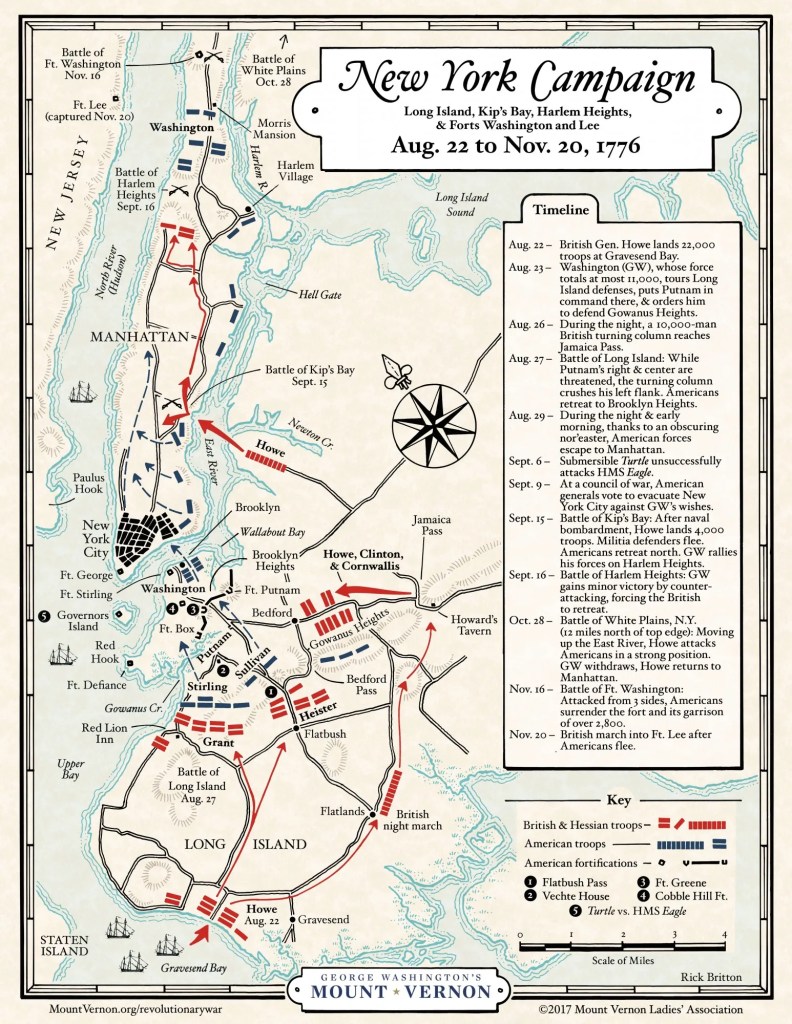
As the battle commenced in the early morning hours of August 27, the British executed their plan flawlessly and with great success. One division of British regulars under General James Grant and one of Hessian mercenaries under General Leopold Phillip von Heister kept the American defenders fixed and distracted as Clinton maneuvered to turn their flank. Around 9 am, the British sprung their trap as Clinton’s Division reached Bedford village behind the American line and engaged the defenders. At the same time, the two other divisions now turned their feints into full-fledged attacks.  With bayonets fixed, the Hessians charged the American left under General John Sullivan and fighting descended into vicious hand to hand combat as the Hessians ruthlessly butchered the Americans. The inexperienced Continentals were now caught between a hammer and an anvil and in danger of being cut off from their route of retreat. Recognizing the danger of their situation, Sullivan’s men panicked and fled pell-mell towards their fortifications at Brooklyn Heights.

With the American left flank disintegrating before their eyes, the American right now began to feel the full weight of Grant’s attack. General William Alexander and his brigade put up stiff resistance for two hours, but the collapse of the American left put his brigade’s position increasingly in peril. Threatened with encirclement, Alexander ordered his brigade to fall back.  He personally led 250 Marylanders in a bayonet charge against an overwhelming British force creating a crucial window of time for more of his soldiers to escape to their fortifications in Brooklyn Heights. Alexander was eventually taken prisoner and only nine of the original 250 made it to the safety of Brooklyn Heights. Watching the battle on the right unfold, Washington remarked “Good God, what brave fellows I must lose.”

By noon, the battle had largely ended. But when the dust cleared the total number of Americans killed, captured, and wounded reached nearly 2200. Although Washington managed to survive a catastrophic day, he wasn’t out of danger yet. His army remained divided between Manhattan and Long Island and the portion that remained on Long Island was exhausted and penned up, with Howe’s army in front of it and the East River at its back. On August 29th, Washington made the unavoidable decision to withdraw his troops from Brooklyn Heights. That evening, under a cover of darkness and fog, a Massachusetts regiment composed of mostly sailors and fishermen ferried the endangered troops back across the East River on flat bottom boats to the temporary safety of Manhattan.  

Washington’s defeat opened the door to a series of equally disastrous losses that ultimately allowed the British to seize full control of New York City. On September, 15, the Americans were routed again at the Battle of Kipp’s Bay as British troops established a foothold on Manhattan Island. Washington would score a minor victory at the Battle of Harlem Heights the next day but suffer another ignominious and demoralizing defeat at White Plains on October 28. Three weeks later American forces were driven from Forts Washington and Lee giving the British full control of New York City. Washington and his army retreated into New Jersey and were chased across the Delaware River into Pennsylvania. The almost uninterrupted progression of defeats in the summer and fall of 1776 squelched much of the optimism from earlier in the year and cast grave doubt on the viability of the revolution and George Washington’s competency as a military commander. Only Washington’s bold decision to cross the icy Delaware River on Christmas night and wage a surprise attack on the Hessian garrison at Trenton would restore faith and optimism in the cause and tamp down doubts about his suitability uas a military commander.

America’s Bloodiest Day, September 17, 1862

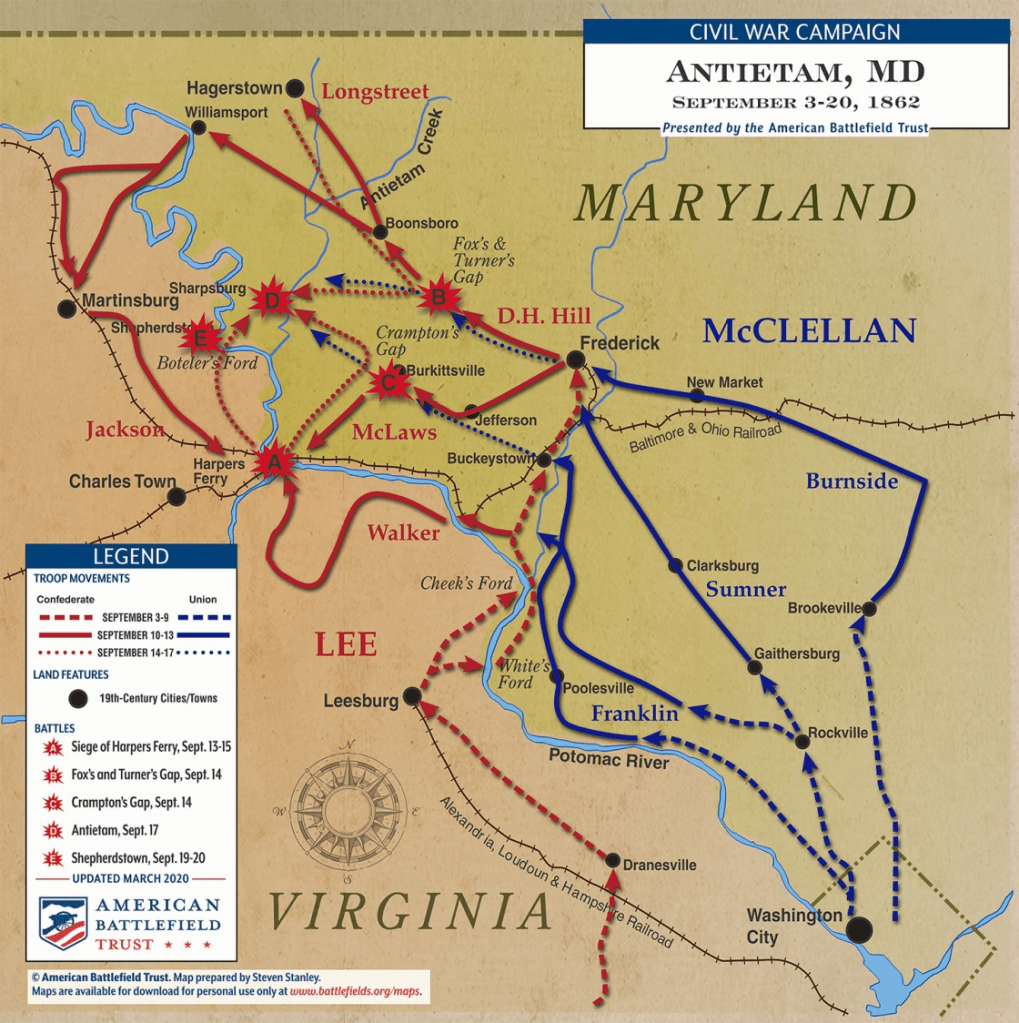
On 17 September 1862, Confederate and Union military forces clashed near Antietam Creek in Western Maryland in what would become the bloodiest day in American history. The two armies together would suffer almost 23,000 killed or wounded and places named “the Cornfield,” “Bloody Lane” or “Burnside’s Bridge” would become forever etched in the collective memory of the nation. The outnumbered Confederates under General Robert E. Lee barely escaped a catastrophic defeat that might have ended the civil war two years sooner if it were not for the indecision of Union General George B. McClellan and his over abundance of caution. Lee’s narrow escape would allow the Confederacy to survive another two and a half years and prove the adage that sometimes it is better to be lucky than good.

The summer of 1862 was ending on a high note for the Confederacy after McClellan’s defeat in the Seven Days Battle and an impressive victory at Second Manassas. In Lee’s mind, momentum was on the side of the Confederacy, and it was time to bring the war to the North. It was time to invade Maryland. Although Maryland was a border state, many Marylanders held pro-Southern sympathies, and Lee calculated that a decisive victory on Maryland soil would not only demoralize the Union but bring Maryland into the war on the side of the Confederacy. It also was harvest time, and Lee wanted to take the war out of Virginia so that its farmers could collect their crops to help feed his army. Many of Lee’s troops were underfed and malnourished subsisting on field corn and green apples, which often gave them indigestion and diarrhea, negatively impacting their availability for combat.

Lee and his 55,000-man army crossed the Potomac River into Maryland on September 4. Three days later his ragged and barefoot army entered the city of Frederick where they encountered an unexpectedly cool reception. Instead of an outpouring of support and affection they found a lack of enthusiasm for their cause if not outright hostility. Several pro-southern citizens of Frederick could not believe that the victorious Confederate army that they heard about was so poorly clad while other stunned citizens just turned their backs. One unnamed citizen noted: “I have never seen a mass of such filthy strong-smelling men.” Lee expected that once he entered Frederick the Union garrisons at Harper’s Ferry and Martinsburg would be withdrawn, clearing the way for him to establish communications through the Shenandoah Valley. Lee could not continue his invasion with these troops sitting on his supply line. He audaciously divided his army and prepared to move deeper into the North while simultaneously seizing Harpers Ferry.

Word that Lee and his army were occupying Frederick prompted McClellan and his 100,000-man army to pursue the rebels. McClellan by nature, was overly cautious. He also consistently overexaggerated the strength of Lee’s army. As a result, his pursuit of Lee lacked the urgency the situation demanded. When McClellan finally reached Frederick on September 12, Lee already divided his army and began to move West. However, McClellan received a stroke of good luck near Frederick when soldiers from the 27th Indiana Regiment discovered a copy of Lee’s orders for the Harper’s Ferry operation, Special Orders no. 191, lying on the ground wrapped around three cigars in a recently abandoned Confederate camp. The discovery of the orders clarified the operational picture for McClellan and revealed that Lee’s army was divided and ripe for defeat in detail.

Now fully aware of Lee’s intentions, McClellan had a simple plan; attack and destroy each element of the Confederate army before it had a chance to reunite. McClellan boasted to Brigadier General John Gibbon of the famed Iron Brigade, “Now I know what to do! Here is a paper with which, if I cannot whip Bobby Lee, I will be willing to go home.” McClellan was determined to seize the initiative and the slowness that characterized his earlier movements disappeared as he raced his army toward the South Mountain range to attack Lee’s army Lee was aware that McClellan was closing in, so after crossing the mountain he sent word to Stonewall Jackson besieging Harper’s Ferry to quickly finish up the task. He also left a rear guard to defend the passes at Turner’s, Fox’s and Crampton’s Gaps to delay McClellan’s and allow time for his army to regroup. 

On September 14, advance elements of McClellan’s army engaged Confederate forces guarding the three passes in fierce fighting. The fight would last all day into nightfall and when it was over the Confederates still precariously held two of the three passes. The following day, the Federal garrison at Harpers Ferry surrendered and Lee ordered the forces at South Mountain to withdraw and rejoin the rest of his army near the small town of Sharpsburg. Stonewall Jackson and his men also hurried from Harpers Ferry to rejoin Lee’s army at Sharpsburg, with the exception of General A.P. Hill’s division which remained at Harpers Ferry to prevent Union forces from retaking the town.

Lee had strongly considered breaking off his Maryland Campaign and returning to Virginia but when he received the news of Harpers Ferry’s surrender he decided to remain. He used  much of September 16 to reorganize and reposition his army for a battle he knew was coming. In characteristic fashion, McClellan’s innate caution prevented him from taking advantage of an opportunity to crush Lee’s army before it could reunite. McClellan spent much of the two days following the battle at South Mountain drawing up plans instead of vigorously pursuing Lee’s exhausted men. When McClellan did arrive near Sharpsburg, on September 16, he discovered Lee had established a 2.5 mile long battle line behind Antietam Creek. That evening Union and Confederate forces skirmished,McClellan drafted a straightforward battle plan. The next day, his army would strike at each of Lee’s flanks simultaneously, followed by a massive assault on the Confederate center. Even though McClellan’s plan was straight forward, the execution of it was wanting.

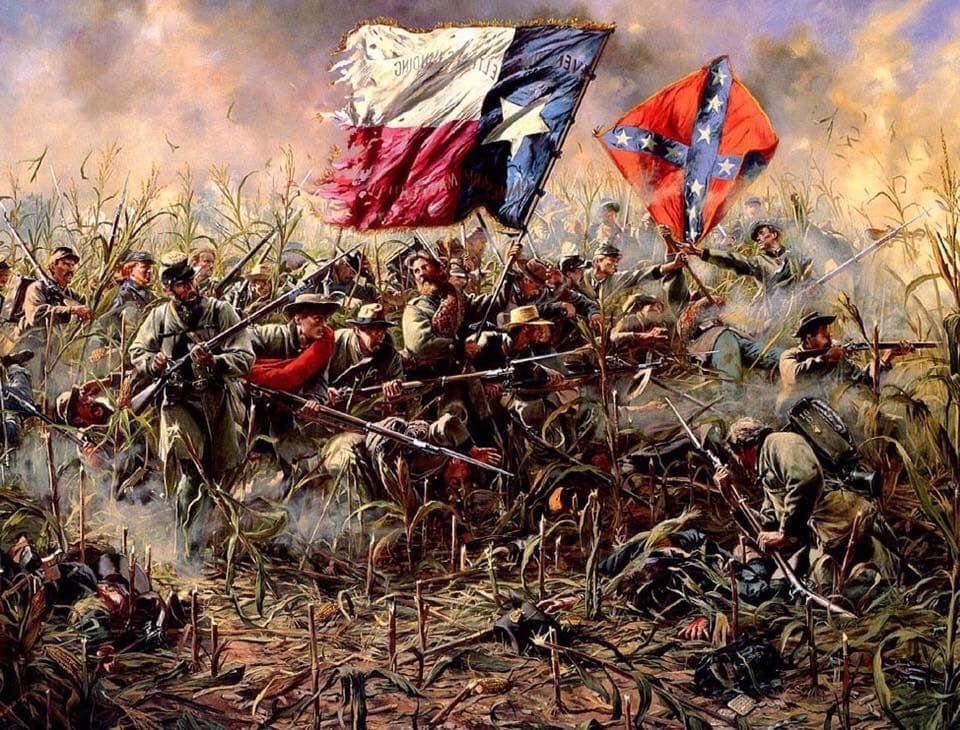
The battle began the following morning at daybreak when the first brigades of General Joe Hooker’s I Corps entered the cornfield of farmer David Miller which would become ground zero for the initial phase of the battle. Hooker’s objective was simple, strike Lee’s left flank and drive it back past a small white stone structure known as the Dunker Church. There was no element of surprise to Hooker’s attack. Lee’s men were prepared and when the first Union troops exited the cornfield a brigade of Georgians rose from the ground, from about 200 yards away, and  unleashed a withering volley, knocking dozens from the ranks. Thousands of additional Federals were cut down in the tall corn rows and over the next four hours the field would change hands at least six times. Even when reinforcements from General Joe Mansfield’s XII Corps and General Edwin Summer’s II Corps managed to drive the rebels back to the Dunker Church and the West Woods, a vicious Confederate counterattack forced the Federals to withdraw. By mid-morning, both sides together would suffer around 10,000 killed and wounded by the time fighting in the cornfield and West Woods ended.

The 1st Texas Infantry Drives the Federals from the Cornfield

The focus of the battle soon shifted from the left to the center of the Confederate line. Here two brigades from Alabama and North Carolina occupied a strong defensive position in a fence-lined sunken farm road that would later become known as “Bloody Lane.” The road was worn down from years of wagon use and formed a natural trench for the defenders. Here, over the next three hours, hundreds of Union soldiers, including the famed Irish Brigade, with their colorful green banners, were cut down as they crested a ridge in front of the Rebel defenders. Two Union regiments eventually managed to flank the Confederate line and seized a slightly elevated position that allowed them to pour down a murderous fire upon the rebels. Several brigade and regimental commanders went down and the entire Confederate line began to break under the weight of the attack and a broken command structure. Soon the Confederates were fleeing back towards Sharpsburg with Federals in hot pursuit. With no reserves to commit, First Corps Commander, James Longstreet, masses an artillery barrage that sends the Federals reeling. The situation was so dire that Longstreet and his staff manned one of the rebel artillery pieces. By 1:00 pm, 2500 Confederate dead and wounded lined the sunken road. Union casualties totaled just under 3,000. The fight at the sunken road is a pivotal point in the battle that is the difference between a decisive Union victory and a tactical draw. There are no Confederate reserves left but McClellan grievously overestimated the strength of Lee’s army. Fearing a Confederate counterattack, he declines to deploy his two Corps he has in reserve which probably would have allowed him to cut Lee off from his escape route across the Potomac at Boetler’s Ford.

The final phase of the battle shifts to the Confederate right in the afternoon where a determined Union assault crushes the rebel flank and disaster is only averted by the timely arrival of General A.P. Hill’s division from nearby Harpers Ferry. The key players in this drama were General Ambrose Burnside and his 12,000 strong IX Corps, tasked with rolling up the Confederate flank and cutting off Lee’s retreat, and four undermanned Confederate brigades totaling about 3,000 men standing in his way. The stage is a 12-foot-wide stone bridge crossing Antietam Creek and the rocky high ground on the other side overlooking the bridge that is occupied by 500 Georgians.

Confederate dead in the Sunken Road

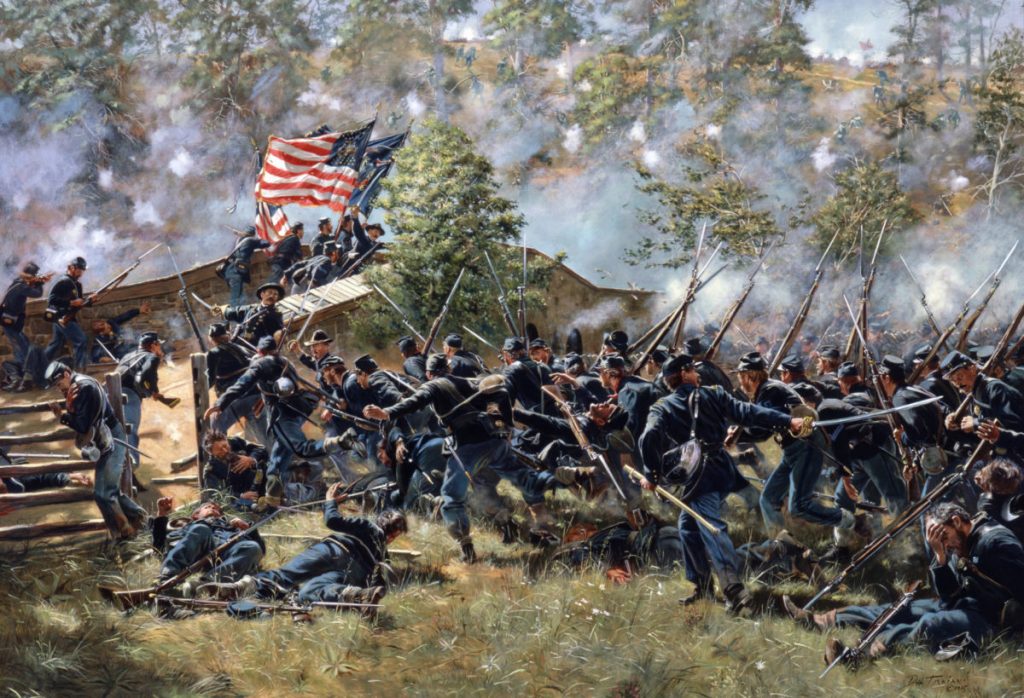
Burnside’s battle plan was to storm the bridge while enacting a crossing, miles downstream where the creek was shallow and could be forded more easily. Around 10 am he launched the first out of what would be three attempts, to seize the bridge. At the same time, he ordered one of his divisions South in search of a crossing point at Snavely’s Ford. The first direct attempt to take the bridge was a complete fiasco. The Connecticut regiment leading the attack came under a withering fire from the Georgians occupying the bluff overhead and within 15 minutes the regiment lost a third of its combat strength. The second assault led by a Maryland and New Hampshire regiment was equally ineffective and costly. By this point in time McClellan was growing impatient and pressing Burnside to take the bridge at all costs.  Around 12:30 Confederate volleys began to slack off as the Georgians occupying the bluff overhead began to run low on ammunition. Sensing an opportunity, one New York and one Pennsylvania regiment stormed the bridge under a heavy cover of canister and musket fire. With their ammunition depleted and word spreading that Union troops were crossing near Snavely’s Ford the Confederates fell back, allowing the Federals to cross unopposed.

The 51st Pennsylvania Regiment Seizes the Stone Bridge

Burnside had finally taken the bridge but failed to advance with the urgency the situation warranted. He spent two hours moving three of his divisions, his artillery, and supply wagons across the creek before resuming the offensive. This delay proved crucial and was one of the key differences between a decisive Union victory and a tactical draw. It provided Lee with time to regroup and reorganize his beleaguered defenses following the collapse of his center and for General A.P. Hill’s division, which was marching from Harpers Ferry to arrive.

Around 4:00 pm Burnside’s IX Corps swept forward in a mile-wide battle line, driving back every thing in its way, as it pushed to cut off Lee’s retreat across the Potomac at Boteler’s Ford. The advance was led by the colorful Zouaves of the 9th New York infantry. Many of Burnside’s men were inexperienced but their umbers dwarfed the limited Confederate troops in this immediate sector. Lee and his staff were trying desperately to rally their broken forces and stave off a rout but just then, in a most dramatic fashion, General Maxcy Gregg’s brigade of South Carolinians, the vanguard of A.P. Hill’s division, slammed into the exposed left flank of Burnside’s army sending it reeling back down the hills and across Antietam Creek. One Union soldier from the 4th Rhode Island Regiment later described Hill’s counterattack, “They were pouring in a sweeping fire as they advanced, and our men fell like sheep at the slaughter.” By 5:30 the battle was over.

In many ways the battle of Antietam is a tale of failed opportunities, primarily on the Union side, and a contrast in leadership. The battle was a tactical draw, but it could have and should have been a decisive Union victory. It is easy to challenge some of the rationale underpinning Lee’s Maryland campaign. One can also question his decision to split his army in the face of a numerically superior enemy. However, in reviewing the course of the battle, one would be hard pressed to find fault with how Lee and the rest of the Confederate high command conducted the battle or could have better employed all the means at their disposal.

Left: Robert E. Lee, Right: Gerorge B. McClellan

The same cannot be said for McClellan who proved woefully inadequate. in his typical self-important fashion, cabled a situation report back to Washington the day after the battle writing, “Those in whose judgment I rely on tell me I fought the battle splendidly and that it was a masterpiece of art.” In reality, he fought the battle not to lose rather than trying win. As a result, he squandered opportunity after opportunity to inflict a decisive and catastrophic defeat on the rebel army. Throughout, the battle McClellan had kept two army corps, between 20,000-30,000 troops, in reserve. He mistakenly feared he was badly outnumbered by Lee and that should he be defeated he would need a reserve force to prevent Lee from moving further North. Had McClellan deployed those reserves in support of the attack on the Sunken Road, Burnside’s efforts to roll up the Confederate right flank, or even to launch a series of new attacks the following day most likely would have resulted in a decisive Union victory and possibly shortening the war by two years. McClellan would pay a steep price for his timidity. Two months later he would be relieved of his command by President Lincoln.

Redemption, May 15, 1972

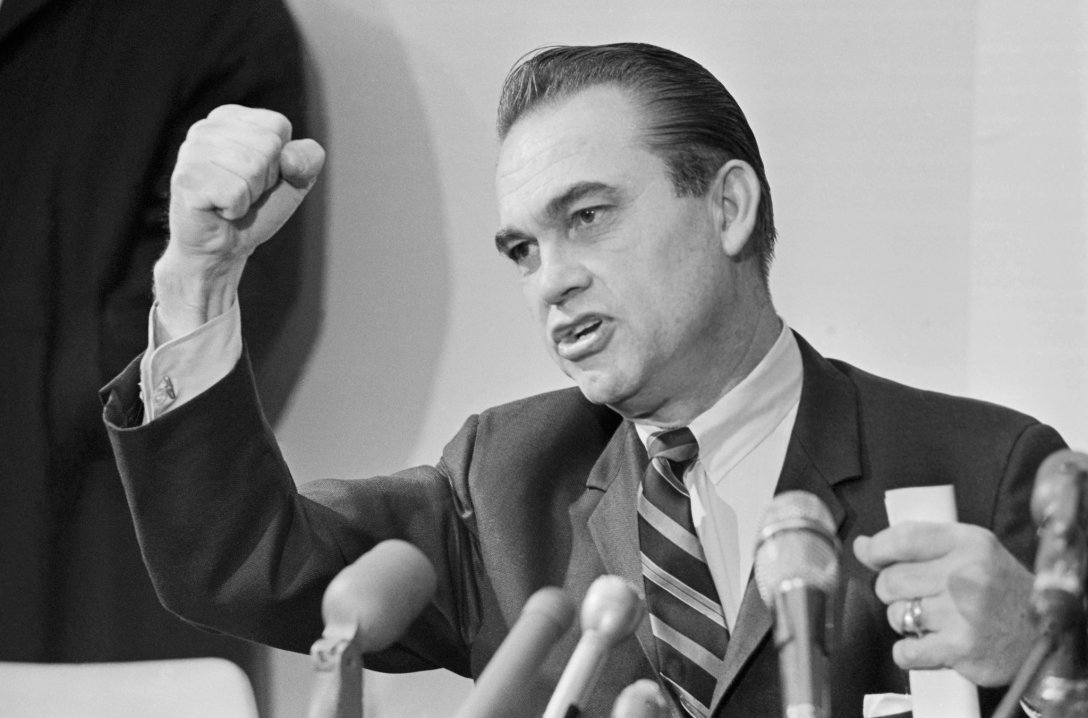
On May 15, 1972, the controversial  Governor of Alabama, George Wallace, was shot five times by Arthur Bremer in Laurel, Maryland while campaigning for the 1972 Democratic presidential nomination.  One of those bullets would lodge itself in Wallace’ spinal chord cutting short his campaign and leaving him paralyzed from the waist down the rest of his life. Known for having coined the words “Segregation now, Segregation tomorrow, Segregation forever,” was a central figure in the opposition to the Civil Rights Movement. He also was a charismatic figure and a talented politician with a natural ability to commune with the common man using a mix of race and rage.

Wallace’s paralysis would prompt a great deal of soul searching within him and place him squarely on the road to racial redemption and reconciliation. In 1979, he went to a church in Montgomery, Ala., where the Rev. Dr. Martin Luther King Jr. had once been pastor. There, he spoke of having learned the meaning of suffering, “I think I can understand something of the pain that black people have come to endure,” he said. “I know I contributed to that pain, and I can only ask your forgiveness.”

In 1982, Wallace ran for Governor a fourth time and won. In that race, he carried all 10 of the state’s counties with a majority black population, nine of them by a better than two-to-one margin. Wallace would go on to hire a black press secretary, appoint more than 160 blacks to state governing boards and double the number of black voter registrars in Alabama’s 67 counties. In part, it was the politics of patronage but on a deeper level it was using his waning political power to make amends with those he once scorned. In 1998, civil rights icon John Lewis, who suffered at the hands of Wallace’s state troopers on the Edmund Pettis bridge in 1965 would write that George Wallace should be remembered for his capacity to change, not his racism. Lewis would write, “I can never forget what George Wallace said and did as Governor, as a national leader and as a political opportunist. But our ability to forgive serves a higher moral purpose in our society. Through genuine repentance and forgiveness, the soul of our nation is redeemed. George Wallace deserves to be remembered for his effort to redeem his soul and in so doing to mend the fabric of American society.”

The Assassination of Abraham Lincoln, April 14, 1865

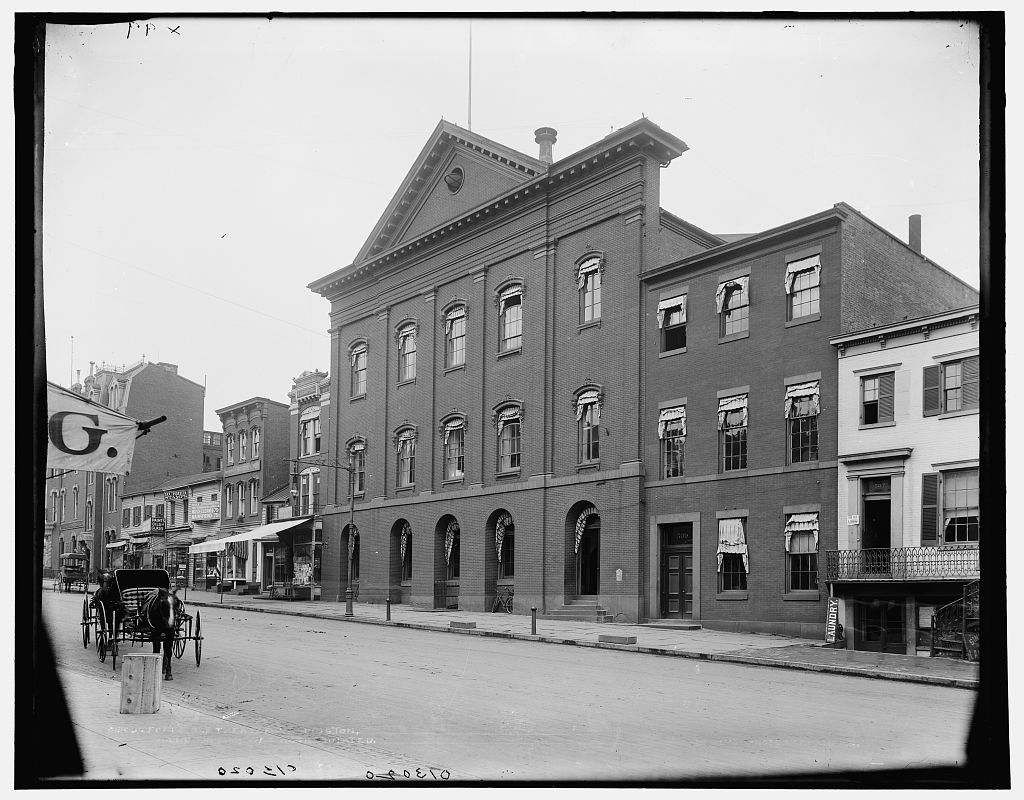
On April 14, 1865, President Abraham Lincoln was assassinated by John Wilkes Booth at Ford’s Theater in Washington DC while attending the play, “Our American Cousin.” Booth, a popular actor at the theater and southern sympathizer, had free access to all areas of the theater. Around 10 pm, He quietly slipped into the box where Lincoln and his wife were sitting and fired his single shot Derringer pistol into the back of the head of the President at point blank range with deadly effect. Booth quickly leaped from the box onto the stage, where he shouted “Sic semper tyrannis,” (Thus always to Tyrants) before bowing and fleeing into the night. Lincoln’s body was brought to a house across the street from the theater, where he would succumb to his wound around 7:30 am the following day. Lincoln’s assassination would forever alter the course of history, thrusting the woefully inept Vice President Andrew Johnson into the presidency. Johnson would prove ill-tempered and ill-suited for the challenge of putting the country back together after four years of civil war.

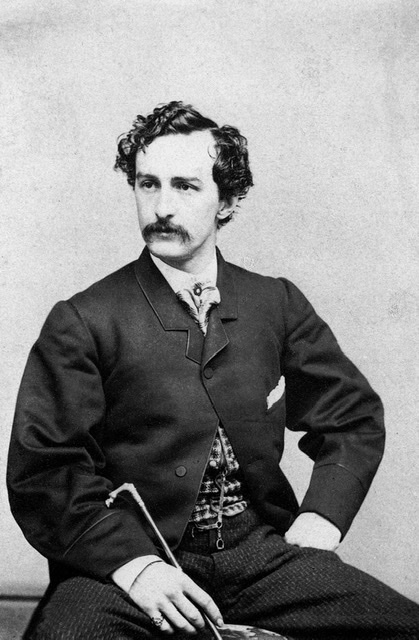
Portrait of an Assassin

Booth was born into a well known family of Maryland thespians in 1838. His father, Junius Brutus Booth,  was a widely regarded British Shakespearean actor who immigrated to the United States with his mistress, Booth’s mother, in 1821 and is considered by many, the greatest tragic actor in the first half of the 19th century. His older brother Edwin followed in his father’s footsteps and was judged by many to be the greatest American Shakespearean actor of the 19th century. Thus it was not surprising that John Wilkes Booth would be drawn to the theater. He made his stage debut at the age of 17 in a production of Richard III by Baltimore’s Charles Street Theater. Although his initial performance was underwhelming he soon joined a Shakespeare production company in Richmond, Virginia where he earned rave reviews for his acting talents. Some critics called Booth “the handsomest man in America” and a “natural genius.”

Nevertheless, like many Maryland families, the Booths were politically divided. Junius and Edwin were staunch Unionist while the younger Booth harbored strong southern sympathies. He supported the institution of slavery and despised abolitionists. After the 1860 election and the beginning of the Civil War he would develop an intense hatred for Lincoln. There has been much speculation that John Wilkes Booth’s embrace of the southern cause was part of a larger sibling rivalry with his older brother Edwin and to step outside the shadow of his famous father. In 1860, Booth joined a national touring company performing in all the major cities north and south, where he soon began to equal if not  surpass his more famous brother in terms of popularity and acclaim. One Philadelphia drama critic remarked, “Without having [his brother] Edwin’s culture and grace, Mr. Booth has far more action, more life, and, we are inclined to think, more natural genius.” He was also becoming quite a wealthy actor, earning $20,000 a year (equivalent to about $569,000). 

With the outbreak of the Civil War in April 1861, Booth found it increasingly more difficult to conceal his Southern sympathies or his hatred for Lincoln. Booth, like most southerners abhorred Lincoln. He saw him as a “sectional candidate” of the North and a tool of the abolitionists to crush slavery. Lincoln’s suspension of habeas corpus and the imposition of martial law in Maryland in May 1861, outraged Booth. He saw these actions as evidence of Lincoln’s treacherous and duplicitous nature and his intent to overturn the republic and make himself king. Booth increasingly quarreled with his brother Edwin, who declined to make stage appearances in the South and refused to listen to his brother’s fiercely partisan denunciations of the North and Lincoln. In early 1863, Booth was arrested in St. Louis while on a theatre tour, when he was heard saying that he “wished the President and the whole damned government would go to hell.” He was charged with making “treasonous” remarks against the government, but was released when he took an oath of allegiance to the Union and paid a substantial fine.

In November of 1863, A family friend John T. Ford opened 1,500-seat Ford’s Theater in Washington, D.C. Booth was one of the first leading men to appear there while Lincoln became one of the theater’s more prominent patrons. In his first role, Booth played a Greek sculptor making marble statues came to life. One evening when Lincoln was watching the play from his box, Booth was said to have shaken his finger in Lincoln’s direction as he delivered a line of dialogue. Lincoln’s sister-in-law, who was sitting with him turned to him and said, “Mr. Lincoln, he looks as if he meant that for you.”The President replied, “He does look pretty sharp at me, doesn’t he?” An admirer of Booth’s acting talents, Lincoln would invite Booth to visit the White House several times but Booth demurred.

Ford’s Theater

A Turn for the Worse

By 1864 the Confederacy’s hopes for victory were diminishing rapidly which only served to intensify Booth’s hatred of Lincoln whom he blamed for he war. After the battle of Gettysburg the previous summer, the Confederacy was hemorrhaging manpower with fewer and fewer options to replace its diminishing ranks. The situation became particularly acute after General Ulysses S. Grant, commander of the Union armies, suspended the exchange of prisoners of war with the Confederate Army to increase pressure on the manpower-starved South. It became absolutely dire following the terrible Confederate loses at the battles of the Wilderness, Spotsylvania, and Cold Harbor in the Spring of 1864. As the hopes of the Confederacy ebbed, Booth became increasingly distraught. Booth had promised his mother at the outbreak of war that he would not enlist as a soldier, but he increasingly chafed at not fighting for the South, writing in a letter to her, “I have begun to deem myself a coward and to despise my own existence.”

To assuage his own guilt and to reverse the declining fortunes of the Southern Confederacy, Booth began to conceive of a plan to kidnap Lincoln and take him to Richmond, believing he could ransom the President back to the Federal Government to free Southern troops. Lincoln’s re-election in November 1864 only further infuriated Booth and created an additional sense of urgency. Booth began to assemble a team of co-conspirators, a mix of Southern sympathizers and likely Confederate agents, who would assist him with the deed.

After Lincoln’s inauguration on March 4, 1865, Booth learned that the President would be attending the play Still Waters Run Deep at the Campbell Hospital on March 17 and considered it a perfect opportunity to kidnap Lincoln. His plan was to intercept the president’s carriage on his way to the play. Booth’s plan this day was spoiled by Lincoln’s change of plan. Instead he decided to speak to the 140th Indiana Regiment.

Murder Most Foul

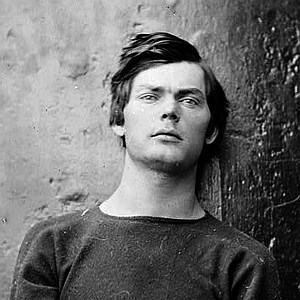
With his initial plans thwarted, Booth and his conspirators went back to the drawing board. However, the fall of Richmond on April 2nd and Lee’s surrender a week later at Appomattox made Booth’s kidnapping plot impractical and irrelevant. The collapse of the Confederacy filled Booth with despair but a speech Lincoln would give would drive Booth in a more deadly direction. On April 11, two days after Lee’s surrender, Lincoln addressed a large assembly of people outside the White House. Among those in the group were Booth and his accomplices David Herold and Lewis Powell. Lincoln’s speech focused largely on healing and putting the fractured nation back together. During his speech, Lincoln called for limited Negro suffrage—giving the right to vote to those who had served in the military during the war, for example. Hearing those words, Booth muttered to companions, “That means nigger citizenship. That is the last speech he will ever make.” He tried to convince one of those companions to shoot the president then and there.

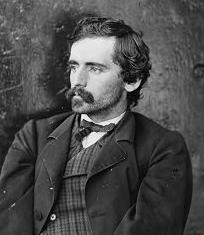
By this time an angry Booth was completely fixated on assassinating Lincoln. He told a friend that he was done with the stage. and that the only play he wanted to present henceforth was Venice Presseved, a play about an assassination. On the morning of Good Friday, April 14, 1865, Booth went to Ford’s Theater to get his mail. While there, he was told by The owner’s brother that the President and Mrs. Lincoln would be attending the play, Our American Cousin that evening, accompanied by Gen. and Mrs. Ulysses S. Grant. He immediately set about making plans for the assassination, which included making arrangements with the livery stable owner for a getaway horse and an escape route. Later that night, at 8:45 pm, Booth informed Powell, Herold, and Atzerodt of his intention to kill Lincoln. He assigned Powell to assassinate Secretary of State William Seward and Atzerodt to do the same to Vice President Andrew Johnson. Herold would assist in their escape into Virginia.

A modern day photo of Lincoln’s box as it looked in 1865

Booth entered Ford’s Theater one last time at 10:10 pm. In the theater, he slipped into Lincoln’s box at around 10:14 p.m. as the play progressed and shot the President in the back of the head with a .41 caliber Deringer pistol. Booth’s escape was almost thwarted by Major Henry Rathbone who was in the presidential box with Mary Todd Lincoln and his fiancée Clara Harris. Rathbone and Harris were guests of Mrs. Lincoln and last minute replacements for General Grant and his wife who opted to visit family in New Jersey instead. Booth stabbed Rathbone when the startled officer lunged at him before jumping from the box onto the stage. Rathbone would suffer from serious mental issues the rest of his life because of his failure to stop Booth.

Booth was the only one of the assassins to succeed. Posing as a pharmacy delivery man, Powell entered Seward’s home where he forced his way upstairs, stabbing the Secretary of State,who was bedridden as a result of an earlier carriage accident, before being subdued. Although Seward was seriously wounded, he would survive. Atzerodt lost his nerve and spent the evening drinking alcohol, never making an attempt to kill Johnson.

Manhunt

After jumping onto the stage, Booth fled by a stage door into an alley, where his getaway horse was waiting for him. He and David Herold rode off into southern Maryland, planning to take advantage of the sparsely settled area’s lack of telegraphs and railroads, along with its predominantly Confederate sympathies. He thought that the area’s dense forests and the swampy terrain made it ideal for an escape route before crossing the Potomac River back into rural Virginia.

Federal troops combed the rural area’s woods and swamps for Booth in the days following the assassination. The hunt for the conspirators quickly became the largest in U.S. history, involving thousands of federal troops and countless civilians. Secretary of War, Edwin M. Stanton, personally directed the operation.

On April 26, soldiers of the 16th New York Cavalry tracked Booth and Herold to a farm in Virginia, just south of the Rappahannock River, where they were sleeping in a barn. The soldiers surrounded the barn and threatened to light it on fire if they did not come out and surrender. Herold surrendered, but Booth cried out, “I will not be taken alive!” The soldiers set fire to the barn and Booth scrambled for the back door with a rifle and pistol.

Sergeant Boston Corbett shot Booth in the back of his head, severing his spinal chord. Paralyzed, the soldiers carried Booth to the steps of the barn. As he lay dying, he told his captors to tell his mother that he died for his country. Two hours later he was dead. By the end of the month, all of Booth’s co-conspirators were arrested except for John Surrat who fled to Canada and would be arrested a year later in Egypt.

After a seven week long military tribunal, four of Booth’s co-conspirators, Herold, Powell, Azterodt and Mary Surrat (John Surrat’s mother) were convicted and sentenced to death by hanging. Surrat would become the first woman executed by the Federal Government. Dr. Samuel Mudd, Samuel Arnold, and Michael O’Laughlen were sentenced to life in prison while Edmund Spangler was sentenced to six years. O’Laughlen died in prison in 1867 but Mudd, Arnold, and Spangler were pardoned in February 1869 by Johnson.

News of Linoln’s death was met with an outpouring of grief across the country. On April 18, Lincoln’s body was carried to the Capitol rotunda to lay in state on a catafalque. Three days later, his remains were boarded onto a train that conveyed him to Springfield, Illinois where he had lived before becoming president. Tens of thousands of Americans lined the railroad route and paid their respects to their fallen leader during the train’s solemn progression through the North. Frederick Douglass called the assassination an “unspeakable calamity” while General Ulysses S. Grant, called Lincoln “incontestably the greatest man I ever knew.” In the South Lincoln’s assassination was met with both joy and trepidation. Some believed Lincoln got what he deserved and saw Booth as a hero. South Carolina diarist Emma Le Conte wrote,”Hurrah! Old Abe Lincoln has been assassinated! It may be abstractly wrong to be so jubilant, but I just can’t help it. After all the heaviness and gloom… This blow to our enemies comes like a gleam of light.” Still others worried that all Southerners would be implicated, complicating efforts to heal the nation and put the divided country back together.