Justice Denied: The Murder of Emmett Till, August 28, 1955

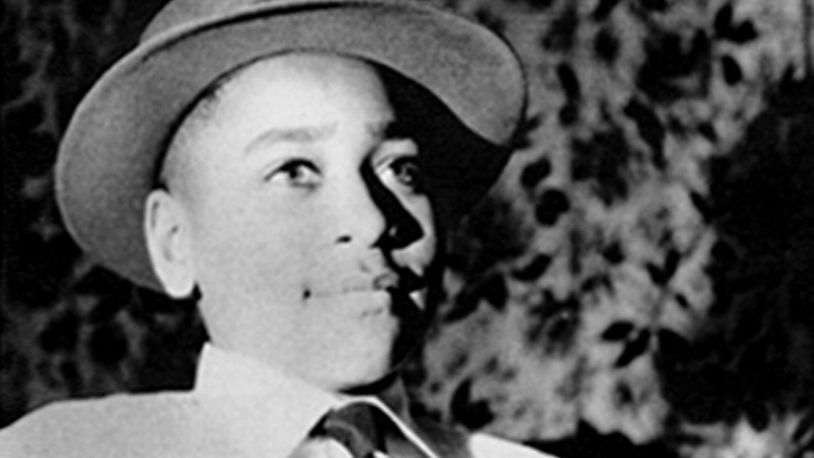
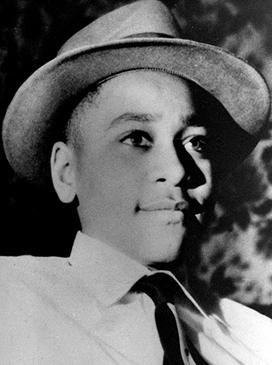
On August 28, 1955,  a fourteen year old African-American boy from Chicago, Emmett Till, was kidnapped, brutally murdered and tossed into the Tallahatchie River for allegedly whistling or making inappropriate advances at a white woman while visiting his relatives in Mississippi. Till’s murder would spark a wave of righteous indignation across the nation because of the sheer brutality of the lynching and the young age of the victim. Although Till’s murder would go unpunished, it would prove to be a watershed moment for race relations in the United States serving as a spring board for the Civil Rights movement and the eventual demise of the Jim Crowe South.

The summer of 1955 was a hot one in the United States. Racial tensions were at a pitch in the wake of the Supreme Court’s landmark decision in the case of Brown v. Board of Education which declared race-based segregation unconstitutional. Embittered Southern whites regarded the Court’s decision as a threat to the established racial hierarchy and white supremacist power structure and vowed a campaign of “massive resistance.” In the months before Till’s murder, Rev. George Lee and Lamar Smith were separately shot and killed in Mississippi after organizing black voter-registration drives. In both cases, investigations identified credible white suspects but potential witnesses were afraid to talk and no charges were ever brought. Seeking to escape the boredom of another Chicago summer, Mamie Till Mobley sent her only child to visit her relatives in Money, Mississippi. Before leaving, Mrs. Till Mobley urged her son to be careful and to watch how he behaved in front of white people, warning that Chicago and Mississippi were completely different. “Even though you think you’re perfectly within your right, for goodness sake take low,” she said, according to subsequently published accounts. “If necessary, get on your knees and beg apologies,” she told him. This was the cauldron of hate fourteen year old Emmett Till was about to enter.

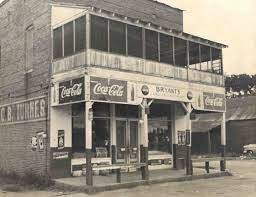
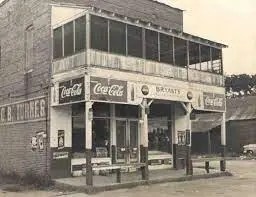
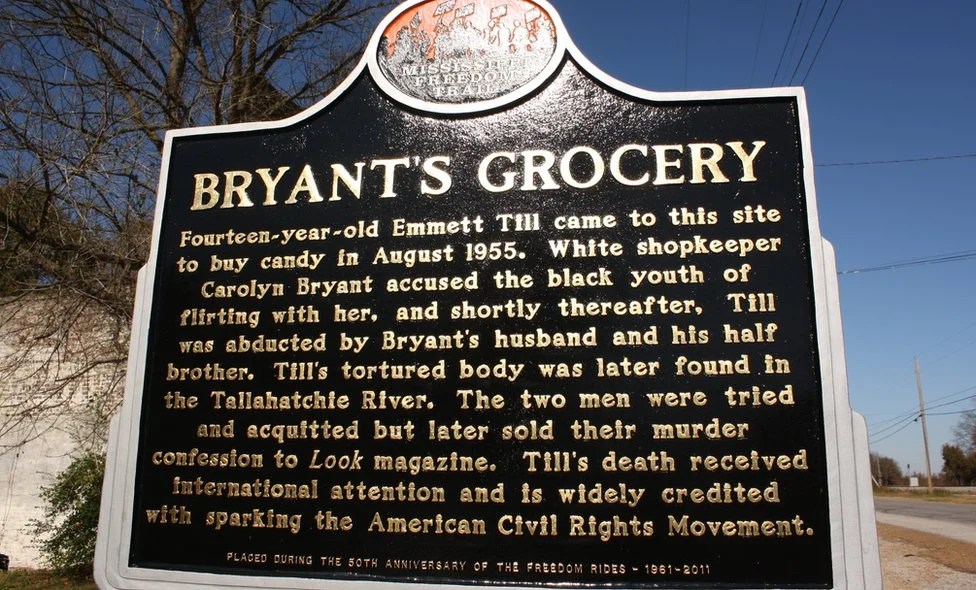
Till arrived at the home of his uncle Mose Wright in the Mississippi Delta town of Money on August 21. Three days later he and his two cousins headed to the local grocery store to buy some candy. The store mostly served the local sharecropper population and was owned by a poor white couple, 24-year-old Roy Bryant and his 21-year-old wife Carolyn. Carolyn Bryant was working the front of the store alone that day; her sister-in-law was in the rear of the store watching the Bryant children. What actually happened next is subject to multiple conflicting accounts but most claim that Till had whistled at Bryant or had engaged in some other unacceptable advance that violated the mores of Jim Crowe Mississippi. Bryant stormed out of the store and warned she was going to get a pistol.
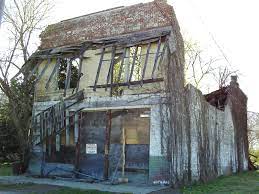
Till and his cousins immediately understood the gravity of the situation. They quickly fled the scene at the urging of some of the older men around town hoping to avoid any unwanted violence. Till refrained from telling his uncle what had happened, fearful of what reprimand might happen and pleaded to return home to Chicago immediately. A few days later, Roy Bryant and his half brother , J.W. Millam went to Mose Wright’s home, in the dead of night, and abducted the terrified 14-year old at gun point. They marched Till to the back of their pick up truck and tied him up before driving off to an isolated barn where they proceeded to teach the young boy a deadly lesson. There they beat Till mercilessly as the boy begged for his mother. They poked out his eye and finally shot him in the head. Once dead, they  tied a 75-pound cotton-gin fan around his neck with barbed wire and tossed his body into the Tallahatchie River demonstrating absolutely no remorse for what they had done.

The barn where Emmett Till was tortured and killed

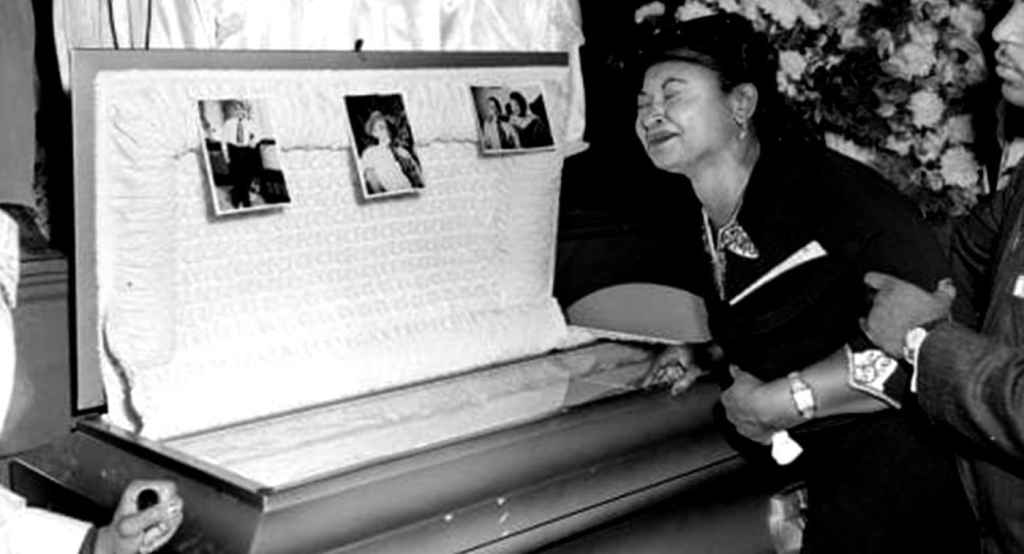
When Till’s body was pulled from the river, his mother could barely identify her son. Mississippi officials pressured Mamie Till Mobley to quickly burry her son in a closed casket ceremony seeking to downplay the murder and move on. Mamie Till Mobley was a strong black woman and she was determined that her only son would not die in vain. Instead, she returned the badly disfigured body to Chicago, where she held an open casket funeral intending to capture the nation’s attention and shine a spotlight on the rampant racism and white supremacist violence directed at African-Americans in the South. The train carrying Till’s body was greeted by large crowds and over 200,000 people paid their respects during the four days of public viewings. Jet Magazine published an expose of photos of Till’s mangled body and his grieving mother at the funeral and the photos reverberated across the nation and around the world. These images would galvanize a movement and inspire African-American Americans to put life and limb at risk in pursuit of the rights, racial equality and justice promised to them as American citizens under the constitution. Less than six months later, an African-American woman in Montgomery Alabama, Rosa Parks, was arrested and fined for refusing to give up her bus seat to a white passenger. When asked why she refused to move Parks explained that she thought about going to the back of the bus but then she thought about Emmett Till and she couldn’t do it.

Roy Bryant and J.W. Millam were arrested for murder within days after Till’s body was discovered but the likelihood of two white men being convicted of murdering an African-American boy in 1950s Mississippi was somewhere between slim and none. The two men were quickly put on trial in September and battle lines were immediately drawn. Northern outrage at the murder prompted many Southerners to resent what they derisively called outside interference and rally in support of the suspects. When Bryant and Millam could not afford an attorney, every lawyer in the county donated their services and $10,000 was collected from local businessmen in support of Bryant and Millam’s defense. Moreover, many whites showed up to watch the trial, bringing their children, picnic baskets and ice cream cones. Meanwhile, African American spectators were relegated to the back and looked on in fear and anger. This was the reality of the Jim Crow South for African Americans. A black man could be killed by a white man without any care or consequence. Neither Bryant nor Millam would be called to the stand to testify and they would eventually be acquitted by an all white male jury after only 67 minutes of deliberations. Jurors later admitted in interviews that although they knew Bryant and Milam were guilty of Till’s murder, they did not think imprisonment or the death penalty were appropriate punishments for white men who had killed a black man. After the verdict was read, Bryant and Millam defiantly walked out of the courtroom lit up cigars and kissed their wives in celebration.

Left to Right: J.W. Millam, Juanita Millam, Carolyn Bryant, Roy Bryant.

Months later, the two men confessed to killing Till in an interview with Look magazine in exchange for $4,000, however, because of the precedent of double jeopardy in U.S. law, they were never tried again for the murder. In 2017, Carolyn Bryant recanted her testimony, that Till had grabbed her wrist and used sexual obscenities admitting that he had never touched, threatened or harassed her. “Nothing that boy did could ever justify what happened to him,” she said. 

Emmett Till’s story would be a historical footnote if it were the exception but it wasn’t. Lynchings were a way of life in the Jim Crow South. They were a tool of extralegal terror intended to intimidate and control African-Americans and maintain a white supremacist power structure by denying them their constitutional rights as American citizens. From 1882 to 1968, 4,743 lynchings occurred in the U.S., according to records maintained by NAACP. The highest number of lynchings during that time period occurred in Mississippi, with 581 recorded. Georgia was second with 531, and Texas was third with 493. Most of these acts of racial terror went unpunished and many occurred with the active participation of law enforcement. Because most African-Americans in the South were denied their right to vote, they could neither elect judges, sheriffs and other officials more representative and protective of their interests or serve on juries. In 2022, President Joe Biden signed the Emmett Till Antilynching Act into law, making lynching a federal hate crime after more than a century of failed efforts in Congress to pass similar legislation.

The Little Rock Nine, September 24, 1957

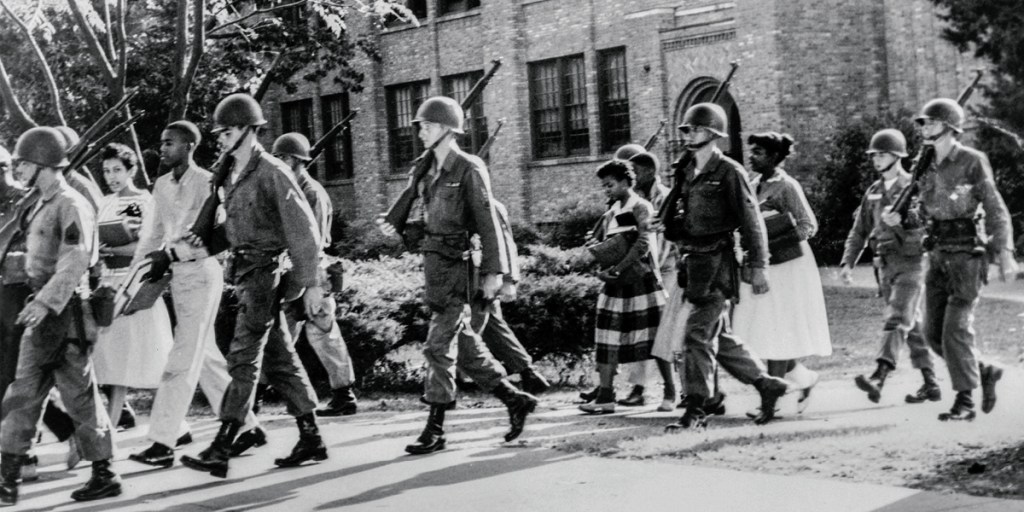
On September 24, 1957, President Dwight D. Eisenhower ordered 1,200 troops from the 101st Airborne Division to forcibly integrate Little Rock Central High School in the face of strong public opposition and determined resistance from Arkansas Governor Orval Faubus. These troops would escort nine African-American teens—Minnijean Brown, Elizabeth Eckford, Ernest Green, Thelma Mothershed, Melba Patillo, Gloria Ray, Terrence Roberts, Jefferson Thomas and Carlotta Walls—into the school, forcing a high profile showdown between state and Federal authorities. Although federal troops would clear the way for their entrance that day, “the Little Rock Nine,” would be subject to constant threat, abuse, and harassment the remainder of the year while the state and the rest of the South developed new strategies to avoid desegregation.

Brown v. Board of Education: The Battle Begins

The landmark 1954 Supreme Court ruling in Brown v. Board of Eduction, which declared segregation unconstitutional, sent shockwaves through out Arkansas and the rest of the South prompting vows of “massive resistance.” Many Southern states initial impulse was to simply ignore the ruling for as long as possible and slow roll the court-ordered desegregation. However, this strategy became increasingly untenable. Foot dragging on the issue had become so prevalent in the South, the court issued a second decision in 1955, known as Brown II, ordering school districts to integrate “with all deliberate speed.” At the same time, the National Association for he Advancement of Colored People (NAACP) also pressed the issue by registering black students in previously all-white schools in cities throughout the South. In Arkansas, the local chapter of the NAACP carefully selected these nine students who it believed had the intelligence, determination, and fortitude to succeed in breaking the color barrier.

In response to these dual pressures, the Little Rock school board voluntarily came up with a plan for gradually integrating the school system. The first schools to be integrated would be the high schools beginning in September 1957. Among these was Little Rock Central High School where this drama would play out. The school board’s plan was deeply divisive prompting a wave of bitterness and resentment amongst a large swathe of the white community in Arkansas. Two pro-segregation groups formed to oppose the plan: The Capital Citizens Council and the Mother’s League of Central High School.

Blockades and Protests

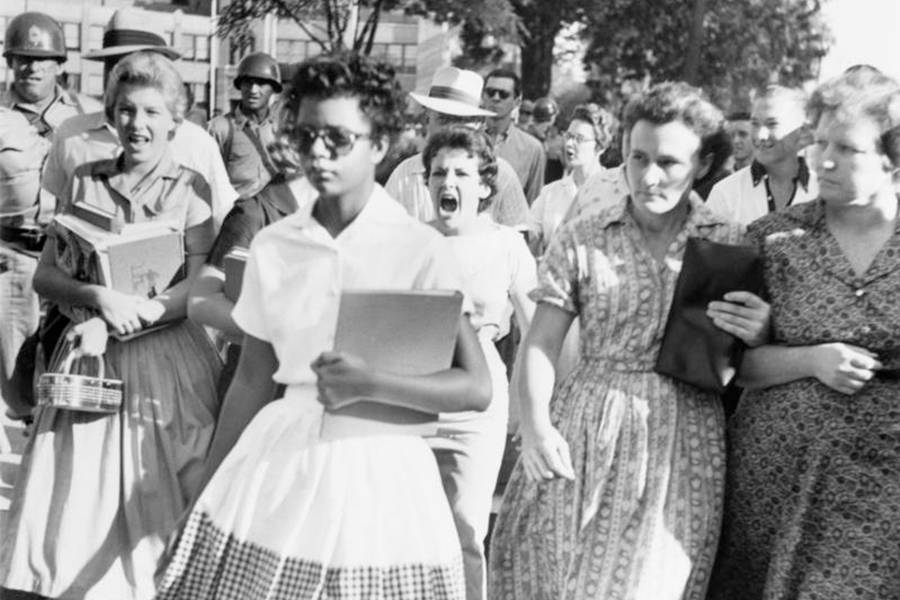
On September 2, 1957 the night prior to what was to be the Nine’s first day in Central High classrooms, Arkansas governor Orval Faubus ordered the state’s National Guard to block their entrance. Faubus said it was for the safety of the nine students warning that violence and bloodshed might break out if black students were allowed to enter the school. On the advice of the school board, the nine African-American students delayed their arrival till the second day, where they encountered a large angry white mob in front of the school, spewing racial epithets, threatening violence and engaging in acts of denigrating behavior. One of the most iconic images of that day was of Elizabeth Eckford, who arrived alone that morning to confront the mob. Eckford, whose family was too poor to afford a telephone, did not get word ahead of time of plans to coordinate their arrival. Eckford was greeted with chants of “two,four, six, eight, we ain’t gonna integrate.” Eckford would recount her experience that day in very stark terms, “They glared at me with a mean look and I was very frightened and didn’t know what to do. I turned around and the crowd came toward me. They moved closer and closer. Somebody started yelling, “Drag her over this tree! Let’s take care of that nigger!”

Elizabeth Eckford approaching Little Rock Central High School on her own


All nine students were prohibited from entering the school that day in what would prove to be the opening salvo in a much larger battle. Sixteen days later a federal judge ordered the National Guard removed and on September 23, the Little Rock Nine attempted to enter the school again. Though escorted by Little Rock police into a side door, another angry crowd gathered and tried to rush into Central High. Fearing for the lives of the nine students, school officials sent the teens home. They did, however, manage to attend classes for about three hours.

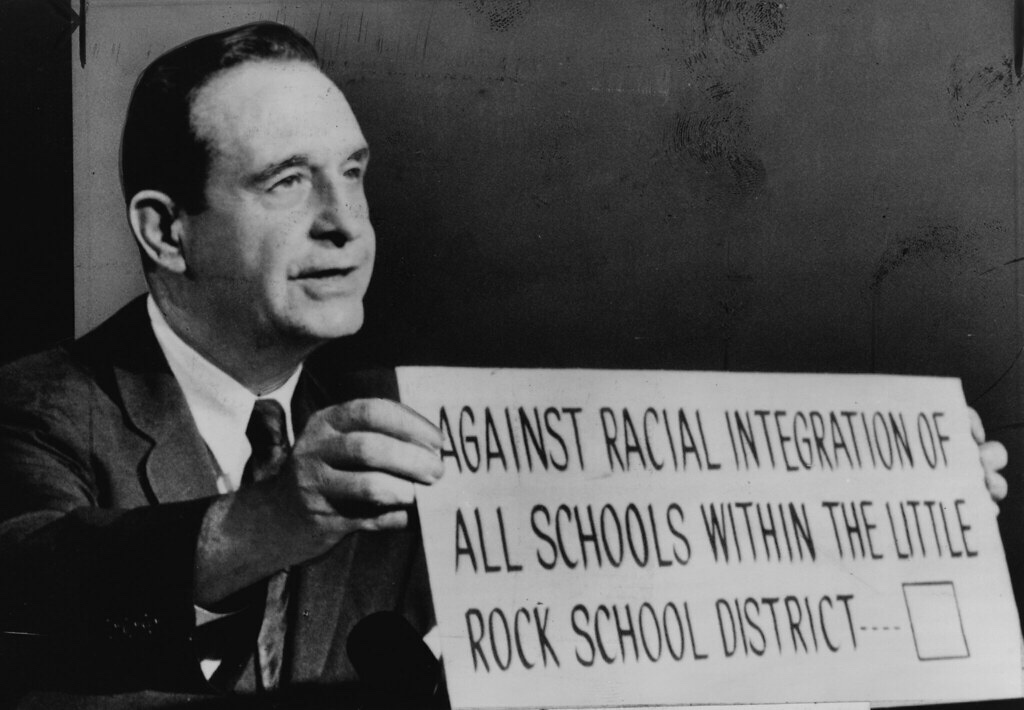
The next day, following a plea from Little Rock’s mayor, Woodrow Mann, President Dwight Eisenhower federalized the National Guard and sent U.S. Army troops to the scene. On September 25, the nine African-American teens entered Little Rock Central High School, personally guarded by soldiers from the Army’s 101st Airborne Division, and began regular class attendance. The Federal government forcibly imposed its authority but the struggle to integrate was far from over. Over the course of the school year, the nine African-American teens were subjected to daily harassment, jeers, and violence at the hands of many white students. For example, Melba Patillo was kicked, beaten and had acid thrown in her face while Gloria Ray was kicked down a flight of steps. At the same time, state authorities regrouped and changed tactics. In September of the following year, Governor Faubus closed all of Little Rock’s high schools for the entire year pending a public vote, to prevent African American attendance. Little Rock citizens voted 19,470 to 7,561 against integration and the schools remained closed for an entire year.

Aftermath

The showdown to integrate Little Rock Central High School was a precursor of things to come through out the entire South over the next decade as white supremacists and segregationists maneuvered to resist integration. Faubus’ use of the national guard and his decision to closed down Little Rock’s public high schools would be replicated by segregationist governors in Mississippi, Alabama, Virginia, and elsewhere. In September 1962, the small university town of Oxford Mississippi was turned into a war zone as Federal Marshals battled with violent white supremacists mobs seeking to prevent African-American James Meredith from attending the University of Mississippi, in what would become known as the “Battle of Oxford.” A year later Alabama Governor George Wallace personally stood in the doorway to the registrar at the University of Alabama to stop African-American Vivian Malone Jones from attending. In Virginia, Prince Edward County would close down its public school system from 1959-1964 rather than comply with court-ordered integration.


Justice Not Served: The Death of Emmett Till, August 28, 1955

On August 28, 1955,  a fourteen year old African-American boy from Chicago, Emmett Till, was kidnapped, brutally murdered and tossed into the Tallahatchie River for allegedly whistling at a white women in a lewd manner while visiting his relatives in Mississippi. Till’s murder would spark a wave of righteous indignation across the nation because of sheer brutality of the lynching and the young age of the victim and become the catalyst for what would become known as the Civil Rights movement.

The summer of 1955 was a hot one in the United States. Racial tensions were on the rise in the wake of the Supreme Court’s landmark decision in the case of Brown v. Board of Education which declared race-based segregation unconstitutional. Bitter and angry Southern whites vowed a campaign of “massive resistance” to counter the court’s orders to desegregate and other threats to what they perceived as their way of life. In the months before Till’s murder, Rev. George Lee and Lamar Smith were separately shot and killed in Mississippi after helping organize black voter-registration drives. It was against this backdrop that Mamie Till sent her only child to visit her relatives in Money, Mississippi, hoping to escape the boredom of another Chicago summer. Before he left for Mississippi, Mrs. Till urged her son to be careful and to watch how he behaved in front of white people there because Chicago and Mississippi were completely different. “Even though you think you’re perfectly within your right, for goodness sake take low,” she said, according to subsequently published accounts. “If necessary, get on your knees and beg apologies.”

Till arrived at his uncle Mose Wright’s home on August 21. Three days later, he and his two cousins, had skipped church where their uncle was preaching and instead headed to the local grocery store to buy some candy. The grocery store mostly served the local sharecropper population and was owned by a poor white couple, 24-year-old Roy Bryant and his 21-year-old wife Carolyn. Carolyn Bryant was alone in the front of the store that day; her sister-in-law was in the rear of the store watching children. What actually happened on August 21 is subject to multiple conflicting accounts but most claim that Till had whistled at Bryant or had engaged in some other lewd advance, something that was a serious taboo in the Jim Crowe South. Bryant stormed out of the store and warned she was going to get a pistol.
Till and his cousins immediately understood the gravity of the situation. They quickly fled the scene at the urging of some of the older men around town hoping to avoid any unwanted violence. Till refrained from telling his uncle what had happened, fearful that he might incur a reprimand and pleaded to return home to Chicago. A few days later, Roy Bryant and his half brother , J.W. Millam went to Mose Wright’s home, in the dead, of night, and abducted the terrified 14-year old at gun point. They marched Till to the back of their pick up truck and tied him up before driving off to an isolated barn where they proceeded to teach the young boy a deadly lesson. There they viciously beat Till as the boy begged for his mother. They poked out his eye, shot him in the head, and tied a 75-pound cotton-gin fan to his neck with barbed wire before tossing his body into the Tallahatchie River with no remorse for what they had done.

When Till’s body was pulled from the Tallahatchie river, his mother could barely identify her son. Nevertheless, Mamie Till was determined that her only son would not die in vain. Mississippi officials pressured her to burry Emmett in Mississippi in a closed casket ceremony hoping to avoid a spectacle. Mamie Till ignored the pressure and brought Emmett Till’s badly disfigured body back to Chicago where she held an open casket funeral hoping to capture the nation’s attention and shine a spotlight on the deep racism and white supremacist violence directed at African-Americans in the South. The train carrying Till’s body was greeted by large crowds while over 200,000 people paid their respects during the four days of public viewings. Jet Magazine published an expose of photos of Till’s mangled body and his grieving mother at the funeral that went reverberated across the nation and around the world. These images would accelerate the civil rights movement and inspire African-American Americans to put life and limb at risk in pursuit of racial equality and justice. Less than six months later, an African-American woman in Montgomery Alabama named Rosa Parks was arrested and fined for refusing to give her bus seat to a white passenger. When asked why she refused to move Parks explained that she thought about going to the back of the bus but then she thought about Emmett Till and she couldn’t do it.

Within a day after Till’s disappearance, both Bryant and Millam were arrested but the chances of two white men being convicted of murdering an African-American boy in 1950s Mississippi were somewhere between slim and none. The two men were put on trial in September and battle lines were quickly drawn. Every lawyer in the county donated their services and $10,000 was collected from local businessmen in support of Bryant and Millam’s defense. Moreover, many whites showed up to watch the trial, bringing their children, picnic baskets and ice cream cones. Meanwhile, African American spectators were relegated to the back and looked on in fear. Neither Bryant nor Millam would be called to the stand to testify and they would eventually be acquitted by an all white male jury after only 67 minutes of deliberations. Jurors later admitted in interviews that although they knew Bryant and Milam were guilty of Till’s murder, they did not think imprisonment or the death penalty were appropriate punishments for white men who had killed a black man. After the verdict was read, Bryant and Millam defiantly walked out of the courtroom lit up cigars and kissed their wives in celebration.

Left: J.W. Milam and his wife Right: Roy Bryant and Carolyn Bryant

Months later, the two men confessed to killing Till in an interview with Look magazine in exchange for $4,000, however, because of the precedent of double jeopardy in U.S. law, they were never tried again for the murder. In 2017, Carolyn Bryant recanted her testimony, admitting that Till had never touched, threatened or harassed her. “Nothing that boy did could ever justify what happened to him,” she said.


Mississippi Burning, June 21, 1964

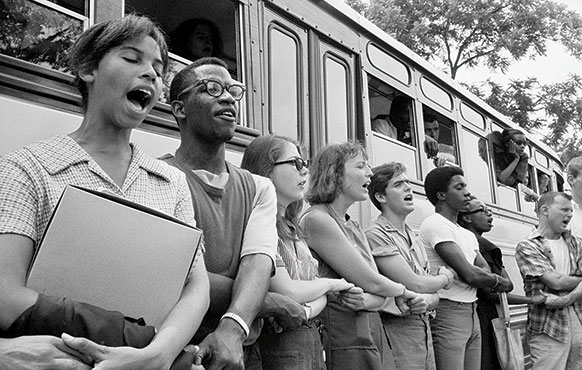
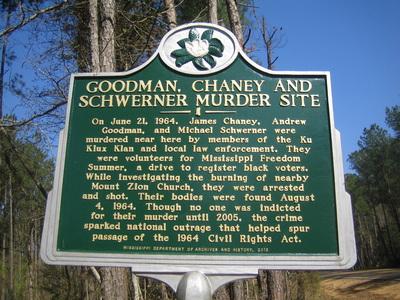
On June 21, 1964 three civil rights activist, Michael Schwerner, Andrew Goodman, and James Chaney were kidnapped and brutally murdered by the Ku Klux Klan in Neshoba County Mississippi. The three were part of what was called Freedom Summer when hundreds of students and young civil rights activists descended upon Mississippi to register and educate the African-American population about their voting rights and to combat the state’s white supremacist power structure that disenfranchised blacks. The murder of Schwerner, Goodman, and Chaney would prove instrumental in the passage of the landmark 1964 Civil Rights Act and the 1965 Voting Rights Act the following year.

The project was organized by the Council of Federated Organizations, a coalition of the four major civil rights organizations — the Student Non-Violent Coordinating Committee, the Congress of Racial Equality, the National Association for the Advancement of Colored People, and the Southern Christian Leadership Conference. The project set up dozens of Freedom Schools, Freedom Houses, and community centers in small towns throughout Mississippi to aid the local Black population. 

Mississippi was chosen as the target of this effort because it had the lowest percentage of registered African-American voters of any state in the Union, only 6.7 percent of eligible black voters. Blacks had been restricted from voting since the turn of the century due to barriers to voter registration and other laws. Many of Mississippi’s white residents deeply resented these “outside agitators” and any attempt to change their ways. The Ku Klux Klan, the White Citizens’ Council, the Sovereignty Commission and even state and local law enforcement were engaged in a campaign of violence and harassment aimed intimidating these students and discouraging local African-Americans from cooperating with these outsiders. Schwerner, in particular, because of his work and “beatnik” appearance, attracted the attention of the Klan, which put him on their special hit list and gave him the code name “Goatee.”

On June 21, 1964, Schwerner, Goodman, and Cheney went to investigate the burning of the Mt. Zion Church in Neshoba county Mississippi by the Klan that served as a Freedom School. They were stopped by Neshoba County Deputy Sheriff Cecil Price just inside the city limits of Philadelphia, the county seat. Price, a member of the KKK who had been looking out for Schwerner or other civil rights workers, threw them in the Neshoba County jail, allegedly under suspicion for church arson. Price kept them in jail for seven hours till late in the evening, denying them a phone call, before he released them on bail. During this time he organized,a plan with his fellow Klan members to murder the activists. Price escorted them out of town on a lonely dirt road and directed never to return. Shortly after exiting the town limits they were chased down by the Klan, pulled over, abducted and murdered. Schwerner and Goodman were shot in the head. Chaney was beaten and castrated before being shot. Their bodies were buried in a newly constructed earthen dam just south of town.

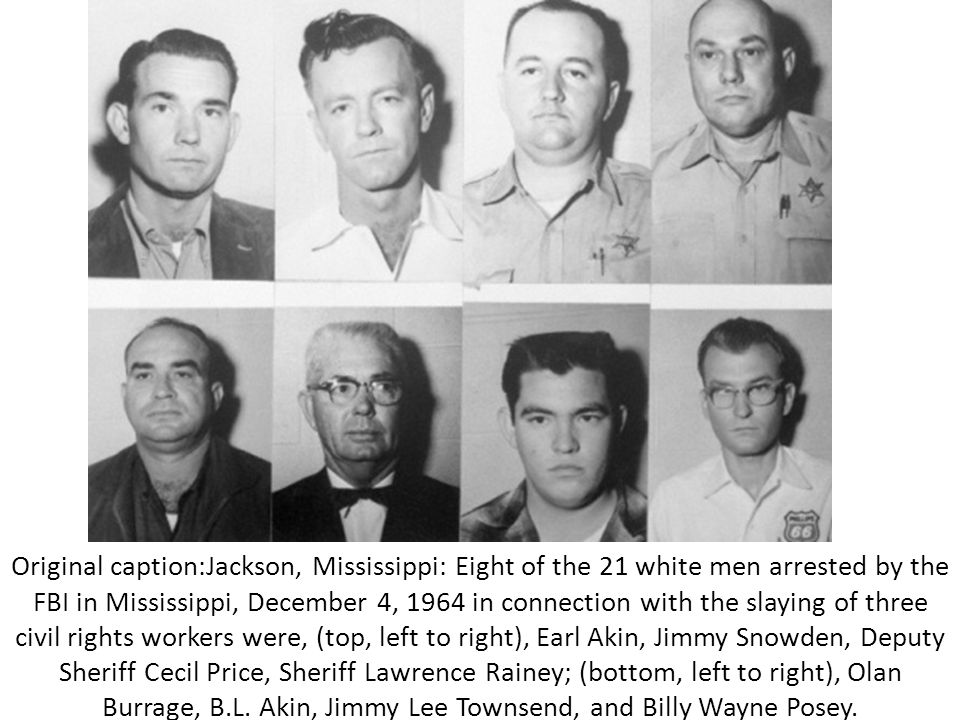
The ensuing FBI search for the three slain civil rights workers grabbed the attention of the nation and finally spotlight on Mississippi’s dreadful record on voting rights and the violent campaign against civil rights that was being waged in that state. On August 4, the remains of the three young men were found. The culprits were identified, but the state of Mississippi made no arrests. With the state unwilling to prosecute the case, nineteen men, including Deputy Price, were indicted on December 4, 1964 by the U.S. Justice Department for violating the civil rights of Schwerner, Goodman, and Chaney (charging the suspects with civil rights violations was the only way to give the federal government jurisdiction in the case). After nearly three years of legal wrangling, in which the U.S. Supreme Court ultimately defended the indictments, the men went on trial in Jackson, Mississippi. Three later an all-white jury found seven men guilty, including Price and KKK Imperial Wizard Sam Bowers. Nine were acquitted, and the jury deadlocked on three others. The mixed verdict was hailed as a major civil rights victory, as no one in Mississippi had ever before been convicted for actions taken against a civil rights worker. None of the convicted men served more than six years behind bars.

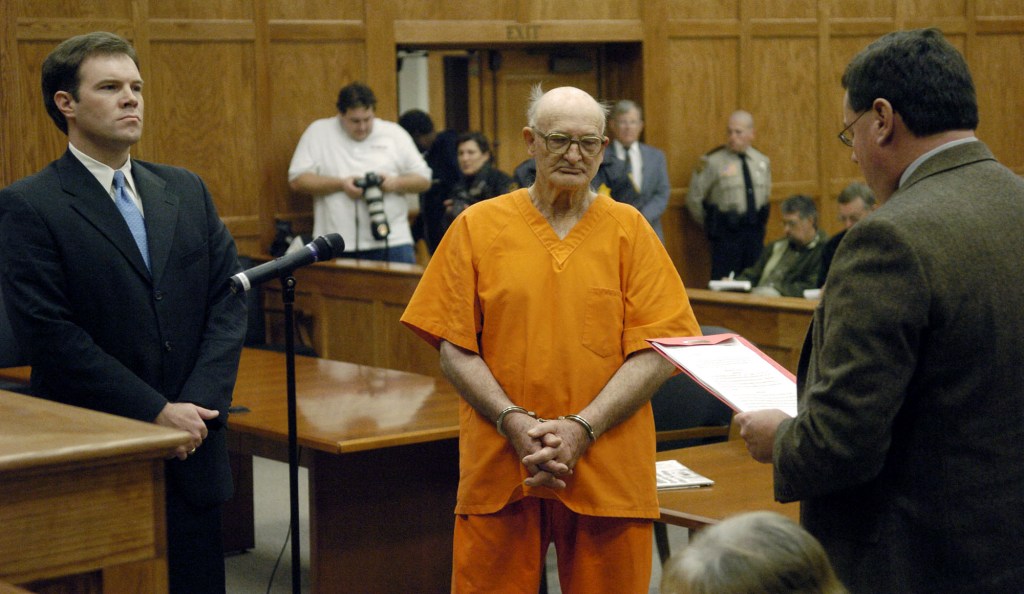
On June 21, 2005, the forty-first anniversary of the three murders, Edgar Ray Killen, was found guilty of three counts of manslaughter for his role in the case. At eighty years of age and best known as an outspoken white supremacist and part-time Baptist minister, he was sentenced to 60 years in prison. He died in prison on January 11, 2018, six days before his 93rd birthday.

Flanked by public defender Chris Collins, left, reputed Ku Klux Klan member Edgar Ray Killen listens as Neshoba County District Attorney Mark Duncan, right, reads the indictment charging Killen with murder in the slayings of three civil rights workers more than 40 years ago, during his appearance in circuit court, Friday, Jan. 7, 2005, in Philadelphia, Miss. (AP Photo/Rogelio Solis)

Ghosts of Mississippi: The Assassination of Medgar Evers, June 12, 1963

On June 12, 1963, civil rights activist Medgar Evers was gunned down in his driveway outside his home in Jackson Mississippi by white supremacist and segregationist Byron De La Beckwith. Emerging from his automobile after a late night NAACP meeting, Evers was shot in the back by Beckwith who had been positioned across the street waiting to ambush him. The bullet pierced through his heart but he managed to stagger to his door. Evers’ wife, Myrlie, and his three children—who were still awake after watching an important civil rights speech by President John F. Kennedy—heard the gun shot and hurried outside. They were soon joined by neighbors and police. Evers was rushed to the hospital where he was initially denied admission because of his race. He died less than 50 minutes later at the age of 37. Evers was buried on June 19 in Arlington National Cemetery with full military honors. 

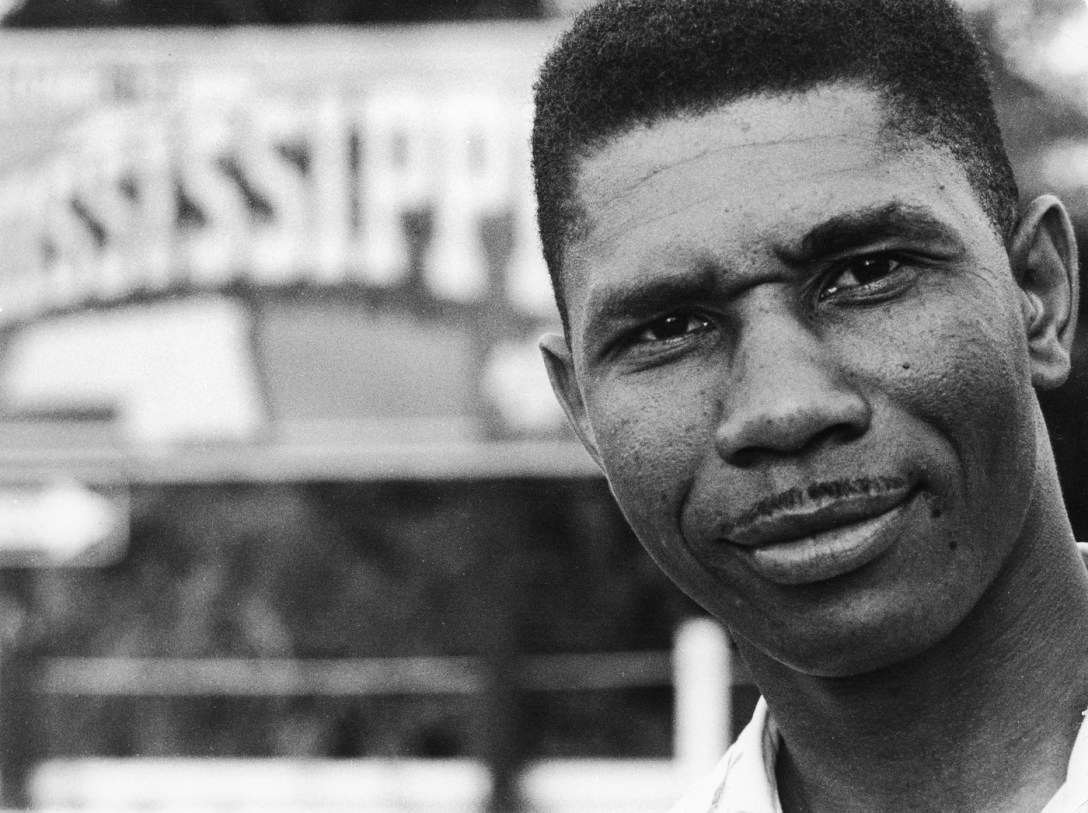
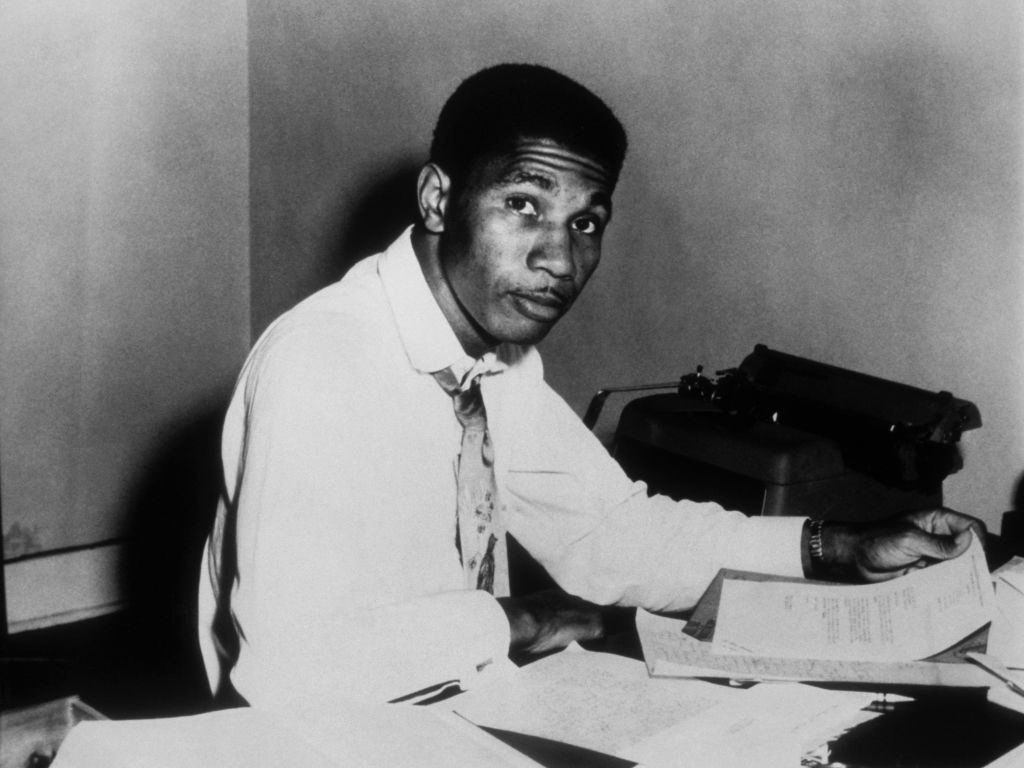
Medgar Evers, the NAACP Field Director for Mississippi

Evers was a decorated World War II veteran who had fought at Normandy in 1944. However, like many other African-American veterans, he returned to a nation that denied him his citizenship rights at the polls. In 1946, Evers attempted to cast a ballot but twenty armed white men, some of whom had been his childhood friends, had learned of his plans to vote and turned up to threaten him. Evers feared for his life. “I made up my mind that it would not be like that again,” he vowed.

Shortly after the landmark Supreme Court ruling in Brown v. Board of Education, Evers volunteered to challenge segregation in higher education and applied to the University of Mississippi School of Law. He was rejected on a technicality, but his willingness to risk harassment and threats for racial justice caught the eye of national NAACP leadership; he was soon hired as the organization’s first field secretary in Mississippi.

Evers was one of Mississippi’s leading civil rights activists. He fought racial injustices in many forms from segregation to how the state and local legal systems handled crimes against African Americans. Evers’ work put him squarely in the crosshairs of the White Citizens Council, a white supremacist group formed in the aftermath of the Brown ruling devoted to preserving segregation. He garnered national attention for organizing demonstrations and boycotts to help integrate Jackson’s privately owned buses, the public parks, Mississippi’s Gulf Coast beaches as well as the Mississippi State Fair. He led voter registration drives, and helped secure legal assistance for James Meredith, a black man whose 1962 attempt to enroll in the University of Mississippi was met with riots and state resistance.

Beckwith was arrested on June 21, 1963 for the murder of Evers but would escape conviction for most of his life, largely due to the racist system of justice that dominated the deep South in the 1960s. He was tried twice in February and April 1964 but in each trial the two all white juries failed to reach a verdict resulting in two mistrials. Beckwith received the support of some of Mississippi’s most prominent citizens, including then-Governor Ross Barnett, who appeared at Beckwith’s first trial to shake hands with the defendant in full view of the jury. After his release Beckwith bragged about his skill with a rifle and hinting to segregationist friends that, indeed, he had killed Evers.

That Beckwith would not be held accountable, while reprehensible, was hardly surprising and consistent with what was increasingly the norm across the South. African-Americans and civil rights activists could expect little legal protection from the courts and law enforcement in the 1960s South which operated largely to preserve segregation and often ignored the facts when white defendants were accused of harming African-Americans. Moreover, most African-Americans were still disenfranchised by Jim Crow laws and therefore ineligible for jury duty. The two white men who murdered fourteen year old Emmet Till eight years earlier for allegedly whistling at a white woman were acquitted . The Ku Klux Klan members that perpetrated the 16th Street Baptist Church bombing in Birmingham, Alabama later that year also escaped justice. The same for the murderers of three civil rights workers in Mississippi the following year.

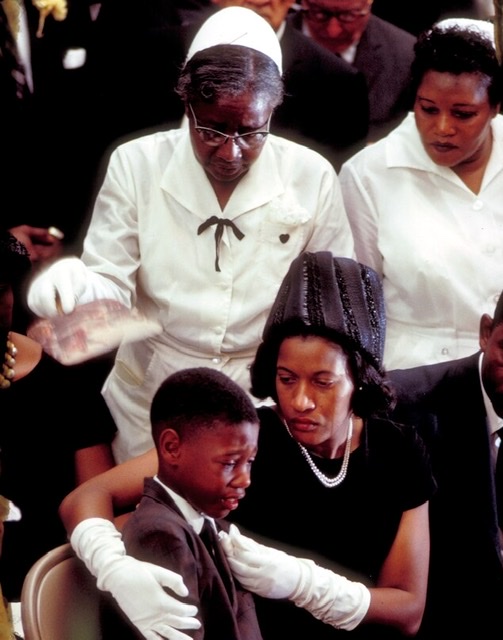
Mylie Evers and son Daniel Kenyatta Evers at Medgar Evers’ funeral

Evers’ assassin, the unrepentant Byron De La Beckwith

Evers was one of Mississippi’s leading civil rights activists. He fought racial injustices in many forms from segregation to how the state and local legal systems handled crimes against African Americans. Evers’ work put him squarely in the crosshairs of the White Citizens Council, a white supremacist group formed in the aftermath of the Brown ruling devoted to preserving segregation. He garnered national attention for organizing demonstrations and boycotts to help integrate Jackson’s privately owned buses, the public parks, Mississippi’s Gulf Coast beaches as well as the Mississippi State Fair. He led voter registration drives, and helped secure legal assistance for James Meredith, a black man whose 1962 attempt to enroll in the University of Mississippi was met with riots and state resistance.

Evers’ home and the driveway where he was shot

Evers’ assassination was a pivotal moment in the Civil Rights movement, a bloody milestone in the fight for racial equality that began with the murder of 14 year-old Emmett Till eight years earlier. It would also prove to be a harbinger of the assassination of Martin Luther King, Jr. by James Earl Ray five years later.