Brown vs. the Board of Education: May 17, 1954

On May 17, 1954, the United States Supreme Court issued its landmark decision in the case of Brown vs. the Board of Education of Topeka, that overturned the principle of “separate but equal” that served as the legal cornerstone for the system of racial segregation in the Jim Crow American South. The ruling would inspire and encourage African-Americans to challenge official segregation across the board, giving birth to what would become known as the Civil Rights Movement. It also provoked a violent and determined backlash from white supremacists power structures in the South who vowed a campaign of “massive resistance” to stymie implementation of the ruling.

Origins of Jim Crow

The origins of legally sanctioned racial segregation in the United States, or what would come to be known as Jim Crow, is usually traced back to the infamous 1896 Supreme Court decision in the case of Plessy vs. Ferguson. However, the beginnings of segregation in the South began a decade earlier with a collapse in agriculture prices. This agricultural depression decimated poor white farmers throughout the South and gave rise to a wave of radical populist politicians demanding a more equitable economic system. Wealthy conservative white Southern Democrats who held power in antebellum period and reclaimed their lofty perch after the collapse of Reconstruction, were put on the defensive. With few cards to play and facing a growing threat to their power from an unlikely partnership of poor white farmers and African-Americans, the Democrats turned to the race card and white supremacy to distract, deflect, and divide claiming white civilization was at risk. These Southern, white, Democratic  governments passed various laws disenfranchising African-Americans and officially segregating black people from the white population by mandating separate schools, parks, libraries, drinking fountains, restrooms, buses, trains, and restaurants. “Whites Only” and “Colored” signs were constant reminders of the enforced racial order. It was authoritarian rule by one race directed at another.
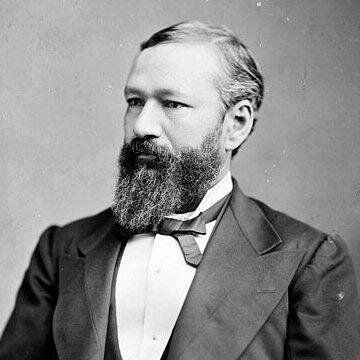
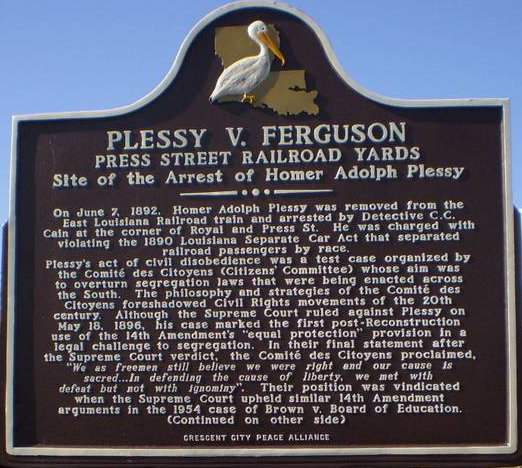
As African-Americans witnessed the pernicious impact of the imposition of racially segregated public facilities, the Black community of New Orleans opted to mount a resistance. In 1890, Louisiana passed a new law that required railroads to provide separate but equal accommodations for white and colored races. Homer Plessy, who was only one-eighth African American but under Louisiana law was considered Colored, decided to test the constitutionality of that law. On June 7, 1892, Plessy agreed to be arrested for refusing to move from a seat reserved for whites. Convicted by a New Orleans court of violating the 1890 law, Plessy filed a petition against the presiding judge, Hon. John H. Ferguson, claiming that the law violated the Equal Protection Clause of the 14th Amendment. Ferguson upheld the law and the case slowly made its way up to the Supreme Court.

On May 18, 1896, the U.S. Supreme Court voted 7-1 against Plessy, with the dissenting vote coming from Chief Justice John Harlan. The Court argued that equal but separate accommodations for whites and blacks imposed by Louisiana did not violate the Equal Protection Clause of the Fourteenth Amendment because plaintiff failed to prove that the separate accommodations were indeed inferior and that the protections of 14th Amendment applied only to political and civil rights not “social rights.” In his dissenting opinion, Chief Justice Harlan, a former slaveholder from Kentucky, argued that segregation ran counter to the constitutional principle of equality under the law: “The arbitrary separation of citizens on the basis of race while they are on a public highway is a badge of servitude wholly inconsistent with the civil freedom and the equality before the law established by the Constitution,” he wrote. “It cannot be justified upon any legal grounds.”

Separate but Not Equal

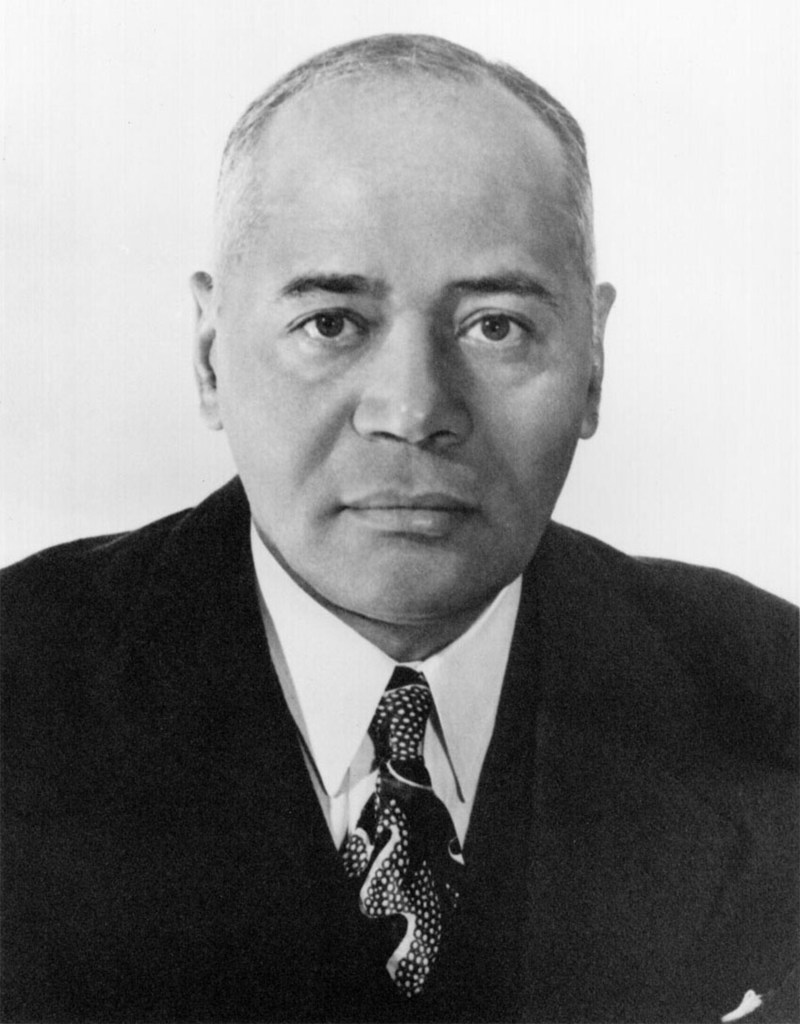
The Supreme Court’s ruling in Plessy v. Ferguson gave an imprimatur of constitutionality to racial segregation but it also carried the seeds of its demise. By the late 1930s, racial segregation in the American South began to come under increased scrutiny. The National Association for the Advancement of Colored People (NAACP) was determined to dismantle the legal theory of “separate but equal” by demonstrating that separate facilities, especially in the field of education, were in fact inferior and of a substandard quality. Attorney Charles Houston, head of the NAACP legal defense fund and his young protege Thurgood Marshall argued several cases in front of the Supreme Court on a number of cases that they believed would collectively erode segregation. In one case after the next, from 1935-1950, the NAACP repeatedly demonstrated that Southern state government were incapable of meeting the standard of separate but equal. For example, In Missouri ex rel. Gaines v. Canada (1939) Houston argued that it was unconstitutional for Missouri to exclude blacks from the state’s university law school when, under the “separate but equal” provision, no comparable facility for blacks existed within the state. In Sweat v. Painter (1949), Marshall argued that a hastily established law school for African-Americans in Texas did not meet the standard of equality. The Court agreed unanimously arguing that a separate school would be inferior in a number of areas, including faculty, course variety, library facilities, legal writing opportunities, and overall prestige. The Court also found that the mere separation from the majority of law students harmed students’ abilities to compete in the legal arena.
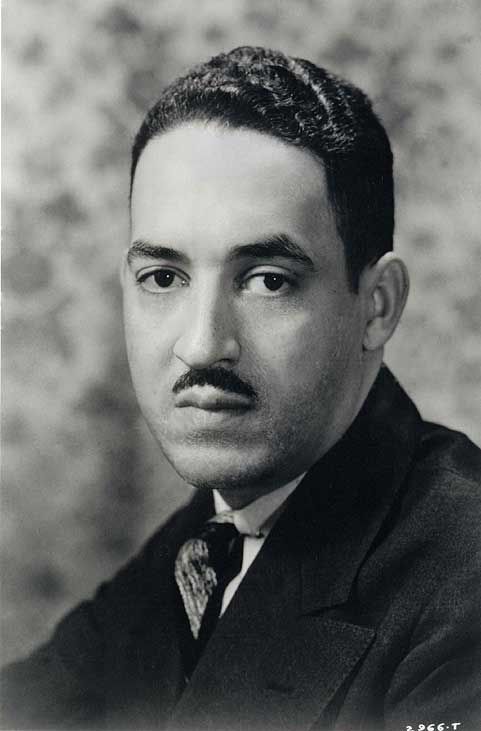
Houston and Marshall’s effort benefited enormously from a Supreme Court had become more progressive since the Plessy ruling, especially after Franklin D. Roosevelt appointed eight out of nine justices during his 12 years in office. Since the end of the Civil War, the court had played a restraining role in the advancement of civil rights, limiting the Federal Government’s ability to protect African-Americans 14th Amendment rights. That trend would begin to reverse by the end of World War II and gather steam by the mid-1950s.

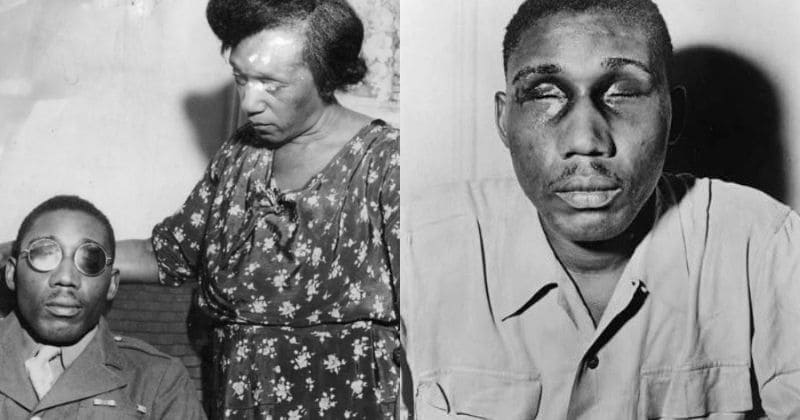
American society was also changing, albeit at a more gradual pace. African-American men volunteered en masse to serve their country in World War I and fought bravely on the frontlines only to return home to a wave of racially motivated violence. African-American men would again unquestioningly heed the call to service in World War II. And when they returned home, they again met a similar fate. This time the beatings and murders of recently returned African American veterans in the South captured national attention, as well as the anger of President Truman, “My stomach turned over when I learned that Negro soldiers, just back from overseas, were being dumped out of army trucks in Mississippi and beaten,” Truman said. “Whatever my inclinations as a native of Missouri might have been, as president I know this is bad. I shall fight to end evils like this.” In a dramatic step, Truman would begin by desegregating the military in 1948.

Truman’s decision to integrate the U.S. military would fracture the Democratic Party and many Southern conservative white politicians who objected to this course organized themselves as a breakaway faction called the Dixiecrats. The Dixiecrats opposed racial integration and sought to maintain Jim Crow laws and white supremacist rule. They even ran an alternative candidate, South Carolina Governor Strom Thurmond in the 1948 presidential election, almost costing Truman the contest. Nonetheless, there were clear signs emerging that legalized racial segregation for the first time was now approaching a fatal rendezvous.

The Decline of Jim Crow

By 1950, the NAACP had amassed cases from Delaware, Virginia, South Carolina, Washington DC, and Kansas challenging the separate but equal standard that were bundled into one case Brown v. Topeka Board of Education. The plaintiff, Oliver Brown filed a class-action suit against the Board of Education of Topeka, Kansas after his daughter, Linda was denied entrance to Topeka’s all-white elementary schools. Brown, represented by NAACP Chief Counsel Thurgood Marshall, claimed that schools for Black children were not equal to the white schools, and that segregation violated the so-called “equal protection clause” of the 14th Amendment.

Wrapping up his presentation to the Court, Marshall emphasized that segregation was rooted in the desire to keep “the people who were formerly in slavery as near to that stage as is possible.”   Even with such powerful arguments from Marshall the justices were divided on how to rule on school segregation. While most wanted to reverse Plessy and declare segregation in public schools to be unconstitutional, they had various reasons for doing so. Unable to come to a solution by June 1953 (the end of the Court’s 1952-1953 term), the Court decided to rehear the case in December 1953. During the intervening months, however, Chief Justice Fred Vinson died and was replaced by Gov. Earl Warren of California. After the case was reheard in 1953, Chief Justice Warren was able to do something that his predecessor had not—i.e. bring all of the Justices to agree to support a unanimous decision declaring segregation in public schools unconstitutional. On May 14, 1954, he delivered the opinion of the Court, stating that “We conclude that in the field of public education the doctrine of ‘separate but equal’ has no place. Separate educational facilities are inherently unequal. . .” By overturning the “separate but equal” doctrine, the Court’s decision in Brown v. Board of Education had set the legal precedent that would be used to overturn laws enforcing segregation in other public facilities.

Massive Resistance Begins

The Brown decision held that school segregation was unconstitutional, but the decision did not explain how quickly nor in what manner desegregation was to be achieved. In May 1955, the Supreme Court issued its implementation guidelines in a decision generally referred to as Brown II. In this ruling the Supreme Court chose not to set a deadline for the completion of desegregation and ordered the lower federal courts to oversee and manage the pace of desegregation “with all deliberate speed,” an ambiguous phrase that left room for a variety of interpretations of the meaning of “deliberate speed.” While Kansas and some other states acted in accordance with the verdict, many school and local officials in the South defied it hoping to drag out implementation as long as possible.

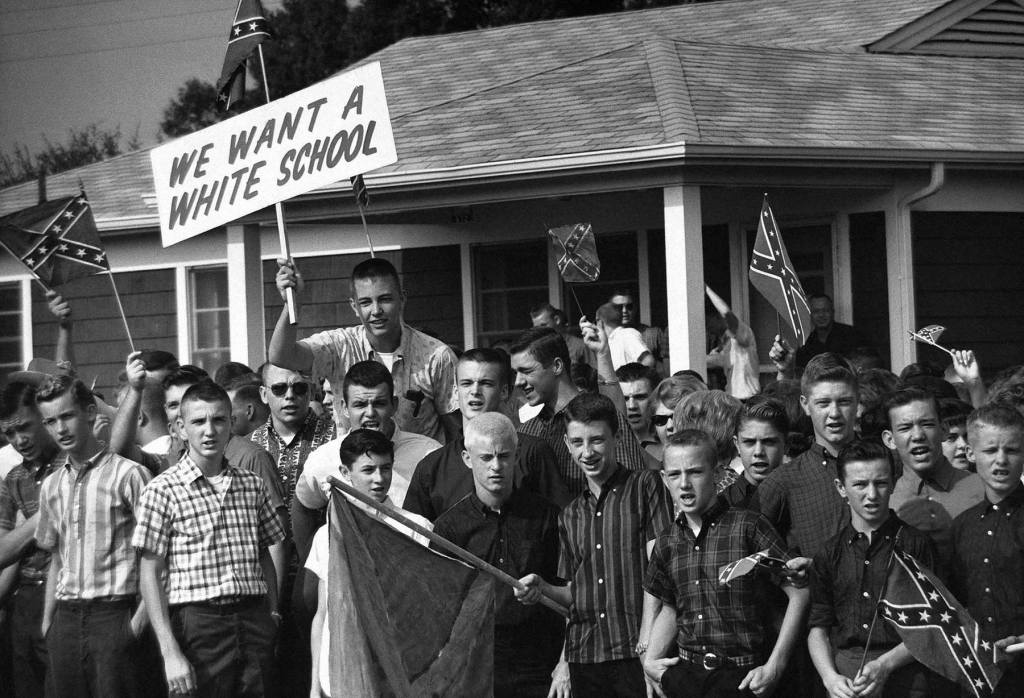
For many Southerners, the Brown decision was tantamount to a declaration of war. In Mississippie Jackson Daily News called the decision “the worst thing that has happened to the South since carpetbaggers and scalawags took charge of our civil government in reconstruction days,” and said it would lead to “racial strife of the bitterest sort.” Mississippi’s powerful Senator James Eastland, declared that “the South will not abide by nor obey this legislative decision by a political body.” In Virginia, Senator Harry Byrd denounced the opinion as “the most serious blow that has yet been struck against the rights of the states in a matter vitally affecting their authority and welfare.” In 1956, 82 representatives and 19 senators endorsed a so-called “Southern Manifesto” in Congress, urging Southerners to use all “lawful means” at their disposal to resist the “chaos and confusion” that school desegregation would cause. In many parts of the South, white citizens’ councils organized to prevent compliance. Some of these groups relied on political action; others used intimidation and violence. In Mississippi, fourteen year-old Emmett Till would become one of the first victims of the supercharged racial tensions following the Brown decision. J.W. Milan, who kidnapped, tortured, and murdered Till only to be found “not guilty” by an all-white jury declared, “Niggers ain’t gonna vote where I live. If they did, they’d control the government. They ain’t gonna go to school with my kids.”

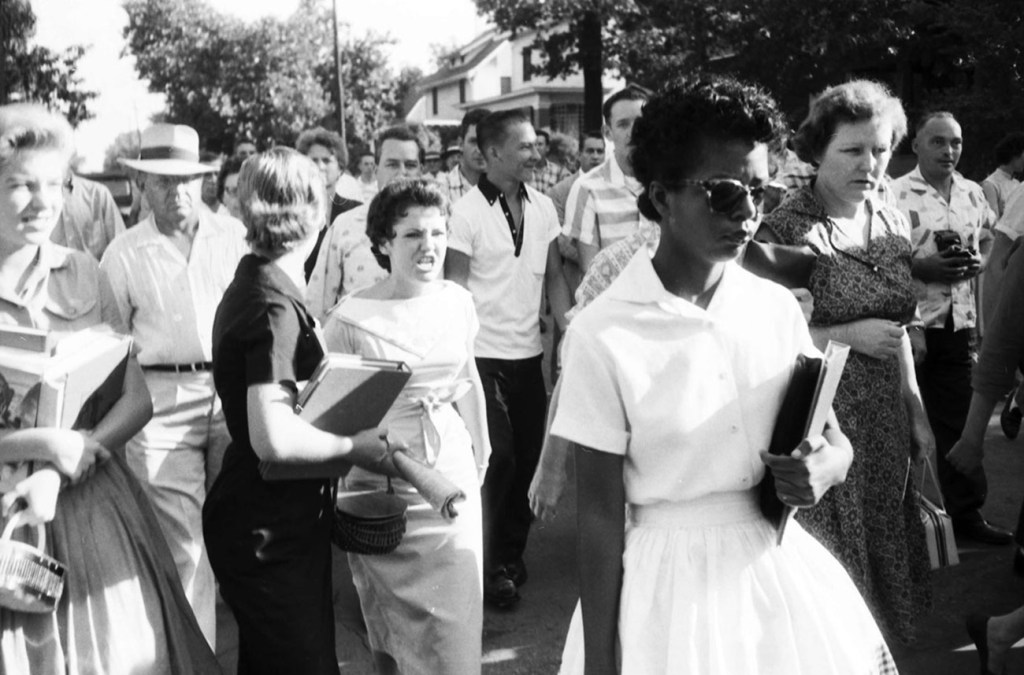
Resistance to the Brown ruling varied from state to state as traditional respect for the rule of law had been overwritten by the misinformed conviction of millions that the Brown decision was not the law of the land but the product of a federal government taken over by conspiratorial and foreign subversives. In Arkansas, Governor Orval Faubus called out the state National Guard to prevent Black students from attending high school in Little Rock in September 1957. After a tense standoff, President Eisenhower deployed federal troops, and nine students—known as the Little Rock Nine entered under armed guard. Troops remained in Little Rock for the 1957-1958 school year. After the troops were withdrawn, however, Governor Faubus closed Little Rock’s public schools for the 1958-1959 school year. 


In Virginia, officials passed legislation closing public schools, diverting tax dollars into private academies to pay tuition for white students, while ensuring there was nothing in place for African-American children to receive an education. In Prince Edward County, the public school system would remain closed for five years in which African-American students were educated in activity centers that the African-American community cobbled together.

In Mississippi, the state would resist federal orders to integrate the University of Mississippi and in September 1962, 320 U.S. Marshall’s protected African-American James Meredith as registered at the University. Meredith’s registration would prompt what would become known as the “Battle of Oxford,” in which mobs armed with gasoline bombs, iron bars, rocks, and firearms attacked the marshals and federalize National Guardsmen. The battle raged all night and by dawn, when the mob had been dispersed, two people were killed and 375 injured, 166 of them marshals, 29 by gunshot.

The next year the drama continued in Alabama, where Governor George Wallace stood in the doorway of the Registrar’s office at the University of Alabama to prevent African-Americans Vivian Malone and James Hood tried to register. When Wallace refused to budge, President John F. Kennedy called for 100 troops from the Alabama National Guard to assist federal officials. Wallace chose to step down rather than incite violence.

Beginning of the End

The Brown decision annihilated the separate but equal standard but it fell short of achieving its primary mission of integrating the nation’s public schools. Nevertheless, Brown still remains one of thee most important Supreme Court rulings in the 200 plus year story of our country. By focusing the nation’s attention on subjugation of African-Americans, it helped fuel a wave of freedom rides, sit-ins, voter registration efforts, and other actions leading ultimately to civil rights legislation in the late 1950s and 1960s.


“All Lives Matter” but Some More than Others!

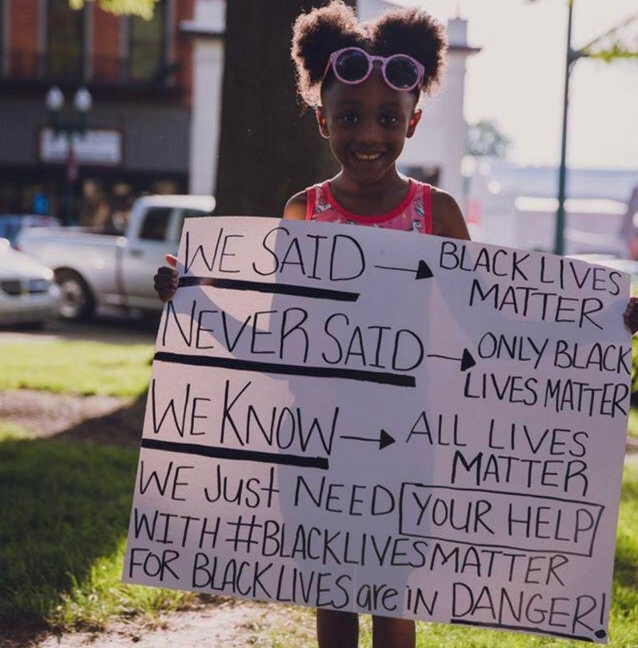
“All lives matter!” or so they say. On the surface it’s reasonable claim. One that is hard to deny or argue with, especially for a nation that was conceived on the premise that all men are created equal. But that’s not really the point, is it? Of course all lives matter, but do they matter equally? History would suggest otherwise. In reality, the phrase “All lives matter” has become a trope to reject and deny the increasingly disturbing trend of unarmed African-Americans killed by police under dubious circumstances and the fact that throughout our country’s history, black lives have been devalued systematically. It’s an expression of fear, based on the erroneous perception that Black Lives Matter is a zero-sum movement that seeks racial advantage rather than the equality promised in the Constitution and Declaration of Independence, a redress of historical grievances and a more equitable system of justice.


The Peculiar Institution

The African-American experience has been one of exploitation and marginalization. Since the first ship arrived in the Jamestown colony in 1619, carrying some 20 plus Angolans against their will, black lives have been devalued. Over the next two hundred years, more than 400,000 additional Africans would be kidnapped from their homes, brought to North America in the squalid hulls of slave ships, and forced into bondage as a source of cheap and captive labor. Often toiling in dangerous and inhospitable conditions, where few would do so of their own choosing, these slaves brought tremendous wealth not only to those that enslaved them but the entire country through the large scale cultivation of rice, tobacco, indigo and cotton. Slavery became so woven into the economic fabric of the country that by 1860, 80 percent of the U.S. GDP was tied to the “peculiar institution.” Yet as Carole Anderson points out in her book White Rage, that in return for almost 250 years of forced labor, African Americans received nothing but rape, whippings, murder, the destruction of families, illiteracy, and poverty.

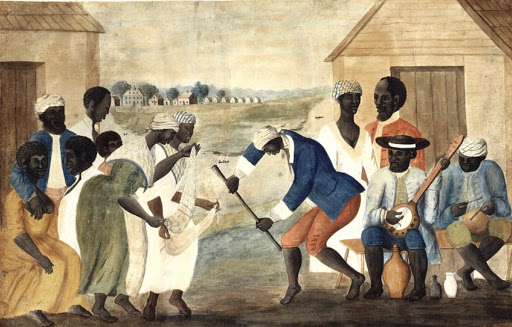
As slaves, African-Americans were a commodity to be bought and sold and once purchased their lives ceased to be their own. They were the property of the slave owner. Slaves had no legal or occupational safety protections, no rights to education, healthcare or religious instruction. They labored six days a week from sun-up to sun-down, with a reprieve on Sundays for rest and worship. They were at the whim and mercy of their owners, who were free to do as they pleased with their property. Disobedience was punished brutally and severely, often at the end of the whip. And if a slave was killed while being “corrected,” the owner was free of any responsibility for their death. Marriages between slaves were not considered legally binding and traditional family ties were not respected. Owners were free to split up families as they liked often with tragic consequences for the slaves involved. Husbands and wives, parents and children were separated, sold elsewhere for profit or some times gifted or transferred for other reasons without any restrictions.

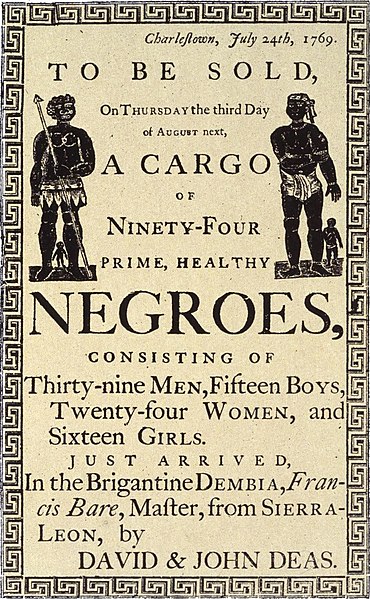
A slave auction advertisement in Charleston, SC

Adding insult to injury, the slave’s subordinate status was given legal standing in the disastrous 1857 Dred Scott decision in which the U.S. Supreme Court ruled that slaves were indeed property and therefore had no rights which the white man was bound to respect. Chief Justice Roger Taney, who delivered the majority opinion, argued that at the time the constitution was adopted, blacks were regarded as “beings of an inferior order and unfit to associate with the white race.” He further added that the words in the Declaration of Independence, “all men were created equal,” were never intended to apply to blacks and that “the negro might justly and lawfully be reduced to slavery for his benefit.”

Even amongst those who believed slavery to be immoral and unjust there was still a strong tendency to view blacks as inferior. For example, President Abraham Lincoln, at least initially, did not believe in racial equality. During the 1858 Lincoln-Douglas debates, Lincoln argued, “I will say then that I am not, nor ever have been, in favor of bringing about in any way the social and political equality of the white and black races,” Lincoln further added that he opposed blacks having the right to vote, to serve on juries, to hold office and to intermarry with whites. Lincoln’s views were consistent with those of the times. However, they would evolve and by the end of the Civil War he was openly speaking of limited black suffrage for the “very intelligent” and those who fought for the Union cause.


The Civil War and Reconstruction

The Union victory in the Civil War brought peace and an end to the four year conflict. It did not lead to a new racial reckoning, atonement for past sins or level the playing field for blacks and whites going forward. For if the North won the Civil War, the South surely won the peace. Over the next ten or so years following the Civil War, embittered former Confederates waged a guerilla style war against Federal Government efforts to grant equal rights to blacks, while seeking to resurrect the plantation economy, perpetuate slavery under another name, and reassert white supremacist rule in the South. Aided and abetted by an openly racist President Andrew Johnson and a U.S. Supreme Court that would undercut major legislative acts and protections for blacks, the end result was not racial equality but segregation, exploitation, oppression and intimidation or what would become known as the “Jim Crow South.”

“This is a country for white men, and by God, as long as I’m President, it shall be a government for white men.”

President Andrew Johnson

To continue exploiting the newly freed African-Americans as a captive source of cheap labor, the Southern states passed restrictive laws called “Black Codes.” These laws required that blacks sign annual labor contracts with plantation, mill, or mine owners to work for pitifully low wages. If they refused and had no other gainful employment, which was impossible because blacks were only allowed to work as laborers or domestics, they would be charged with vagrancy and rented out as laborers to pay off their fines. Apprenticeship laws forced many minors (either orphans or those whose parents were deemed unable to support them by a judge) into unpaid labor for white planters. After ratification of the 14th Amendment, these laws were replaced by another odious form of peonage, sharecropping, which consigned African-Americans in the South to a life of abject poverty for most of the 19th and 20th century. Fewer than 20 percent of sharecroppers ever made a profit and challenging the system could easily result in being lynched.

Unrepentant southerners violently resisted the Federal Government’s efforts to protect and expand the civil rights of former slaves and to extend the franchise to black men, through the 14th and 15th Amendments. They opposed the idea of political and legal equality between the races and regarded black suffrage as a threat to their political power that would lead to “nigger domination.” In all fairness, the 15th Amendment also encountered considerable resistance in the North as well for similar reasons. Nevertheless, groups such as the Ku Klux Klan, the White League, Red Shirts and simple mobs carried out acts of terror and violence to intimidate African-Americans and their white Republican allies and to prevent them from holding political office or exercising their right to vote. Lynchings, with the blessing and involvement of local law enforcement, rose dramatically and would persist as a means of intimidation and control long after the failure of Reconstruction. At the same time, large scale violence such as the 1873 Colfax Louisiana Massacre achieved or overturned what couldn’t be won at the ballot box. By 1880, all Federal troops were withdrawn from the South and the Southern white elite were in control again. The antebellum social, political, and economic order in the South was restored as if the Civil War never happened.

A lynching in Texas


Several important U.S. Supreme Court decisions in the later-half of the 19th century eviscerated the 14th and 15th Amendment protections for African-Americans, opening the door to an extended period of legally sanctioned racial discrimination that would endure for almost a century. In United States v. Cruickshank (1876), United States v. Reese (1876) and United States v. Harris (1883) the court essentially hollowed out the federal government’s ability to prosecute hate crimes committed against African-Americans, allowed state governments to implement poll taxes, literacy tests and other means to disqualify black voters, and gave a greenlight to acts of terror and violence while limiting freedmen’s ability to enforce their rights in federal court, the only forum where they stood a chance of a fair hearing. In Plessy v. Ferguson (1898) the court established its infamous separate but equal standard, ensuring that segregation would increase and endure at least till 1964. These rulings would essentially allow blacks to be segregated lynched, and disenfranchised without anyone ever being brought to justice. African-Americans were once again at the mercy of southern whites and relegated to second class citizens.

“By narrow and ingenious interpretation [the Supreme Court’s] decisions over a period of years had whittled away a great part of the authority presumably given the government for protection of civil rights.”

C. Van Woodward

Life in the Jim Crow South was increasingly bleak and brutish for African-Americans and in many respects was no better if not worse than slavery. Blacks were trapped in a vicious racial hierarchy that denied them the most basic human dignity and freedoms. Deprived of control over the means to earn a living, Southern blacks were still forced to toil for white landowners under a sharecropping system that became a form of debt slavery and offered no economic mobility. Segregation increasingly took hold and Blacks were systematically excluded from everything from schools to residential areas to public parks to theaters to pools to hospitals, asylums, jails and residential homes. Almost every aspect of Southern society was segregated to the disadvantage of blacks and served as a constant reminder of their inferior status. Effectively stripped of their right to vote and denied protection at the Federal level by the U.S. Supreme Court, African-Americans were at the mercy of a legal system stacked against them with former Confederates working as police and judges making it difficult win court cases and gain a fair hearing.

Violence against blacks in the South also increased in frequency and cruelty, uninhibited by the legal system. Lynchings became a public spectacle and the preferred method of southern whites to intimidate blacks and to assert their dominance over political and economic power. Southern whites often showed little mercy. Records include at least one incident where two brothers in Texas were burnt at the stake and one in Georgia in which a pregnant woman was hanged, her belly slashed open and the head of her unborn child crushed under a boot. An estimated two or three blacks were lynched each week in the late 19th and early 20th centuries. In Mississippi alone, 581 blacks were lynched from the late 1800s to 1955. Nationwide, the figure climbed to nearly 5,000. This tragic combination of violent repression, a lack of economic opportunity and no legal recourse ensured blacks would remain impoverished, endangered, and without rights or hope in the South.

A family of Texas sharecroppers, the Arthurs, arrive in Chicago homeless and without money fleeing Paris, Texas after two of their sons were burned alive, at the Lamar County Fairgrounds, on July 6, 1920.

The Great Migration,World War I, and the Red Summer

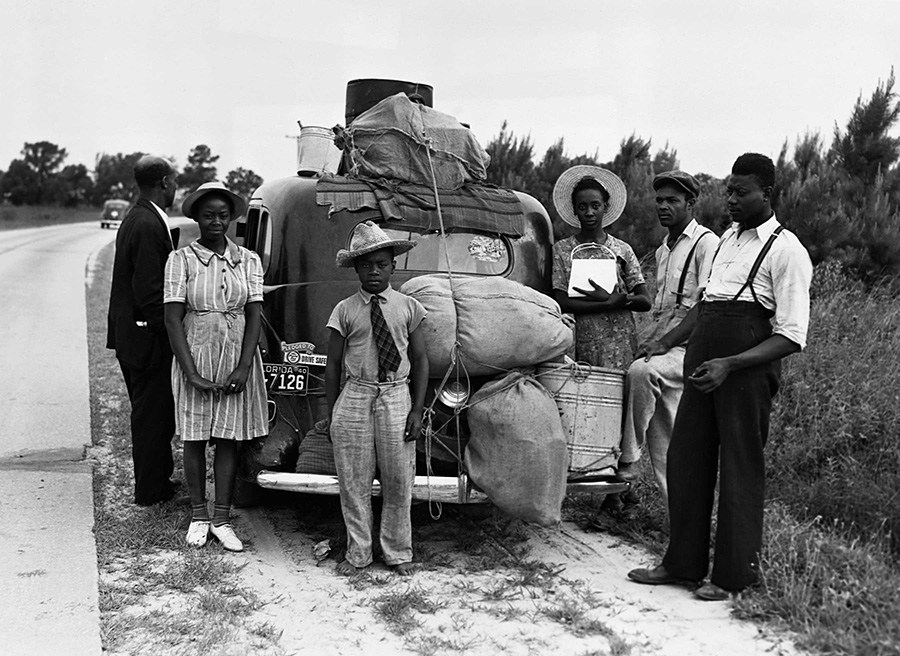
Up until the end of the 19th century, 9 out of every 10 African-Americans lived below the Mason-Dixon Line. As a result, most racism towards blacks was concentrated in the South. That’s not to say that whites in the north were free of prejudice and racist sentiment. In fact, the callous and cowardly attacks on African-Americans during the 1863 New York City draft riots showed otherwise. Nonetheless, things began to change around 1916 as African-Americans began leaving the South en mass, fueled by poor economic conditions, an increasing availability of jobs in the North’s booming manufacturing industry and a desire to escape the pain of Jim Crow. Over one million African-Americans from the South would make the long journey northward by the end of 1919. That number would reach 6 million by the year 1970.

An African-American family leaving Florida for New Jersey

African-Americans would soon find that the North was not the promised land they hoped and in the summer of 1919, racial violence exploded throughout the country, in what would become known as “The Red Summer.” It was some of the worst white on black violence in U.S. history and demonstrated that racism was not simply a regional problem indigenous to the South but a national one. Race riots erupted in Chicago, Arkansas, Washington DC, New York City, Omaha, Charleston, Memphis, Philadelphia, Texas and elsewhere. Hundreds if not thousands of African-American men, women, and children were brutally shot, hanged, and beaten to death by angry white mobs threatened by black advancement and intent on preventing them from asserting their equality. As one black sharecropper remarked, “they just hated to see niggers livin like people.”

The outbreak of violence was the result of competing social forces: Black men were returning from World War I expecting the same rights they had fought and bled for in Europe, and African Americans were moving north to escape the brutal Jim Crow laws of the South. Whites saw blacks as competition for jobs, homes and political power. In Chicago, riots broke out in late July after a 17 year old African-American boy was attacked by a white mob for violating the unofficial segregation of the city’s beachfront. Four days of fighting between black and white mobs in Chicago’s predominantly black south side left 15 whites and 23 Blacks dead, and an additional 1,000 Black families were left homeless after rioters torched their residences. Newspapers reporting the events would claim that blacks were rioting and that anarchists were allegedly operating in the black neighborhoods, but there is not real evidence of any of that. These actions were overwhelmingly by white mobs.

In Elaine, Arkansas, over 200 poor black sharecroppers were killed in a police-led white rampage because they dared to unionize and break free from unscrupulous white landowners who cheated them out of cash and crop. In Washington DC white mobs — many made up of members of the military — rampaged through the city beating any black they could find after false rumors of a white woman being assaulted by black men spread. Black military veterans organized and retaliated  The Washington Times newspaper described the situation as such, “Bands of whites and blacks hunted each other like clansmen throughout the night, the blood-feud growing steadily. From nightfall to nearly dawn ambulances bore their steady stream of dead and wounded to hospitals.” These scenes were repeated elsewhere throughout the country in the summer.

Racial tensions and white mob violence continued and did not really begin to wane until 1923. Two of the most heinous acts of racial violence against African-American communities occurred shortly after the Red Summer. In May of 1921, a race riot broke out in Tulsa, Oklahoma after a young black man allegedly assaulted a white woman. Hundreds of white people descended upon the Black neighborhood of Greenwood. Whites killed more than 300 African-Americans. The Tulsa police did nothing to quell the violence and some actively participated in it. It was also reported that white men flew airplanes above Greenwood, dropping kerosene bombs. More than a hundred businesses and other buildings were destroyed, including a school, a hospital, a library, and dozens of churches. More than 1,200 Black-owned houses burned. The economic losses in the Black community were stunning, amounting to more than $1 million. In January 1923, more than 10,000 angry white men from across the state of Florida rampaged through the prosperous black community of Rosewood after a white women claimed she was raped by a black man. The number of deaths from the massacre remains unknown but the town was entirely destroyed by the violence, and the residents never returned.

Covenants and Redlining

The rapid influx of African-Americans in northern cities prompted a white backlash in other less menacing but still disturbing ways. Although there was no official policy of racial segregation in the North, unofficial segregation existed, especially in the housing market, which exacerbated racial tensions. In the major northern cities, African-Americans were often funneled into areas of the cities that were overcrowded ramshackle slums, through the deliberate policies of restrictive covenants and redlining, which prohibited blacks from owning or renting property in certain neighborhoods and discouraged banks from investing in predominantly black areas. These policies inhibited any upward mobility for African-American families, relegating them to a life of urban poverty. Any efforts to escape these confines and relocate to better and more prosperous white suburban neighborhoods met with violent resistance. As Richard Rothstein points out in his book, The Color of Law, white families sent their children to college with their home equities; they were able to take care of their parents in old age. They were able to pass on their wealth to their children. None of these advantages were available to African-Americans who were prohibited from owning homes in the suburbs.


Returning Home from World War II

Approximately 1.2 African-American men again answered their nation’s call to service, putting life and limb at risk in the fields of Europe and the islands of the South Pacific, only to face an even greater danger when they returned home. Black soldiers returning home from the war found the same socioeconomic ills and racist violence that they faced before. Despite their sacrifices overseas, they still struggled to get well-paying jobs, encountered segregation and endured targeted brutality, designed to eliminate any expectation of racial equality.

In February 1946, Isaac Woodard, a Black veteran who served in the Pacific theater, got into a heated argument with a bus driver while traveling from Georgia to South Carolina. Woodard, in his uniform, was ordered off the bus in a town now known as Batesburg-Leesville, S.C., and beaten so terribly with a billy club by the local police chief that he was permanently blinded. John C. Jones, a Black veteran, was lynched in Louisiana after he was accused of looking at a young white woman through a window of her family’s house. Two other Black veterans, Richard Gordon and Alonza Brooks, were murdered in Marshall, Texas, after a labor dispute with their employers. The violence became so pervasive and brutal that civil rights activists lobbied President Truman for a federal anti-lynching law, but Southern Democrats shut down Truman’s efforts.

African-Americans Veterans also struggled to benefit from the G.I. Bill, upon their return. Many black veterans were denied access to a college education and were largely relegated to vocational programs. By comparison, 28 percent of white veterans went to college on the G.I. Bill, compared with 12 percent of Blacks. Of that number, upward of 90 percent of Black veterans attended historically Black colleges and universities — institutions mainly in the South that were already underfunded with limited resources. During the summer of 1947, Ebony magazine surveyed 13 cities in Mississippi and discovered that of the 3,229 V.A. home loans given to veterans, two went to African-Americans.

Civil Rights and the Death of Jim Crow

In the late 1940s, cracks began to appear in the legal foundation of Jim Crow segregation. In 1948, President Truman issued an executive order to begin the integration of the United States’ armed forces, a process that would be accelerated by the Korean War. Earlier that year, Truman, a native Missourian, delivered a civil rights speech before a joint session of Congress. He called on Congress to adopt a civil rights package that included federal protection against lynching, better protection of the right to vote, and a permanent Fair Employment Practices Commission, despite strong opposition from he southern wing of the Democratic Party. The Supreme Court, which was complicit in the enactment of the Jim Crow system with its earlier rulings, also began to re-examine it’s separate but equal doctrine that served as the foundation of legal segregation. On May 17, 1954, the Supreme Court turned the country upside down with its ruling in the landmark case of Brown v. Board of Education of Topeka. In a unanimous opinion, Chief Justice Earl Warren wrote, “in the field of public education the doctrine of ‘separate but equal’ has no place,” as segregated schools are “inherently unequal.” As a result, the Court ruled that the plaintiffs were being “deprived of the equal protection of the laws guaranteed by the 14th Amendment.” The ruling drove a stake through the heart of Jim Crow but it would take a decade long struggle for civil rights to bring about its demise.

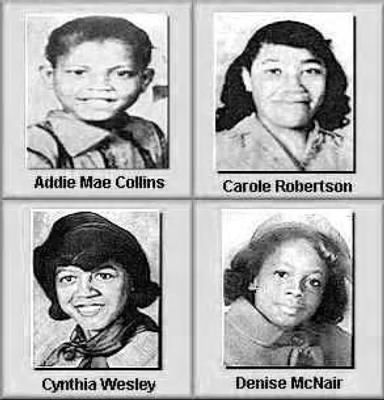
The Supreme Court’s ruling outraged segregationists through out the South while energizing civil rights activists. Over the course of the next ten years, African-Americans waged a campaign of non-violent civil disobedience to end institutionalized discrimination, disenfranchisement, and segregation but were repeatedly beaten, bombed, shot, imprisoned, humiliated and degraded by a southern power structure determined to resist their efforts at all costs. Fourteen year-old Emmett Till would pay with his life for no reason other than allegedly whistling at a white woman. In Greensboro North Carolina, four young African-American men staged a sit-in at an all white lunch counter, enduring heckling and harassment from white patrons, sparking similar actions across the city and rest of the South. Freedom Riders protesting against segregated interstate travel were beaten and shot at by the Ku Klux Klan in Alabama. Four young African-American girls lost their lives in the despicable 16th Street Baptist Church bombing in Birmingham Alabama. James Meredith’s desire to attend the University of Mississippi touched off a brutal battle on the streets of Oxford between Federal Marshals and segregationists. Six hundred protestors were beaten by the police on the Edmund Pettus bridge in Selma Alabama for simply demanding their constitutional right to vote. These are just some of the individual and collective acts of bravery and the suffering that helped lead to the 1964 Civil Rights Act and the 1965 Voting Rights Act that closed the curtain on the Jim Crow era.


All Lives Don’t Matter!

There is probably no other idea or concept more central to the American identity or ethos than the notion of equality. It’s at the forefront of the Declaration of Independence and it is the foundation of the American dream, the idea that we all have equal access and opportunity to better ourselves. It is also a key feature of our legal system, the idea we are all equal under the law. Yet when we peel away the onion, that is our history and when we are honest with ourselves, can we really say that there is racial equality in modern American society.  We would all like to believe that 13th Amendment outlawing slavery leveled the playing field for blacks and whites while the 1964 Civil Rights Act and the 1965 Voting Rights Act purged racial discrimination from our society but that is not the truth. We still want to see ourselves as that “ the city upon a hill” that John Winthrop wrote about in the 17th century but we continued to fall short of our aspirations.

Today, in America we are at another historical crossroads regarding race. We have another opportunity to confront our past, warts and all, to make amends, and to lay the foundation for a new racial reckoning, a third Reconstruction if you like. When we defiantly say, “All lives matter,” we refuse to acknowledge that past. When we say “All lives matter,” we deny and delegitimize all the pain, suffering and indignity that African-Americans have endured for the past 400 years. When we say, “All lives matter,” we are saying aren’t listening and African-American concerns are not valid. At a time when racial tensions are being deliberately inflamed maybe we should stop talking and start putting some meaning behind that empty phrase.