
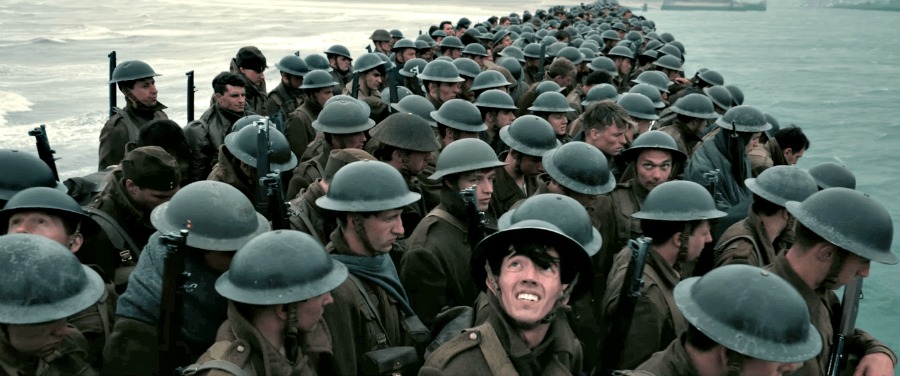
On May 26, 1940, Great Britain commenced Operation Dynamo, the evacuation of over 300,000 British, French, and Belgian soldiers from the beaches and harbor of the coastal French town of Dunkirk. These soldiers were isolated and trapped by the German Army during the six week battle for France. Facing what newly appointed Prime Minister Churchill called a “colossal military disaster,” the Royal Navy along with every private small craft that could be pressed into service safely evacuated these forces back to Great Britain over the course of the next nine days and under the constant threat of German Luftwaffe.
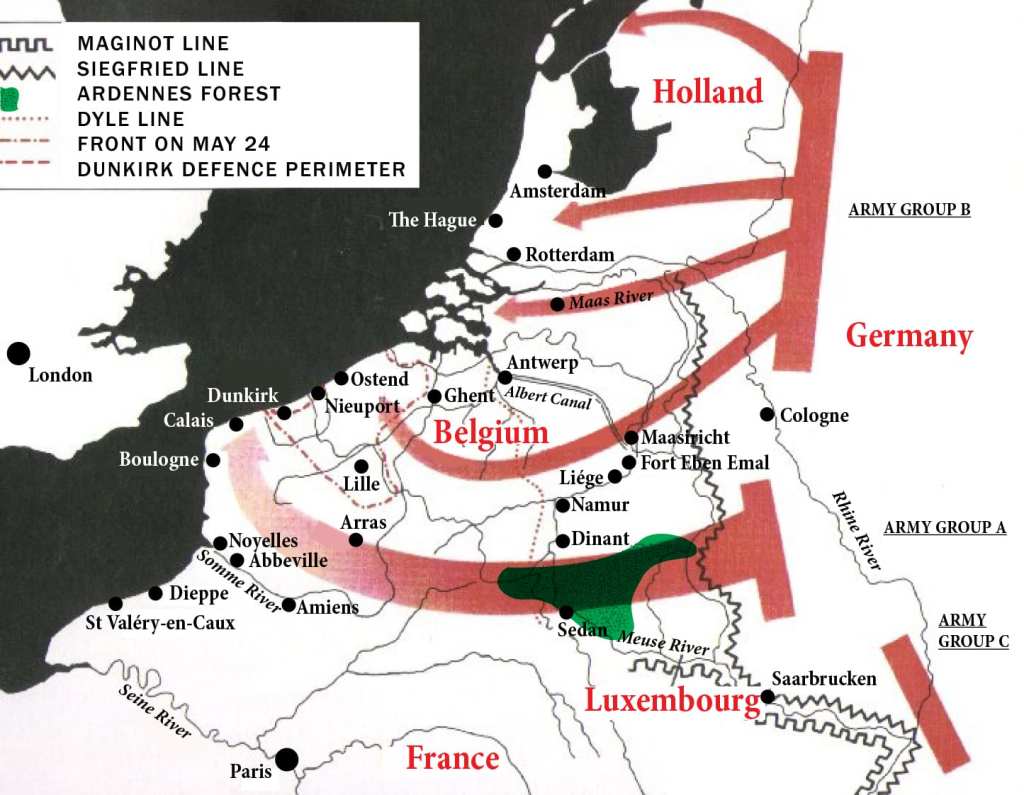
At the outset, Churchill and the rest of British command expected that the evacuation from Dunkirk could rescue only around 45,000 men at most. But the success of Operation Dynamo exceeded all expectations. On May 29, more than 47,000 British troops were returned; more than 53,000, including the first French troops, made it out on May 30. By the time the evacuations ended some 198,000 British and 140,000 French troops would manage to get off the beaches at Dunkirk—a total of some 338,000 men.
Germany had hoped defeat at Dunkirk would lead Britain to negotiate a speedy exit from the conflict. Instead, the “Miracle at Dunkirk” became a rallying cry for the duration of the war, and an iconic symbol of the British spirit. It would also ensure that Great Britain would survive to fight Nazi Germany another day.
On June 4, Churchill addressed a proud British nation advising caution not to assign the attributes of a victory to this rescue. He warned in a speech that “Wars are not won by evacuations.” In the same speech, however, he delivered a stirring statement of the British resolve that would serve the nation well over the next five grueling years of warfare, “We] shall not flag or fail. We shall go on to the end, we shall fight in France, we shall fight on the seas and oceans, we shall fight with growing confidence and growing strength in the air, we shall defend our Island, whatever the cost may be, we shall fight on the beaches, we shall fight on the landing grounds, we shall fight in the fields and in the streets, we shall fight in the hills; we shall never surrender.”
Two months later, the Nazis would begin the Battle of Britain, the first major military campaign fought entirely by air forces. Isolated and alone following France’s surrender, Great Britain would continue to bravely resist Nazi Germany on its own until Hitler ordered the invasion of the Soviet Union on June 22, 1941.
 Tragedy and Farce