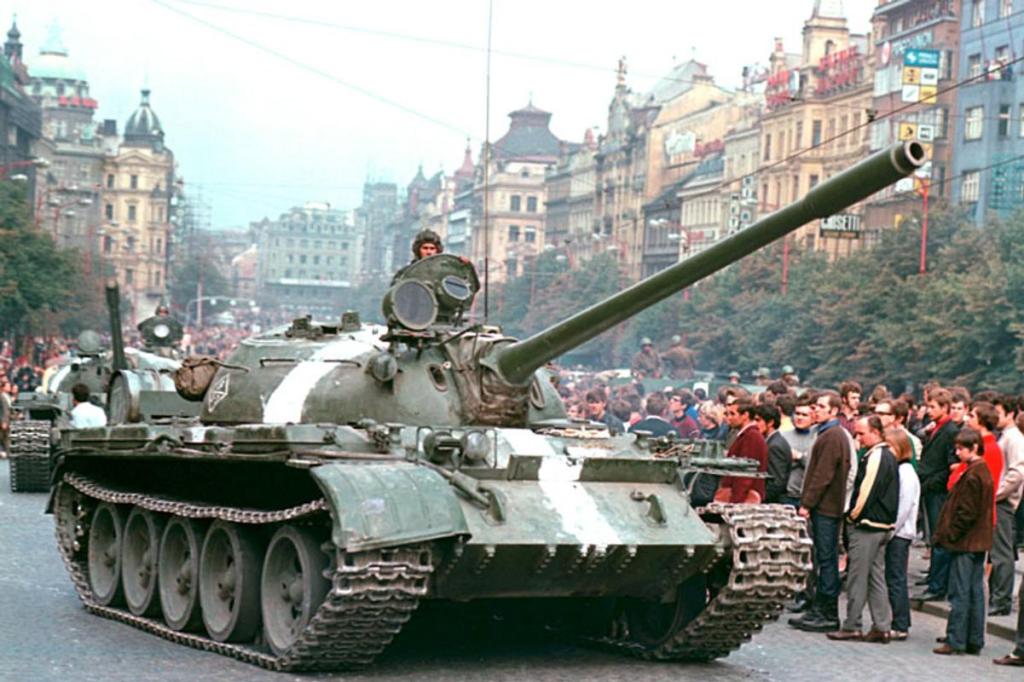
On August 20-21, 1968, the combined armies of the Soviet Union, Poland, Hungary, and Bulgaria invaded Czechoslovakia to topple the reformist government of Alexander Dubcek and to ensure that Prague remained firmly entrenched in the Soviet orbit and under communist rule. This Soviet-led intervention was the third time since 1953 in which Moscow was forced to use military power to ensure its control over its East European satellites. It also further underscored the fundamental tenet of Soviet policy toward the region, the idea of limited sovereignty. Diversity within the Eastern Bloc was permissible only within the context of strict Soviet control and universal conformance on two key points: loyalty to the Soviet Union in foreign affairs and the primacy of the communist party in the domestic sphere.
Of all of Moscow’s East European satellites, Czechoslovakia was the last to succumb to full Soviet control and therefore was late to experience de-Stalinization. Since 1948, Czechoslovakia had been ruled by Communist hardliners Klement Gottwald and Antonin Novotny who ensured that unlike Poland or Hungary, Czechoslovakia remained a hardcore Stalinist state firmly within the Soviet sphere of influence. However, by the 1960s the Czech economy began to falter, and cracks within the ruling Communist Party emerged as popular dissatisfaction with communist rule was on the rise.
In early 1968, Novotny was ousted as the head of the Czechoslovakian Communist Party and replaced by Alexander Dubcek in what would become known as the “Prague Spring.” In many ways, Dubcek was a forerunner to future Soviet leader Mikhail Gorbachev. Dubcek, like Gorbachev, sought to breathe new life into the Communist system and insisted that all reforms would take place within the framework of the Marxist-Leninist state. Nonethless, as he implemented reforms he began to lose control of the process. Dubcek relaxed censorship while encouraging greater policy debate and limiting the powers of the secret police. He also pledged to put more emphasis on the production of consumer goods, while suggesting the possibility of a multiparty government and democratic elections ten years in the future. From Moscow’s perspective, it appeared that Dubcek was dismantling Communist rule not reforming it.
Soviet leaders were increasingly alarmed by what was happening in Czechoslovakia and the model it might provide for the Soviet people and the other Communist states of Eastern Europe. However, Soviet leadership was divided between those who wanted to avoid a replay of the 1956 Hungarian crisis and counseled patience and those who argued for a swift military solution to the problem. In Eastern Europe there was surprisingly strong support for the latter. The hardline Communist leaders of East Germany and Poland—Walter Ulbricht and Władysław Gomułka—were especially apprehensive and argued for a decisive military intervention. Gomułka’s support for the use of force was a particularly ironic twist because his rise to the top of the Polish communist party in October 1956 against Moscow’s wishes, almost triggered a Soviet military intervention in Poland. In July, the Kremlin insisted on consultations with their Czechoslovak counterparts to better understand the situation. Dubcek defended his reform agenda and resisted demands he reverse course but reaffirmed Czechoslovakia’s alliance with the Soviet Union and the Warsaw Pact.
As Dubcek struggled to convince the Soviets and his fellow East Europeans of his continued allegiance, momentum for a military intervention was growing in Moscow and the other East European capitals. On 3 August, representatives from the Soviet Union, the German Democratic Republic, the People’s Republic of Poland, the Hungarian People’s Republic, the People’s Republic of Bulgaria and Czechoslovakia met in Bratislava in a last-ditch effort to reach a compromise and avoid military force. The meeting did little to resolve the standoff and only resulted in a vaguely worded declaration subject to contradictory interpretations. The declaration addressed the principles of equality, sovereignty, and territorial integrity while reaffirming the participants unshakable fidelity to Marxism–Leninism, proletarian internationalism, and the implacable struggle against bourgeois ideology and all “antisocialist” forces. More disturbing were the repeated references to fraternal assistance, code word in Soviet parlance for military intervention, and the idea that it was right and duty of all communist states to intervene in another if communist rule were ever endangered or replaced by a non-communist system. This idea would form the basis for what became known as the Brezhnev Doctrine.
At an August 16-17 meeting, the Soviet Politburo unanimously passed a resolution to “provide help to the Communist Party and people of Czechoslovakia through military force”. At an August 18 Warsaw Pact meeting, Brezhnev announced that the intervention would go ahead on the night of 20 August, and asked for “fraternal support”, which the national leaders of Bulgaria, East Germany, Hungary, and Poland duly offered. East German military forces were left out of the invasion at the last minute for fear of reawakening memories of the 1939 German invasion and provoking strong resistance. Romania refused to participate in the intervention and its leader Nicolai Ceausescu condemned the invasion in a August 21 public address calling it a “grave error” that “constituted a serious danger to peace in Europe and for the prospects of world socialism.” His address was perceived as a gesture of disobedience towards the Soviet Union. However, Ceausescu escaped the Kremlin’s ire largely because he continued to run Romania as a hard-core communist state and did not threaten to leave the Warsaw Pact.
Around 11 pm on August 20, more than 200,000 troops and 2,000 tanks from the Soviet Union, Poland, Hungary, and Bulgaria rolled across the border into Czechoslovakia. Armed resistance to the invasion was negligible, but protesters immediately took to the streets. The invaders quickly occupied the capital of Prague and spread out to take control of other major cities, key points of communication, and airports. Soviet leader Leonid Brezhnev insisted on the participation of at least some of Moscow’s Warsaw Pact allies in the intervention to give it a veneer of legitimacy. Nevertheless, Soviet military forces did most of the heavy lifting.
The invasion caught most of Czechoslovakia and the world by surprise. Although resistance to the invasion was negligible, unlike the 1956 Hungarian Uprising, protesters immediately took to the streets. Within hours, Dubcek, along with other government leaders, was arrested and flown to Moscow in hand cuffs for interrogation. He was surprisingly allowed to return to Prague on August 27, where in an emotional address he acknowledged the error of his ways and agreed to curtail his reforms. He was forced to gradually dismiss reformist aides and government officials who were quickly replaced by hard-line Communists. After anti-Soviet rioting broke out in April 1969, he was removed as first secretary of the Czechoslovak Communist Party and replaced by Gustav Husak, a hardliner who was willing to work with the Soviets. Dubcek was later expelled from the Communist Party and briefly served as ambassador to Turkey, before being made a minor forestry official in Slovakia.
In the years that followed, Husák consolidated his power, further purging the government and communist party of Dubcek loyalists, reimposing centralized control over the economy and reinstating the power of the security service. He also ensured that Czechoslovakia once again became a cooperative member of the Warsaw Pact. Husak’s rule would come to be known as the “Reluctant Terror.” It was characterized as one of strict adherence to Soviet policy objectives and the minimum amount of repression necessary to achieve these objectives and prevent a return to Dubcek- style reformism. As a result, the regime was neither a complete return to Stalinism nor al liberal one either. Husak would continue to rule Czechoslovakia until November 1989 when he and the rest of the communists were overthrown in what became known as the Velvet Revolution
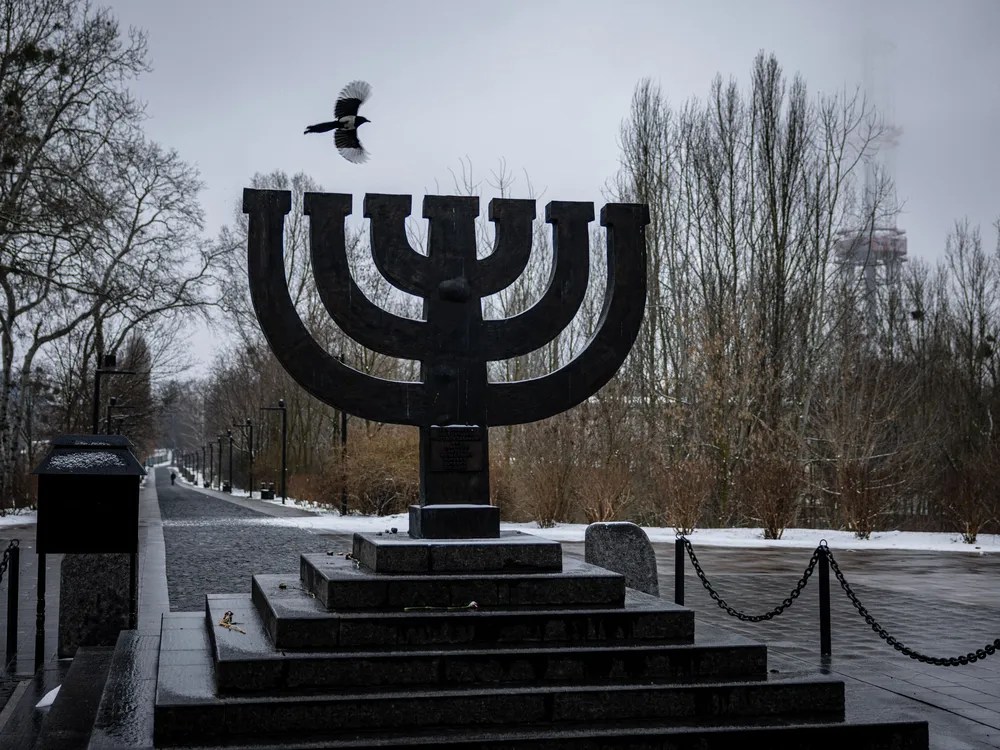
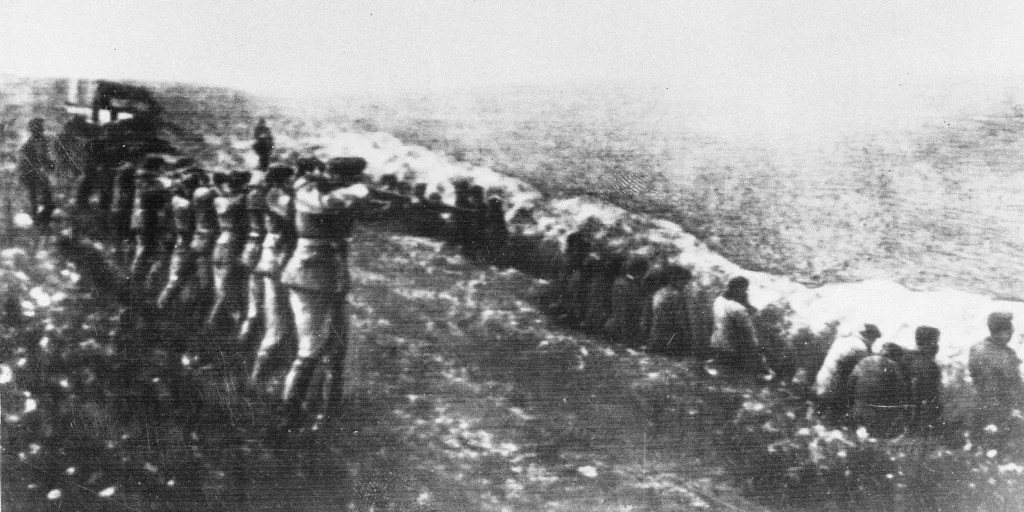
On September 29-30, 1941, the Nazis carried out a mass execution of over 33,000 Soviet Jews at the Babi Yar ravine just outside of Kyiv, Ukraine. The Jews were told they were being relocated and were marched in small groups to the outskirts of the city. There they were stripped naked, their possessions confiscated, and machine-gunned into the ravine by mobile killing squads associated with the Nazi SS called Einsatzgrupen and some Ukrainian auxiliary police. It was one of the largest mass executions of World War II and the apex of the “Bullet Holocaust,” the period before 1942 when the Nazis transitioned to a more systematic approach to exterminating Europe’s Jews using poison gas and “death camps” such as Auschwitz in occupied Poland.
The Babi Yar Memorial Complex outside Kyiv
Nazi Germany invaded the Soviet Union on June 22, 1941 and as the German Wehrmacht advanced deeper into the USSR a wave of executions followed in its wake. In places such as Lithuania, Latvia, Belarus, Moldova and Ukraine, Jews were rounded up and summarily shot by the Einsatzgrupen and local anti-Semites, all in accordance with Adolf Hitler’s racial ideology of creating Lebensraum, or “living space” for the 1000-year German Reich.
The Nazis seized Kyiv, the capital of the Ukrainian Soviet Socialist Republic, on September 19 and the Einsatzgrupen units were ordered to exterminate all Jews and Soviet commissars found there. By the time Germans reached Kyiv in mid-September 1941, about 100,000 of the city’s prewar Jewish population of 160,000 already had fled or joined the Soviet military to fight the invasion. Those that remained were largely women, children, the elderly, and the infirm. During the first week of the German occupation of Kyiv, two major explosions rocked the city, destroying the military headquarters of the German Army Group South and killing a large number of German soldiers. Although the explosions were caused by mines left by retreating Soviet soldiers, the Germans used the sabotage as a pretext to murder those Jews who still remained in Kyiv. On September 26 the German Army and the SS concluded that Kyiv’s Jewish population wouldn’t be confined in a ghetto, but instead annihilated at Babi Yar. Two days later, Nazi authorities in Kyiv ordered all Jewish residents to appear the next morning at an intersection in the city’s Lukianivka district, with all their personal documents, money and valuables and warm clothing. They were then marched through the city to Babi Yar where they were told to undress and lined up and shot. Infants were taken from their parents’ arms and thrown into the ravine.
Einsatzgruppen Executing Ukraine’s Jews at Babi Yar
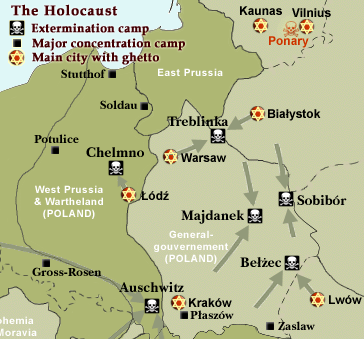
In late 1941, SS head Heinrich Himmler witnessed an Einsatzgruppen mass execution first-hand and concluded that shooting Jews was too costly, inefficient, and exerted too much stress on his men. In November Himmler decided a transition should be made away from mass shootings to the use of poison gas, especially with women and children. Experiments with the use of Zyklon B, a cyanide-based gas, had been in effect since September as well as mobile gas vans to murder mentally ill patients. However, the gas vans were not popular with the Einsatzkommandos, because removing the dead bodies from the van and burying them was a horrible ordeal. On January 20, 1942, Himmler and numerous other Nazi officials involved in implementing the “Final Solution” met in the Berlin suburb of Wannsee to formalize plans for the total eradication of Europe’s 11 million Jews. Here it was decided that the Einsatzgruppen Mobil killing units would be replaced by permanent killing centers at Auschwitz, Belzec, Chelmno, Majdanek, Sobibor, Treblinka, in occupied Poland.
Thirty years ago this week, Soviet hardliners carried out an ill-fated attempt to overthrow Soviet President Mikhail Gorbachev, seeking to stave off what they perceived as the looming disintegration of the Soviet Union. In doing so, these coup plotters unleashed powerful centrifugal forces, accelerating the outcome they sought to prevent. Four months later, the hammer and sickle flag of the Soviet Union was lowered from the Kremlin for the last time; and with it, the country passed into what Leon Trotsky famously called the “dustbin of history.”
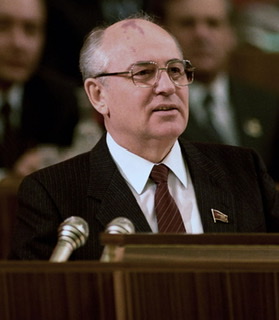
Mikhail Gorbachev
In March 1985, Gorbachev came to power inheriting a country that was clearly at risk of falling behind and badly in need of systemic reform. Gorbachev’s twin policies of Glasnost and Perestroika were largely aimed at reforming the Soviet system to make it more responsive to the needs of the state and the Soviet people. However, instead of revitalizing the country, they would undermine the foundational institutions that kept the system afloat. Gorbachev’s tinkering around the margins of the Soviet command economy always fell short of the structural reforms needed to breathe new life into the system. His “new thinking” in Soviet foreign policy, which was intended to create an international environment more conducive to internal reforms, would lead to a relaxation in Cold War tensions and most importantly the collapse of communist rule in Eastern Europe. However, in the end, all it achieved was to ensure that Gorbachev would be remembered more fondly abroad than at home.
It was Gorbachev’s opening up of the Soviet political system which would ultimately lead to the country’s demise. For decades, Soviet leaders ruled with an iron hand stamping out any dissension or opposition the deemed a threat to their socialist state but such practices also contributed to the overall stagnation of the country. In promoting his concept of Glasnost, which loosely translates into openness, Gorbachev sought to encourage debate and the exchange of ideas that might produce new solutions to the country’s problems, Grant the Soviet people more freedom, and to put a “human face” on the Soviet system by making it less repressive. Instead these reforms raised uncomfortable questions about Soviet history, created new platforms for regime critics and opponents to challenge Soviet central authority, and unleashed pent up ethnic nationalism that undermined the legitimacy of the state and the instruments of coercion that Soviet leaders relied on to keep everything in order.
Coup instigators Alexander Tizyakov, Vasily Starodubtsev, Boris Pugo, Gennady Yanayev and Oleg Baklanov announce Gorbachev’s “illness” and the imposition of a State of Emergency.
For all intents and purposes, it was the growing demands for independence among the non-Russian Soviet Socialist Republics and Gorbachev’s consent to sign a new Union treaty that would devolve more power and authority to the republics than the center propelled the coup plotters into action. Soviet leaders, much like the Russian Czars, had long seen ethnic nationalism as a threat to the territorial integrity and cohesion of the state and once Gorbachev let this genie out of the bottle, he found it increasingly difficult to push it back in. Unwilling to resort to the large scale use of violence to keep the country together, especially after the fallout from the January 1991 Soviet military crackdown in Lithuania, Gorbachev agreed to hand over more power and authority to the republics as a price to keep the country together.
Determined to stymie any plans for a new Union treaty, the coup plotters moved to detain Gorbachev on the evening of August 18 while at his dacha in Crimea. They demanded that Gorbachev declare a state of emergency or resign and name Soviet Vice President Gennady Yanaev acting President in order to restore order. Gorbachev refused. The following day the coup plotters, now calling themselves “the State Committee for the State of Emergency”, appeared on television and announced that Gorbachev was ill and that they were taking over.
Soviet tanks on the streets of Moscow
The coup attempt was poorly conceived and executed from the outset but it’s failure was not a foregone conclusion. When the coup conspirators appeared on stage the following day to announce Gorbachev had resigned and they were taking over some were nervous and visibly shaken. For example, Prime Minister Valentin Pavlov was sweating and trembling profusely demonstrating clear signs of hypertension and stress, which did not convey confidence. At the same time the coup plotters failed to arrest President of the Russian republic, Boris Yeltsin, who had become a fierce critic and thorn in the side of the Soviet leadership. The position of the President of Russia was a fairly new one, a direct result of Gorbachev’s reforms, and Yeltsin was using the post to challenge the a legitimacy of the Soviet authorities. KGB Chairman Vladimir Kryuchkov ordered the elite KGB Alpha commandos to surround Yeltsin’s residence. However, Yeltsin and his people had gotten word of what was happening and he fled just before the Alpha commandos arrived.
Hundreds of tanks and armored vehicles poured into downtown Moscow in a massive show of force but the Soviet military was divided in its loyalties, despite Defense Minister Yazov and other senior defense officials being part of the coup. In 1957, the Soviet military played a key role in squashing a move by rival Communist Party officials to oust Khrushchev but the military was not asked to fire on their own people. By 1991, however, the Soviet military had been called on to use violence to suppress domestic unrest in Georgia, Azerbaijan, and Lithuania and there was little appetite within the military to play a greater role in domestic politics. Although there was a clash between some Soviet troops and protestors that left three dead, the military, for the most part, sought to straddle the fence looking for indicators of who was likely to prevail.
Ultimately, Yeltsin proved to be the pivotal figure in this drama. The photo of Yeltsin atop a Soviet tank outside the Russian White House, rallying the resistance to the coup became the defining image of this ordeal. Yeltsin’s courage and leadership would inspire over 200,000 people in Moscow to take to the streets in defiance of the coup plotters. On August 20, the conspirators ordered the KGB’s elite Alpha and Vymple commandos, paratroopers, and OMON forces to storm the White House. These orders were rejected when it was clear these forces were outnumbered and any action would lead to considerable blood shed. Facing unexpected large scale resistance, and unresponsive instruments of coercion, the coup plotters began to lose their nerve and the conspiracy began to unravel.
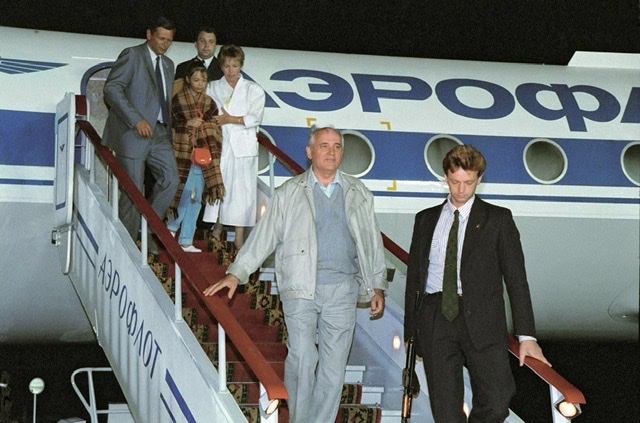
On August 21, KGB Chairman Kryuchkov and several other conspirators flew to Crimea to meet with Gorbachev to negotiate a way out of the mess they created. Gorbachev refused. That afternoon Defense Minister Yazov ordered all military units to withdraw from Moscow. Around 5:00 pm Yanayev signed a decree dissolving the State Committe for the State of Emergency and it was clear the coup had failed. The following day Gorbachev returned to Moscow and the coup plotters were arrested.
Gorbachev returning from Crimea
In the end, the coup plotters accelerated the outcome that they so earnestly sought to prevent. Over the next several months, Yeltsin and Gorbachev would battle for primacy as Gorbachev sought to preserve Soviet central authority while Yeltsin tried to seize more power and authority for the institutions of the Russian republic. At the same time, the non-Russian republics increasingly declared their independence from Moscow. The fate of the Soviet Union was ultimately decided on December 1, 1991, when the people of Ukraine voted overwhelmingly in favor of independence. It was now clear that the Soviet Union could no longer be preserved, despite Gorbachev’s best efforts. A week later Yeltsin and the new presidents of Belarus and Ukraine met just outside of Minsk and agreed to dissolve the Soviet Union and replace it with a much weaker and uncertain arrangement, the Commonwealth of Independent States.
On April 26, 1986, the Number Four reactor of the Soviet nuclear power plant at Chernobyl, Ukraine, suffered a catastrophic explosion during a routine maintenance check, exposing the nuclear core and releasing 50 tons of radioactive material into the atmosphere in what would become the worst nuclear accident in history. The accident was largely the result of a faulty reactor design and bureaucratic incompetence.
Soviet authorities tried to conceal that something catastrophic had occurred as emergency crews tried desperately to contain the fires and radiation leaks. Helicopters dumped tons of sand and boron on the reactor to try and squelch the fires and prevent further radioactive emissions to no avail. After telling residents nothing about the disaster for some 36 hours, Soviet officials finally begin evacuating roughly 115,000 people from nearby towns and villages. Residents were informed it would be temporary and they were told nothing more than they should pack only vital documents and belongings, plus some food. The Kremlin continued to try and hide the extent of the problem but on April 28, Swedish monitoring stations reported abnormally high levels of wind-transported radioactivity in the atmosphere and pressed Moscow for an explanation. The Soviet Union finally acknowledged the extent of the accident had occurred.
The consequences of the Chernobyl accident would be far reaching but perhaps none as important as the political fall out from the Soviet authorities attempt to hide and cover up the accident from their own people. The Chernobyl accident and the attempted cover-up would prove to be a wake up call for Soviet society. It would accelerate a loss of faith and trust in the country’s leaders and the entire Soviet system, which had been building for decades. Chernobyl would prove to be a catalyst for Gorbachev’s Glasnost and Perestroika reforms leading to a new level of debate and grass roots activism never seen before in the USSR. Gorbachev once described the disaster as a “turning point” for the USSR, one that “opened the possibility of much greater freedom of expression, to the point that the system as we knew it could no longer continue”. Pro-independence movements would emerge from Chernobyl protests in the Ukrainian and Belorussian Soviet Socialist Republics, with the ineffectiveness of the Soviet system a key factor. These protests would ultimately lead to the collapse of the USSR five years later.
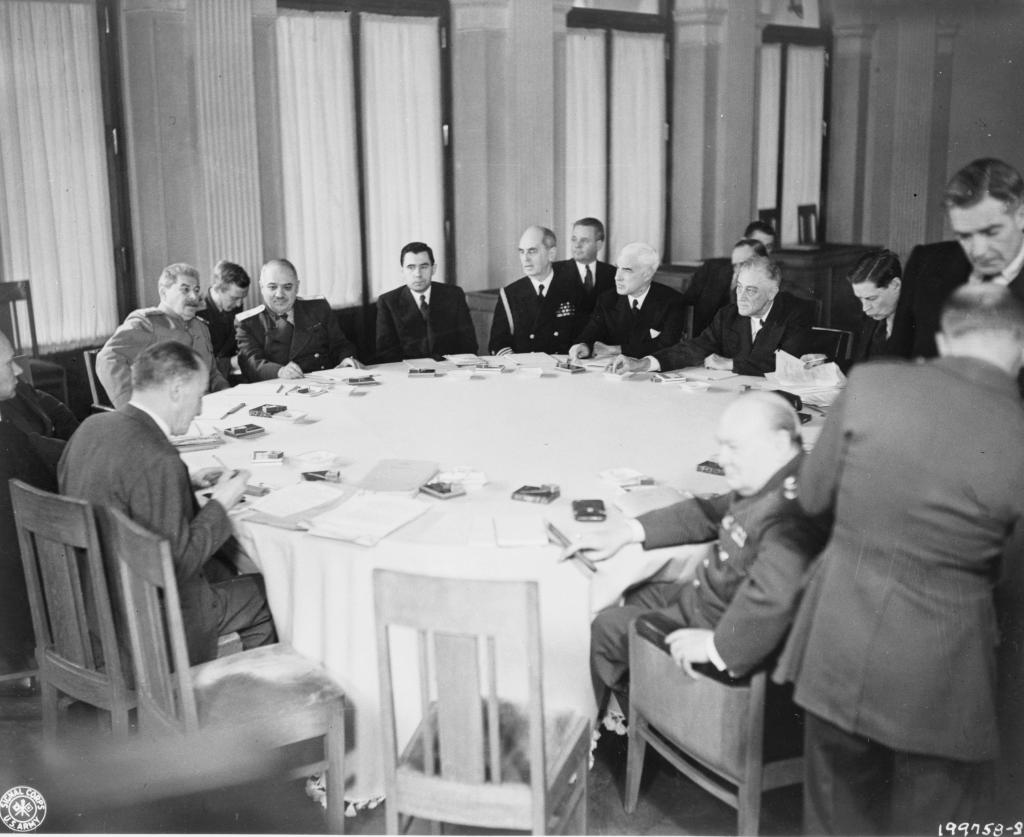
On February 4, 1945, United States President Franklin Roosevelt, British Prime Minister Winston Churchill, and Soviet leader Josef Stalin gathered at the Soviet seaside resort of Yalta to hammer out a post-war settlement for Europe and address other pending issues including the war in the Pacific. Code named ARGONAUT, the conference spanned eight days and was the final time the “Big Three” would meet together. Roosevelt would die from a brain hemorrhage in April 1945 while a war weary British public would vote Churchill out of office in the July 1945 elections. The Conference also marked the high-tide of allied cooperation and a gradual unraveling of the wartime alliance soon followed as a clash of ideologies and competing post-war political interests gained preeminence. In the decades, that followed, the word “Yalta,” much like “Munich” would become synonymous with appeasement and capitulation.
The Beginning of the End
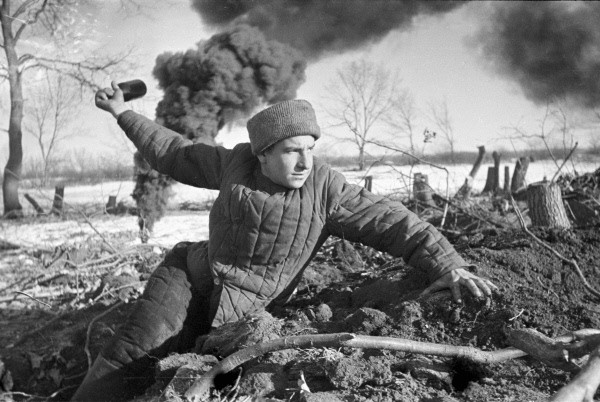
By September 1944, if not sooner, it had become increasingly apparent that it was no longer a case of if Nazi Germany would be defeated but when. The Soviet victory at Stalingrad in February 1943 had turned the tide of the war blunting any further German advances Eastward. The vaunted Nazi Wehrmacht would spend the remainder of the war on the defensive. A powerful Soviet counteroffensive, Operation Bagration, forced the Nazis to fall back westward and the Red Army was on the outskirts of Warsaw by the beginning of August 1944. In the West, the June amphibious landings at Normandy established a US, British, and Canadian foothold in France and by the end of August Paris would be liberated and the combined US, British, and Canadian armies poised to enter Germany.
Left: American troops storming the beaches of Normandy, June 6, 1944, Right: A Soviet soldier at Stalingrad, January 1943.
In the Pacific, the United States continued to make steady and almost inevitable progress against Japan but at great cost. By the end of June 1944, U.S. Marines had taken the strategically important island of Saipan but at the cost of over 13,000 casualties. The capture of Saipan would allow the United States to launch B-29 bomber strikes on the Japanese mainland but the ferocity of the Japanese resistance, 29,000 killed in action including 5,000 suicide attacks, served as a harbinger of what a U.S. invasion of the Japanese homeland might encounter. Estimates of the time suggested that such an operation could last a year and result in upwards of one million U.S. casualties.
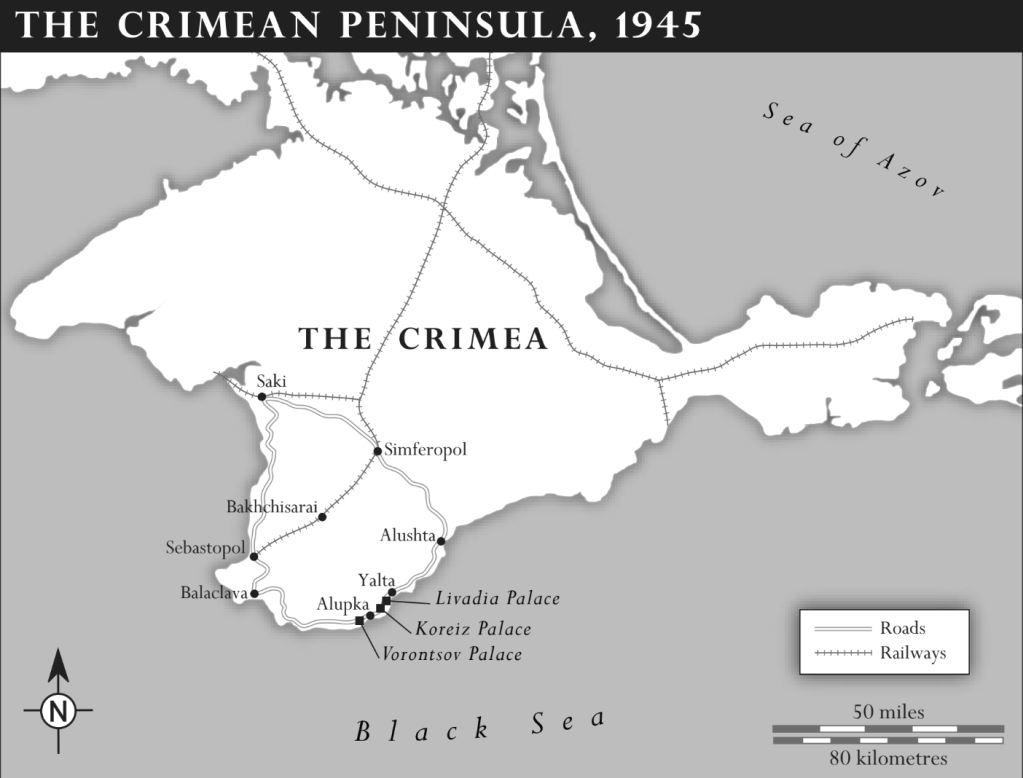
With the defeat of Nazi Germany growing more likely, President Roosevelt called for a conference of the Big Three in November 1944 to address numerous post-war issues and to enlist Soviet assistance in the war against Japan. The previous year, Roosevelt, Churchill, and Stalin met in Tehran where the United States and Great Britain committed to opening a long-awaited second front in France and Stalin agreed in principle to declare war against Japan after Nazi Germany’s defeat. After much debate, Roosevelt and Churchill agreed to meet Stalin in early February 1945 at Yalta on the Crimean Peninsula in the Soviet Union, despite warnings from Roosevelt’s physicians that such a long and onerous trip could kill the weakening president.
The Conference Begins
Located near the tip of the Crimean Peninsula in the Ukrainian Soviet Socialist Republic, the conference was held at the Livadia Palace overlooking the Black Sea. Once the summer retreat of Czar Nicholas II, it would become ground zero for negotiations that would decide the future of post-war Europe.
All three leaders arrived at the conference with competing agendas. For Roosevelt, securing Soviet entrance into the war against Japan was a top priority. Roosevelt worried U.S. casualties at Saipan and increasing Japanese suicide attacks in the Pacific were signs of things to come should the US attempt an invasion of the Japanese homeland. These apprehensions were reinforced later that month at the battle of Iwo Jima, where the US would suffer another 25,000 casualties. Roosevelt also wanted Stalin’s support for his idea of a United Nations organization that would maintain peace and stability and prevent another world war.
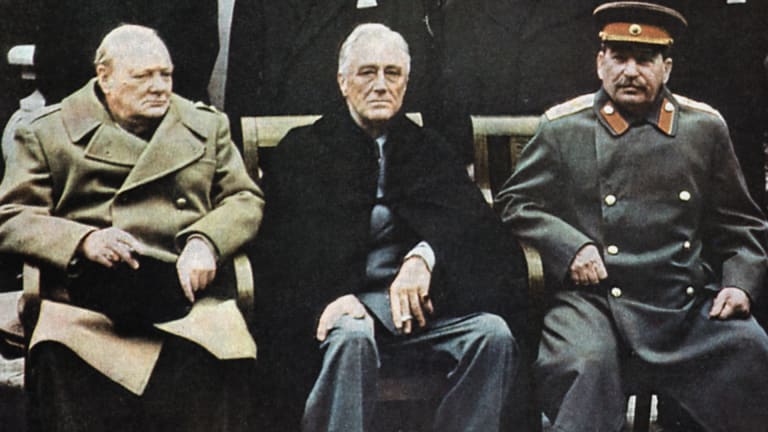
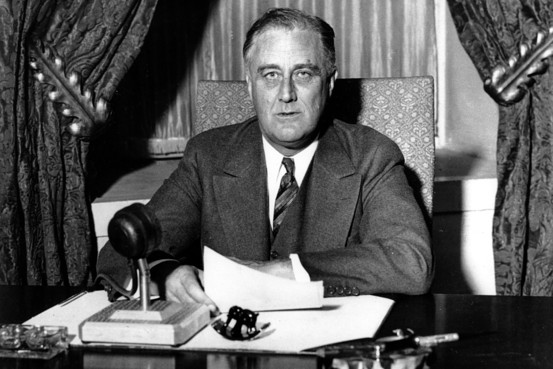
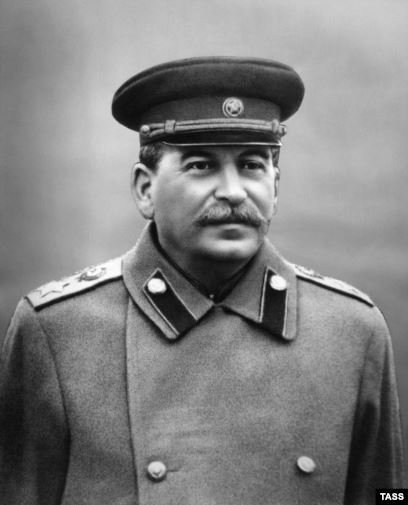
Left: President Franklin D. Roosevelt; Center: British Prime Minister Winston Churchill; Right: Soviet leader Josef Stalin
Stalin’s goals were more cynical and single minded. Beyond ensuring that Germany would never rise again to threaten the Soviet Union and securing an agreement on reparations, he had two main aims. He wanted Allied recognition of the territory that he seized from Poland and Romania in 1940 as part of the Molotov-Von-Ribbentrop Pact and of a Soviet sphere of influence over Eastern Europe. As Stalin told one of his Yugoslav communist allies, “This war is not as in the past; whoever occupies a territory also imposes on it his own social system. Everyone imposes his own system as far as his army can reach.”
Churchill’s aims for the conference centered primarily on preserving Britain’s colonial empire, preventing Soviet domination of Europe and ensuring that Germany would never again pose a threat to European peace and stability. Churchill recognized early on, much like Stalin, that the further the Red Army advanced West, the greater the influence the Soviet Union would wield over post-war Europe. He also worried that Roosevelt, desperate for a Soviet declaration of war on Japan, would be too eager to placate Stalin with other concessions in Europe. Churchill hoped to create a bulwark of strong democratic-capitalist states in Europe to contain the spread of Soviet communism and ensure that Britain was not left alone to face the Soviets in Europe. As such, Churchill would lobby hard for France to be given a position on the Allied Control Commission and a zone of German occupation against Stalin’s objections. He also would strongly oppose Soviet demands for reparations from Germany, mindful of the failures of the Versailles Treaty which had left Germany embittered, economically destitute, politically susceptible to extremism, and resentful of the international community.
The Post-War Order Takes Shape
Over the course of seven days the Big Three would hammer out a number of agreements that would serve as the framework for a post-war peace. The allies agreed that once Germany was defeated, it would be divided into four zones of occupation; the US, Great Britain, the USSR, and France would each control a zone. The German capital of Berlin was also divided in similar fashion. Initially, Stalin balked at giving France responsibility for a zone of occupation because of its surrender in 1940 but eventually relented after it was agreed that a French zone would be carved out of the US and British zones. On the issue of reparations, Stalin demanded $20 billion in reparations from Germany, half of this sum to be destined for the Soviet Union. Churchill rejected this amount while Roosevelt accepted the sum as a basis for future discussion. The three leaders agreed to the creation of a commission to study the issue further.
The second day of the conference
On other issues, Roosevelt achieved his primary objective of securing Stalin’s promise to enter the war against Japan three months after Germany’s defeat. In return, Roosevelt acceded to Stalin’s demands including the annexation of South Sakhalin Island and the Kurile Islands and several other concessions that would allow Moscow a sphere of influence in Manchuria following Japan’s surrender. Stalin also accepted Roosevelt’s plan for a United Nations organization but only after the three leaders agreed that all permanent members of the organization’s Security Council would hold veto power.
The Intractable Problem of Poland
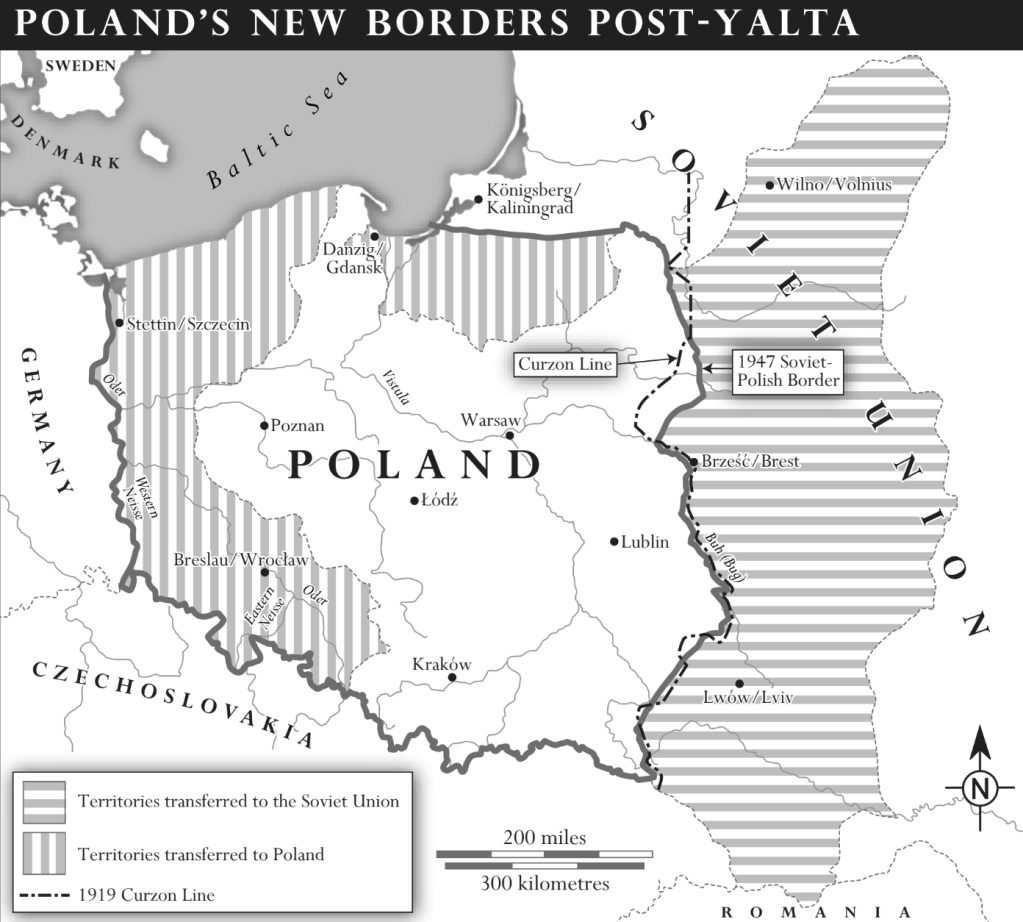
No other issue would prove more acrimonious and contribute more to the unraveling of the war time alliance than the question of Poland. Churchill first broached the subject on the third day of the conference, February 6, and it soon became evident that whatever flexibility and goodwill that helped to resolve the earlier issues had disappeared. At its core, the Polish problem was about borders and what kind of government Poland would have after the war. More specifically, would Poland become a free and democratic state with its pre-war borders intact or a truncated, Soviet controlled puppet, under communist rule? The argument over Poland’s border’s was largely moot. Roosevelt and Churchill, in principal, had conceded to Stalin’s demands at the 1943 Tehran Conference. However, on the composition of Poland’s post-war government Roosevelt and Churchill battled for Poland’s right to self-determination employing all kinds of stratagems and arguments but in the end they secured only paper promises that they lacked the means to enforce.
All three leaders had a vested interest in the outcome of the Polish question. However, where Poland ranked on their hierarchy of concerns and the leverage they could wield to bring about a favorable outcome varied considerably. The Soviets arguably had the most at stake in Poland and the fact that the Red Army was stretched across Polish territory gave Stalin the most leverage. For Stalin, Polish self determination was incompatible with Soviet security. “Throughout history, Poland has been the corridor through which the enemy has passed into Russia. Poland is a question of life and death for Russia,” he argued. In Stalin’s mind there could be no security without control over Poland and the rest of Eastern Europe and control meant the establishment of Communist-dominated regimes beholden to Moscow.
It was clear from early on that Stalin had designs on Poland and that almost all Soviet actions regarding Poland were aimed at establishing their control and eliminating any opposition. In 1940, Stalin secretly executed over 22,000 Polish military officers and intelligentsia taken captive during the attack on Poland the previous year, demonstrating his malign intentions toward Poland. In July 1944, the Soviets stood up a pro-Soviet, Polish communist government in Lublin in opposition to the Western recognized London-based Polish government in exile. The next month, the Red Army sat idly by on the outskirts of Warsaw allowing the Nazis to brutally crush an uprising by forces loyal to the Polish government in exile, despite allied pleas to come to their aid. With over 250,000 anti-Communist Poles killed in he uprising there were to few to left to challenge the communists in Lublin. For Stalin, Poland was a closed question. It’s fate was already decided by the advance of the Red Army and there was no need to renegotiate or discuss what had already been won. Moreover, Stalin believed that the Soviet Union was fully justified in unilaterally deciding Poland’s fate because the United States and Britain had done so with France and Italy earlier with no input from Moscow.
History of the Warsaw Uprising
For Churchill, the question of Poland’s post-war government was of both symbolic and practical importance. It was the Nazi invasion of Poland on September 1, 1939 that was the casus belli for both Britain and France to declare war on Germany. Britain went to war so “that Poland should be free and sovereign,” Churchill argued. Britain’s only interest, he added was “one of honor because Britain drew the sword for Poland against Hitler’s brutal attack.” Having already consented to Stalin’s Polish land grab, Churchill insisted on guarantees that the Poles themselves would be allowed to determine the composition of their government. “Poland must be mistress in her own house and captain of her own soul,” he declared. This required a dissolution of the pro-Soviet Lublin government and new free elections, neither of which Stalin was prepared to accept.
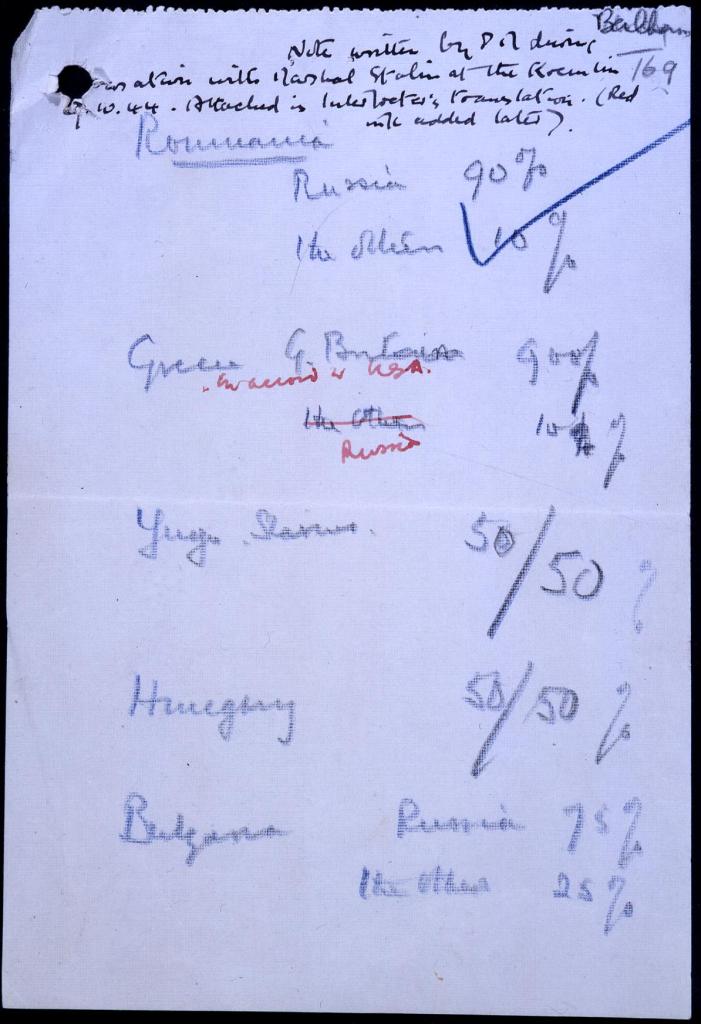
Despite his eloquent and impassioned plea for Polish self-determination, Churchill was a realist. He knew that as long as the Red Army occupied Poland and the rest of Eastern Europe there was little that he or Roosevelt could do to prevent Soviet domination of the region. Churchill had lobbied Roosevelt in 1943 for a military operation in the Balkans instead of the Normandy landings in large part to curb the Red Army’s advance into the region. Unable to persuade Roosevelt, Churchill turned to diplomacy to try and limit the spread of Soviet influence. On October 9, 1944, in Moscow, Churchill and Stalin reached a notorious “spheres of influence” agreement in which the two leaders cynically divided up the Balkans. According to Churchill, he suggested that the Soviets should have 90% influence in Romania and 75% in Bulgaria. Great Britain would control the other 10% and 25% respectively. Conversely, the British would have 90% in Greece (a strategically crucial country for British imperial communications in the Mediterranean Sea). Britain and the Soviet Union would share dominance both in Hungary and Yugoslavia. Churchill wrote this proposal on a piece of paper which he pushed across to Stalin, who ticked it off and passed it back in agreement. This “percentage agreement” was never formalized but it did demonstrate to Stalin that Churchill understood the weak hand he was playing and that he was prepared to be ruthlessly pragmatic about the fate of Eastern Europe.
The original “Percentages Agreement” divvying up spheres of influence in Balkans
Roosevelt shared Churchill’s apprehensions about the Soviet domination of Eastern Europe but he also saw Poland as a no-win situation. The Soviets had the upper hand. They had the advantages of power and proximity and he was reluctant to risk losing their cooperation in the war against Japan or support for his United Nations concept in a clash he was destined to lose. Roosevelt approached the Polish issue very carefully at the conference, avoiding the emotional outbursts that Churchill was sometimes prone to while calibrating his language to avoid alienating Stalin. In his opening remarks on the Polish question, Roosevelt addressed the less thorny issue of Poland’s borders first and suggested Stalin return the city of Lviv to the Poles, claiming such magnanimity would have a salutary effect on further discussions. Stalin was unmoved. That evening, he sent a note to Stalin explaining that the United States could never recognize the Lublin government while implying that how the Soviet Union handled the Polish question would impact cooperation in the post-war period. Roosevelt seemed to hope that the momentum of wartime alliance, and the prospect of a cooperative and amicable post-war relationship would appeal to Stalin as much as it appealed to him. He clearly misjudged Stalin.
Game Over
After almost five days of painstaking argument and debate over Poland, Roosevelt and Churchill finally were forced to acknowledge the inevitable, that there was little they could do short of war to prevent Soviet domination of Eastern Europe. In the end, both men conceded that the Soviet installed Communist government would form the basis of a new provisional government of national unity. They tried to constrain Stalin and gloss over their abandonment of the legitimate Polish government-in-exile in London by insisting that the government be augmented to include representatives from other parties and that free elections to choose a successor government would be held as soon as possible. They also made a last ditch effort to try and assure at least a modicum of freedom for Eastern Europe with the Declaration on Liberated Europe. Yet, in the end these stratagems all failed to hamstring Stalin because they were all lacked detail, were subject to multiple interpretations, and had no enforcement mechanisms or means to hold him accountable. Roosevelt’s Chief of Staff, Admiral William Leahy put it best, “This [agreement on Poland] is so elastic that the Russians can stretch it all the way from Yalta to Washington without ever technically breaking it,”
Stalin and the Soviet installed Polish Committee of National Liberation
As both Roosevelt and Churchill returned home from the conference, they were each sadly aware of how little they had achieved for Poland but tried to put the best possible spin on things. Both men came under fire from domestic critics for carving up Poland and passively accepting Soviet domination of Eastern Europe as they framed the Polish outcome as the best possible under the circumstances. As one of Roosevelt’s most senior advisors remarked, “it was not a question of what we would let the Russians do, but what we could get the Russians to do.”
The agreements reached at Yalta met with a mixed reception among the small number of experienced Russia hands at the State Department. Charles Bohlen, who helped open the first U.S. embassy in the Soviet Union in 1934, headed the department’s East European Division and acted as Roosevelt’s interpreter at Yalta, felt that the agreements reached were “realistic compromises.” Bohlen believed that while Roosevelt and Churchill had made many concessions on Poland there was still a chance for a genuinely democratic Polish government if the agreements were carried out.
George Kennan
George Kennan, who was the deputy chief of mission in Moscow and who would later become one of the chief architects of the U.S. containment policy toward the Soviet Union, was much less optimistic. In a memorandum written a few months before Yalta, Kennan painted a rather gloomy assessment of future Soviet relations with the West. He thought the idea that Stalin was someone the United States could cut reasonable deals with was absurd and that there was little hope for post-war cooperation with the Soviet Union because of Moscow’s determination to dominate Eastern Europe.
Kennan would prove more accurate in his assessment. Within a month’s time, Roosevelt and Churchill realized that Stalin would not honour his promise of free elections for Poland. Reports of wholesale deportations and liquidations of opposition Poles by the Soviets began to emerge. Near the end of March, Ambassador to the USSR Averell Harriman, Kennan’s boss, cabled Roosevelt that “we must come clearly to realize that the Soviet program is the establishment of totalitarianism, ending personal liberty and democracy as we know it.” Roosevelt soon began to admit that his view of Stalin had been excessively optimistic and that Stalin was not a man of his word. “Averell is right.”We can’t do business with Stalin,” Roosevelt lamented. “He has broken every one of the promises he made at Yalta.”
A monument in Warsaw commemorating the Soviet deportations
As the realization of Stalin’s duplicity set in, both Roosevelt and Churchill both began to show a new willingness to consider harsher policies toward the Soviet Union. For Roosevelt, it was too late. He would pass away on April 12. Churchill, however, directed the British Chiefs of Staff to develop secret military plans to enforce the Yalta agreements and drive the Soviets out of Poland which would would become known as Operation Unthinkable. After a month of planning the British Chief of Army Staff on June 9, 1945, predictably concluded: “It would be beyond our power to win a quick but limited success and we would be committed to a protracted war against heavy odds.” In fact, theBritish military leadership believed it would take 45 Anglo-American divisions, several divisions of Poles and 100,000 rearmed Germans. In little over a month, Churchill surprisingly would be voted out of office, replaced by a Labour government under Clement Attlee.
The Cold War Begins
A little over a year after Yalta, Churchill delivered his famous speech at a small American college in Missouri where he uttered the famous line, “From Stettin in the Baltic to Trieste in the Adriatic, an iron curtain has descended across the Continent.” Churchill’s speech has traditionally been viewed as the beginning of the Cold War, the titanic 45 year struggle for ideological supremacy between the United States and its democratic allies and the Soviet Union and its communist satellites. However, the seeds were clearly planted at the Yalta conference and germinated with Stalin’s duplicity and Roosevelt and Churchill’s quick realization that he was not a man of his word.
In the years following the conference, both Roosevelt and Churchill’s reputations took a hit as the word Yalta became synonymous with betrayal and abandonment. Critics argue that Roosevelt and Churchill were too quick and willing to appease Stalin. Could things have turned out differently? Probably not.
Sun Tzu wrote that every battle is won before it is even fought and the fate of Poland had been pretty much decided long before Roosevelt and Churchill went to Yalta in February, 1945. The Red Army was in full control of the country. The Polish resistance loyal to the government in exile in London was decimated. The Lublin Committee, now transformed into the Provisional Government, was issuing decrees and seeing them carried out. Its legitimacy continued to be questioned in London and Washington. But it would have taken a great deal more leverage than Roosevelt and Churchill possessed, or could reasonably be expected to apply, in order to alter the fundamental situation. The Russians had the double advantage of proximity and power. An argument can be made that Roosevelt should have set aside his earlier reluctance to engage in post-war negotiations before Germany was defeated and should have raised these issues earlier at the 1943 Tehran Conference. At that point he might have had more leverage over the Soviets. The Red Army would not have been in control of Poland yet and he could have conditioned Lend Lease Aid to Soviet support for free elections. In the end, Roosevelt was not going to jeopardize the war time alliance for post war issues when the outcome of the war was still somewhat in doubt. Moreover, it is far from certain that any threats short of military force would have deterred Stalin.












 Tragedy and Farce