On April 26, 1986, the Number Four reactor of the Soviet nuclear power plant at Chernobyl, Ukraine, suffered a catastrophic explosion during a routine maintenance check, exposing the nuclear core and releasing 50 tons of radioactive material into the atmosphere in what would become the worst nuclear accident in history. The accident was largely the result of a faulty reactor design and bureaucratic incompetence.
Soviet authorities tried to conceal that something catastrophic had occurred as emergency crews tried desperately to contain the fires and radiation leaks. Helicopters dumped tons of sand and boron on the reactor to try and squelch the fires and prevent further radioactive emissions to no avail. After telling residents nothing about the disaster for some 36 hours, Soviet officials finally begin evacuating roughly 115,000 people from nearby towns and villages. Residents were informed it would be temporary and they were told nothing more than they should pack only vital documents and belongings, plus some food. The Kremlin continued to try and hide the extent of the problem but on April 28, Swedish monitoring stations reported abnormally high levels of wind-transported radioactivity in the atmosphere and pressed Moscow for an explanation. The Soviet Union finally acknowledged the extent of the accident had occurred.
The consequences of the Chernobyl accident would be far reaching but perhaps none as important as the political fall out from the Soviet authorities attempt to hide and cover up the accident from their own people. The Chernobyl accident and the attempted cover-up would prove to be a wake up call for Soviet society. It would accelerate a loss of faith and trust in the country’s leaders and the entire Soviet system, which had been building for decades. Chernobyl would prove to be a catalyst for Gorbachev’s Glasnost and Perestroika reforms leading to a new level of debate and grass roots activism never seen before in the USSR. Gorbachev once described the disaster as a “turning point” for the USSR, one that “opened the possibility of much greater freedom of expression, to the point that the system as we knew it could no longer continue”. Pro-independence movements would emerge from Chernobyl protests in the Ukrainian and Belorussian Soviet Socialist Republics, with the ineffectiveness of the Soviet system a key factor. These protests would ultimately lead to the collapse of the USSR five years later.
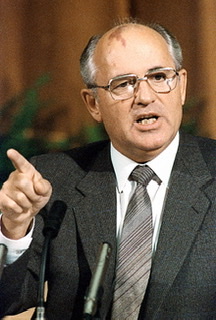
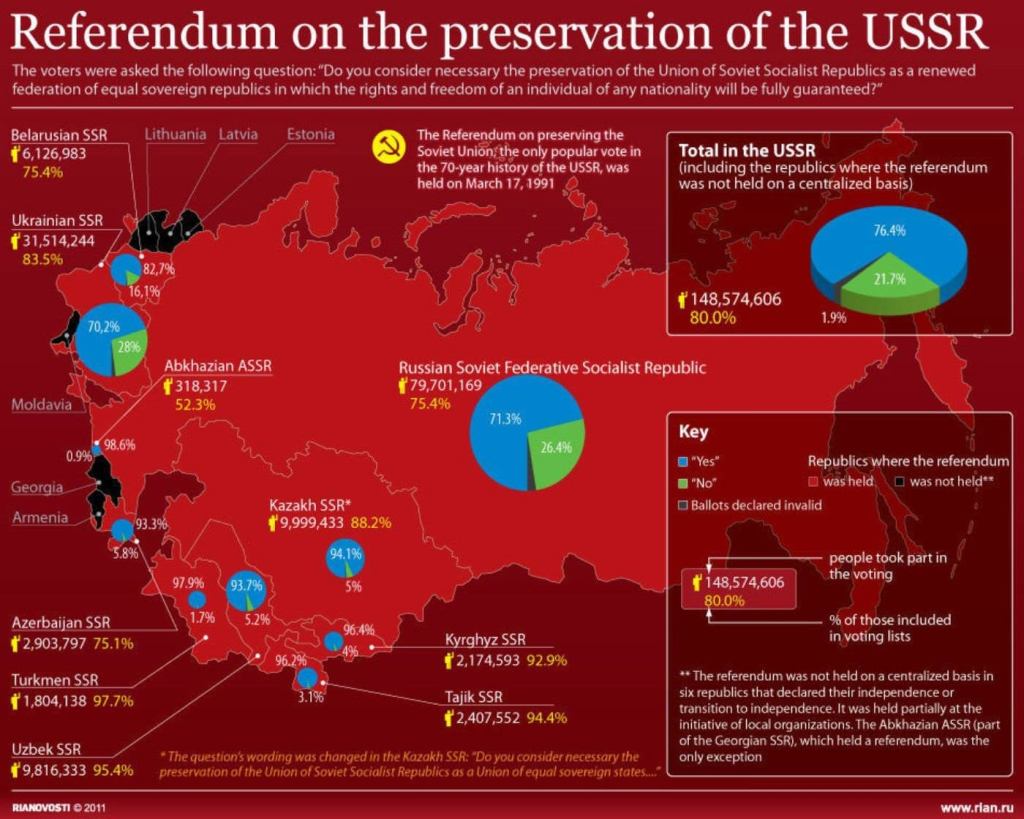
Thirty years ago today, Soviet authorities conducted a referendum on the future of the Soviet Union that would prove to be a key inflection point that would ultimately lead to the failed August 1991 coup attempt and the subsequent dissolution of the USSR. The question presented to the Soviet people was a very simple one, “Do you consider necessary the preservation of the Union of Soviet Socialist Republics as a renewed federation of equal sovereign republics in which the rights and freedom of an individual of any ethnicity will be fully guaranteed?” The referendum was conducted against a background of increasing nationalist pressures in the non-Russian Soviet Socialist Republics, unleashed by Gorbachev’s reformist policies of Glasnost and Perestroika. Increasingly bold efforts by the Baltic States to assert their sovereignty and challenge Soviet authority, prompted a violent crackdown by the Soviet military first in Lithuania on January 13, 1991 and then in Latvia later that month.The crackdown in the Baltic States generated a sharp rebuke in the West, further complicating Soviet leader Gorbachev’s efforts to manage the increasingly difficult task of reforming the country while suppressing the nationalist pressures bent on tearing the country apart. The referendum was Gorbachev’s gambit to defuse these nationalist pressures and stem the collapse of the Union without having to resort to violence. Gorbachev hoped it would make clear that despite rising separatist sentiments in many parts of the USSR, a majority of Soviet citizens wanted the country to remain unified. Additionally, he wanted to outflank hardliners who opposed any changes to the union structure.
By March 1991, Soviet authority had weakened considerably since Gorbachev first burst on the scene six years earlier and his ability to impose his will without question or compromise was diminished. To conduct such a referendum and to secure the legitimacy for a restructured union he sought to win, he needed the voluntary participation of the 15 constituent SSRs that made up the Soviet Union, which was no easy task. A number of the more nationalist minded SSR’s—Lithuania, Latvia, Estonia, Armenia, Georgia, and Moldavia—boycotted and refused to participate. Instead, the Baltic States and Georgia conducted independence referenda. The three Baltic polls all produced clear majorities in favor of independence and Georgia would follow suit in May. Still others would use the referendum to add other controversial questions.
Gorbachev probably could have managed these rising ethnic tensions if his power and authority were not under challenge from an unexpected direction, the Russian Federation. The challenge would come from Boris Yeltsin. Yeltsin had been a Politburo member but was expelled in 1988 for his incessant criticisms of Gorbachev and the slow pace of reform and he would continue to be a thorn in Gorbachev’s side. Yeltsin’ election to the new Congress of People’s Deputies in March 1990 provided him with an opportunity to maintain a higher profile. His subsequent elevation two months later to Chairman of the Supreme Soviet of the Russian Soviet Federative Socialist Republic (RSFSR), despite Gorbachev’s efforts to derail hid bid, gave Yeltsin a direct platform to challenge Gorbachev.
Yeltsin was a shrewd politician, despite his many shortcomings that would manifest themselves later, and recognized that his path to supreme power lay not with the decaying structures of Soviet authority but those of the Russian Republic. He understood that Gorbachev needed the RSFSR participation or the referendum would be meaningless. Efforts to strong arm its participation would also undermine the legitimacy of the referendum. Yeltsin exploited this leverage to advance his own power. The RSFSR would participate but it would add an additional question, one that addressed the establishment of the office of President of Russia by universal popular suffrage.
Gorbachev eventually received the outcome he wanted, about 76 percent of those who voted were in favor of preserving the union. Gorbachev now had his popular mandate to begin negotiations on a new union treaty. The following month he met with the nine leaders of the SSRs that participated in the referendum and began talks in earnest on a new union treaty. However, in the RSFSR, 70 percent of the population approved the establishment of an elected office of the President of the Russian Republic. Gorbachev had his mandate but Yeltsin now had a high profile platform to challenge Gorbachev and the entire state and communist party apparatus of the USSR and the results would be catastrophic for the country.
Gorbachev soon found his authority steadily weakening. His retreat to the center after the violent January crackdowns in Lithuania and Latvia, only alienated hardline conservatives. The ethnically based popular front groups in the non-Russian SSRs, such as Rukh in Ukraine and the Karabakh Committee in Armenia, that were originally formed to support Gorbachev’s reform efforts were now powerful nationalist separatist movements. Yeltsin would overwhelmingly be elected President in June of 1991 giving him a popular legitimacy that Gorbachev could not hope to achieve. Yeltsin would now become the titular head of the USSR’s nascent democratic movement and Gorbachev’s greatest foil as the Soviet leader sought to navigate between hardline statists in the Politburo and popular demands for change from below.
Gorbachev continued to work with the leaders of the nine SSRs that participated in the referendum, despite his crumbling authority, but ominous dark clouds began to appear on the horizon. For Soviet hardliners, the union needed to be preserved at all costs and Gorbachev’s efforts posed a clear and urgent danger. In July 1991, a number of Soviet hardliners/Russian nationalists published an open letter in the newspaper Sovietskaya Rossiya, calling for drastic action to prevent the imminent disintegration of the USSR. In what would become known as “A Word to the People,” a number of prominent Soviet figures, several who would be implicated in the failed coup attempt a month later, warned that the country was teetering on the edge of the abyss and that the only way to save the country was to impose emergency rule. It would prove to be a clear harbinger of what was about to happen a month later.
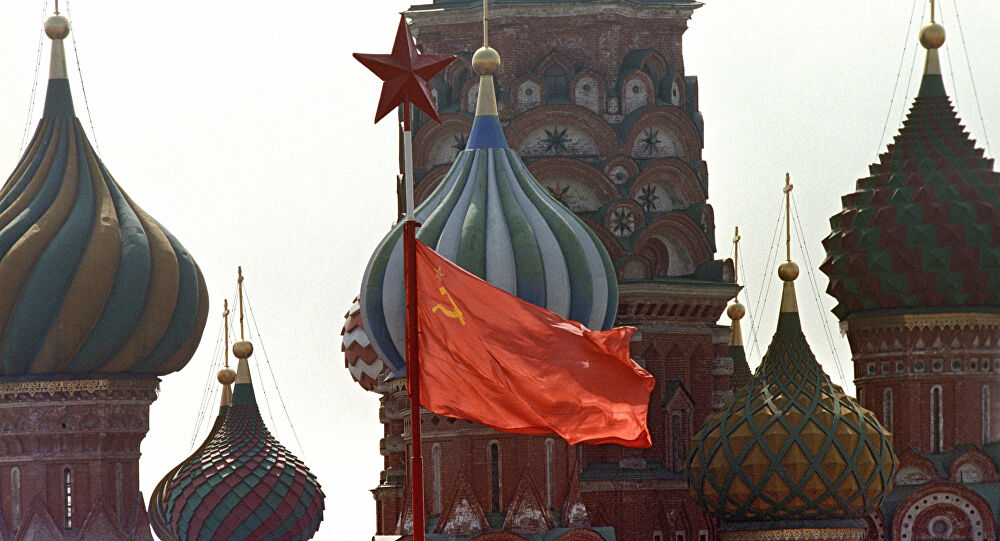
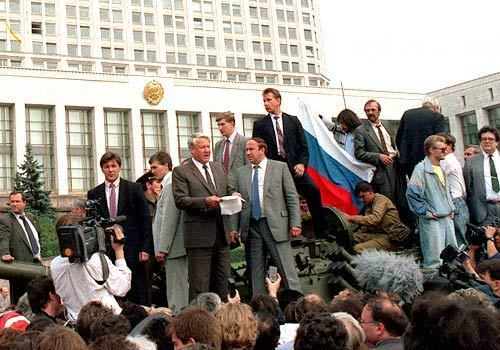
By August, work on a new union treaty that would devolve more power and authority to the SSRs was complete and ready to be signed. On August 19, 1991 a group of hardliners known as the State Committee for the State of Emergency arrested Gorbachev and instituted emergency rule in an attempt to forestall the signing of the new agreement. News of the coup attempt produced a backlash all across the USSR with Boris Yeltsin rallying the Russian public in Moscow to rise up and resist the putsch. After three days, the coup attempt faltered. The outcome the coup plotters sought to prevent, the disintegration of the USSR was now accelerated and on December 25 1991, the red hammer and sickle flag was lowered from the Kremlin for the last time. The Soviet Union passed into the dustbin of history.


 Tragedy and Farce