The Failed Soviet Coup: August 19-21, 1991

Thirty years ago this week, Soviet hardliners carried out an ill-fated attempt to overthrow Soviet President Mikhail Gorbachev, seeking to stave off what they perceived as the looming disintegration of the Soviet Union. In doing so, these coup plotters unleashed powerful centrifugal forces, accelerating the outcome they sought to prevent. Four months later, the hammer and sickle flag of the Soviet Union was lowered from the Kremlin for the last time; and with it, the country passed into what Leon Trotsky famously called the “dustbin of history.”
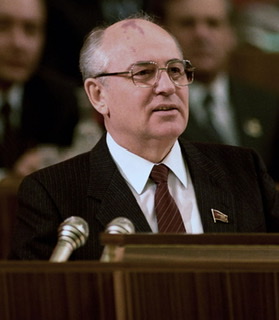
Mikhail Gorbachev

In March 1985, Gorbachev came to power inheriting a country that was clearly at risk of falling behind and badly in need of systemic reform. Gorbachev’s twin policies of Glasnost and Perestroika were largely aimed at reforming the Soviet system to make it more responsive to the needs of the state and the Soviet people. However, instead of revitalizing the country, they would undermine the foundational institutions that kept the system afloat. Gorbachev’s tinkering around the margins of the Soviet command economy always fell short of the structural reforms needed to breathe new life into the system. His “new thinking” in Soviet foreign policy, which was intended to create an international environment more conducive to internal reforms, would lead to a relaxation in Cold War tensions and most importantly the collapse of communist rule in Eastern Europe. However, in the end, all it achieved was to ensure that Gorbachev would be remembered more fondly abroad than at home.

It was Gorbachev’s opening up of the Soviet political system which would ultimately lead to the country’s demise. For decades, Soviet leaders ruled with an iron hand stamping out any dissension or opposition the deemed a threat to their socialist state but such practices also contributed to the overall stagnation of the country. In promoting his concept of Glasnost, which loosely translates into openness, Gorbachev sought to encourage debate and the exchange of ideas that might produce new solutions to the country’s problems, Grant the Soviet people more freedom, and to put a “human face” on the Soviet system by making it less repressive. Instead these reforms raised uncomfortable questions about Soviet history, created new platforms for regime critics and opponents to challenge Soviet central authority, and unleashed pent up ethnic nationalism that undermined the legitimacy of the state and the instruments of coercion that Soviet leaders relied on to keep everything in order.

Coup instigators Alexander Tizyakov, Vasily Starodubtsev,  Boris Pugo, Gennady Yanayev and Oleg Baklanov announce Gorbachev’s “illness” and the imposition of a State of Emergency.

For all intents and purposes, it was the growing demands for independence among the non-Russian Soviet Socialist Republics and Gorbachev’s consent to sign a new Union treaty that would devolve more power and authority to the republics than the center propelled the coup plotters into action. Soviet leaders, much like the Russian Czars, had long seen ethnic nationalism as a threat to the territorial integrity and cohesion of the state and once Gorbachev let this genie out of the bottle, he found it increasingly difficult to push it back in. Unwilling to resort to the large scale use of violence to keep the country together, especially after the fallout from the January 1991 Soviet military crackdown in Lithuania, Gorbachev agreed to hand over more power and authority to the republics as a price to keep the country together.

Determined to stymie any plans for a new Union treaty, the coup plotters moved to detain Gorbachev on the evening of August 18 while at his dacha in Crimea. They demanded that Gorbachev declare a state of emergency or resign and name Soviet Vice President Gennady Yanaev acting President in order to restore order. Gorbachev refused. The following day the coup plotters, now calling themselves “the State Committee for the State of Emergency”, appeared on television and announced that Gorbachev was ill and that they were taking over.

Soviet tanks on the streets of Moscow


The coup attempt was poorly conceived and executed from the outset but it’s failure was not a foregone conclusion. When the coup conspirators appeared on stage the following day to announce Gorbachev had resigned and they were taking over some were nervous and visibly shaken. For example, Prime Minister Valentin Pavlov was sweating and trembling profusely demonstrating clear signs of hypertension and stress, which did not convey confidence. At the same time the coup plotters failed to arrest President of the Russian republic, Boris Yeltsin, who had become a fierce critic and thorn in the side of the Soviet leadership. The position of the President of Russia was a fairly new one, a direct result of Gorbachev’s reforms, and Yeltsin was using the post to challenge the a legitimacy of the Soviet authorities. KGB Chairman Vladimir Kryuchkov ordered the elite KGB Alpha commandos to surround Yeltsin’s residence. However, Yeltsin and his people had gotten word of what was happening and he fled just before the Alpha commandos arrived.

Hundreds of tanks and armored vehicles poured into downtown Moscow in a massive show of force but the Soviet military was divided in its loyalties, despite Defense Minister Yazov and other senior defense officials being part of the coup. In 1957, the Soviet military played a key role in squashing a move by rival Communist Party officials to oust Khrushchev but the military was not asked to fire on their own people. By 1991, however, the Soviet military had been called on to use violence to suppress domestic unrest in Georgia, Azerbaijan, and Lithuania and there was little appetite within the military to play a greater role in domestic politics. Although there was a clash between some Soviet troops and protestors that left three dead, the military, for the most part, sought to straddle the fence looking for indicators of who was likely to prevail.

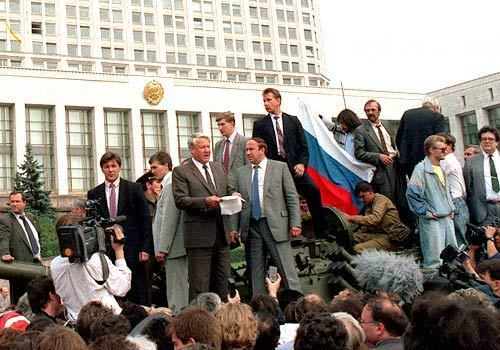
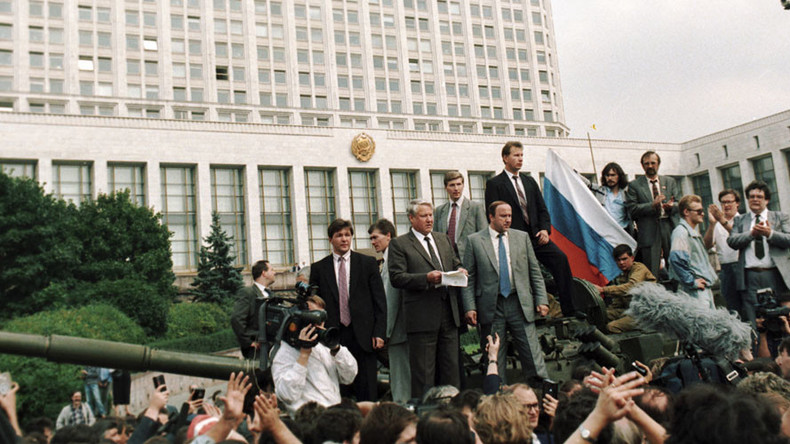
Ultimately, Yeltsin proved to be the pivotal figure in this drama. The photo of Yeltsin atop a Soviet tank outside the Russian White House, rallying the resistance to the coup became the defining image of this ordeal. Yeltsin’s courage and leadership would inspire over 200,000 people in Moscow to take to the streets in defiance of the coup plotters. On August 20, the conspirators ordered the KGB’s elite Alpha and Vymple commandos, paratroopers, and OMON forces to storm the White House. These orders were rejected when it was clear these forces were outnumbered and any action would lead to considerable blood shed. Facing unexpected large scale resistance, and unresponsive instruments of coercion, the coup plotters began to lose their nerve and the conspiracy began to unravel.

On August 21, KGB Chairman Kryuchkov and several other conspirators flew to Crimea to meet with Gorbachev to negotiate a way out of the mess they created. Gorbachev refused. That afternoon Defense Minister Yazov ordered all military units to withdraw from Moscow. Around 5:00 pm Yanayev signed a decree dissolving the State Committe for the State of Emergency and it was clear the coup had failed. The following day Gorbachev returned to Moscow and the coup plotters were arrested.
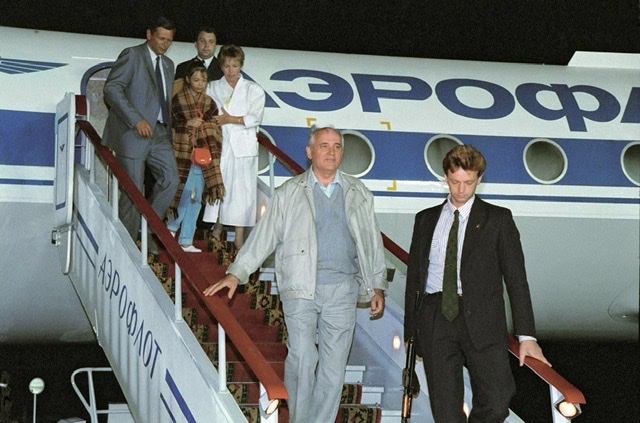
Gorbachev returning from Crimea

In the end, the coup plotters accelerated the outcome that they so earnestly sought to prevent. Over the next several months, Yeltsin and Gorbachev would battle for primacy as Gorbachev sought to preserve Soviet central authority while Yeltsin tried to seize more power and authority for the institutions of the Russian republic. At the same time, the non-Russian republics increasingly declared their independence from Moscow. The fate of the Soviet Union was ultimately decided on December 1, 1991, when the people of Ukraine voted overwhelmingly in favor of independence. It was now clear that the Soviet Union could no longer be preserved, despite Gorbachev’s best efforts. A week later Yeltsin and the new presidents of Belarus and Ukraine met just outside of Minsk and agreed to dissolve the Soviet Union and replace it with a much weaker and uncertain arrangement, the Commonwealth of Independent States.
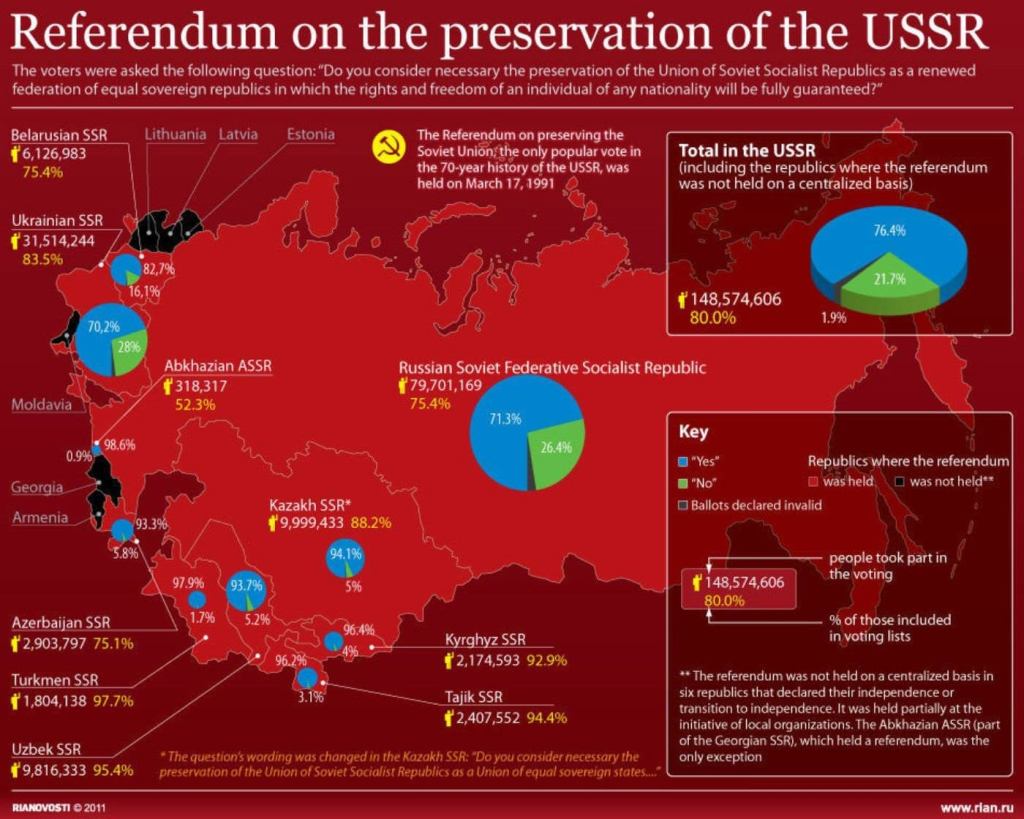
Soviet Disunion: The March 17, 1991 Referendum

Thirty years ago today, Soviet authorities conducted a referendum on the future of the Soviet Union that would prove to be a key inflection point that would ultimately lead to the failed August 1991 coup attempt and the subsequent dissolution of the USSR. The question presented to the Soviet people was a very simple one, “Do you consider necessary the preservation of the Union of Soviet Socialist Republics as a renewed federation of equal sovereign republics in which the rights and freedom of an individual of any ethnicity will be fully guaranteed?” The referendum was conducted against a background of increasing nationalist pressures in the non-Russian Soviet Socialist Republics, unleashed by Gorbachev’s reformist policies of Glasnost and Perestroika. Increasingly bold efforts by the Baltic States to assert their sovereignty and challenge Soviet authority, prompted a violent crackdown by the Soviet military first in Lithuania on January 13, 1991 and then in Latvia later that month.The crackdown in the Baltic States generated a sharp rebuke in the West, further complicating Soviet leader Gorbachev’s efforts to manage the increasingly difficult task of reforming the country while suppressing the nationalist pressures bent on tearing the country apart. The referendum was Gorbachev’s gambit to defuse these nationalist pressures and stem the collapse of the Union without having to resort to violence. Gorbachev hoped it would make clear that despite rising separatist sentiments in many parts of the USSR, a majority of Soviet citizens wanted the country to remain unified. Additionally, he wanted to outflank hardliners who opposed any changes to the union structure.

By March 1991, Soviet authority had weakened considerably since Gorbachev first burst on the scene six years earlier and his ability to impose his will without question or compromise was diminished. To conduct such a referendum and to secure the legitimacy for a restructured union he sought to win, he needed the voluntary participation of the 15 constituent SSRs that made up the Soviet Union, which was no easy task. A number of the more nationalist minded SSR’s—Lithuania, Latvia, Estonia, Armenia, Georgia, and Moldavia—boycotted and refused to participate. Instead, the Baltic States and Georgia conducted independence referenda. The three Baltic polls all produced clear majorities in favor of independence and Georgia would follow suit in May. Still others would use the referendum to add other controversial questions.

Gorbachev probably could have managed these rising ethnic tensions if his power and authority were not under challenge from an unexpected direction, the Russian Federation. The challenge would come from Boris Yeltsin. Yeltsin had been a Politburo member but was expelled in 1988 for his incessant criticisms of Gorbachev and the slow pace of reform and he would continue to be a thorn in Gorbachev’s side. Yeltsin’ election to the new Congress of People’s Deputies in March 1990 provided him with an opportunity to maintain a higher profile. His subsequent elevation two months later to Chairman of the Supreme Soviet of the Russian Soviet Federative Socialist Republic (RSFSR), despite Gorbachev’s efforts to derail hid bid, gave Yeltsin a direct platform to challenge Gorbachev.  

Yeltsin was a shrewd politician, despite his many shortcomings that would manifest themselves later, and recognized that his path to supreme power lay not with the decaying structures of Soviet authority but those of the Russian Republic. He understood that Gorbachev needed the RSFSR participation or the referendum would be meaningless. Efforts to strong arm its participation would also undermine the legitimacy of the referendum. Yeltsin exploited this leverage to advance his own power. The RSFSR would participate but it would add an additional question, one that addressed the establishment of the office of President of Russia by universal popular suffrage.

Gorbachev eventually received the outcome he wanted, about 76 percent of those who voted were in favor of preserving the union. Gorbachev now had his popular mandate to begin negotiations on a new union treaty. The following month he met with the nine leaders of the SSRs that participated in the referendum and began talks in earnest on a new union treaty. However, in the RSFSR, 70 percent of the population approved the establishment of an elected office of the President of the Russian Republic. Gorbachev had his mandate but Yeltsin now had a high profile platform to challenge Gorbachev and the entire state and communist party apparatus of the USSR and the results would be catastrophic for the country.

Gorbachev soon found his authority steadily weakening. His retreat to the center after the violent January crackdowns in Lithuania and Latvia, only alienated hardline conservatives. The ethnically based popular front groups in the non-Russian SSRs, such as Rukh in Ukraine and the Karabakh Committee in Armenia, that were originally formed to support Gorbachev’s reform efforts were now powerful nationalist separatist movements. Yeltsin would overwhelmingly be elected President in June of 1991 giving him a popular legitimacy that Gorbachev could not hope to achieve. Yeltsin would now become the titular head of the USSR’s nascent democratic movement and Gorbachev’s greatest foil as the Soviet leader sought to navigate between hardline statists in the Politburo and popular demands for change from below.

Gorbachev continued to work with the leaders of the nine SSRs that participated in the referendum, despite his crumbling authority, but ominous dark clouds began to appear on the horizon. For Soviet hardliners, the union needed to be preserved at all costs and Gorbachev’s efforts posed a clear and urgent danger. In July 1991, a number of Soviet hardliners/Russian nationalists published an open letter in the newspaper Sovietskaya Rossiya, calling for drastic action to prevent the imminent disintegration of the USSR. In what would become known as “A Word to the People,” a number of prominent Soviet figures, several who would be implicated in the failed coup attempt a month later, warned that the country was teetering on the edge of the abyss and that the only way to save the country was to impose emergency rule. It would prove to be a clear harbinger of what was about to happen a month later.

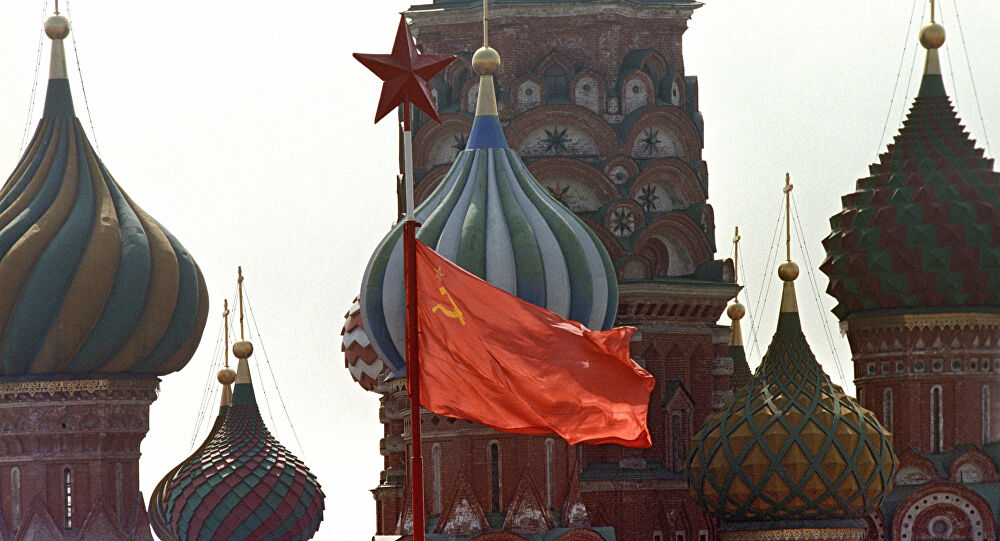
By August, work on a new union treaty that would devolve more power and authority to the SSRs was complete and ready to be signed. On August 19, 1991 a group of hardliners known as the State Committee for the State of Emergency arrested Gorbachev and instituted emergency rule in an attempt to forestall the signing of the new agreement. News of the coup attempt produced a backlash all across the USSR with Boris Yeltsin rallying the Russian public in Moscow to rise up and resist the putsch. After three days, the coup attempt faltered. The outcome the coup plotters sought to prevent, the disintegration of the USSR was now accelerated and on December 25 1991, the red hammer and sickle flag was lowered from the Kremlin for the last time. The Soviet Union passed into the dustbin of history.

Reflections on Gorbachev and the 1991 Coup

The attempted overthrow of Soviet President Mikhail Gorbachev on August 19, 1991 by a group of hardliners was the tragic culmination of five very tumultuous years in which Gorbachev attempted to reform and reinvigorate the Soviet political-economic system but in doing so unleashed centrifugal forces that accelerated its demise. Gorbachev’s dilemma was the same one that confronted every modernizing Russian leader since at least Peter the Great, how to conduct effective reform of the system without jeopardizing or relinquishing political control. He was thrust into power with the expectation that he, unlike his geriatric predecessors, would be the young vibrant tonic needed to revive the Soviet system, the one to humanize it and make it more competitive with the West, not to preside over its whole-sale destruction and the collapse of the Soviet state. Gorbachev evolved from a measured reformer to a radical deconstructionist and back to a conservative reactionary having lost control of the reform process which soon became bigger than him. Gorbachev’s trademark slogans, Glasnost and Perestroika (openness and restructure), that inspired so much hope for meaningful reforms in the beginning of his rule quickly became insufficient in the face of demands for something more than tinkering at the edges. In the end, Gorbachev tried to put the genie back in the bottle, but it was too late.

August 1991: Boris Yeltsin at the Russian White House

Gorbachev instinctively understood that any successful reform effort would need to overcome an entrenched state and Communist Party bureaucracy resistant to change. He would also need a relaxation in tensions with the United States to focus on domestic challenges, break with the policies of the past that were bankrupting the state and to undercut the arguments of his opponents that reform would leave the USSR vulnerable to the United States.

Like any new leader, Gorbachev’s first task was to consolidate his power. Within a month of taking power  he set about overhauling state and party cadres removing ossified plutocrats and replacing them with a younger generation of party leaders who shared his reform impulses. Gorbachev ousted two of his main rivals in the Politburo, Victor Grishin and Grigoriy Romanov, promoting close peers in their place. He replaced long standing Soviet Foreign Minister, Andrei Gromyko, with the relatively unknown First Secretary of the Georgian Communist Party Eduard Shevardnadze. He also rounded out his foreign policy team by promoting a close confidant, Aleksandr Yakovlev to be a foreign a foreign policy advisor and full member of the politburo. Yakovlev would be a key architect of Gorbachev’s “new thinking” in foreign policy.

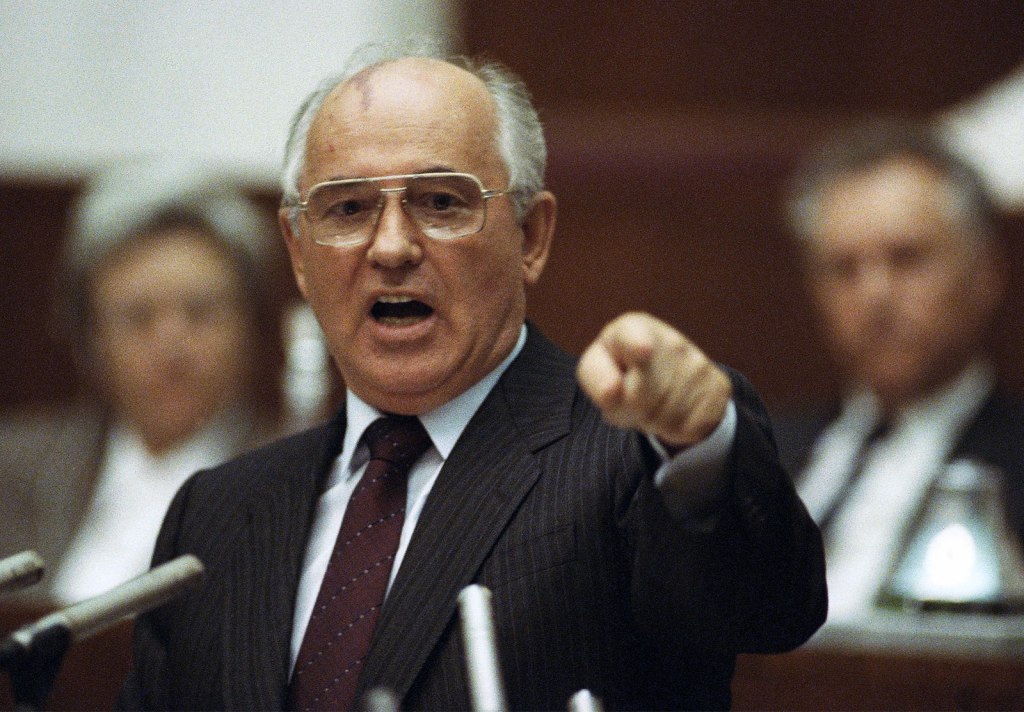
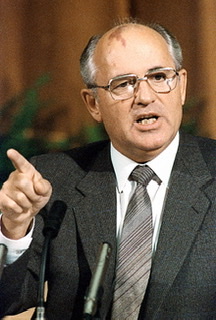
Soviet president Mikhail Gorbatchev

Nonetheless, personnel changes alone were not going to overcome the bureaucracy. Gorbachev needed to create new institutions and expand civil society to gain greater control over the party apparatus.  In doing so he created alternative centers of power and unleashed a wave of pent up nationalist sentiment in the non-Russian Republics of the Soviet Union that subverted Party authority and led to the fragmentation of the country. Gorbachev essentially created created Boris Yeltsin  and at each part of the drama gave him a soap box to challenge the central government.  In the non-Russian republics of the USSR, Gorbachev supported the creation of popular fronts as a way for people to mobilize society in support of his agenda. The Sajudis movement in Lithuania, Rukh in Ukraine, the Karabakh Committee in Armenia, and Birlik in Uzbekistan and others all started as vehicles in support of Gorbachev’s reforms. Eventually, these popular fronts assumed a more nationalistic character and began to agitate for greater political rights and independence from Moscow. So much so that the last two years of Gorbachev’s rule were dominated by the nationalities problem and the proximate cause underlying the coup attempt. The coup attempt was to prevent the signing of a new union treaty that Gorbachev had conceded to that would have devolved more power to the republics. It’s ironic that in attempting to stave off what the coup plotters saw as the dismantlement of the USSR, accelerated its collapse.