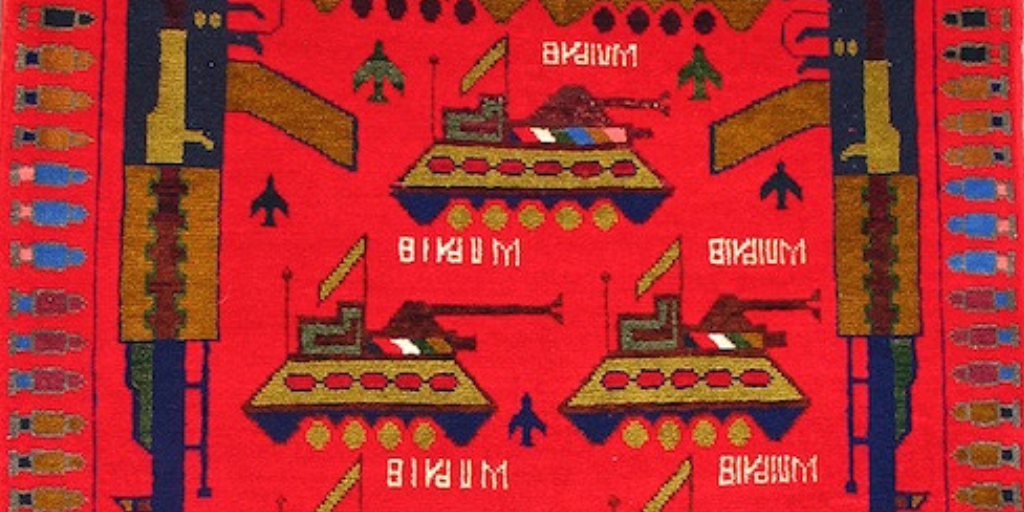
End of an Error: The Soviet Withdrawal from Afghanistan

On February 15, 1989, Lt. General Boris Gromov, Commander of the Soviet 40th Army, crossed over the Amu Darya River from Afghanistan into the Uzbekistan completing the Soviet withdrawal from Afghanistan. The almost ten year Soviet occupation, which began on December 24, 1979 would leave scars on both countries. For the Soviet Union, Afghanistan was a quagmire; one that undermined public faith and confidence in the Soviet system and leadership, hastened an end to the Cold War, and eventually brought about the dissolution of the USSR. For Afghanistan, it was a traumatic event that plunged the country into almost 40 years of constant war and state failure. For the United States, the Soviet invasion of Afghanistan would put in motion a chain of events that would ultimately lead to the tragedy of September 11, 2001.
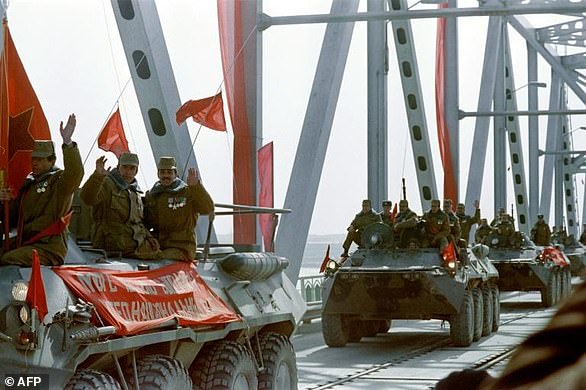
Soviet troops returning home from Afghanistan in February 1989 across the Friendship Bridge


Prelude to a Catastrophe

The Soviet decision to invade Afghanistan was not one taken lightly by the Kremlin and was made only after months of debate and discussion. It was the predictable, if not unavoidable result of growing Soviet involvement in Afghan internal affairs over several years and powerful security and ideological concerns. 

The Soviet Union enjoyed a long history of friendly cooperation with Afghanistan under King Mohammed Zahir Shah. It was the first country to recognize Afghanistan’s independence in 1919 and became Afghanistan’s main source of military and economic assistance in the post-World War II period. From 1956-77, the Soviet Union and its allies trained over 4,000 Afghan officers and delivered more than $600 million worth of military supplies. In the same period, the USSR also gave Afghanistan grants or credit lines totaling more than $1.3 billion, a sum which was exceeded in the Middle East and South Asia areas only by grants given to Egypt, India and Syria. Nonetheless, for nearly two decades the KGB also secretly funded and nurtured communist leadership networks at Kabul University and in the Afghan Army, training and indoctrinating 3,725 military personnel in the Soviet Union.

In 1973, the king was overthrown in a bloody coup orchestrated by his cousin Mohammad Daud Khan. Daud’s reign, however, would prove short-lived. In April 1978, he was ousted in a coup led by the Afghan Communists and elements of the military, which proceeded to proclaim a new Marxist Leninist state, the Peoples’ Democratic Republic of Afghanistan (PDRA). The Saur Revolution, as it became known, would usher in a period of prolonged upheaval and instability that ultimately dragged Moscow deeper and deeper into the proverbial quagmire.

The USSR welcomed the establishment of the PDRA even though it enjoyed cooperative relations with Afghanistan’s previous leaders. Nevertheless, the Peoples’ Democratic Party of Afghanistan (PDPA)—the Communists—was sharply divided into two rival factions, which did not bode well for the stability of the new Peoples’ Republic. The first faction, the Khalq, was led by Nur Muhammad Taraki and Hafizullah Amin and consisted largely of ethnic Pashtuns from the poorer cross-sections of Afghanistan.  As committed Marxist-Leninists, Taraki and Amin sought to transform Afghanistan from a feudal nation into a Communist one as rapidly as possible. The other faction, the Parcham, led by Babrak Karmal, tended to be made up of Afghanistan’s ethnic minorities. The Parcham called for a gentler approach, arguing that Afghanistan was simply not ready for Communism and would not be for some time. Many Soviet diplomats and advisers concurred with the Parcham’s more measured approach, worried that an aggressive implementation of Communist reforms would provoke a rebellion within Afghanistan’s deeply conservative and Muslim society.
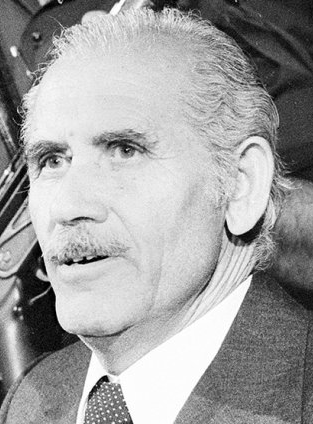
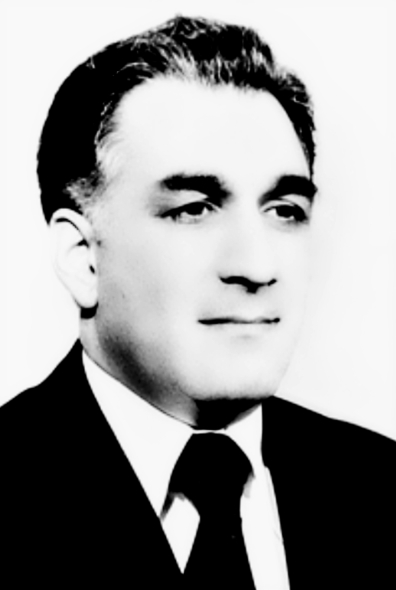
Immediately after coming to power, the Khalqis began to purge the Parchami faction, and instituted a Soviet-style program of modernizing reforms, including land reform and female literacy campaigns, which provoked the violent, conservative, Muslim backlash that Moscow predicted. On March, 15, 1979, a violent anti-government uprising occurred in the city of Herat.  The government dispatched the 17th Army Division to quell the uprising but the unit mutinied and joined the uprising. Desperate, the Afghan government appealed to the Kremlin to intervene and restore order, as stipulated in the December 1978 Soviet-Friendship Treaty. The Afghan request prompted an emergency meeting of the Soviet Politburo two days later to consider a response. In accordance with the Brezhnev Doctrine, which proclaimed the irreversibility of Communist regimes, Soviet Foreign Minister Gromyko argued that “under no circumstances may [the USSR] lose Afghanistan.” However, there was little appetite amongst the Soviet military for an intervention at time and the appeal was rebuffed. Soviet Premier Alexei Kosygin responded to the Afghans, “We carefully studied all aspects of this action and came to the conclusion that if our troops were introduced, the situation in your country would not only not improve, but would worsen. One cannot deny that our troops would have to fight not only with foreign aggressors, but also with a certain number of your people. And people do not forgive such things.” 

The Afghan government eventually suppressed the uprising in Herat without major Soviet assistance. However the death toll was a staggering 25,000 dead, which included 20 Soviet advisers caught up in the unrest. The revolt served as an alarm bell for Moscow and a reminder of the fragility of the Afghan Communist government. After Herat, the Soviets were convinced that neither Taraki nor Amin could control the deteriorating situation alone. Veteran diplomat Vasily Safronchuk was sent to Kabul to persuade Taraki and Amin to ease the pace of reform and broaden support for the regime by bringing non-Communists into the government. However, his advice fell on deaf ears in Kabul. In August, Moscow sent General Ivan Pavlovsky, the commander of the 1968 invasion of Czechoslovakia, to Afghanistan, ostensibly to provide recommendations on how to counter the growing insurgency but also to assess the situation for a possible military intervention. At the end of August, the Soviets also increased their on-ground advisors to 5000 and delivered large quantities of tanks and helicopter gunships to Bagram and Shindand airbases.

From Hell No to All In

What follows next is the story of how the Soviet leadership went from a categorical refusal to send military forces to suppress the the revolt in Herat and bolster their Afghan Marxist-Leninist clients, to the deployment of 80,000 troops to Afghanistan, nine months later to stabilize the country. Unlike the earlier decision in March, which was made by the entire fifteen-member Politburo, the decision to intervene militarily in December was driven ultimately by four men: Foreign Minister Gromyko, KGB Director Yuri Andropov, Defense Minister Dmitri Ustinov, and chief party ideologue Mikhail Suslov.

By the fall of 1979, the situation in Afghanistan had gone from bad to worse. The Afghan communists continued to ram through unpopular reforms at breakneck speed that only increased armed opposition in the countryside. At the same time, rivalries inside the Communist government only further destabilized the situation. Amin, who had tenuously co-existed with Taraki, used the Herat uprising to consolidate his power and lay the groundwork to eliminate his rival. At the end of March, Amin became Prime Minister. In July he assumed the duties of Defense Minister as well and began to purge the cabinet of Taraki loyalists. The Soviets were closely monitoring Amin’s accumulation of power with grave concern. Moscow had come to view Amin as the main obstacle to peace and stability in Afghanistan and clearly preferred Taraki. In early September, Taraki was summoned to the Kremlin and given explicit direction from Soviet leader Leonid Brezhnev to get rid of Amin.

Left: Soviet Foreign Minister Andrei Gromyko; Center: Afghan President Nur Muhammad Taraki; Soviet General Secretary Leonid Brezhnev. The Kremlin was angered that Amin had not only toppled Taraki who had its backing, but had him killed.

On September 14, Taraki invited Amin, to a meeting at the presidential palace. It was supposed to be an ambush on Amin, orchestrated by Taraki’s Soviet advisers, but Amin was tipped off about the trap as he arrived. After a short but bloody shoot out, Amin escaped unharmed but more ruthless from the experience. As acting Defense Minister, Amin returned later that day with an Army contingent and placed Taraki under house arrest. He subsequently had Taraki executed on October 9, much to the shock of the Soviet leadership. News of Taraki’s execution deeply dismayed Brezhnev, who had personally assured the Afghan leader of his support and protection. “What a scum this Amin is,” Brezhnev is alleged to have remarked. Brezhnev’s strong reaction and sense of personal insult gave strong impetus to continuing discussions about the prospect of removing Amin.

Amin’s power grab only exacerbated Soviet apprehensions that the situation in Afghanistan was spiraling out of control. Taraki’s execution demonstrated a complete disregard for Moscow’s wishes and showed that he was unresponsive to Soviet counsel. Resistance to the government was also growing more violent as Islamic opposition fighters, the Mujahideen, declared a jihad against the Communists. Pakistani military assistance to the Mujahideen only further destabilized the situation. The Soviets feared that the government in Kabul would collapse dealing a crushing blow to their prestige and give rise to an anti-Soviet, Islamist Afghanistan on their southern border. However, one factor above all may have tilted the Soviet decision-making calculus toward a full scale military intervention to oust Amin and stabilize the situation.

The Afghan Mujahideen

As Amin showed a greater willingness to buck the Soviets while he consolidated power, he also began to reach out to the United States about improving relations. Amin almost certainly knew that his arrest and subsequent execution of Taraki were not well received in Moscow and that he probably needed a hedge against over dependence on the Soviet Union. On October 27, 1979, Amin met with acting American Chargé d’Affaires Archer K. Blood to discuss a possible rapprochement. Over the course of a forty minute meeting, Amin stressed his personal commitment to improving U.S.-Afghan relations, expressing his deep affection for the U.S. which he acquired during his time spent in the country as a student. He denied that Afghanistan was a Soviet puppet and declared that he could never sacrifice Afghan independence to any foreign demands, including from the Soviets. Blood came away from the meeting impressed by Amin and optimistic that he was truly interested in improving bilateral relations. Nevertheless, the United States still viewed Amin as a dangerous tyrant and Blood urged caution going forward citing a list of contentious issue in the relationship that would need to be addressed first. Amin was still held at least partly responsible for the murder of U.S. Ambassador Adolf Dubbs who was abducted at gunpoint in the middle of Kabul and killed in a botched rescue effort.

News of the meeting between Amin and Blood was met with alarm in Moscow. The Soviets had increasingly viewed Amin as a danger to stability inside Afghanistan.  They now worried that he was seeking a Geo-political realignment, much like Egyptian President Anwar Sadat’s expulsion of the Soviet military in 1972, with equally negative repercussions for Moscow’s regional influence and security interests. Two days after the meeting, Soviet Foreign Minister Gromyko, KGB Director Yuri Andropov, and Defense Minister Dmitri Ustinov sent a report to the Central Committee warning that there were disturbing signs that the new Afghan leadership intended to conduct a “more balanced policy” in relation to the Western powers. They further speculated that the United States was warming to the possibility of an improvement in relations with Kabul and a whole sale Afghan Geo-political realignment based on their contacts with Amin. The KGB concluded that the CIA had begun to work with Amin to manipulate Afghanistan’s relationship with the Soviet Union. KGB officers on the ground in Afghanistan then convinced their superiors in Moscow that drastic measures were needed to save the Afghan revolution. Amin needed to be eliminated or at a minimum removed from office.
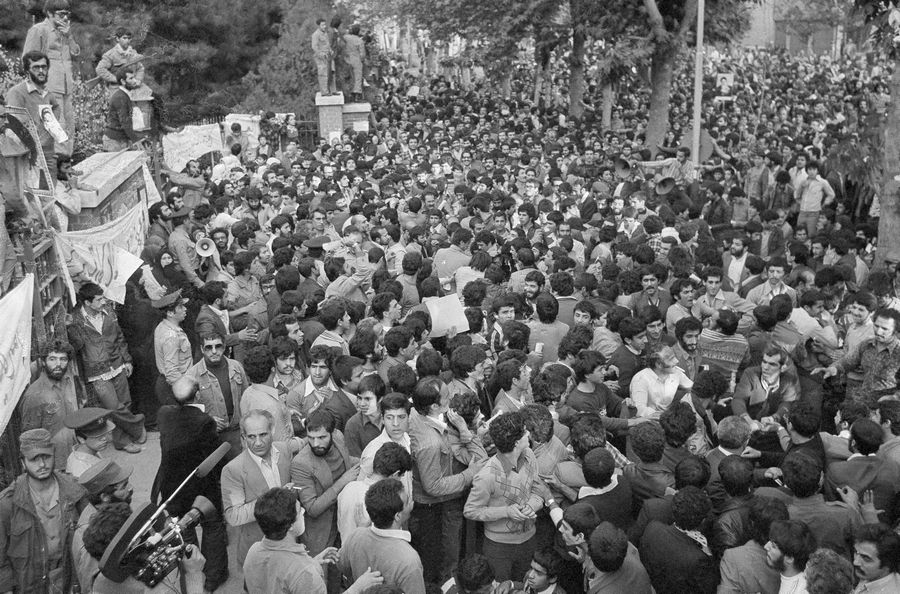
A mob of Iranian students take over the U.S. Embassy in Tehran in November 1979.

In the collective mind of the Soviet security apparatus, Afghanistan was a natural target for the U.S.  In January 1979, the Iranian revolution had forced the abdication of long-time American ally Shah Mohammad Reza Pahlavi.  The advent of a hostile regime led by Ayatollah Ruhollah Khomeini was a devastating blow to U.S. power and influence in the region and its prestige around the world. Moscow worried that Washington would try to recoup some of its lost influence through Afghanistan and more importantly find a replacement location for the highly secret intelligence collection sites it had maintained in Iran to track Soviet military activities.

At the same time, the Mujahideen insurgency in the countryside continued to grow with the Afghan army repeatedly proving itself ineffective, despite the increased Soviet involvement in guiding Afghan combat operations and logistics. Mutinies were spreading throughout the Army. In mid-October, the entire 7th Infantry Division, which was led by Taraki loyalists, revolted and launched an attack on the capital. After several days of heavy fighting, the mutiny was finally suppressed but it was clear the regime was divided and struggling to defend itself. The government in Kabul now controlled at most only 25 percent of the country.

By the end of November 1979, the prevailing view amongst the Soviet leadership was that Amin needed to be replaced because of his disloyalty and ineffectiveness. Soviet officials were making it known on the diplomatic circuit that, even though the USSR continued to provide weapons, equipment and advisors to the existing regime, Moscow was trying to come up with an alternative leader. On December 4, Andropov wrote Brezhnev with a solution. He had been contacted by exiled Afghan communists, including former Parcham faction head Babrak Karmal, who had “worked out a plan for opposing Amin and for creating ‘new’ party and state organs” and requested assistance. With Karmal now waiting in the wings, the question now became how and when to get rid of Amin.

On December 8,  Brezhnev hosted a small group meeting of key Politburo members— KGB Director Yuri Andropov, Defense Minister Dmitri Ustinov, Foreign Minister Andrei Gromyko, and chief Party ideologist Mikhail Suslov— to review the situation in Afghanistan and determine next steps. These four men had come to dominate Soviet foreign policy especially as Brezhnev grew more ill and incapacitated. Leading the discussion, Andropov expressed reservations about Amin’s loyalty, his contacts with the United States, and his inability to curb the growing insurgency and anti-Soviet sentiment. Ustinov followed next warning that the deteriorating situation threatened the security of the Soviet Union’s southern border. Moreover, an Afghanistan more closely aligned with the United States could become a forward operating base for U.S. military forces including Pershing II missiles. The group tentatively agreed to direct the KGB to remove Amin and replace him with the Babrak Karmal. They also agree to send an undetermined number of Soviet troops to Afghanistan for the same purpose. These decisions were perfunctorily ratified by the larger Politburo on December 12, with Prime Minister Alexei Kosygin, who consistently opposed the idea of an invasion, noticeably absent.
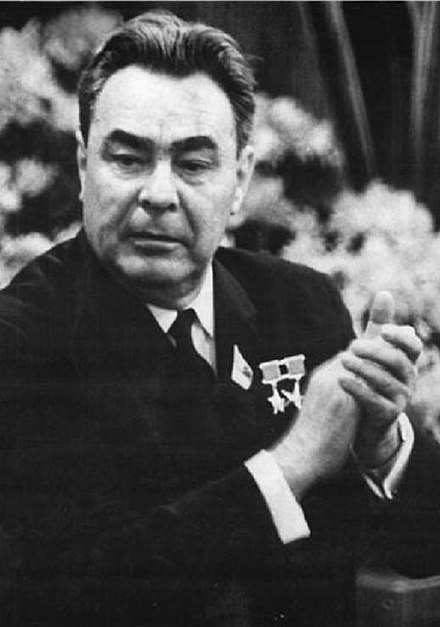
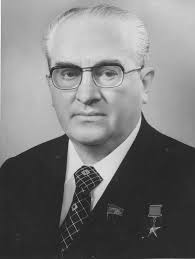
Defense Minister Ustinov informed Chief of the General Staff, Nikolai Ogarkov on December 10 that a decision had been made to send Soviet troops to Afghanistan and directed him to plan for a 70,000-80,000 man deployment. The General Staff had been planning for such a contingency since the Herat uprising and had been surreptitiously deploying military forces to Afghanistan and along its borders for weeks and months. Ogarkov and his deputy, General of the Army Sergei Akhromeev, however, were much less enthusiastic about the mission than Ustinov. Ogarkov argued that 80,000 troops were not enough for the mission. The 1968 invasion of Czechoslovakia, a country with more favorable terrain, required 500,000 troops. He further warned that the Afghan people never tolerated foreign intervention and that they risked turning the entire Muslim world against the Soviet Union. Ustinov overruled Ogarkov’s concerns sternly reminding him that his job was not to teach the Politburo its business but to carry out its orders.

On December 13, the KGB attempted to assassinate Amin by having one of his Soviet cooks slip poison into his favorite drink, Coca-Cola. However, the carbonation of the soda rendered the poison harmless allowing Amin to escape relatively unharmed. A couple of weeks later, the KGB attempted to poison his food again but the Soviet Embassy in Afghanistan, unaware of the plot, sent doctors to save him. The failure of the KGB assassination attempts left Moscow with few options other than military force to eliminate Amin.

The Die is Cast

Late in the evening of 24 December, units of the 103rd and 105th Airborne Divisions landed at Kabul airport and the military airfield at Bagram in the initial phase of what would become the Soviet invasion of Afghanistan. Over the next several days, waves of AN-22 and AN-24 military transport aircraft surged into Kabul and points South to include Shindad and Kandahar, carrying additional military forces, supplies and equipment. Engineers laid floating pontoon bridges across the Amu Darya near Termez and on Christmas Day Soviet tanks began to roll into Afghanistan. For months, Amin had been pressing Moscow to deploy additional military forces to help the Afghan Army defeat the Mujahideen insurgents in the countryside. So when these military forces suddenly began to arrive on Christmas Eve there was little immediate alarm or suspicion.

By the 27th the Soviets had assembled sufficient forces to control Kabul and began fanning out into the city, securing key communication nodes and the main ministries. On the evening of December 27, 700 special operators from the KGB Grom and Zenit groups, the 345th Independent Guards Airborne Regiment, and the 154th Separate Spetsnasz Detachment dressed in Afghan Amy uniforms attacked the Tajberg Palace. After about an hour of heavy fighting against Afghan National Army forces and the Presidential Guard inside and around the palace the battle ended with Amin’s body in a pool of blood. The next morning Radio Kabul announced, in Russian, that Amin had been tried and shot as an enemy of the people. By the end of December Babrak Karmal would be installed as President of Afghanistan while 80,000 Soviet troops occupied the country.

The Quagmire Begins

The Soviet invasion was intended to be a short and straight forward operation, similar to Hungary in 1956 and Czechoslovakia in 1968. Enter with overwhelming force, eliminate the problem individual or individuals and declare victory. And that is what Brezhnev seemed to have in mind. By the end of January 1980 Brezhnev considered the Afghanistan matter closed and ordered Soviet military forces home. However Andropov, Ustinov and Gromyko argued that withdrawing would be a serious mistake. Amin may have been eliminated but Karmal would need time to consolidate his power and stabilize the country. Soviet military forces should remain until the Afghan government was strengthened, they argued in a report to Brezhnev. Moreover, pulling out too soon would prompt the Afghans and others to question the Soviet Union’s reliability as a partner.

Mujahideen fighters use a “Stinger” missile to take down a Soviet helicopter gunship

The rest of the story as they say is history. Amin’s death removed a major complicating factor for Moscow in Afghanistan but did little to curb the growing insurgency. In fact, the Soviet invasion only served to strengthen and expand the ranks of the Mujahideen resistance. Over the next nine years, the Soviets would find themselves bogged down in a guerrilla war against a determined and resilient Islamic insurgency, aided and abetted by covert military assistance from the United States. In the end Ogarkov’s predictions proved tragically correct. The Afghan people refused to accept a foreign occupation and the invasion only turned a large part of the Muslim world against the Soviet Union.

Soviet President And Secretary General of the Communist Party of the Soviet Union, Mikhail S. Gorbachev

By the mid-1980s the Soviet public began to sour on what came to be seen as a never ending conflict. In March 1985, a new generation of Soviet leader, Mikhail Gorbachev, took power determined to revive the stagnating Soviet economy and to introduce new thinking into Soviet foreign policy. Gorbachev worried about the conflict in Afghanistan. At a Politburo meeting on October 17, 1985, he read letters from Soviet citizens expressing growing dissatisfaction with the war in Afghanistan—including “mothers’ grief over the dead and the crippled” and “heart-wrenching descriptions of funerals.” Gorbachev told the Politburo “If we don’t change approaches [to evacuate Afghanistan], we will be fighting there for another 20 or 30 years.” On April 14, 1988, the Soviets signed the Geneva Accords in which they promised to withdraw from Afghanistan. Less than a year later, the last Red Army units crossed the Termez Bridge into the Soviet Union, ending what Gorbachev had referred to as a “bleeding wound.”

Muscovites carry the portraits of young Soviet soldiers who fell in Afghanistan. The Soviets withdrew from the country 30 years ago.

As Marx argued in his essay, The Eighteenth Brumaire of Louis Napoleon, history repeats itself, first time as tragedy, second time as farce. The Soviet Union invaded Afghanistan seeking to eliminate one man, Hafizullah Amin, and tried to impose a foreign ideology, communism, on a largely tribal based society. It ultimately failed. The United States invaded Afghanistan, largely to eliminate one man, Osama bin Laden and also tried to impose a foreign ideology, democracy, on a tribal based society. After almost 20 years it’s not clear that the United States has been anymore successful.
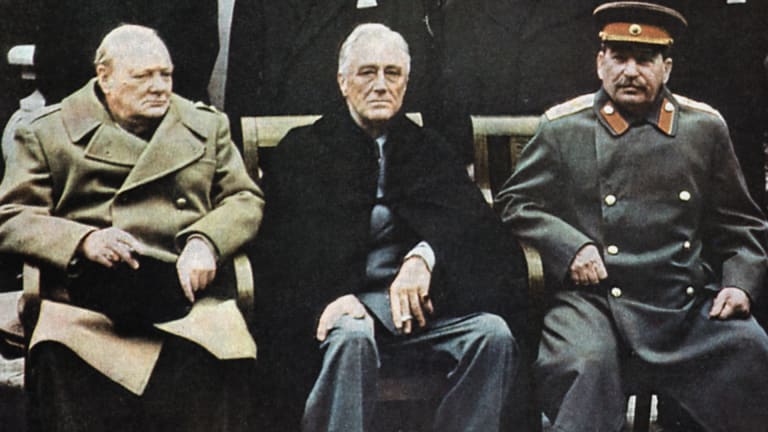
Yalta, February 1945: The Beginning of the Cold War

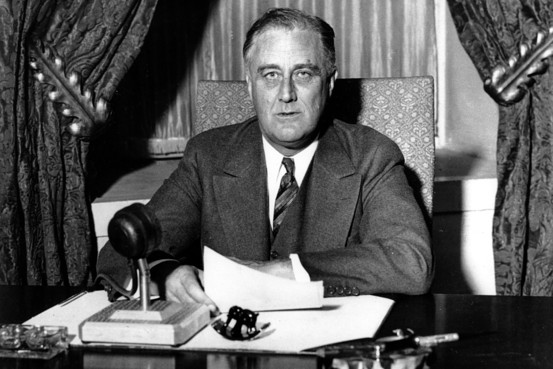
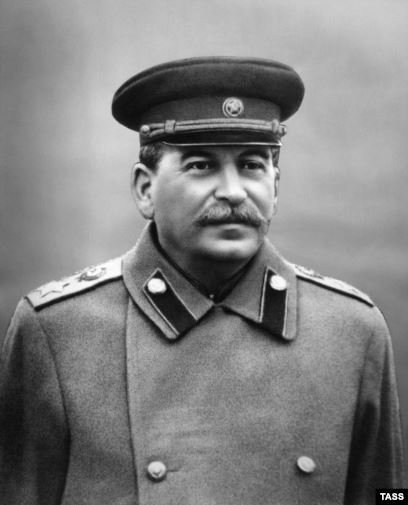
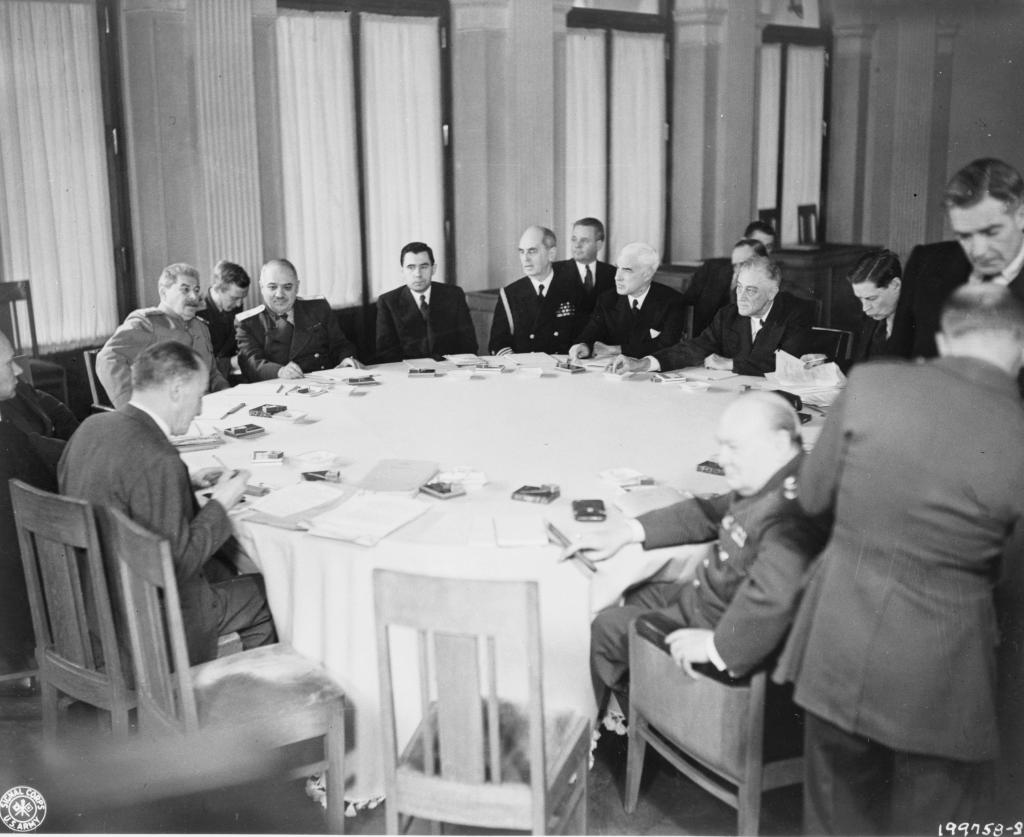
On February 4, 1945, United States President Franklin Roosevelt, British Prime Minister Winston Churchill, and Soviet leader Josef Stalin gathered at the Soviet seaside resort of Yalta to hammer out a post-war settlement for Europe and address other pending issues including the war in the Pacific. Code named ARGONAUT, the conference spanned eight days and was the final time the “Big Three” would meet together. Roosevelt would die from a brain hemorrhage in April 1945 while a war weary British public would vote Churchill out of office in the July 1945 elections. The Conference also marked the high-tide of allied cooperation and a gradual unraveling of the wartime alliance soon followed as a clash of ideologies and competing post-war political interests gained preeminence. In the decades, that followed, the word “Yalta,” much like “Munich” would become synonymous with appeasement and capitulation.

The Beginning of the End

By September 1944, if not sooner, it had become increasingly apparent that it was no longer a case of if Nazi Germany would be defeated but when.  The Soviet victory at Stalingrad in February 1943 had turned the tide of the war blunting any further German advances Eastward. The vaunted Nazi Wehrmacht would spend the remainder of the war on the defensive. A powerful Soviet counteroffensive, Operation Bagration, forced the Nazis to fall back westward and the Red Army was on the outskirts of Warsaw by the beginning of August 1944. In the West, the June amphibious landings at Normandy established a US, British, and Canadian foothold in France and by the end of August Paris would be liberated and the combined US, British, and Canadian armies poised to enter Germany.

In the Pacific, the United States continued to make steady and almost inevitable progress against Japan but at great cost. By the end of June 1944, U.S. Marines had taken the strategically important island of Saipan but at the cost of over 13,000 casualties. The capture of Saipan would allow the United States to launch B-29 bomber strikes on the Japanese mainland but the ferocity of the Japanese resistance, 29,000 killed in action including 5,000 suicide attacks, served as a harbinger of what a U.S. invasion of the Japanese homeland might encounter. Estimates of the time suggested that such an operation could last a year and result in upwards of one million U.S. casualties.

With the defeat of Nazi Germany growing more likely, President Roosevelt called for a conference of the Big Three in November 1944 to address numerous post-war issues and to enlist Soviet assistance in the war against Japan. The previous year, Roosevelt, Churchill, and Stalin met in Tehran where the United States and Great Britain committed to opening a long-awaited second front in France and Stalin agreed in principle to declare war against Japan after Nazi Germany’s defeat. After much debate, Roosevelt and Churchill agreed to meet Stalin in early February 1945 at Yalta on the Crimean Peninsula in the Soviet Union, despite warnings from Roosevelt’s physicians that such a long and onerous trip could kill the weakening president.

The Conference Begins

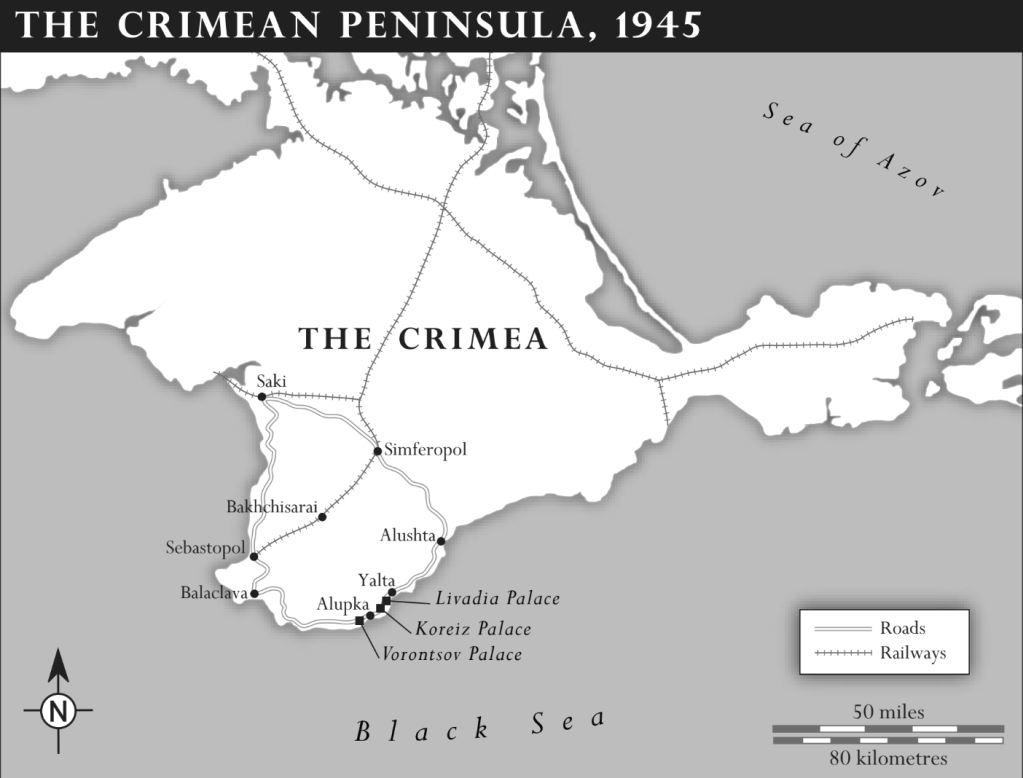
Located near the tip of the Crimean Peninsula in the Ukrainian Soviet Socialist Republic, the conference was held at the Livadia Palace overlooking the Black Sea. Once the summer retreat of Czar Nicholas II, it would become ground zero for negotiations that would decide the future of post-war Europe.  

All three leaders arrived at the conference with competing agendas. For Roosevelt, securing Soviet entrance into the war against Japan was a top priority. Roosevelt worried U.S. casualties at Saipan and increasing Japanese suicide attacks in the Pacific were signs of things to come should the US attempt an invasion of the Japanese homeland. These apprehensions were reinforced later that month at the battle of Iwo Jima, where the US would suffer another 25,000 casualties. Roosevelt also wanted Stalin’s support for his idea of a United Nations organization that would maintain peace and stability and prevent another world war. 

Stalin’s goals were more cynical and single minded. Beyond ensuring that Germany would never rise again to threaten the Soviet Union and securing an agreement on reparations, he had two main aims. He wanted Allied recognition of the territory that he seized from Poland and Romania in 1940 as part of the Molotov-Von-Ribbentrop Pact and of a Soviet sphere of influence over Eastern Europe. As Stalin told one of his Yugoslav communist allies, “This war is not as in the past; whoever occupies a territory also imposes on it his own social system. Everyone imposes his own system as far as his army can reach.”

Churchill’s aims for the conference centered primarily on preserving Britain’s colonial empire, preventing Soviet domination of Europe and ensuring that Germany would never again pose a threat to European peace and stability. Churchill recognized early on, much like Stalin, that the further the Red Army advanced West, the greater the influence the Soviet Union would wield over post-war Europe. He also worried that Roosevelt, desperate for a Soviet declaration of war on Japan, would be too eager to placate Stalin with other concessions in Europe. Churchill hoped to create a bulwark of strong democratic-capitalist states in Europe to contain the spread of Soviet communism and ensure that Britain was not left alone to face the Soviets in Europe. As such, Churchill would lobby hard for France to be given a position on the Allied Control Commission and a zone of German occupation against Stalin’s objections. He also would strongly oppose Soviet demands for reparations from Germany, mindful of the failures of the Versailles Treaty which had left Germany embittered, economically destitute, politically susceptible to extremism, and resentful of the international community.

The Post-War Order Takes Shape

Over the course of seven days the Big Three would hammer out a number of agreements that would serve as the framework for a post-war peace. The allies agreed that once Germany was defeated, it would be divided into four zones of occupation; the US, Great Britain, the USSR, and France would each control a zone. The German capital of Berlin was also divided in similar fashion. Initially, Stalin balked at giving France responsibility for a zone of occupation because of its surrender in 1940 but eventually relented after it was agreed that a French zone would be carved out of the US and British zones. On the issue of reparations, Stalin demanded $20 billion in reparations from Germany, half of this sum to be destined for the Soviet Union. Churchill rejected this amount while Roosevelt accepted the sum as a basis for future discussion. The three leaders agreed to the creation of a commission to study the issue further. 

The second day of the conference

On other issues, Roosevelt achieved his primary objective of securing Stalin’s promise to enter the war against Japan three months after Germany’s defeat. In return, Roosevelt acceded to Stalin’s demands including the annexation of South Sakhalin Island and the Kurile Islands and several other concessions that would allow Moscow a sphere of influence in Manchuria following Japan’s surrender.  Stalin also accepted Roosevelt’s plan for a United Nations organization but only after the three leaders agreed that all permanent members of the organization’s Security Council would hold veto power.

The Intractable Problem of Poland

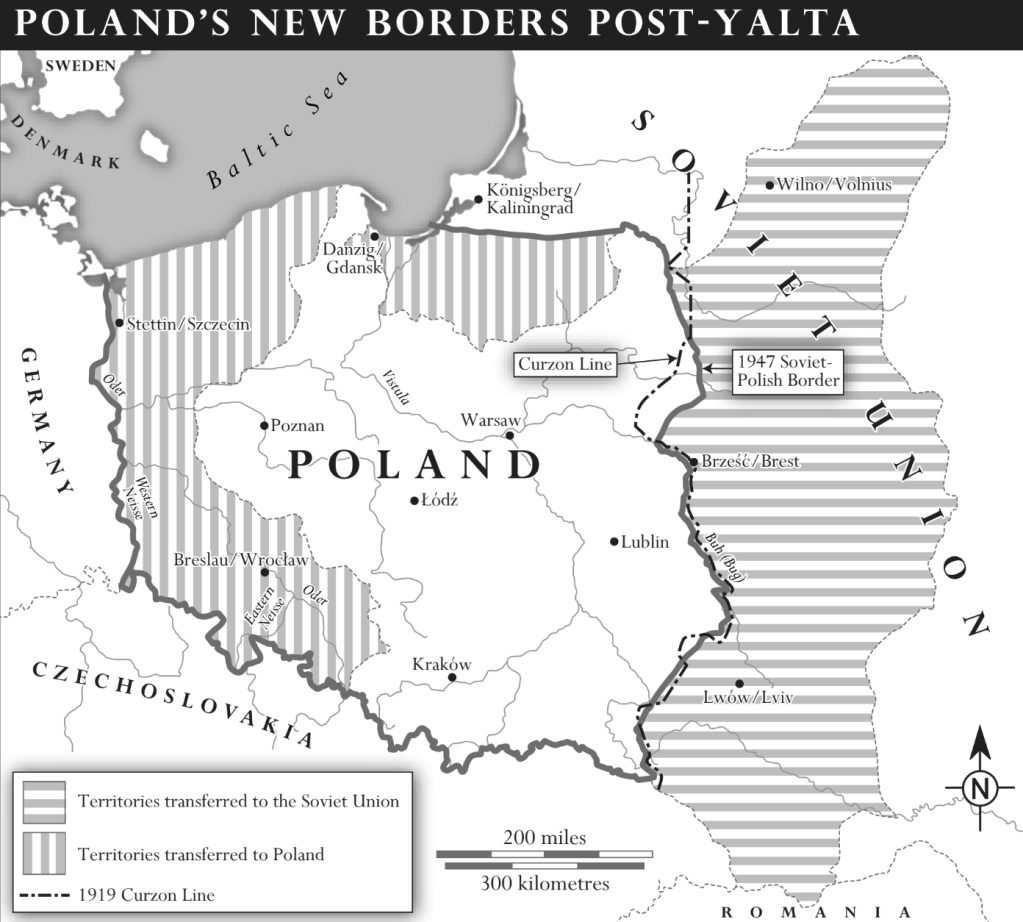
No other issue would prove more acrimonious and contribute more to the unraveling of the war time alliance than the question of Poland. Churchill first broached the subject on the third day of the conference, February 6, and it soon became evident that whatever flexibility and goodwill that helped to resolve the earlier issues had disappeared.  At its core, the Polish problem was about borders and what kind of government Poland would have after the war. More specifically, would Poland become a free and democratic state with its pre-war borders intact or a truncated, Soviet controlled puppet, under communist rule? The argument over Poland’s border’s was largely moot. Roosevelt and Churchill, in principal, had conceded to Stalin’s demands at the 1943 Tehran Conference. However, on the composition of Poland’s post-war government Roosevelt and Churchill battled for Poland’s right to self-determination employing all kinds of stratagems and arguments but in the end they secured only paper promises that they lacked the means to enforce.

All three leaders had a vested interest in the outcome of the Polish question. However, where Poland ranked on their hierarchy of concerns and the leverage they could wield to bring about a favorable outcome varied considerably. The Soviets arguably had the most at stake in Poland and the fact that the Red Army was stretched across Polish territory gave Stalin the most leverage. For Stalin, Polish self determination was incompatible with Soviet security. “Throughout history, Poland has been the corridor through which the enemy has passed into Russia. Poland is a question of life and death for Russia,” he argued. In Stalin’s mind there could be no security without control over Poland and the rest of Eastern Europe and control meant the establishment of Communist-dominated regimes beholden to Moscow.

It was clear from early on that Stalin had designs on Poland and that almost all Soviet actions regarding Poland were aimed at establishing their control and eliminating any opposition. In 1940, Stalin secretly executed over 22,000 Polish military officers and intelligentsia taken captive during the attack on Poland the previous year, demonstrating his malign intentions toward Poland. In July 1944, the Soviets stood up a pro-Soviet, Polish communist government in Lublin in opposition to the Western recognized London-based Polish government in exile. The next month, the Red Army sat idly by on the outskirts of Warsaw allowing the Nazis to brutally crush an uprising by forces loyal to the Polish government in exile, despite allied pleas to come to their aid. With over 250,000 anti-Communist Poles killed in he uprising there were to few to left to challenge the communists in Lublin. For Stalin, Poland was a closed question. It’s fate was already decided by the advance of the Red Army and there was no need to renegotiate or discuss what had already been won. Moreover, Stalin believed that the Soviet Union was fully justified in unilaterally deciding Poland’s fate because the United States and Britain had done so with France and Italy earlier with no input from Moscow.

History of the Warsaw Uprising

For Churchill, the question of Poland’s post-war government was of both symbolic and practical importance. It was the Nazi invasion of Poland on September 1, 1939 that was the casus belli for both Britain and France to declare war on Germany. Britain went to war so “that Poland should be free and sovereign,” Churchill argued. Britain’s only interest, he added was “one of honor because Britain drew the sword for Poland against Hitler’s brutal attack.” Having already consented to Stalin’s Polish land grab, Churchill insisted on guarantees that the Poles themselves would be allowed to determine the composition of their government. “Poland must be mistress in her own house and captain of her own soul,” he declared. This required a dissolution of the pro-Soviet Lublin government and new free elections, neither of which Stalin was prepared to accept.

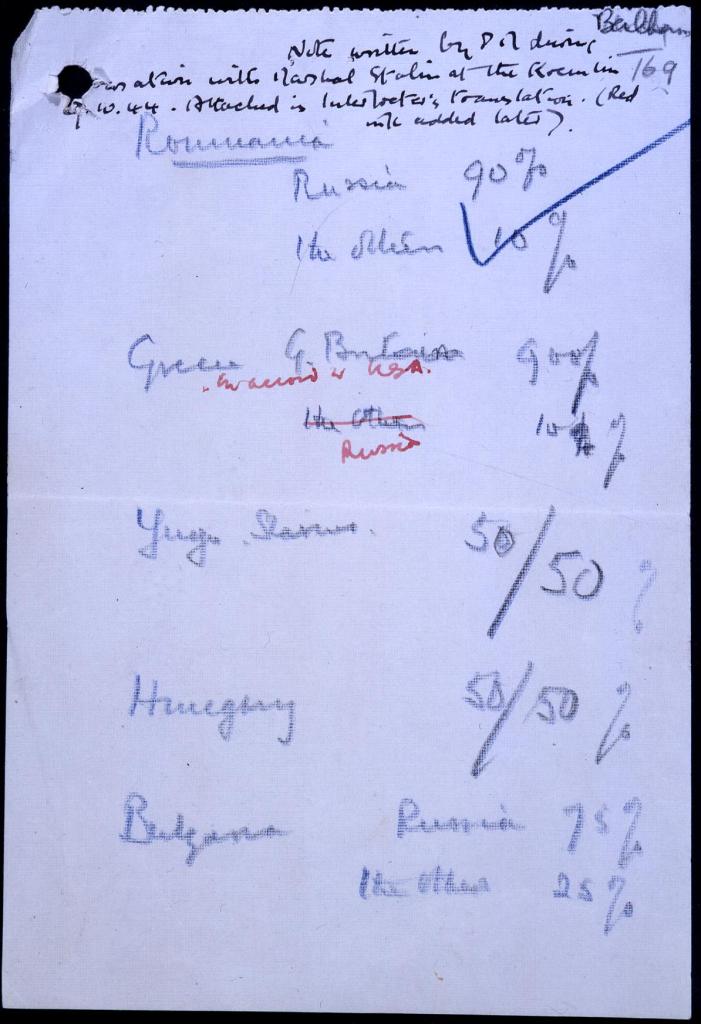
Despite his eloquent and impassioned plea for Polish self-determination, Churchill was a realist. He knew that as long as the Red Army occupied Poland and the rest of Eastern Europe there was little that he or Roosevelt could do to prevent Soviet domination of the region. Churchill had lobbied Roosevelt in 1943 for a military operation in the Balkans instead of the Normandy landings in large part to curb the Red Army’s advance into the region. Unable to persuade Roosevelt, Churchill turned to diplomacy to try and limit the spread of Soviet influence. On October 9, 1944, in Moscow, Churchill and Stalin reached a notorious “spheres of influence” agreement in which the two leaders cynically divided up the Balkans. According to Churchill, he suggested that the Soviets should have 90% influence in Romania and 75% in Bulgaria. Great Britain would control the other 10% and 25% respectively. Conversely, the British would have 90% in Greece (a strategically crucial country for British imperial communications in the Mediterranean Sea). Britain and the Soviet Union would share dominance both in Hungary and Yugoslavia. Churchill wrote this proposal on a piece of paper which he pushed across to Stalin, who ticked it off and passed it back in agreement. This “percentage agreement” was never formalized but it did demonstrate to Stalin that Churchill understood the weak hand he was playing and that he was prepared to be ruthlessly pragmatic about the fate of Eastern Europe.

The original “Percentages Agreement” divvying up spheres of influence in Balkans

Roosevelt shared Churchill’s apprehensions about the Soviet domination of Eastern Europe but he also saw Poland as a no-win situation. The Soviets had the upper hand. They had the advantages of power and proximity and he was reluctant to risk losing their cooperation in the war against Japan or support for his United Nations concept in a clash he was destined to lose. Roosevelt approached the Polish issue very carefully at the conference, avoiding the emotional outbursts that Churchill was sometimes prone to while calibrating his language to avoid alienating Stalin. In his opening remarks on the Polish question, Roosevelt addressed the less thorny issue of Poland’s borders first and suggested Stalin return the city of Lviv to the Poles, claiming such magnanimity would have a salutary effect on further discussions. Stalin was unmoved. That evening, he sent a note to Stalin explaining that the United States could never recognize the Lublin government while implying that how the Soviet Union handled the Polish question would impact cooperation in the post-war period. Roosevelt seemed to hope that the momentum of wartime alliance, and the prospect of a cooperative and amicable post-war relationship would appeal to Stalin as much as it appealed to him. He clearly misjudged Stalin.

Game Over

After almost five days of painstaking argument and debate over Poland, Roosevelt and Churchill finally were forced to acknowledge the inevitable, that there was little they could do short of war to prevent Soviet domination of Eastern Europe. In the end, both men conceded that the Soviet installed Communist government would form the basis of a new provisional government of national unity. They tried to constrain Stalin and gloss over their abandonment of the legitimate Polish government-in-exile in London by insisting that the government be augmented to include representatives from other parties and that free elections to choose a successor government would be held as soon as possible. They also made a last ditch effort to try and assure at least a modicum of freedom for Eastern Europe with the Declaration on Liberated Europe.  Yet, in the end these stratagems all failed to hamstring Stalin because they were all lacked detail, were subject to multiple interpretations, and had no enforcement mechanisms or means to hold him accountable. Roosevelt’s Chief of Staff, Admiral William Leahy put it best, “This [agreement on Poland] is so elastic that the Russians can stretch it all the way from Yalta to Washington without ever technically breaking it,”

Stalin and the Soviet installed Polish Committee of National Liberation

As both Roosevelt and Churchill returned home from the conference, they were each sadly aware of how little they had achieved for Poland but tried to put the best possible spin on things. Both men came under fire from domestic critics for carving up Poland and passively accepting Soviet domination of Eastern Europe as they framed the Polish outcome as the best possible under the circumstances. As one of Roosevelt’s most senior advisors remarked, “it was not a question of what we would let the Russians do, but what we could get the Russians to do.”

The agreements reached at Yalta met with a mixed reception among the small number of experienced Russia hands at the State Department. Charles Bohlen, who helped open the first U.S. embassy in the Soviet Union in 1934, headed the department’s East European Division and acted as Roosevelt’s interpreter at Yalta, felt that the agreements reached were “realistic compromises.” Bohlen believed that while Roosevelt and Churchill had made many concessions on Poland there was still a chance for a genuinely democratic Polish government if the agreements were carried out.

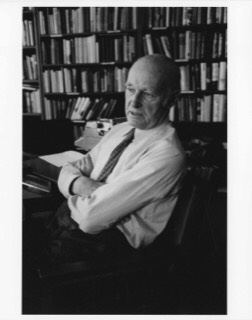
George Kennan

George Kennan, who was the deputy chief of mission in Moscow and who would later become one of the chief architects of the U.S. containment policy toward the Soviet Union, was much less optimistic. In a memorandum written a few months before Yalta, Kennan painted a rather gloomy assessment of future Soviet relations with the West. He thought the idea that Stalin was someone the United States could cut reasonable deals with was absurd and that there was little hope for post-war cooperation with the Soviet Union because of Moscow’s determination to dominate Eastern Europe. 

Kennan would prove more accurate in his assessment. Within a month’s time, Roosevelt and Churchill realized that Stalin would not honour his promise of free elections for Poland. Reports of wholesale deportations and liquidations of opposition Poles by the Soviets began to emerge. Near the end of March, Ambassador to the USSR Averell Harriman, Kennan’s boss, cabled Roosevelt that “we must come clearly to realize that the Soviet program is the establishment of totalitarianism, ending personal liberty and democracy as we know it.” Roosevelt soon began to admit that his view of Stalin had been excessively optimistic and that Stalin was not a man of his word. “Averell is right.”We can’t do business with Stalin,” Roosevelt lamented. “He has broken every one of the promises he made at Yalta.”

A monument in Warsaw commemorating the Soviet deportations

As the realization of Stalin’s duplicity set in, both Roosevelt and Churchill both began to show a new willingness to consider harsher policies toward the Soviet Union. For Roosevelt, it was too late. He would pass away on April 12. Churchill, however, directed the British Chiefs of Staff to develop secret military plans to enforce the Yalta agreements and drive the Soviets out of Poland which would would become known as Operation Unthinkable. After a month of planning the British Chief of Army Staff on June 9, 1945, predictably concluded: “It would be beyond our power to win a quick but limited success and we would be committed to a protracted war against heavy odds.” In fact, theBritish military leadership believed it would take 45 Anglo-American divisions, several divisions of Poles and 100,000 rearmed Germans. In little over a month, Churchill surprisingly would be voted out of office, replaced by a Labour government under Clement Attlee.

The Cold War Begins

A little over a year after Yalta, Churchill delivered his famous speech at a small American college in Missouri where he uttered the famous line, “From Stettin in the Baltic to Trieste in the Adriatic, an iron curtain has descended across the Continent.” Churchill’s speech has traditionally been viewed as the beginning of the Cold War, the titanic 45 year struggle for ideological supremacy between the United States and its democratic allies and the Soviet Union and its communist satellites. However, the seeds were clearly planted at the Yalta conference and germinated with Stalin’s duplicity and Roosevelt and Churchill’s quick realization that he was not a man of his word.

In the years following the conference, both Roosevelt and Churchill’s reputations took a hit as the word Yalta became synonymous with betrayal and abandonment. Critics argue that Roosevelt and Churchill were too quick and willing to appease Stalin. Could things have turned out differently? Probably not.

Sun Tzu wrote that every battle is won before it is even fought and the fate of Poland had been pretty much decided long before Roosevelt and Churchill went to Yalta in February, 1945. The Red Army was in full control of the country. The Polish resistance loyal to the government in exile in London was decimated. The Lublin Committee, now transformed into the Provisional Government, was issuing decrees and seeing them carried out. Its legitimacy continued to be questioned in London and Washington. But it would have taken a great deal more leverage than Roosevelt and Churchill possessed, or could reasonably be expected to apply, in order to alter the fundamental situation. The Russians had the double advantage of proximity and power. An argument can be made that Roosevelt should have set aside his earlier reluctance to engage in post-war negotiations before Germany was defeated and should have raised these issues earlier at the 1943 Tehran Conference. At that point he might have had more leverage over the Soviets. The Red Army would not have been in control of Poland yet and he could have conditioned Lend Lease Aid to Soviet support for free elections. In the end, Roosevelt was not going to jeopardize the war time alliance for post war issues when the outcome of the war was still somewhat in doubt. Moreover, it is far from certain that any threats short of military force would have deterred Stalin.

.


Stalingrad: Turning Point in the East

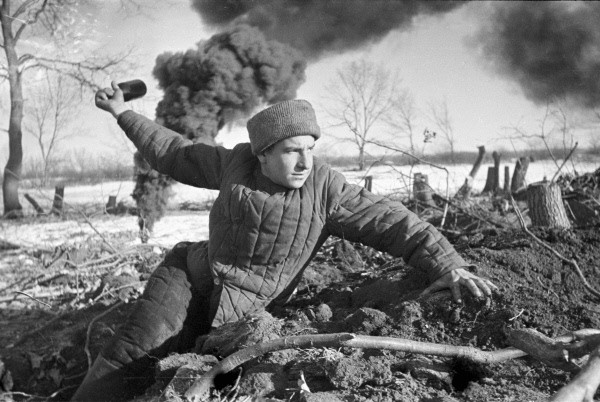
On February 2, 1943, the German 6th Army surrendered at the battle of Stalingrad bringing an end to the five-month long battle that would ultimately prove to be the turning point of the war. The Wehrmacht would advance no further east and after Stalingrad would find itself on the defensive all the way up to the fall of Berlin in May 1945. Germany’s defeat shattered its military reputation for invincibility and dealt a devastating blow to German morale. Conversely, victory at Stalingrad bolstered the morale of the Red Army which had been on its heels for the better part of almost two years as well as confidence in the Soviet leadership. More Soviet soldiers died in this five-month contest than Americans died in the entire war.

Hitler’s June 21, 1941 invasion of the Soviet Union, codenamed Operation Barbarossa, came as a shock to Soviet leader Josef Stalin, in particular the lightening like advance of the Wehrmacht as it drove deep into Soviet territory encircling entire army groups and major cities that were ill-prepared for the Nazi attack. Stalin had been warned of an expected German attack on the Soviet Union but refused to believe the information. 

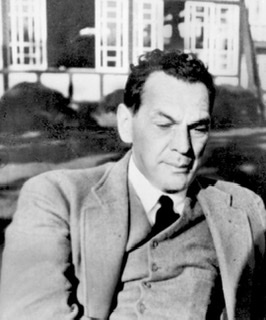
Stalin’s Spy: Richard Sorge

On May 12, 1941, Richard Sorge, a Soviet military intelligence operative working undercover in Tokyo learned from his sources inside the German embassy that 170 German divisions would attack all across the Soviet frontier on June 20. He relayed the information back to Moscow but Stalin refused to believe and questioned its accuracy. The two dictators had agreed to a non-aggression pact in August of 1939. Stalin harbored no illusions that Germany would eventually attack the USSR. However, Stalin believed that a German attack was at least a year off, that the Nazis were still dependent on the Soviet Union for war-making natural resources, and that Sorge’s information was a British deception intended to drag Moscow into the war against Hitler.

The German attack was a complete success. Major cities like Kyiv and Minsk had fallen to the Nazis with ease and by the first week of December the Wehrmacht was only 30 kilometers from the gates of Moscow. However, as the weather became bitterly cold, the German offensive ground to a halt, and was pushed back 200 km by a determined Soviet counteroffensive. The full onset of winter, one of the coldest and most brutal on record, prohibited any further offensive operations.

In May 1942, the Nazis resumed the offensive but turned their focus of attention south toward the Caucasian oil fields and the city of Stalingrad. Stalingrad was a large industrial city that was critical to the Soviet war effort while the seizure of the oil fields would deprive the Soviets of critical resources. Hitler also attached enormous symbolic and propaganda importance to the city that bore Stalin’s name, believing that it’s capture would deal a huge psychological blow to the Soviet war effort.  

The initial German attack in the south went well. The Red Army had been caught off guard once again expecting a renewed German push to take Moscow. Within two weeks the industrial city of Kharkhiv had fallen and the Wehrmacht advanced more than 300 miles.  By early August, the Sixth Army under General Friedrich von Paulus began to advance towards the city of Stalingrad. By August 23 the Germans were in the suburbs, where fighting turned ferocious. Bombed into rubble by German aircraft and artillery, the city became a vast landscape of rubble and burnt ruins, impassable to tanks and an ideal terrain for defenders as the outnumbered Soviet armies fell back into the city. 

Friedrich Von Paulus, commander of the German 6th Army

By September both the Germans and Soviets were rushing reinforcements to the city as the battle gradually descended into grim hand to hand fighting and small unit actions. Stalin gathered all available troops to the east bank of the Volga, some from as far away as Siberia. However, the Soviets could only reinforce and resupply their forces by dangerous crossings of the Volga river which came under constant attack from German dive bombers and artillery. Inside the city discipline and morale within the Red Army was rapidly disintegrating. Under pressure from above, the commander of Soviet forces in the city, General Vasily Chuikov, resorted to extreme and desperate measures to restore order and discipline. Officers, commissars, and enlisted men were shot on sight for cowardice. 

In late September, the Germans held most of Stalingrad and the Red Army was pushed back to within a few hundred meters of the west bank of the Volga river but continued to tenaciously hold its ground. As Chuikov’s 62nd Army fought desperately to maintain its toeholds, Red Army generals Georgy Zhukov and Aleksandr Vasilevsky began to see an opportunity. The Germans, for all of their apparent might, were overextended. In many spots to the north and south of the city, the German lines were being held by inferior Romanian, Hungarian or Italian units, lacking adequate anti-armor capabilities.

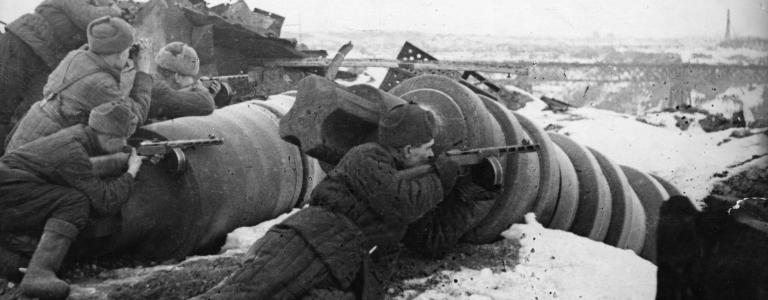
Street fighting at Stalingrad

The Soviet High Command had begun planning for a massive counterattack code named Operation Uranus. The plan called for two massive mechanized drives launched from the north and the south of the city, with the goal of cutting through the units protecting the German flanks and linking up, effectively surrounding the German Sixth Army in the city and cutting it off from its supply lines. Zhukov had quietly redirected large amounts of reinforcement and supplies to the flanks unnoticed that were originally intended for Chuikov’s 62nd Army. For roughly a month and a half, Chuikov’s men fought desperately against the German onslaught enduring constant attacks from German aircraft and artillery. Places like the Stalingrad Tractor Factory and the Red October Steel Factory would become the scenes of brutal small unit fighting that would be memorialized as places of great honor and tragedy.

On November 19 the Soviet’s launched their counter attack striking the Romanian 3rd Army in the North, which crumbled in the face of a massive Soviet armor attack.  The next morning the Soviets attacked the Romanian 4th Army, south of Stalingrad. In a replay of the previous day’s events, the Romanians were routed. Von Paulus, the commander of the German 6th Army, quickly understood what the Soviets were trying to achieve and the gravity of the situation. He contemplated a retreat to escape before the Soviet trap completely closed but was ordered by Hitler to stand his ground at all cost. Herman Goering, head of the German air force, vowed that his vaunted Luftwaffe would be able to resupply the 6th Army.

Two days later, both pincers of the Soviet counterattack would link up, cutting off the Sixth Army from the rest of the Wehrmacht. Operation Uranus had worked perfectly, the 6th Army was completely encircled. A week earlier, the Germans believed they were on the verge of a glorious victory, mopping up the last pockets of a dying resistance.  Now the entire tide of the battle had changed. They were the ones trapped and on the verge of defeat. 

Hitler’s priority now shifted to breaking the encirclement and rescuing the 200,000 plus German soldiers and their allies trapped by the Red Army.  Field Marshal Erich von Manstein, one of Germany’s most able commanders, was directed to plan and lead an operation to break through to the beleaguered 6th Army. On December 12, Manstein initiated Operation Winter Tempest. After some initial success, the German attack ran out of steam and by the end of December was beaten back. With hopes of a break out fading and Luftwaffe resupply flights having ceased, prospects for the survival of the men of the 6th Army became increasingly bleak. 

As conditions deteriorated further, Hitler ordered his men to fight to the death. On January 30, Hitler promoted Von Paulus to the rank of field marshal. It was his fervent hope was that Von Paulus not allow himself to be taken alive since no German field marshal had ever surrendered. Instead, von Paulus and his staff surrendered on January 31, along with 90,000 troops still under his command. On February 2 the remainder of the 6th Army capitulated bringing to an end the saga of Stalingrad.