

On February 2, 1943, the German 6th Army surrendered at the battle of Stalingrad bringing an end to the five-month long battle that would ultimately prove to be the turning point of the war. The Wehrmacht would advance no further east and after Stalingrad would find itself on the defensive all the way up to the fall of Berlin in May 1945. Germany’s defeat shattered its military reputation for invincibility and dealt a devastating blow to German morale. Conversely, victory at Stalingrad bolstered the morale of the Red Army which had been on its heels for the better part of almost two years as well as confidence in the Soviet leadership. More Soviet soldiers died in this five-month contest than Americans died in the entire war.
Hitler’s June 21, 1941 invasion of the Soviet Union, codenamed Operation Barbarossa, came as a shock to Soviet leader Josef Stalin, in particular the lightening like advance of the Wehrmacht as it drove deep into Soviet territory encircling entire army groups and major cities that were ill-prepared for the Nazi attack. Stalin had been warned of an expected German attack on the Soviet Union but refused to believe the information.
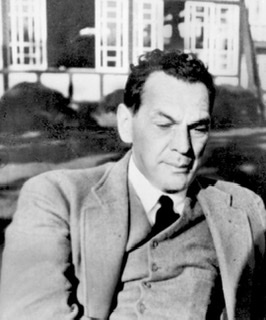
On May 12, 1941, Richard Sorge, a Soviet military intelligence operative working undercover in Tokyo learned from his sources inside the German embassy that 170 German divisions would attack all across the Soviet frontier on June 20. He relayed the information back to Moscow but Stalin refused to believe and questioned its accuracy. The two dictators had agreed to a non-aggression pact in August of 1939. Stalin harbored no illusions that Germany would eventually attack the USSR. However, Stalin believed that a German attack was at least a year off, that the Nazis were still dependent on the Soviet Union for war-making natural resources, and that Sorge’s information was a British deception intended to drag Moscow into the war against Hitler.
The German attack was a complete success. Major cities like Kyiv and Minsk had fallen to the Nazis with ease and by the first week of December the Wehrmacht was only 30 kilometers from the gates of Moscow. However, as the weather became bitterly cold, the German offensive ground to a halt, and was pushed back 200 km by a determined Soviet counteroffensive. The full onset of winter, one of the coldest and most brutal on record, prohibited any further offensive operations.

In May 1942, the Nazis resumed the offensive but turned their focus of attention south toward the Caucasian oil fields and the city of Stalingrad. Stalingrad was a large industrial city that was critical to the Soviet war effort while the seizure of the oil fields would deprive the Soviets of critical resources. Hitler also attached enormous symbolic and propaganda importance to the city that bore Stalin’s name, believing that it’s capture would deal a huge psychological blow to the Soviet war effort.
The initial German attack in the south went well. The Red Army had been caught off guard once again expecting a renewed German push to take Moscow. Within two weeks the industrial city of Kharkhiv had fallen and the Wehrmacht advanced more than 300 miles. By early August, the Sixth Army under General Friedrich von Paulus began to advance towards the city of Stalingrad. By August 23 the Germans were in the suburbs, where fighting turned ferocious. Bombed into rubble by German aircraft and artillery, the city became a vast landscape of rubble and burnt ruins, impassable to tanks and an ideal terrain for defenders as the outnumbered Soviet armies fell back into the city.

By September both the Germans and Soviets were rushing reinforcements to the city as the battle gradually descended into grim hand to hand fighting and small unit actions. Stalin gathered all available troops to the east bank of the Volga, some from as far away as Siberia. However, the Soviets could only reinforce and resupply their forces by dangerous crossings of the Volga river which came under constant attack from German dive bombers and artillery. Inside the city discipline and morale within the Red Army was rapidly disintegrating. Under pressure from above, the commander of Soviet forces in the city, General Vasily Chuikov, resorted to extreme and desperate measures to restore order and discipline. Officers, commissars, and enlisted men were shot on sight for cowardice.
In late September, the Germans held most of Stalingrad and the Red Army was pushed back to within a few hundred meters of the west bank of the Volga river but continued to tenaciously hold its ground. As Chuikov’s 62nd Army fought desperately to maintain its toeholds, Red Army generals Georgy Zhukov and Aleksandr Vasilevsky began to see an opportunity. The Germans, for all of their apparent might, were overextended. In many spots to the north and south of the city, the German lines were being held by inferior Romanian, Hungarian or Italian units, lacking adequate anti-armor capabilities.
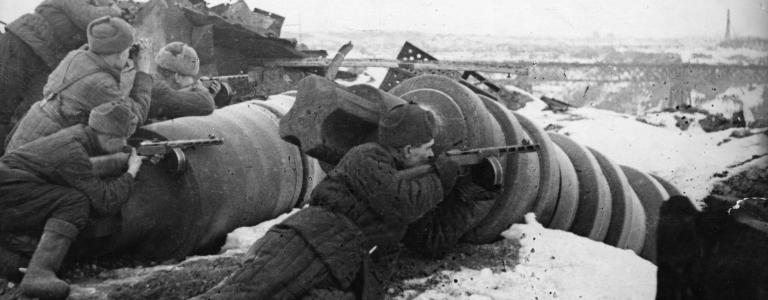
The Soviet High Command had begun planning for a massive counterattack code named Operation Uranus. The plan called for two massive mechanized drives launched from the north and the south of the city, with the goal of cutting through the units protecting the German flanks and linking up, effectively surrounding the German Sixth Army in the city and cutting it off from its supply lines. Zhukov had quietly redirected large amounts of reinforcement and supplies to the flanks unnoticed that were originally intended for Chuikov’s 62nd Army. For roughly a month and a half, Chuikov’s men fought desperately against the German onslaught enduring constant attacks from German aircraft and artillery. Places like the Stalingrad Tractor Factory and the Red October Steel Factory would become the scenes of brutal small unit fighting that would be memorialized as places of great honor and tragedy.
On November 19 the Soviet’s launched their counter attack striking the Romanian 3rd Army in the North, which crumbled in the face of a massive Soviet armor attack. The next morning the Soviets attacked the Romanian 4th Army, south of Stalingrad. In a replay of the previous day’s events, the Romanians were routed. Von Paulus, the commander of the German 6th Army, quickly understood what the Soviets were trying to achieve and the gravity of the situation. He contemplated a retreat to escape before the Soviet trap completely closed but was ordered by Hitler to stand his ground at all cost. Herman Goering, head of the German air force, vowed that his vaunted Luftwaffe would be able to resupply the 6th Army.

Two days later, both pincers of the Soviet counterattack would link up, cutting off the Sixth Army from the rest of the Wehrmacht. Operation Uranus had worked perfectly, the 6th Army was completely encircled. A week earlier, the Germans believed they were on the verge of a glorious victory, mopping up the last pockets of a dying resistance. Now the entire tide of the battle had changed. They were the ones trapped and on the verge of defeat.
Hitler’s priority now shifted to breaking the encirclement and rescuing the 200,000 plus German soldiers and their allies trapped by the Red Army. Field Marshal Erich von Manstein, one of Germany’s most able commanders, was directed to plan and lead an operation to break through to the beleaguered 6th Army. On December 12, Manstein initiated Operation Winter Tempest. After some initial success, the German attack ran out of steam and by the end of December was beaten back. With hopes of a break out fading and Luftwaffe resupply flights having ceased, prospects for the survival of the men of the 6th Army became increasingly bleak.
As conditions deteriorated further, Hitler ordered his men to fight to the death. On January 30, Hitler promoted Von Paulus to the rank of field marshal. It was his fervent hope was that Von Paulus not allow himself to be taken alive since no German field marshal had ever surrendered. Instead, von Paulus and his staff surrendered on January 31, along with 90,000 troops still under his command. On February 2 the remainder of the 6th Army capitulated bringing to an end the saga of Stalingrad.


